There were five separate beach landing sites on D-Day, codenamed Utah, Omaha, Gold, Juno, and…
The most strongly defended of the beaches was Omaha, which also had the most difficult terrain. Over 2,400 American soldiers were killed or…
There were five separate beach landing sites on D-Day, codenamed Utah, Omaha, Gold, Juno, and Sword, with American troops landing at Utah and Omaha, Canadian troops (principally) landing at Juno and British forces landing an hour later at Gold and Sword.
The most strongly defended of the beaches was Omaha, which also had the most difficult terrain. Over 2,400 American soldiers were killed or wounded there on D-Day. By comparison, the Americans suffered only 197 casualties in the landing at Utah Beach.
Sword Beach was the easternmost of the D-Day landing sites, less than 10 miles from Caen. Taking it was the responsibility of the British 3rd Infantry Division, commanded by Major General Thomas Gordon Rennie.
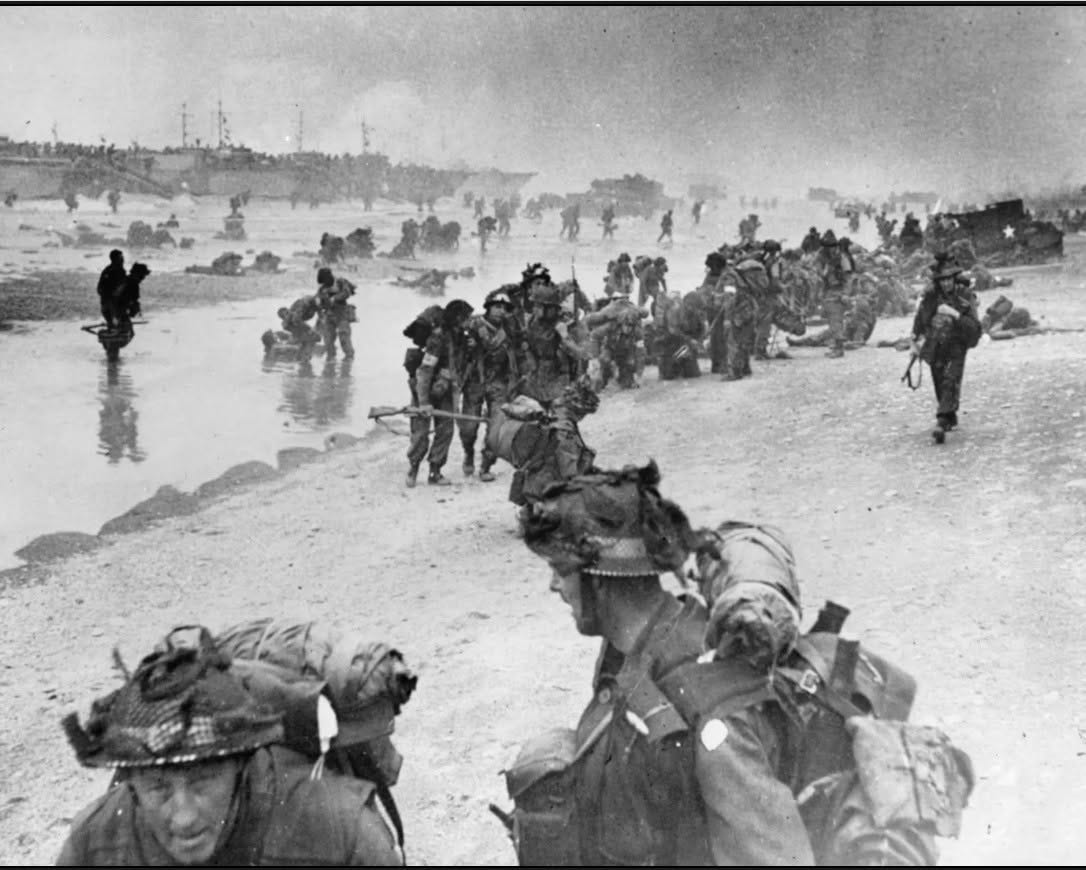
Preceded by heavy naval and aerial bombardment, the Sword Beach landings began at 7:25 a.m. Although the German defense was disorganized, their initial defensive fire was heavy and effective, being particularly deadly to the first assault wave. Soon, however, the British troops, supported by tanks, were able to overrun the principal German stronghold and secure the beachhead. Royal Marine commando units (and one Free French unit) began landing at 8:20 a.m., pushing rapidly inland and along the coast, further expanding the area under British control. By the end of day, over 28,000 men and over 200 tanks had landed at Sword Beach, while suffering 683 casualties.
One of the goals of the Sword landing was to capture Caen by the end of the day. But despite the success of the landing, vehicle congestion began to bog down the advance, which was further stalled by a German armored counterattack in the afternoon. Although Caen was still in German hands at the end of the day, the Sword assault had secured a deep beachhead. The following day the British forces who landed at Sword were able to link up with the Canadians from the Juno landing, and jointly they drove on Caen. The final liberation of the city came on July 19, at a very high cost. But that is a Dose for another day.
D-Day was 82 years ago today.
The photo was taken on Sword Beach.
메타데이터
- post_id
- 4fc467684b5c
- slug
- there-were-five-separate-beach-landing-sites-on-d-day-codenamed-utah-omaha-gold-juno-and-4fc467684b5c
- url
- https://medium.com/@sayedshakarabbas/there-were-five-separate-beach-landing-sites-on-d-day-codenamed-utah-omaha-gold-juno-and-4fc467684b5c
- canonical_url
- https://medium.com/@sayedshakarabbas/there-were-five-separate-beach-landing-sites-on-d-day-codenamed-utah-omaha-gold-juno-and-4fc467684b5c
- author_url
- https://medium.com/@sayedshakarabbas
- status
- ok
- fetched_at
- 2026-06-14 11:28:49