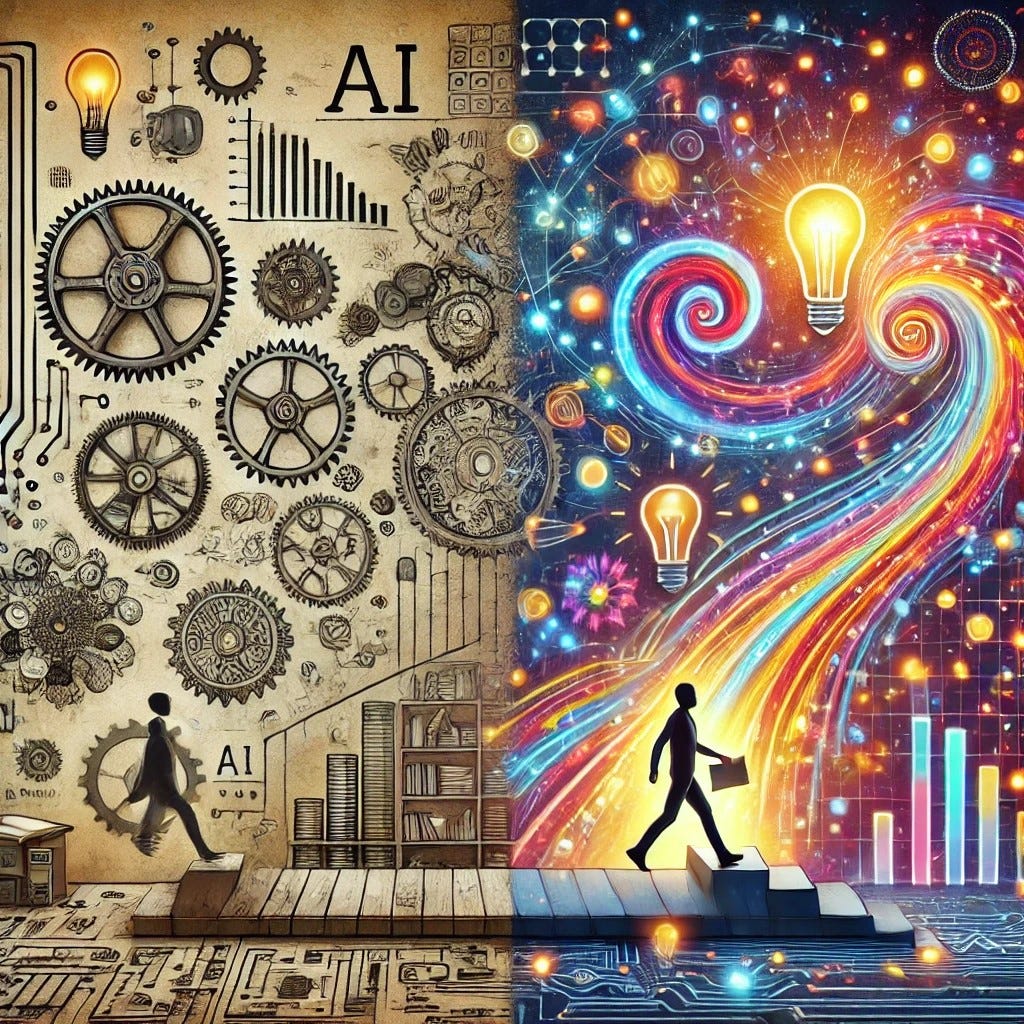
We Mistook Literacy for Thinking
Because we think that critical thinking and judgment were a by-product of literacy.
We Mistook Literacy for Thinking
Because we think that critical thinking and judgment were a by-product of literacy.
We have made a quiet mistake.
We have begun to believe that critical thinking is a by-product of literacy. Once a child can read, write, articulate, and perhaps even debate, judgment will follow.
But literacy is a tool. Judgment is a stance.
Literacy allows you to decode text. Judgment will enable you to decode intent.
Literacy lets you construct sentences. Judgment asks whether the sentence should exist at all.
And this is where the real unease with AI begins.
Because if literacy is about processing information, AI will outperform us. It already drafts faster, summarizes cleaner, translates wider, and structures tighter. It can simulate an argument. It can mimic nuance. It can produce the appearance of thought.
What it cannot own is judgment.
Judgment is not speed. It is not fluency. It is not vocabulary. It is the discipline of pause. It is the courage to doubt your first conclusion. It is the willingness to ask, “What is missing here?”
AI will scrub mechanical literacy. It will automate the visible parts of thinking. The formatting. The phrasing. The predictable logic chains.
But judgment lives in a deeper layer.
Not in how much you know. Not even in how well you articulate. But in how you weigh.
Weigh consequences. Weigh context. Weigh trade-offs. Weigh silence.
In design, I have seen this repeatedly. Two people can access the same tools. The same data. The same AI prompts. One produces something impressive. The other produces something responsible.
The difference is not literacy.
It is discernment.
And discernment is formed in places literacy does not reach:
- In lived experience.
- In moral tension.
- In the discomfort of ambiguity.
- In staying with a problem long enough for it to resist simplification.
If we mistake literacy for thinking, we will compete with AI on its strongest ground. If we cultivate judgment, we step onto terrain that remains profoundly human.
Perhaps the real question is not whether AI will replace thinkers.
It is whether we have trained ourselves to be thinkers at all.
Because the future will not belong to those who can generate the most words.
It will belong to those who can decide which words matter.
And, Yuval Noah Harari, says nothing different here.
메타데이터
- post_id
- 4fdc49aa42d8
- slug
- we-mistook-literacy-for-thinking-4fdc49aa42d8
- url
- https://medium.com/technique-and-passion-navigating-learning-design/we-mistook-literacy-for-thinking-4fdc49aa42d8
- canonical_url
- https://medium.com/technique-and-passion-navigating-learning-design/we-mistook-literacy-for-thinking-4fdc49aa42d8
- author_url
- https://medium.com/@anshula2007
- status
- ok
- fetched_at
- 2026-06-16 19:09:56