Losing DRG: Rogue Core Runs to Crashes? Here is How to Stabilize Your Descent
There is a very specific type of adrenaline rush that only Deep Rock Galactic players understand. It is the feeling of being miles…
Losing DRG: Rogue Core Runs to Crashes? Here is How to Stabilize Your Descent
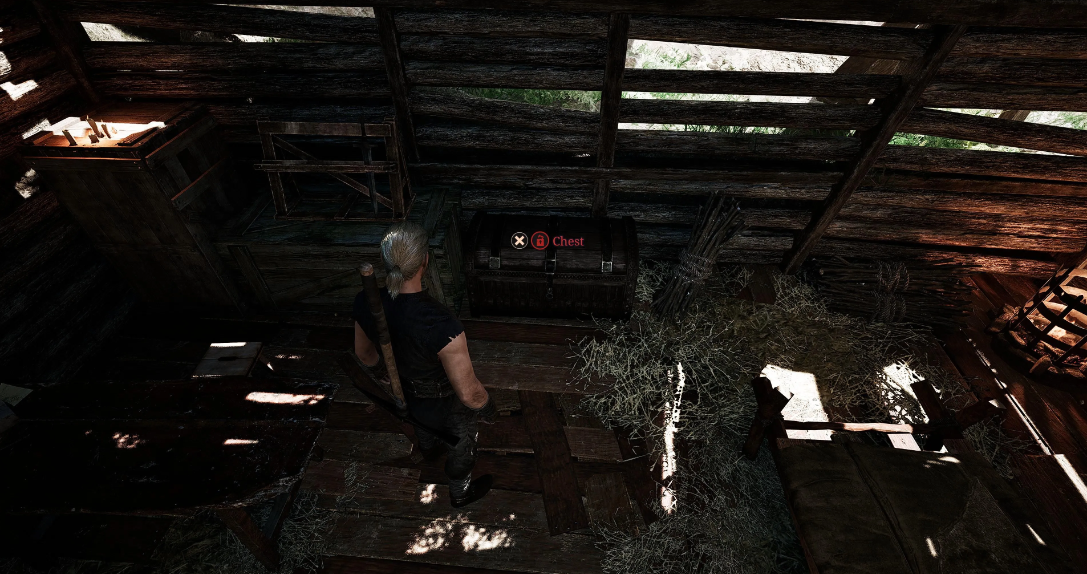
There is a very specific type of adrenaline rush that only Deep Rock Galactic players understand. It is the feeling of being miles underground, surrounded by pitch-black darkness, with a flare slowly burning out as you hear the clicking of mandibles echoing from the tunnel walls.
For years, Deep Rock Galactic (DRG) has been the gold standard for co-op extraction shooters. But with their latest spin-off, Deep Rock Galactic: Rogue Core, developer Ghost Ship Games has completely flipped the script. They took the cozy, beer-drinking, dwarven camaraderie of the base game and plunged it into pure, unadulterated survival horror.
If you haven’t taken the plunge into Rogue Core yet, you are missing out on one of the most atmospheric and mechanically deep rogue-lites of the decade. But as a solo player, I quickly discovered that the descent into darkness comes with a massive catch.
Here is why Rogue Core is an absolute must-play, and how you can actually make it playable when the game’s brutal co-op scaling and technical stutters try to ruin your night.
What is Rogue Core? The Lore of “The Greyout”
To understand why this game is so gripping, you have to understand the premise.

Deep Rock Galactic (the greedy intergalactic mining corporation we all know and tolerate) has lost contact with several massive deep-crust mining operations. An anomaly known only as “The Greyout” has enveloped these sectors. All communications are jammed. All automated defense systems are offline.
You do not play as a fully kitted-out, promoted dwarf with custom overclocks and heavy weaponry. Instead, you play as a “Reclaimer.”
Reclaimers are sent into the absolute deepest, darkest parts of Hoxxes IV with literally nothing but a standard-issue sidearm, a flare, and a company-mandated pickaxe. Your mission is to descend through procedurally generated stages, re-establish the phase nodes, and find out what slaughtered the previous mining crews.
The Intoxicating Rogue-Lite Loop
The gameplay loop is where Rogue Core hooks you. Because you start with nothing, every single piece of equipment has to be scavenged on the fly.
As you fight through the darkness, you discover abandoned supply caches left behind by the dead crews. You use these to piece together jury-rigged weapons mid-dive. The transition of power is incredible. You might start a run frantically dodging a swarm while plinking away with a weak pistol, but 30 minutes later, you are wielding a chain-lightning plasma cannon infused with strange alien Expenite, melting hordes of newly mutated Glyphid variants.

It is tense, tactical, and incredibly rewarding. Until you die.
Because this is a true rogue-lite, a wipe means you lose your temporary loadout. You are sent back to the Reclaimer hub with only the meta-progression resources (like Merit Points, Intel, and Scrip) you managed to extract.
And this is exactly where the masterpiece starts to frustrate the adult gamer.
The Solo Miner’s Dilemma: Scaling and Stability
Rogue Core is actively designed around four-player synergy. In the base game, solo players were given a little AI drone named Bosco to help mine and revive. In Rogue Core, you are completely alone.
When you spend 45 minutes meticulously clearing a stage, finding the perfect weapon synergies, and gathering a massive haul of Intel, the game expects a team to cover multiple sightlines. As a solo player, getting stun-locked by a single new enemy variant means instantly losing an hour of your real-world time.
But the difficulty isn’t even the most frustrating part. The real enemy is the technical instability and the repetitive chore of manual looting.
Rogue Core is built on an engine pushing intense volumetric lighting, massive destructible environments, and huge swarm logic. It is gorgeous, but it can be incredibly taxing on your system.
There is nothing more heartbreaking than reaching the final extraction phase, only for the game to freeze. A random Windows 11 stutter, a sudden frame drop, or a fatal DX12 exception error will crash you to the desktop. In a rogue-lite where death means losing everything, technical instability is a fatal flaw.
Furthermore, picking up individual pieces of dropped resources in the dark while a swarm approaches completely breaks the combat flow. Doing low-level anomaly runs just to grind 10 more “Merit Points” to unlock a basic weapon frame feels like tedious manual labor, not gaming.
The Modern Toolkit: Fixing the Game Without “Cheating”
As someone who values my gaming hours immensely, I refuse to play Russian Roulette with my PC’s performance or my free time. When a game’s scaling disrespects my time, I take control of the player experience.
Instead of digging through Reddit to find messy command-line fixes for micro-stutters, or downloading sketchy, outdated Cheat Engine .ct files that break every time Ghost Ship Games releases a hotfix, I use a dedicated background toolkit.
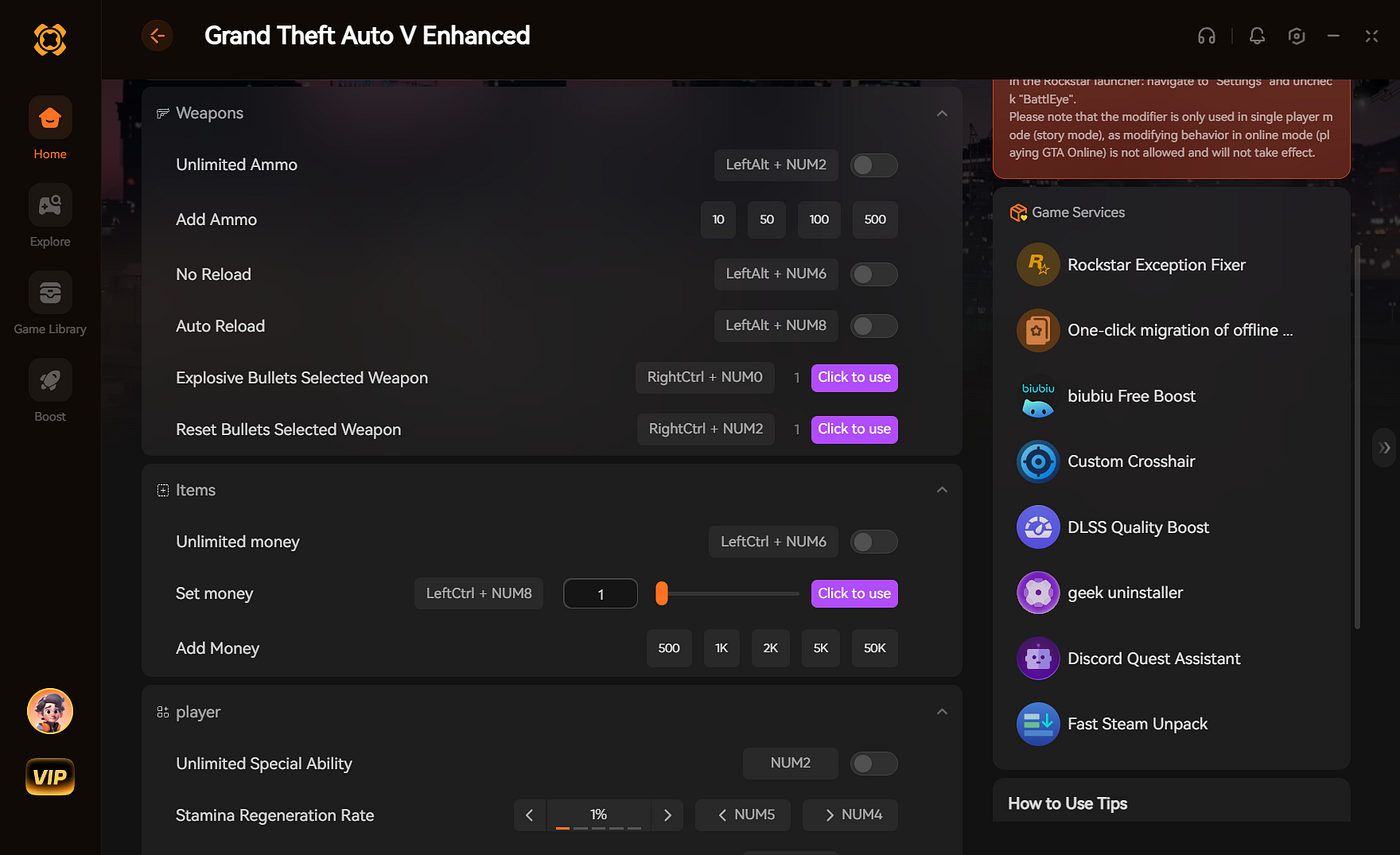
Lately, I’ve just been keeping XMODhub running during my solo dives. Most people think of memory editors strictly as “mod menus,” but I actually use it primarily as a background game service and Quality of Life (QoL) suite.

Image Source: XmodHub
Here is how I use it to curate a stable, player-first experience:
1. Rock-Solid Game Services (The Crash Preventer)
Before I even drop into the caves, the tool is doing the heavy lifting to ensure my run isn’t ruined by engine bugs.
- Win11 Stutter & Exception Fixes: It automatically stabilizes common C++/DX12 exceptions in real-time.
- Black Screen/Crash Detection Fix: If the engine hangs during a massive C4 explosion, this service kicks in to keep the process alive so I don’t lose my extraction data.
- AMD Graphics Driver Update / Stuck Detection: It ensures hardware miscommunications don’t leave my dwarf frozen in place while bugs chew on my armor.
2. The “Loot Vacuum” (Removing the Chores)
I absolutely refuse to use toggles like “God Mode,” “Infinite Ammo,” or “Kill All Enemies.” Bypassing the combat completely ruins the adrenaline rush of a rogue-lite. Instead, I fix the pacing.
- Area-of-Effect Absorption Monster: This is an absolute game-changer. Instead of mashing the interact button to pick up scattered resources in the dark, everything within a certain radius is automatically vacuumed into your inventory. You get to focus 100% of your attention on the gunplay and the movement.
3. Respecting Your Time (Bypassing the Grind)
The meta-progression in this game can feel like a slot machine. If I complete three grueling runs but the RNG refuses to drop the specific resources I need, I balance the scales myself.
- Targeted Resource Injection: I will manually add a small batch of Merit Points, Intel, or Scrip through the tool to compensate for an unfair solo wipe.
- XP Multiplier: I highly recommend setting this to a low 1.5x. It gently speeds up the leveling curve so you aren’t stuck grinding the exact same low-tier anomalies for days on end.
- Out-of-Combat Exploration: If I just want to practice maneuvering or test a new pathing strategy in the procedurally generated caves without being bothered, toggling on Fly Mode or using Save/Restore Player Position turns the terrifying Greyout into an explorable sandbox.
The Final Verdict: Your Cave, Your Rules
Deep Rock Galactic: Rogue Core is shaping up to be a legendary title. The atmosphere is unmatched, and the weapon crafting loop is deeply satisfying.
But there is a lingering stigma in the gaming community that adjusting single-player parameters makes you less of a “real” gamer. The truth is, as an adult, you have to adapt the media you consume to fit your actual life. You shouldn’t have to deal with outdated hex scripts, and you definitely shouldn’t accept losing your hard-earned progress to a random Win11 stutter.
By utilizing modern background tools to stabilize the engine and vacuum up the tedious loot, you can strip away the artificial padding and get straight to the glorious, terrifying chaos of the descent.
Smooth out your game, grab your jury-rigged plasma rifle, and I’ll see you in The Greyout.
메타데이터
- post_id
- 4fe05582d52a
- slug
- losing-drg-rogue-core-runs-to-crashes-here-is-how-to-stabilize-your-descent-4fe05582d52a
- url
- https://medium.com/@sitirukoyah22/losing-drg-rogue-core-runs-to-crashes-here-is-how-to-stabilize-your-descent-4fe05582d52a
- canonical_url
- https://medium.com/@sitirukoyah22/losing-drg-rogue-core-runs-to-crashes-here-is-how-to-stabilize-your-descent-4fe05582d52a
- author_url
- https://medium.com/@sitirukoyah22
- status
- ok
- fetched_at
- 2026-06-09 15:37:30