Scent Has a Dress Code
A man’s fragrance routine should change with the room. The office, the gym, date night, and nightlife do not ask for the same scent…
Scent Has a Dress Code
A man’s fragrance routine should change with the room. The office, the gym, date night, and nightlife do not ask for the same scent behavior.

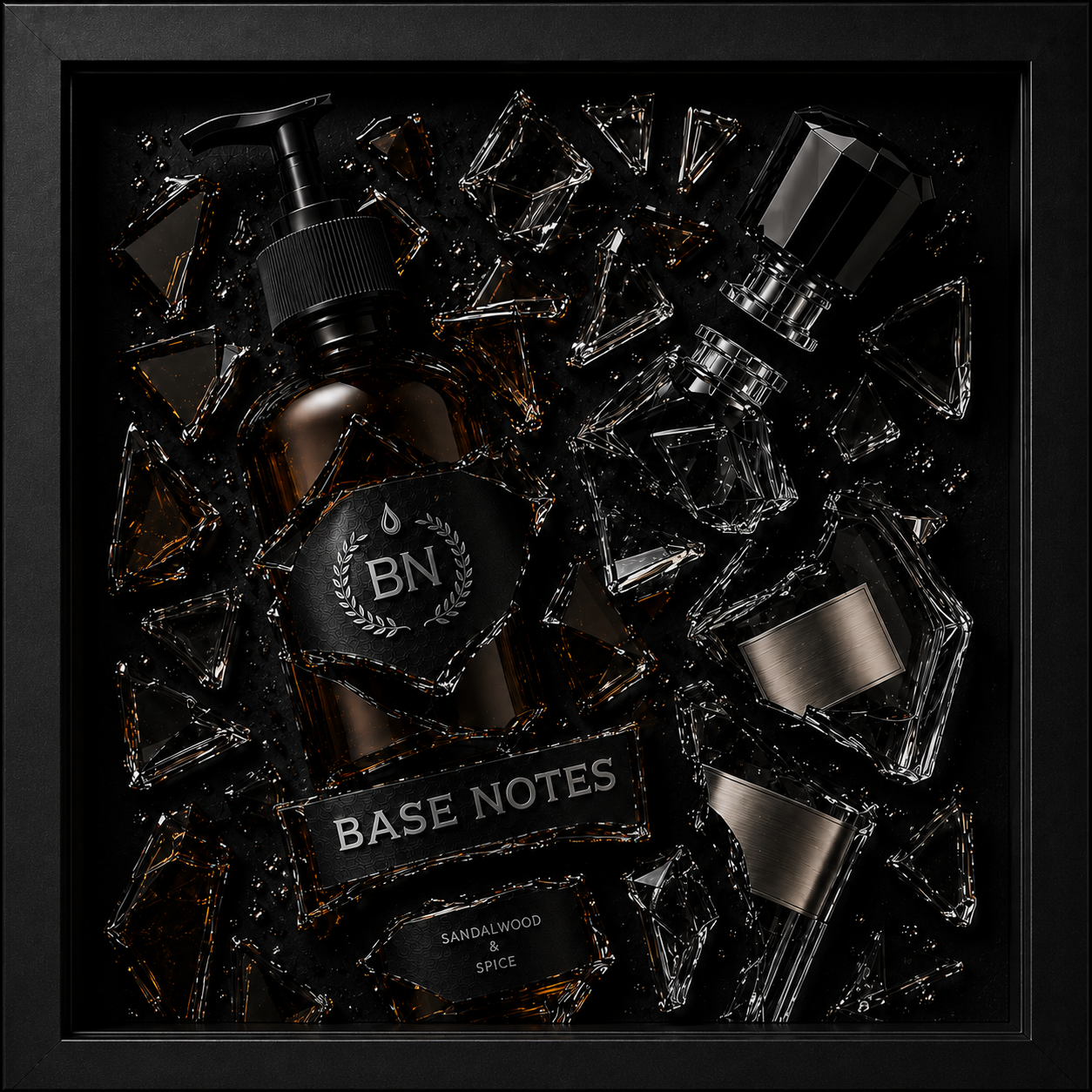
Image credit: Base Notes. The right scent is not only about the bottle; it is about the room you are walking into.
Scent Has a Dress Code
A man learns early that rooms have rules, even when no one says them out loud. A boardroom asks for a different shirt than a beach bar. A wedding asks for a different shoe than the gym. A first date asks for a different kind of attention than a morning commute. Clothing makes this obvious because clothing is visible, but scent follows the same logic. Fragrance has a dress code too.
Most men do not think about scent that way. They usually begin with the bottle. They ask which cologne is strongest, which one lasts longest, which one gets compliments, which one works for every season, and which one can become their signature. Those questions are common, but they are incomplete. The more useful question comes before the bottle: where is this scent going to live?
The room determines the scent.
That idea sounds simple, but it changes the entire way men should think about fragrance. Scent is not experienced in a vacuum. It enters shared air. It reacts to temperature, skin, clothing, proximity, time, and expectation. It can feel clean in one environment and intrusive in another. It can feel warm and inviting at dinner, then become too heavy in an office elevator the next morning. It can feel impressive in a late-night lounge and careless inside a conference room.
The same scent behavior is not appropriate everywhere because every room changes the meaning of the fragrance.
The office is the easiest place to understand this. Work environments are not built around personal atmosphere. They are shared spaces. People sit close, meet in enclosed rooms, ride elevators together, and spend hours near each other without choosing the level of intimacy that fragrance can create. In that setting, scent should not ask for too much attention. It should feel clean, prepared, and controlled at conversational distance.
An office fragrance routine should not announce the man before he arrives. It should not compete with the meeting. It should not linger aggressively after he leaves the room. The office rewards restraint because professionalism is partly the ability to understand shared space. A man who smells polished at work does not need to fill the room. He needs to respect it.
This is where Citrus Veil has a clear role in the Base Notes routine. Citrus Veil belongs naturally to clean daytime restraint. It supports a fresher scent direction that feels bright, crisp, and prepared without becoming heavy. For the office, warm weather, daytime movement, professional settings, and close shared spaces, a citrus-leaning base can help the routine feel controlled rather than excessive.
The goal is not to smell invisible. The goal is to smell appropriate.
That distinction matters because a man can be noticeable without being loud. A well-chosen scent can make someone seem prepared, polished, and intentional without becoming the main subject in the room. In professional settings, this is often the strongest kind of scent behavior: close enough to be part of the impression, restrained enough not to become a distraction.
The gym sits on the opposite side of the problem. The office punishes too much fragrance because people are trapped near it. The gym punishes too much fragrance because heat, sweat, and movement magnify everything. A scent that seems moderate at home can feel aggressive once the body warms up. A fragrance used to cover sweat rarely reads as refinement. It reads as a shortcut.
The gym does not need cologne as a mask. It needs cleanliness first.
That is why the scent decision around the gym should begin after the workout, not before it. A man should not try to perfume his way through poor hygiene or use fragrance as a cover for exertion. The better move is sequence: shower, reset the skin, apply a controlled layer, then decide whether the next room actually calls for cologne. The gym itself is not the destination for scent. The transition after the gym is.
This is where the Base Notes routine becomes practical instead of decorative. Cleanse. Layer. Spray. The order creates discipline. The shower resets the body. The layer prepares the skin and scent direction. The spray finishes the impression only if the next setting calls for it. A man leaving the gym for work does not need the same scent behavior as a man leaving the gym for dinner. The next room decides the routine.

Image credit: Base Notes. After the gym, the strongest scent decision is not more cologne; it is resetting the routine before the next room.
Date night changes the rules again. A date is not an office, and it is not a gym. It is more intimate, slower, and more dependent on proximity. The scent does not need to reach across the room because the setting itself is built around closeness. Dinner, conversation, a car ride, a walk, a low-lit table, or a quiet bar all give fragrance a different job. It should not broadcast. It should draw closer.
This is where many men overshoot. They assume that because date night matters, the fragrance should be stronger. The instinct is understandable. A man wants to make an impression. He wants to feel attractive, finished, and memorable. But the most effective date-night scent is rarely the one that overpowers the table. It is the one that becomes noticeable at the right distance.
Date-night scent should reward proximity.
Warmth matters here, but warmth still needs control. Woods, spice, amber, leather, and soft depth can all work well in intimate settings because they create atmosphere around the body. But when applied without restraint, those same directions can become heavy. The difference is not only the fragrance category. It is the way the routine is built.
Sandalwood & Spice belongs naturally in this part of the Base Notes system. It gives the base more warmth and texture. It suggests closeness without needing to shout. It can support a fragrance routine that feels more evening-appropriate, more tactile, and more personal than a clean daytime base. Where Citrus Veil speaks to freshness and restraint, Sandalwood & Spice speaks to warmth and proximity.
That does not mean a man should become a different person at night. It means the same man can adjust the emotional temperature of his scent. The same way he might exchange a work shirt for a darker jacket, he can move from crisp daytime freshness into something warmer and more intimate. This is not reinvention. It is occasion awareness.
Nightlife is different again. A late-night lounge, rooftop bar, private event, hotel bar, or dark social room has more atmosphere than the office and more distance than a dinner table. The lighting is lower. Music, movement, and background scent may already be present. Clothing often becomes darker and sharper. The room may be able to handle more depth than daytime settings.
But nightlife still does not excuse carelessness.
A man can wear a deeper scent at night without turning it into a cloud. He can choose amber, leather, woods, or darker warmth without making the room endure him. The point is not to dominate the air. The point is to match the weight of the environment. A scent that belongs in nightlife should feel composed inside the room, not desperate to overpower it.
This is where Woody Amber & Leather has its strongest use case. It supports a darker, more grounded scent direction. It fits low light, sharper clothing, colder weather, leather, evening settings, and rooms where a little more depth makes sense. But its role is still controlled. It should help the man belong to the atmosphere, not compete with it.
The difference between date night and nightlife is distance. Date night usually rewards closeness. Nightlife often allows a little more presence. The office asks for restraint. The gym asks for reset. Each room changes the job of the scent.
That is why “signature scent” can be misunderstood. The idea sounds refined: one man, one scent, one identity. But taken too literally, it can make a man rigid. He may keep wearing the same scent behavior everywhere, even when the room changes. A true signature does not have to mean one bottle for every situation. It can mean a consistent standard of control across different settings.
The signature is not only what he wears.
The signature is how well he reads the room.

Image credit: Base Notes. Date-night scent should reward proximity, not overpower the table before the conversation begins.
The science of scent supports this broader idea that context matters. Odor is closely connected to emotion, memory, and perception. A scent can be tied to a person, a place, or a moment with unusual force. This is part of why fragrance feels so intimate compared with other grooming choices. A shirt is seen. A watch is noticed. A scent is experienced in the air between people.
That air is never neutral. It belongs to the room.
Research on sensory perception and marketing has shown that sensory cues can influence judgment, mood, and behavior. Odor research has also described strong links between scent and emotional processing. In practical terms, fragrance is not merely a private preference. It is a cue other people experience in a particular environment. The same cue can be read differently depending on the setting.
A fresh scent in an office may read as clean and prepared. A heavy scent in that same office may read as careless. A warm scent at dinner may feel intimate. The same warmth at the gym may feel misplaced. A darker leather or amber direction in a lounge may feel refined. In a small morning meeting, it may feel like too much of the wrong room entered too early.
This is why scent control is not only about the amount sprayed. It is also about choosing the right direction before the spray happens. The Base Notes framework gives men a way to think about that decision without turning grooming into a complicated ritual. Citrus Veil, Sandalwood & Spice, and Woody Amber & Leather are not just scent names. They are different directions for different kinds of presence.
Citrus Veil supports the man who needs daytime clarity. It belongs to the office, warm weather, clean shirts, early meetings, travel mornings, and professional spaces where freshness should feel polished rather than aggressive. It says prepared, not loud.
Sandalwood & Spice supports the man entering a closer setting. It belongs to date night, dinner, evening conversation, cool weather, and moments where warmth matters more than brightness. It says considered, not forced.
Woody Amber & Leather supports the man moving into deeper atmosphere. It belongs to night, lounges, darker clothing, late dinners, low light, and environments where the scent can have more weight without losing control. It says grounded, not excessive.
These scent directions do not replace cologne. They prepare the base beneath it.
That point is central to Base Notes. A man does not have to abandon fragrance to improve his scent routine. He has to stop treating cologne as the entire routine. What happens before the spray shapes what happens after it. The body wash, the layer, the skin, the environment, and the final fragrance all work together whether he plans them or not.
If he does not plan them, the room still judges the result.
This is where occasion-based grooming becomes a sign of maturity. A man who understands scent does not force one fragrance behavior into every setting. He does not ask the room to adapt to him. He adjusts the routine to the room, the same way he adjusts clothing, tone, volume, and timing. That adjustment is not weakness. It is refinement.
A man does not lose identity by adapting to context. He proves taste by doing it well.

Image credit: Base Notes. Nightlife can carry more depth, but control still matters more than volume.
The practical mistake is asking one product to answer every room. Men often want a single solution because simplicity feels efficient. But scent is not only a matter of ownership. It is a matter of use. A man may own a beautiful fragrance and still misuse it by wearing it in the wrong room, at the wrong volume, at the wrong time, or over the wrong base.
The better approach is not a crowded shelf. It is a better framework.
Cleanse. Layer. Spray.
The sequence gives structure to occasion. Cleanse resets the body. Layer sets the direction. Spray finishes the impression. Once a man understands this order, he can make better decisions without overcomplicating the routine. The office may call for Citrus Veil and restraint. Date night may call for Sandalwood & Spice and warmth. Nightlife may call for Woody Amber & Leather and depth. After the gym, the first decision may not be cologne at all. It may be cleansing properly before building the scent back up.
This is the difference between wearing fragrance and understanding scent. Wearing fragrance is easy. Understanding scent requires context. It requires knowing that projection, sweetness, freshness, warmth, and depth do not mean the same thing everywhere. It requires knowing when scent should sit close, when it can open up, and when it should stay quiet.
A polished man does not wear the same scent behavior everywhere any more than he wears the same outfit everywhere. He reads the room, then chooses. That choice is not only about what he likes. It is about what the moment calls for.
The strongest impression is rarely accidental. It is chosen.
Fragrance starts before the spray. But it also starts before the room. It starts in the decision to prepare for where the man is going, not simply what he wants to smell like in isolation. The office, the gym, date night, and nightlife each ask for something different. The man who understands that does not need louder scent. He needs better control.
Layer first. Spray second.
Built Beneath Your Fragrance.

Image credit: Base Notes. Built Beneath Your Fragrance.
References
Herz, R. S. (2004). A naturalistic analysis of autobiographical memories triggered by olfactory, visual and auditory stimuli. Chemical Senses, 29(3), 217–224. DOI: 10.1093/chemse/bjh025
Kadohisa, M. (2013). Effects of odor on emotion, with implications. Frontiers in Systems Neuroscience, 7, 66. DOI: 10.3389/fnsys.2013.00066
Krishna, A. (2012). An integrative review of sensory marketing: Engaging the senses to affect perception, judgment and behavior. Journal of Consumer Psychology, 22(3), 332–351. DOI: 10.1016/j.jcps.2011.08.003
Lenochová, P., Vohnoutová, P., Roberts, S. C., Oberzaucher, E., Grammer, K., & Havlíček, J. (2012). Psychology of fragrance use: Perception of individual odor and perfume blends reveals a mechanism for idiosyncratic effects on fragrance choice. PLOS ONE, 7(3), e33810. DOI: 10.1371/journal.pone.0033810
Spence, C. (2021). Scent and the city: The role of smell in urban design. Cognitive Research: Principles and Implications, 6, 24. DOI: 10.1186/s41235–021–00289-y
메타데이터
- post_id
- 4ff0e4f53b29
- slug
- scent-has-a-dress-code-4ff0e4f53b29
- url
- https://medium.com/@Basenoteslotion/scent-has-a-dress-code-4ff0e4f53b29
- canonical_url
- https://medium.com/@Basenoteslotion/scent-has-a-dress-code-4ff0e4f53b29
- author_url
- https://medium.com/@Basenoteslotion
- status
- ok
- fetched_at
- 2026-08-28 16:51:06