The Next AI Race Isn’t Algorithms, It’s Memory
Why the economics of storage and retrieval — not model size — will define the future of AI Assistants.
The Next AI Race Isn’t Algorithms, It’s Memory
Why the economics of storage and retrieval — not model size — will define the future of AI Assistants.
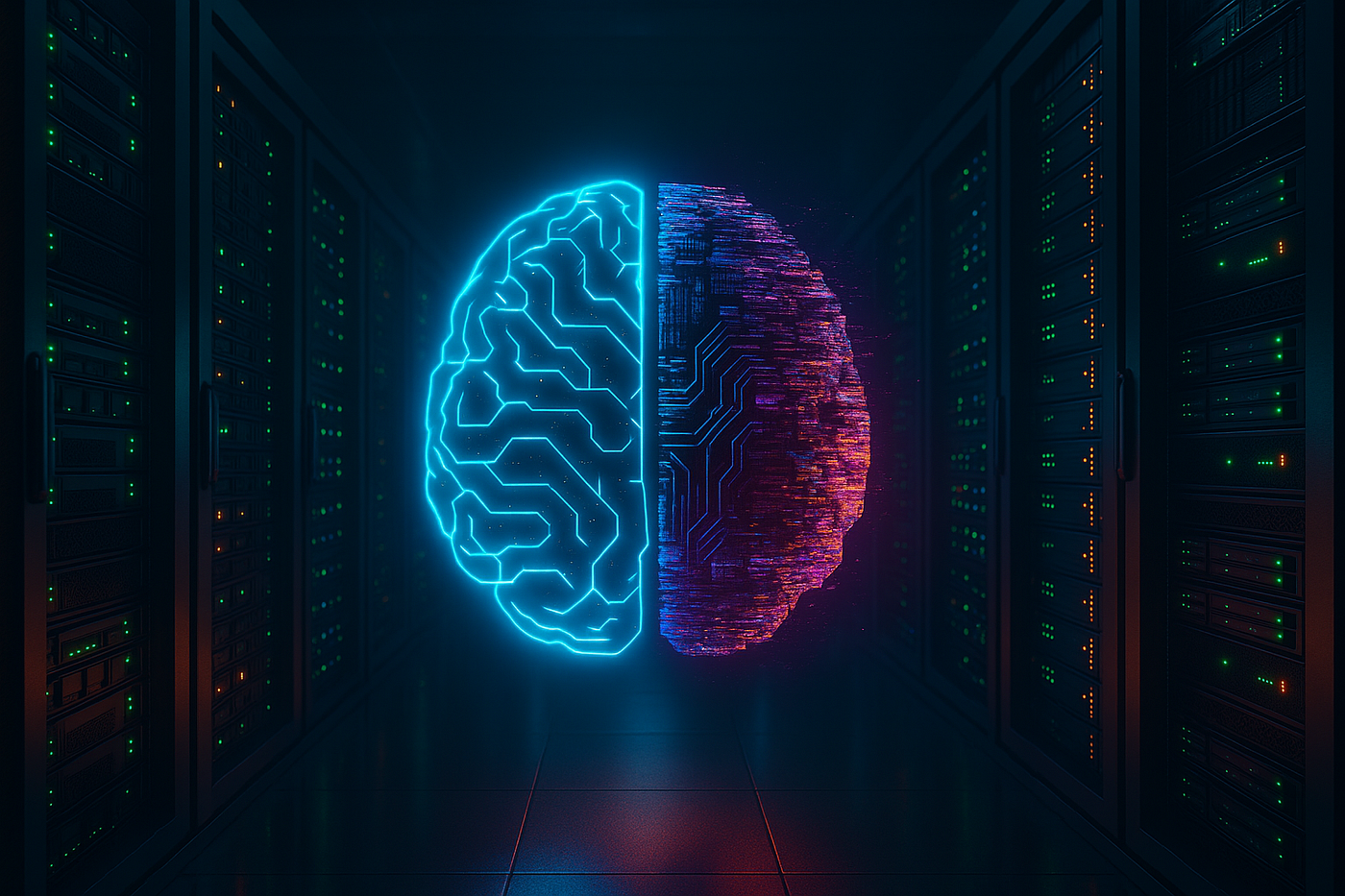
For all the hype about AI, it’s easy to think of AI assistants like ChatGPT as infinite in intelligence. Ask it anything, and it responds instantly with something smart, useful, or at least provocative. But beneath that fluid surface, AI has one glaring limitation: memory.
The paradox is obvious once you’ve spent serious time with one of these systems. ChatGPT feels like a second brain — but a second brain with amnesia. It remembers just enough context to sustain a conversation, but not a lifetime of them. For many users, that’s fine. For anyone who imagines AI as a permanent cognitive partner, it’s a structural frustration.
And the reason isn’t technical, it’s economic.
Memory Limits as a Design Constraint
OpenAI — and every other AI lab — has to cap persistent memory. Not because they can’t store everything, but because doing so would break the economics of the system.
- Storage cost: Keeping billions of users’ full conversation histories, indexed and instantly retrievable, would explode storage needs and retrieval latency.
- Processing cost: Even if the data is stored, every query would need more compute to search, rank and contextualize. That translates directly into higher per-prompt costs.
- User privacy & governance: More memory means more risk and more complex controls, which again adds cost.
These aren’t abstract constraints. They’re guardrails, imposed because the economics of memory don’t yet scale.
Why Data Economics Matter More Than Model Size
The media still frames AI progress as a story of model size: GPT-3 gave way to GPT-4, and now the hype cycle churns toward GPT-5 and beyond. Bigger models, more parameters, higher IQ. But the real bottleneck won’t be model architecture. It will be the economics of memory.
Imagine two AI assistants: one that’s bigger but forgetful, and one that’s smaller but remembers everything you’ve ever told it. Which is more useful? For most people, the answer is obvious. A brain that forgets can’t really be a brain at all.
This is why the next curve in AI innovation won’t be about stacking more layers onto a neural net. It will be about slashing the cost of storage and retrieval. The metric that matters isn’t parameters per dollar — it’s memories per dollar.
The Environmental Constraint
There’s another angle the mainstream rarely mentions yet it may prove the hardest limit of all: energy.
Data centers already account for around 2% of global electricity use, and AI is accelerating that demand. Storage isn’t passive — it has to be powered, cooled, secured and managed. When you multiply that by the prospect of lifelong memory for billions of users, the resource strain looks staggering.
Cooling systems suck up water. Communities push back against new hyperscale data centers. Energy efficiency becomes not just a nice-to-have, but the limiting factor in AI adoption. Unless the energy cost per query falls dramatically, expanding AI memory could hit ecological and political walls faster than technical ones.
This isn’t a problem you solve with a new model release. It’s a problem of physics and infrastructure.
What Breakthroughs Could Unlock It
If we want AI assistants that remember everything, the breakthroughs won’t look like the flashy demos we’re used to. They’ll look like infrastructure revolutions:
- New storage media: DNA-based storage, optical discs that last a century, phase-change memory. All promising cheaper, denser and more sustainable ways to hold data.
- Compute efficiency: Neuromorphic chips and in-memory computing that cut the energy cost of retrieval.
- Compression and summarization: Storing distilled representations of conversations — embeddings instead of raw logs — that still allow retrieval without eating petabytes.
None of these are headline grabbers. But they’re the foundation of truly persistent AI assistants.
The Exponential Unlock of Unlimited Memory
Now imagine the flip side. What happens if we solve the economics of memory?
Suddenly, your AI assistant recalls every conversation you’ve ever had with it, over years or decades. It knows your history, your voice, your unfinished ideas, your recurring patterns. It doesn’t just respond in the moment — it grows with you.
Scale that up further: trillions of interaction threads across billions of users, forming a global collective memory. Patterns of human knowledge, preferences and creativity, surfaced not from static training data but from living memory.
That leap would dwarf the jump from GPT-4 to GPT-5. It’s not about width. It’s about depth.
We’ve been trained to think of AI progress as a race for bigger brains. But the truth is simpler and more profound: brains are only as useful as their memory.
The next frontier isn’t a larger model. It’s AI assistants that remember everything — affordably, sustainably and safely.
When that shift happens, AI won’t just feel like a second brain. It will finally live up to the metaphor.
메타데이터
- post_id
- 4ff445bdaf65
- slug
- the-next-ai-race-isnt-algorithms-it-s-memory-4ff445bdaf65
- url
- https://medium.com/@agault/the-next-ai-race-isnt-algorithms-it-s-memory-4ff445bdaf65
- canonical_url
- https://medium.com/@agault/the-next-ai-race-isnt-algorithms-it-s-memory-4ff445bdaf65
- author_url
- https://medium.com/@agault
- status
- ok
- fetched_at
- 2026-06-10 18:44:10