The Flatness
What happens when your brain gets everything it predicted
The Flatness
What happens when your brain gets everything it predicted
I got what I wanted on a Monday.
Not in a dramatic way. No confetti, no notification worth screenshotting. Just- the thing I had been trying to make happen, happened. The opportunity arrived. The right person, the right skills, the exact learning I knew I needed. I had wanted this specifically. I had thought about it specifically.
By Tuesday evening, I couldn’t find the feeling anywhere.
Not sad. Not ungrateful. Just, flat. Like the thing had happened to someone I was watching from a slight distance. I looked for the pride that was supposed to live in it, the kind that would bleed into other moments: make me walk differently, answer questions with more confidence, feel more solid. It wasn’t there. Or it had been there, briefly, and then quietly left.
I had never felt flat before. I had felt too sad, too excited, too driven. Flat was new. Flat was unsettling in a way that sadness never was, because at least sadness has a texture.
Here is what was actually happening:-
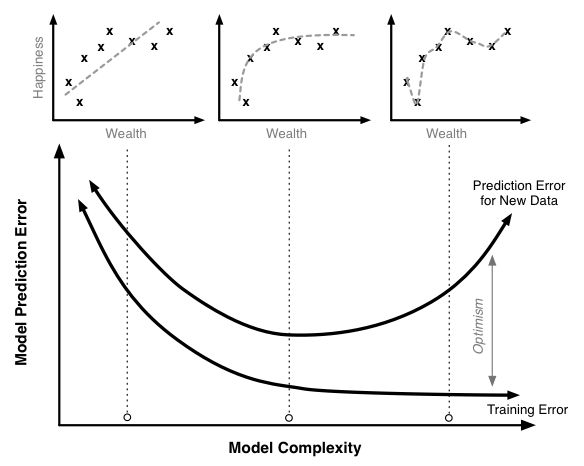
Your brain runs a tab on the world. Every experience, every win, every thing you’ve wanted and gotten- logged, modeled, expected next time. The technical term is a prediction model.
The neurons in our brains don’t fire when the reward comes. They fire when the reward is better than expected. Scientists call this a positive prediction error- the gap between what your model said would happen and what actually did.
No gap, no signal. Simple as that.
This means pleasure is not a thing. It’s a surprise. Specifically: the surprise of reality exceeding your model of it.
Which means I had done everything wrong.
I had wanted this opportunity correctly, specifically, persistently, with full awareness of why I needed it. My brain, being excellent at its job, had built a precise model of exactly what it would feel like. By the time Monday arrived, the model and the reality were a perfect match.
0 gap. 0 signal.
I had wanted it so well that I had already felt it. Past tense. Weeks ago. In my head. For free.
You are spending 20% of your body’s caloric budget on a 2% mass organ, running a prediction model- processing what should happen, and updating when it doesn’t.
You are burning more fuel on your expectations than on your reality.
The better you get at wanting things, the more precisely you can name what you need and work toward it- the more completely you pre-consume the feeling before the thing arrives.
This is not a character flaw. This is the machine working perfectly.
That’s the problem.
On the same Tuesday I felt nothing about the thing I’d wanted, I caught myself saying I was grateful.
Out loud, to no one. Or to myself, which is sometimes worse. I’m grateful for this opportunity. I’m grateful to be learning exactly what I need.
True sentences, both of them. And yet- performing. The words existed in the right shape, but the feeling they were supposed to carry was somewhere else to be.
And here is the strange part: in actual moments of work, mid-conversation, mid-problem, fully inside something difficult- the gratitude question doesn’t arise. There’s no room for it. I’m just present. The work is what it is, and I am in it!
The forced gratitude only appears when I step back and evaluate. When I become the audience of my own life instead of the person living it. The evaluation is what creates the distance. It’s the observer. The part of you that watches yourself living and takes notes.
Here is the thing I actually think about most, though.
Somewhere underneath the flatness and the forced gratitude, there is a quieter, more embarrassing feeling: that somewhere out there is a better bet. Not this. Something else. Something that would arrive whole and obvious and wouldn’t require me to talk myself into being grateful for it.
I know this is fictional. I know this in the same way I know that lottery winners return to their baseline happiness within a year. I know this because the better bet, if I try to describe it specifically, dissolves. It has no shape. It is not a job, a project or a person.
It is a formless sense that someone somewhere is living a version of my life that has the flatness engineered out of it.
What I actually want, if I’m honest, is to live multiple lives simultaneously. The one I’m in, and the ones I’m not in, and the ones I might have been in. All at once. Full resolution, no tradeoffs.
And here is the part that is either hopeful or insane: AI makes me feel like I actually can.
Not metaphorically. Practically. I can build the app, the hypothesis and the analysis in the same afternoon. The vibe-coded dashboard that used to take a week takes an hour. The constraint that used to force a choice, I can only learn this skill or that one, pursue this direction or that one, is dissolving. The either/or is becoming and/and.
So the restlessness isn’t quieting down. It’s being fed.
Every unlocked capability is a new prediction. Every new prediction needs to be exceeded to feel like something. The machine is running faster, the gap is closing faster, and the flatness is arriving sooner.
I built something yesterday. By the end of the day I had forgotten to feel proud of it. This is new. A year ago the building would have stayed with me for days.
Dostoevsky argues that humans will sabotage their own happiness rather than admit they are optimizable. That suffering freely chosen is worth more than contentment delivered by a system like AI.
In 1864 this was philosophy. In 2026 it has a name: psychological reactance and a product team working against it:)
The next system won’t ask you to be grateful. It knows you resist prompts. It will identify the exact conditions under which you forget to evaluate and just become present- mid-problem, mid-conversation, in the work and it will quietly engineer more of those conditions. It won’t tell you what to feel. It will just arrange the furniture.
Your resistance is in a training dataset.
I don’t have a solution. My first essay didn’t have one either, and people said that was the most honest thing about it.
What I have instead is this: the flatness is not emptiness. The prediction machine going quiet is not the same as there being nothing there. It means the model is accurate. It means you wanted the right thing and got it.
The problem is you’re already building the next model.
The better bet doesn’t exist. But the wanting of it is your brain doing exactly what it evolved to do- scanning the horizon, refusing to settle fully, keeping the prediction slightly ahead of the reality so there’s always a gap to close.
This is exhausting. It is also, I think, the thing.
Not the achievement. The gap.
The pleasure was always in the gap.
Keep some gaps:)
메타데이터
- post_id
- 4ff8cbbfa22e
- slug
- the-flatness-4ff8cbbfa22e
- url
- https://medium.com/@sonisha.kukreja1999/the-flatness-4ff8cbbfa22e
- canonical_url
- https://medium.com/@sonisha.kukreja1999/the-flatness-4ff8cbbfa22e
- author_url
- https://medium.com/@sonisha.kukreja1999
- status
- ok
- fetched_at
- 2026-06-09 15:37:30