The VLEO Revolution in Next-Generation NTN: Architectural Paradigms and Deployment Horizons
Abstract
The VLEO Revolution in Next-Generation NTN: Architectural Paradigms and Deployment Horizons
Abstract
The standardization of Non-Terrestrial Networks (NTN) in 3GPP Releases 17 and 18 marked a paradigm shift in global telecommunications, validating spaceborne nodes as viable components of the mainstream cellular ecosystem. However, legacy Low Earth Orbit (LEO) networks operating above 500 km face persistent physical limitations, primarily dominated by high free-space path loss and Doppler scaling, which complicate direct-to-device (D2D) link budgets. This paper explores the architectural emergence of Very Low Earth Orbit (VLEO) sub-layers (150–450 km) within the 6G NTN framework. We analyze the core communication dynamics, design trade-offs, aerodynamic lifespans, and orbital synchronization mechanics required to exploit VLEO’s profound latency and signal strength benefits, presenting a comprehensive outlook on this next frontier of space-ground integration.
I. Introduction
The initial phases of Non-Terrestrial Networks (NTN) established a reliable blueprint for extending coverage to unserved regions. Yet, as the industry transitions toward 6G system architectures, the limitations of traditional LEO constellations have become pronounced. Deploying multi-thousand-satellite mega-constellations at 600–1,200 km incurs high path loss, demanding highly directional, bulky tracking antennas on user equipment (UE) — an engineering barrier for standard consumer smartphones.
To make true, mass-market direct-to-device (D2D) connectivity seamless, the industry must look lower. Very Low Earth Orbit (VLEO), representing the airspace from 150 km to roughly 450 km, offers an environment where the laws of RF propagation shift dramatically in our favor. By closing the physical distance to the user, VLEO bridges the gap between terrestrial performance and space-based ubiquity.
However, this regime introduces a fundamental engineering paradox: the atmospheric density, though negligible at higher bands, creates continuous structural drag that threatens satellite longevity. This article details the specific architectural adjustments, aerodynamic innovations, and communication protocols defining the VLEO era.
II. The Physics of Proximity: Why VLEO Matters
Operating in VLEO alters the primary variables of the link budget equation, lowering power thresholds for both space and ground infrastructure.
A. Quantifying the Link Budget Advantage
Free-Space Path Loss (FSPL) scales directly with the square of the distance d and the operating frequency f:
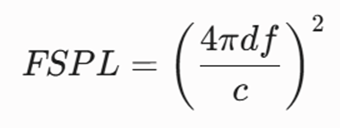
Where c represents the speed of light. Comparing a legacy LEO satellite operating at d1 = 1200 km to a VLEO platform at d2 = 300 km reveals a distance ratio of 4:1. Because of the inverse-square law, this spatial reduction yields an approximate 12 dB improvement in signal strength.
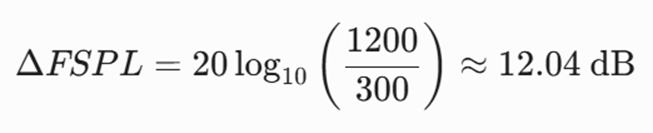
This 12 dB margin changes the hardware economics of satellite design. Instead of deploying complex, power-hungry phased arrays to penetrate the atmosphere, a VLEO node can maintain the same link margin using a significantly smaller aperture and reduced power output. On the uplink side, standard unmodified 3GPP handheld devices can close the link to a VLEO satellite without draining their batteries or exceeding safe RF exposure limits.
B. Latency Parity with Terrestrial Backhaul
For time-critical 6G vertical industries — such as autonomous shipping, distributed grid routing, and decentralized cloud switching — propagation delay remains a strict bottleneck. While a Geostationary Earth Orbit (GEO) loop introduces over 250 ms of latency, a VLEO link operating at 300 km achieves a one-way physical time-of-flight of just 1 ms. When factoring in processing overhead, VLEO round-trip time (RTT) matches or beats long-haul terrestrial fiber, enabling real-time edge computing directly over space infrastructure.
III. Architectural Paradigms of VLEO Payloads
Deploying a functional telecom layer at the edge of the atmosphere requires rethinking traditional satellite chassis and payload topologies.
A. Regenerative Architecture vs. Transparent Pipes
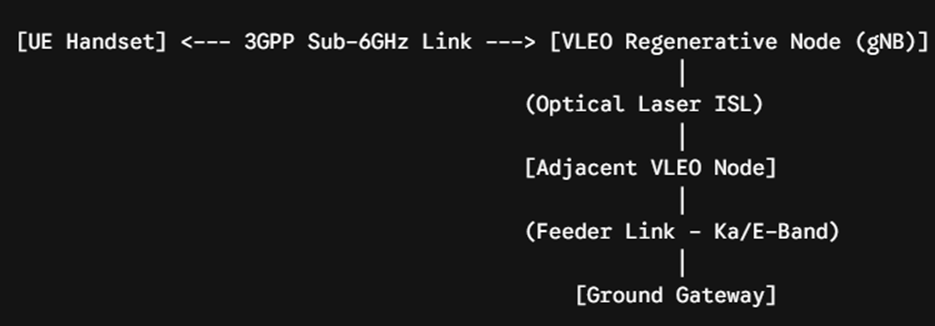
Early LEO deployments relied heavily on transparent (bent-pipe) transponders due to weight and thermal constraints. For VLEO, the industry is shifting decisively toward regenerative payloads where the base station (gNB) functionalities are fully processed on board.
- Onboard Processing (OBP): By integrating gNB physical and MAC layer processing into the satellite, the user link can terminate directly in orbit. This eliminates the necessity of having a ground gateway permanently within the satellite’s immediate field of view.
- Inter-Satellite Links (ISLs): Operating in ultra-dense configurations, VLEO nodes utilize coherent optical laser ISLs to route data horizontally through the constellation layer, bypassing ground hops altogether to optimize the end-to-end network path.
B. Coping with the Aerodynamic Environment
The defining characteristic of VLEO is the presence of residual atmospheric gases, including highly reactive atomic oxygen (AO). This creates a hostile envelope that causes ongoing structural drag and material degradation.
- Air-Breathing Electric Propulsion (ABEP): To avoid carrying heavy, finite chemical propellants to maintain altitude, modern VLEO platforms use intake scoops to capture ambient atmospheric particles. These particles are compressed, ionized, and accelerated using onboard solar power, creating a continuous, self-sustaining propulsion loop that compensates for drag.
- Sleek, Low-Drag Forms: VLEO satellites move away from the traditional boxy or sprawling solar panel layouts of higher orbits. They adopt razor-thin, highly aerodynamic profiles, stacking flat and aligning their cross-sections directly with the velocity vector to minimize the atmospheric footprint.
IV. Communication Dynamics and Protocol Adaptations
The performance benefits of VLEO introduce substantial synchronization challenges at the network and physical layers due to the fast relative motion of the satellites.
A. High Doppler Shifts and Waveform Pre-Compensation
A satellite orbiting at 300 km must travel at a higher speed (~ 7.72 km/s) than a satellite at 1,200 km to counteract gravitational pull. This rapid motion causes severe Doppler shifts (fD), expressed as:
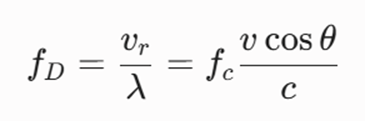
Where vr is the relative radial velocity between the satellite and the terminal, fc is the carrier frequency, and theta (ϑ) is the angle of arrival.
For a VLEO platform utilizing the 3GPP n256 band (~2 GHz), the maximum Doppler shift can surpass +- 50 kHz with a high rate of change (Doppler rate). If left unmanaged, this frequency drift degrades Orthogonal Frequency Division Multiplexing (OFDM) subcarrier orthogonality, causing severe inter-carrier interference (ICI).
Consequently, next-generation VLEO architectures deploy dynamic, closed-loop time and frequency pre-compensation algorithms at the satellite gateway and the device layer, using Ephemeris data to pre-shift the waveform before transmission.
B. Ultra-Fast Mobility and Handover Management
Because a VLEO satellite flies low and fast, its footprint on the Earth’s surface is small, and its visibility window for a stationary ground user is compressed to roughly 90–120 seconds.
To prevent call drops and packet loss during these rapid changes, networks must use predictive, non-measurement-based handovers. Utilizing the deterministic orbital paths of the constellation, the core network can proactively prepare target beams and adjacent satellites for incoming user sessions, allowing for seamless handovers without the signaling overhead typical of terrestrial networks.
V. Environmental Sustainability and Self-Cleaning Orbits
Beyond performance metrics, VLEO offers a clean alternative to the growing problem of space debris. The traditional LEO bands are increasingly cluttered, and a dead satellite at 1,000 km can remain an orbital hazard for centuries.
In contrast, VLEO has an inherent, natural safety mechanism. If a VLEO satellite suffers a critical system failure or runs out of power, the ambient atmospheric drag pulls it downward automatically. Within days or weeks, the spacecraft undergoes complete, passive thermal disintegration in the upper atmosphere. This self-cleaning property prevents orbital crowding, ensuring long-term sustainability for global network operations.
VI. Conclusion
The integration of VLEO into the non-terrestrial network architecture represents a fundamental evolution in global connectivity. By dropping the orbital plane down to the edge of the atmosphere, VLEO addresses the long-standing path loss and latency barriers of satellite communication. While the resulting aerodynamic drag and rapid handover windows require complex engineering solutions, the payoff is clear: a highly efficient, ultra-low-latency space network that can connect directly to standard consumer electronics, unlocking a truly unified, global 6G ecosystem.
References
- [1] X. Luo, H.-H. Chen, and Q. Guo, “LEO/VLEO Satellite Communications in 6G and Beyond Networks — Technologies, Applications, and Challenges,” IEEE Network, vol. 38, no. 5, pp. 273–285, Sept. 2024.
- [2] Next G Alliance, “Technology Roadmap Working Group: NTN Panel Report on 6G Evolution,” Alliance for Telecommunications Industry Solutions (ATIS), Tech. Rep., Feb. 2026.
- [3] S. Liu, Z. Gao, and B. Ottersten, “LEO Satellite Constellations for 5G and Beyond: How Will They Reshape Vertical Domains?” IEEE Communications Magazine, vol. 59, no. 6, pp. 75–81, June 2021.
- [4] M. Centenaro, C. E. Costa, F. Granelli, C. Sacchi, and L. Vangelista, “A survey on technologies standards and open challenges in satellite IoT,” IEEE Communications Surveys & Tutorials, vol. 23, no. 3, pp. 1693–1720, 3rd Quart. 2021.
- [5] G. Chen, S. Wu, Y. Deng, J. Jiao, and Q. Zhang, “VLEO Satellite Constellation Design for Regional Coverage of Aviation and Marine Users,” IEEE Transactions on Wireless Communications, vol. 25, no. 4, pp. 1102–1115, May 2026.
- [6] P. Li, D. K. Borah, E. K. Tameh, and A. R. Nix, “Turbo Codes, LDPC Codes, and Polar Codes for Modern Satellite Communication Systems,” IEEE Communications Magazine, vol. 60, no. 12, pp. 75–82, Dec. 2022.
메타데이터
- post_id
- 5013da798a14
- slug
- the-vleo-revolution-in-next-generation-ntn-architectural-paradigms-and-deployment-horizons-5013da798a14
- url
- https://medium.com/@manish.uniyal19/the-vleo-revolution-in-next-generation-ntn-architectural-paradigms-and-deployment-horizons-5013da798a14
- canonical_url
- https://medium.com/@manish.uniyal19/the-vleo-revolution-in-next-generation-ntn-architectural-paradigms-and-deployment-horizons-5013da798a14
- author_url
- https://medium.com/@manish.uniyal19
- status
- ok
- fetched_at
- 2026-06-09 18:22:14




