How Two Men And Booze Paved Way For The Legendary Lexus LFA
Uncover the captivating tale of Japan’s automotive transformation, as a chance bar conversation leads to the creation of the legendary…
How Two Men And Booze Paved Way For The Legendary Lexus LFA
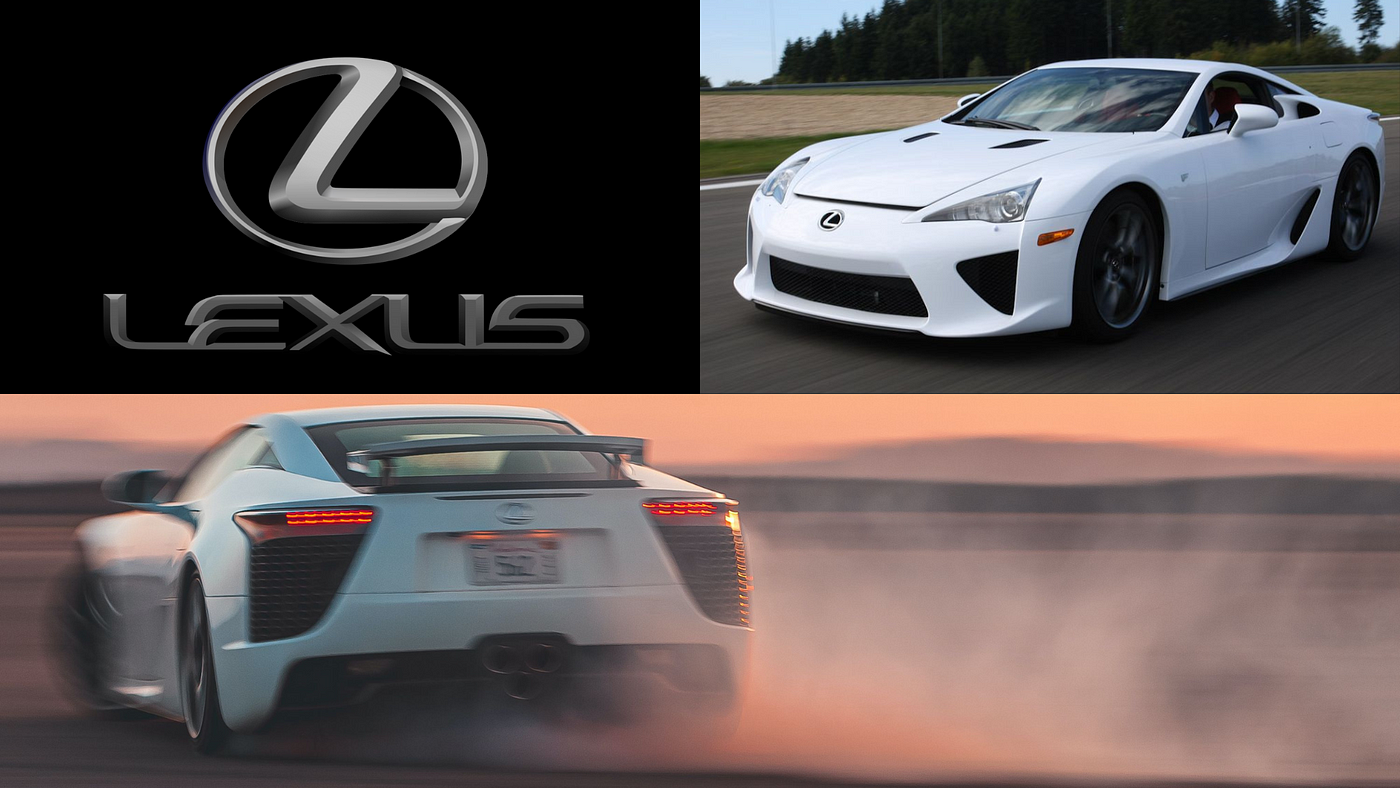
Japan, the land of rising sun, is known for their landscapes, curvy mountain roads, anime, and cars. Although Japan is now known to make some of the most legendary cars in the automotive space, it was not the case before. Brands like Toyota, Nissan, and Honda were making great cars in the likes of Supra, Skyline GT-R, and NSX’s but in 2000’s each one of them were going obsolete and could not compete with the Europeans.
Japan was in a desperate need to make something that revolutionized their name and since Toyota had done that previously with their 2000 GT, they took the matter in their own hands to Japanese moving art. This is the story of shifting the perspective from bring and mundane to something that provides the rush of adrenaline like never before. With the help of two dreamers, sharpened minds, and a prodigal son, it is the tale of Japan’s greatest supercar, the Lexus LFA.
How Booze created the idea of the LFA

We have found evidence that hunters and gatherers were making alcohol way before agriculture was a thing. Although it might not be good for your health, booze is a reason we have the Nascar, refrigerator, our current civilization, and the Lexus LFA.
In the late 90’s at a noisy bar in Hokkaido Japan, two quite gentleman sat across each other named Haruhiko Tanahashi one of Toyota’s prolific engineer responsible for making Crown and Celica series of cars, and on the other side his boss Tetsuo Hattori, who was top Toyota engineer at that time. The air in that Izakaya (informal Japanese bar) was tense, however a few rounds of Saké (Japanese rice wine) helped ease the tension and let Tanashi speak about his dream of making a sports car.
The dream of making the ultimate sportscar, a machine that does not get obsolete and stand the test of time, a machine that not only Toyota but Japan as a whole can be proud of. At first Tanahashi thought that the conversation would end like any other drunken exchange of words, but the thought made Hatorri intrigued and he ordered more beer and said why not, and the plan for the LFA got laid out on a piece of napkin.
One month after the conversation, Tanahashi was eager to start as soon as possible on his dream project before the upper management’s feet got cold.
Project P280

At the Shibetsu Proving Grounds, which is a secret facility tucked away in a quiet corner of Japan to test their upcoming endeavors. Tanahashi now became the head of this coveted attempt that was known to few as the Project P280.
Initially the Project P280 was a mission to create an open top V6 powered car to replace the mk4 Supra and compete with the newly unveiled Honda S2000. One morning when the engineers at Toyota were testing the NSX and Nissan 300Z at the facility to develop their next sports car for the masses. During the testing Tanahashi got new instructions from his boss while talking about the possibility of the balanced drop top sports car.
The man said that baby sports cars are bad and pointed towards making a grown up sports car. By the word he asked Tanahashi to dream bigger, a car that does not only look in the showroom but something that can spend its aging life stared at in a museum. This car will not be a 6 cylinder car, it should have 10 cylinders and should be capable enough to take on any F1 inspired sportscar of that era like the Ferrari F50 or Mclaren F1. Also the engine should be capable enough to push the vehicle above 200 mph. The project was to make a halo car for their luxury car division Lexus, and there were no budget constraints either.
The benchmark was the Mclaren F1

Few months passed after the conversation and Tanahashi once again came back to the Shibetsu track, however this time the test car was not NSX or 300Z, this time it was the Mclaren F1. While testing one of the greatest drivers cars ever made, it left Tanahashi inspired and terrified at the same time. He knew his capabilities and was also well versed in making great cars like the Toyota Supra, but not something with the stature and capability of Gordon Murray’s F1.
However Takahashi knew someone that had the experience to create a world class car.
A world class car requires a world class team

The man is named Hiromu Naruse, a premier racecar driver from Japan that got his motorsport career in the 2000GT. The guy has given inputs for some of the best cars ever made by Toyota, and if you have ever driven a golden age Toyota car, you would know what we are talking about here.
When the man came to know about the fact that Toyota is making another car like the 2000GT, he leapt at the opportunity to get onboard. Together Tanahashi and Naruse started working and started with the manifesto for the development of the LFA. The initial draft contained more than 500 key points from the suspension geometry, aerodynamics, power to weight ratio of the engine, down to the shape and size of the steering wheel.
This core philosophy covered everything on what the LFA will be about, the problem was everything written on the piece of paper didn’t sound like Toyota. At this stage the LFA was not much more than the aspirations of the dreamers. A team of 170 people was assembled at the Motomachi facility, however because of the cost and constant pressure from upper management the task in hand was seeing constant downfall.
Akio Toyoda came onboard

Grandson of the founder of Toyota and part of the senior board members, the man helped to push the LFA from paper to prototypes. Nasuro and Takahashi went to the guy for backup and considering that Naruso himself was his driving teacher, he couldn’t say no. They invited him on the test track to show the validity of the project, where he drove other supercars and came to know what truly special actually meant.
The experience got him intrigued on expanding the limits of the possibilities and the project for the True Halo Car found a new ray of hope. He went on fighting with everyone at Toyota for years in the defense of the LFA project. And despite no real expectation of greatness the Project now had an almost unlimited budget.
Toyota engineers created everything by hand, bespoke by hand, and by 2004 the test prototypes were going around the Nurburgring. Akio himself drove every prototype and provided inputs to improve the car, it became his own pet project and he was well aware of the preferences and disagreements. And the man liked a high revving power plant.
The engine was influenced by Formula 1

Initially V8’s were considered for the LFA as Toyota had a record of making some fantastic eight cylinder engines, however it got dropped all thanks to Formula 1. A high revving naturally aspirated balanced 10 cylinder engine should be the powerplant of the no compromise LFA,
The 1LR-GUE, 4.8 liter naturally aspirated V10 engine was less of an engineering marvel and more of an instrument for gods. The engine was one of the most powerful naturally aspirated production engines ever created and even passed the legendary Mclaren F1 engine in hp/l metrics. The engine made 553 hp at a whopping 9,000 rpm and 354 lb-ft of torque at 6,800 rpm.
With that said the engine did not get the legendary status on how powerful or fast it was, the real reason was the way it sounded.
The aural mastery of Yamaha

Since the benchmark was the McLaren F1, the LFA should also have to be more than just fast, it has to deliver an experience. Toyota approached Yamaha for the job, the only thing they have to make sure here is that the engine sang and the driver heard it.
Yamaha knew the stature of the car and created a surge tank inspired by wind and string instruments on top of the engine. The chamber took the induction and combustion noises from the engine and created something nobody ever heard of.
Yamaha efforts were not only limited to the engine, they influenced the design of the car as well. To truly hear the engine Yamaha gave instructions to Toyota to specifically make chambers between the engine and the driver to create a surround sound like effect. The sound was delivered to several openings inside the cabin, to feel the rush of 1LR, the engine climb revelations so quickly that it made a record of fastest revving production engine. You can confirm the fact, with the use of a digital instrument cluster which was specifically made since the analogue one’s could not keep up.
“Kaizen” the Japanese Philosophy for constant improvement

Kaizen is a Japanese philosophy of when you see a way to improve something you should do it. This philosophy was the sole reason that the LFA became the legend and failed at the same time. In 2005, Lexus unveiled the LF-A concept to the public in 2005 and the world was in awe looking at the car.
However, due to the fact that it was made with the old fashioned aluminum and the LFA production LFA was made with the same material. Since no compromises was the forefront of the project, it was later decided that the carbon fiber was what fast cars were made of. The decision solely was responsible for pushing the launch date to three more years.
The philosophy did not stop here as the LFA was circling “The Ring” since 2004, Hiromu Naruse decided to form a racing team called Gazoo Racing or GR. The first endeavor of this racing department was to prepare two LFA prototypes for the 24h of Nurburgring race. The reason behind the participation was, they will know everything that needed to be fixed before it went into a full production stage.
One of the two prototypes was driven by none other than Akio Toyoda himself, they didn’t win the race but a lot of improvements were made because of the competition.
Why did this level of brilliance fail?

It can be very hard to justify the development time of the LFA, everytime the car came close to the finish, the Kaizen spirit kicked it away. In 2009 when the LFA finally got revealed to the world, it made a lot of hustle, it was the ultimate driving machine from Toyota and had everything in the recipe to be the leading car from Japan.
But there was a problem, two years earlier than the LFA, Nissan had already launched their R35 GT-R, a ferociously fast car that already became Japan’s answer to the world. It broke multiple records and was available at a one third of the price of LFA. The eternity long development, significant high price tag of $300,000 with the fact that it was a Toyota had doomed the LFA. Although people didn’t buy it at first and only 500 of them were made for the entire world.
More interesting reads
메타데이터
- post_id
- 507a7deb65f3
- slug
- how-two-men-and-booze-paved-way-for-the-legendary-lexus-lfa-507a7deb65f3
- url
- https://medium.com/@carhptalks/how-two-men-and-booze-paved-way-for-the-legendary-lexus-lfa-507a7deb65f3
- canonical_url
- https://medium.com/@carhptalks/how-two-men-and-booze-paved-way-for-the-legendary-lexus-lfa-507a7deb65f3
- author_url
- https://medium.com/@carhptalks
- status
- ok
- fetched_at
- 2026-06-17 08:20:12