Two Ceasefires, Two Collapses: The Same Trigger, Twice in Three Weeks
Run the sequence once and it is a crisis. Run it twice, identically, inside a month, and it stops being a crisis and starts being a…
Two Ceasefires, Two Collapses: The Same Trigger, Twice in Three Weeks

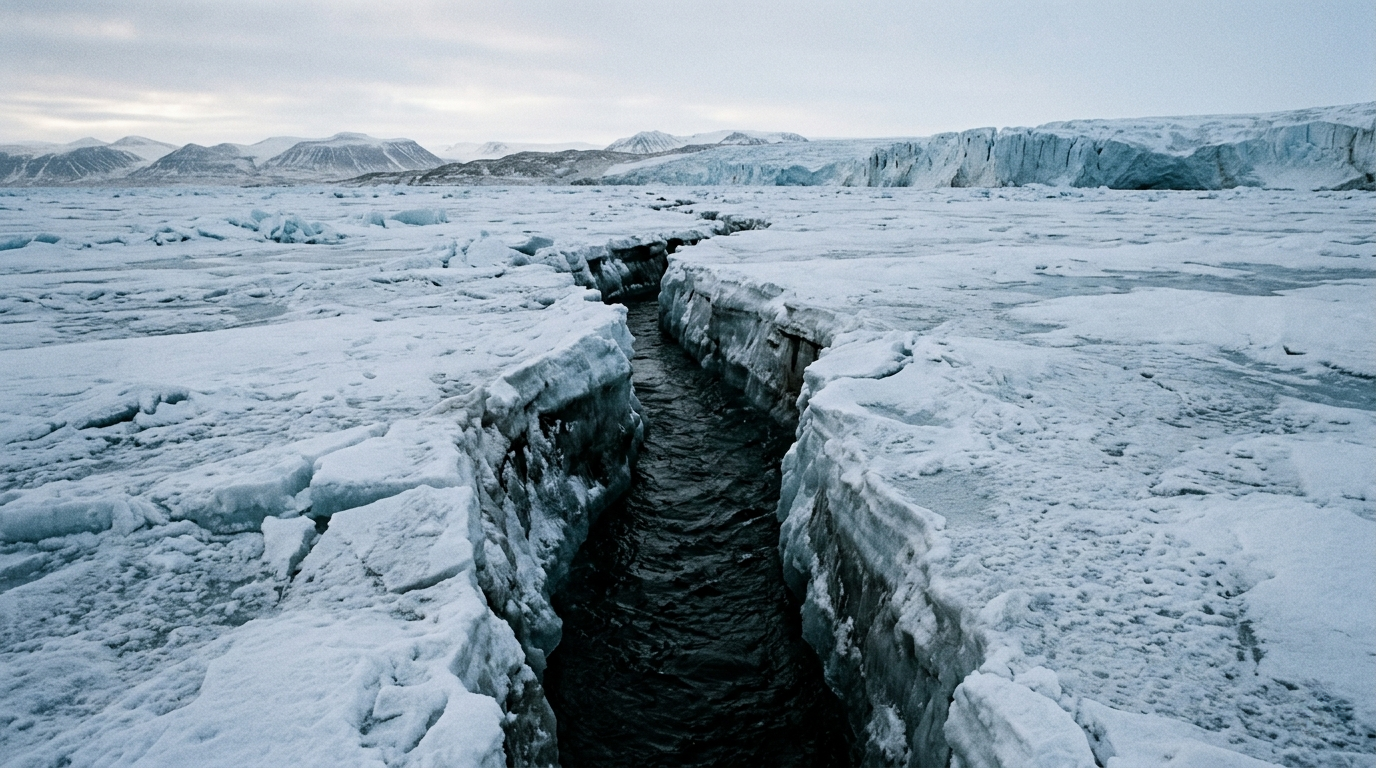
The same beat, twice in three weeks. All images generated by the author unless stated
Run the sequence once and it is a crisis. Run it twice, identically, inside a month, and it stops being a crisis and starts being a pattern, and patterns tell you something a single event cannot.
Twice in three weeks in 2026, the ceasefire between the United States and Iran collapsed through the same four-step sequence, in the same order and with the same actors playing the same roles.
The late June cycle: on 25 June, an Iranian drone struck the Singapore-flagged container ship Ever Lovely in the Strait of Hormuz, what CENTCOM called a “foolish violation” of the ceasefire. The next day, US aircraft struck Iranian missile and drone storage sites and coastal radar positions. On 27 June, a second vessel, the Panama-flagged tanker Kiku, carrying over two million barrels of crude, was hit by an Iranian one-way attack drone; CENTCOM said Iran had been given the chance to honour the ceasefire and “elected not to.” The US launched a further wave of strikes on ten military sites over the following two days. The IRGC claimed it had destroyed eight US installations at Ali Al Salem Air Base in Kuwait and the Fifth Fleet headquarters in Bahrain in response. On 29 June, both sides stood down. The cycle paused.
The 7–8 July cycle: the identical pattern resumed within two weeks. On 6–7 July, three commercial vessels were struck in under twenty-four hours, including the Qatari LNG tanker Al Rekayyat, which suffered an engine room fire, and a Saudi-flagged crude tanker. Iranian state television confirmed the LNG tanker had been attacked “after ignoring warnings,” without formally claiming the strike. On 7 July, the US revoked the sixty day sanctions waiver on Iranian oil exports and CENTCOM launched what it called “powerful” strikes against more than eighty Iranian targets, air defence systems, coastal radar, anti-ship missile capability and over sixty IRGC small boats. On 8 July, the IRGC retaliated with strikes on at least eighty-five US installations across Bahrain and Kuwait and claimed to have shot down an American MQ-9 Reaper drone. Donald Trump declared the memorandum of understanding “over.”
Same shape. Same order. Eleven days between the stand-down and the stand-to.
Why the repetition matters more than either incident
A single ceasefire violation tells you almost nothing on its own, wars are full of them and most get absorbed without derailing an entire diplomatic framework. What a repeated, identically shaped violation tells you is structural: something about the underlying arrangement makes this specific sequence the path of least resistance back to open conflict, for one side or both, every single time.
There are, broadly, two honest readings of that fact and this piece is not going to pretend one is obviously correct.
The first reading: neither side has the domestic control to prevent it. Iran’s naval and paramilitary forces in the Gulf, the fast, deniable IRGC boats, the tanker-adjacent harassment tactics, do not require top-down Supreme Leader authorisation to act, especially with the Supreme Leader currently invisible and the presidency’s authority over military decisions genuinely unclear. On the American side, Trump’s own rhetoric (“vicious, violent,” “waste of time, scum” a declared, and proven, willingness to strike again “tonight”) suggests a president who treats any Iranian provocation, however small or ambiguous in origin, as sufficient cause to resume full-scale strikes rather than absorb it and preserve the wider agreement. If neither side is actually capable of restraining the specific actors who keep re-triggering the sequence, then the pattern is a symptom of weak control, not strategy.
The second reading: the sequence serves someone’s interests precisely because it keeps recurring. Each candidate beneficiary is concrete rather than speculative. The IRGC has, by multiple accounts, tightened its grip on Iranian decision making during Mojtaba Khamenei’s absence and a state of permanent low level conflict is exactly what preserves that institutional relevance and the budget that comes with it, as one analysis of the pattern put it, every Iranian strike demonstrates that Tehran, not Washington, is setting the tempo. On the Israeli side, a ceasefire that collapses repeatedly is not a policy failure for a government that has long opposed any deal leaving Iran with residual nuclear or regional capacity, it is closer to vindication. And inside the United States, oil prices spiked roughly six per cent each time the cycle broke, a genuinely uncomfortable dynamic for an administration heading into a midterm cycle, where each repetition manufactures a fresh crisis that demands a fresh presidential response rather than a quiet, sustained absorption of the problem. A ceasefire that dies and is renegotiated repeatedly, rather than either holding or collapsing permanently, lets every one of these actors demonstrate resolve to their own audience at regular intervals without bearing the full cost of continuous war.

Both times, it started in the same stretch of water.
The attribution problem, both times
In neither cycle has Iran formally claimed responsibility for the initial tanker attacks, Iranian state television came close in July, confirming the LNG tanker had been struck “after ignoring warnings” while stopping short of an outright claim. But Iran’s silence is not the same as the incidents going unattributed. Qatar held Iran “fully legally responsible” for the strike on the Al Rekayyat. Saudi Arabia made the same attribution for the tanker flying its flag. The United States attributed both the Ever Lovely and Kiku strikes to Iran directly, by name, before launching its retaliatory waves.
What is consistent across both cycles is the specific asymmetry: near universal external attribution of the provocation to Iran, paired with Iran’s own refusal to claim it, followed by loud, immediate and fully claimed Iranian retaliation once the US has struck back. Silence on the trigger, ownership of the response, in both cycles. That is a repeating feature worth treating as data rather than coincidence.
What repetition usually means, historically
Ceasefires that collapse via the same specific mechanism more than once are not new in this exact theatre and the historical pattern is not encouraging. The most direct precedent is the Tanker War of 1984–88, a phase of the Iran-Iraq War in which both sides attacked commercial shipping in the Persian Gulf for years. A UN-sponsored ceasefire in the land war nominally held from mid-1984, but attacks on tankers bound to and from Kharg Island continued regardless, Iraq struck, Iran retaliated, in a tit-for-tat pattern that repeated dozens of times over four years before the US Navy’s Operation Praying Mantis ended the naval phase in 1988. Between 2019 and 2022, a smaller scale version of the same dynamic recurred: Iranian limpet-mine attacks and drone strikes on tankers near the Strait, including a fatal 2021 strike on an Israeli-linked vessel, each followed by US statements, diplomatic pressure, a period of calm and then repetition.
The pattern across four decades is not one of linear de-escalation. It is what one assessment of the broader US-Iran relationship calls a stop-start dynamic, in which periods of relative calm are punctuated by renewed incidents, diplomatic setbacks and sudden shifts in posture. The 2026 repetition is not an anomaly. It is the latest iteration of a structural pattern that has defined the Gulf for forty years — which makes it considerably harder to treat the current cycle as a temporary breakdown rather than the theatre’s default operating condition.
If the US-Iran ceasefire is settling into that same rhythm, a fragile calm punctuated by a recurring, near-identical trigger every few weeks, then the honest description of the current situation is not “a ceasefire that keeps failing.” It is a low-intensity war that has adopted the vocabulary of a ceasefire without adopting its substance, in a theatre with forty years of precedent for exactly that outcome.
The date that matters more than the pattern
There is a harder deadline sitting underneath this recurring cycle: the sanctions waiver on Iranian oil exports, granted as part of the June memorandum, is set to wind down by 17 July. That date removes whatever remains of Iran’s economic incentive to avoid a third cycle. If the pattern holds, and two-for-two is not yet proof that it will, but it is not nothing either, the most dangerous window is not some indefinite future point. It is specific, mechanical and roughly a week and a half away from the second collapse.

The pattern has run twice. The next mechanical deadline is already on the calendar.
Part of the What If AI Investigated series. Sources: CENTCOM statements on the June and July 2026 strikes; contemporaneous reporting on both violation cycles including specific vessel names, dates, and strike counts; Qatari and Saudi government attribution statements; Trump’s public statements at the NATO Ankara summit, 8 July 2026; historical record of the 1984–88 Tanker War and the 2019–2022 Gulf tanker incidents as structural precedent.
메타데이터
- post_id
- 50aa7d89a4f9
- slug
- two-ceasefires-two-collapses-the-same-trigger-twice-in-three-weeks-50aa7d89a4f9
- url
- https://medium.com/what-if-ai-investigated/two-ceasefires-two-collapses-the-same-trigger-twice-in-three-weeks-50aa7d89a4f9
- canonical_url
- https://medium.com/what-if-ai-investigated/two-ceasefires-two-collapses-the-same-trigger-twice-in-three-weeks-50aa7d89a4f9
- author_url
- https://medium.com/@jamie_gray027
- status
- ok
- fetched_at
- 2026-07-13 06:23:13