The Pulse of India’s Supply Chain: How Flipkart Plans for 500 Million Customers — Part 1
In the world of e-commerce, a click of a “Buy Now” button starts an invisible race. Across India (metro cities or remote villages) millions…
The Pulse of India’s Supply Chain: How Flipkart Plans for 500 Million Customers — Part 1
In the world of e-commerce, a click of a “Buy Now” button starts an invisible race. Across India (metro cities or remote villages) millions of customers expect their packages to arrive with a speed that feels like magic.
But behind that “magic” is a monumental logistical puzzle. At Flipkart, we serve over 500 million registered users. We manage 150 million products. On an average day, we handle 4 million shipments. During our biggest sales events, like the Big Billion Days (BBD), that scale doesn’t just grow, it explodes.
Managing this isn’t just about more trucks or bigger warehouses. It’s about The Plan. Recently, our work in revolutionizing this plan through our Central Planning Platform (CPP, henceforth) was recognized globally. We were named a finalist for the 2025 Franz Edelman Award — considered as the “Nobel Prize” of Operations Research. Figure 1 shows our journey of building the Central planning platform (CPP).
In the first post of our series, we take you under the hood of the Flipkart supply chain. We’ll explore the two core life cycles of our network, the real-world planning actions that connect them, and the challenges that led us to build the CPP. We will dive deeper into the specific technical solutions and architectures of these layers in subsequent posts.
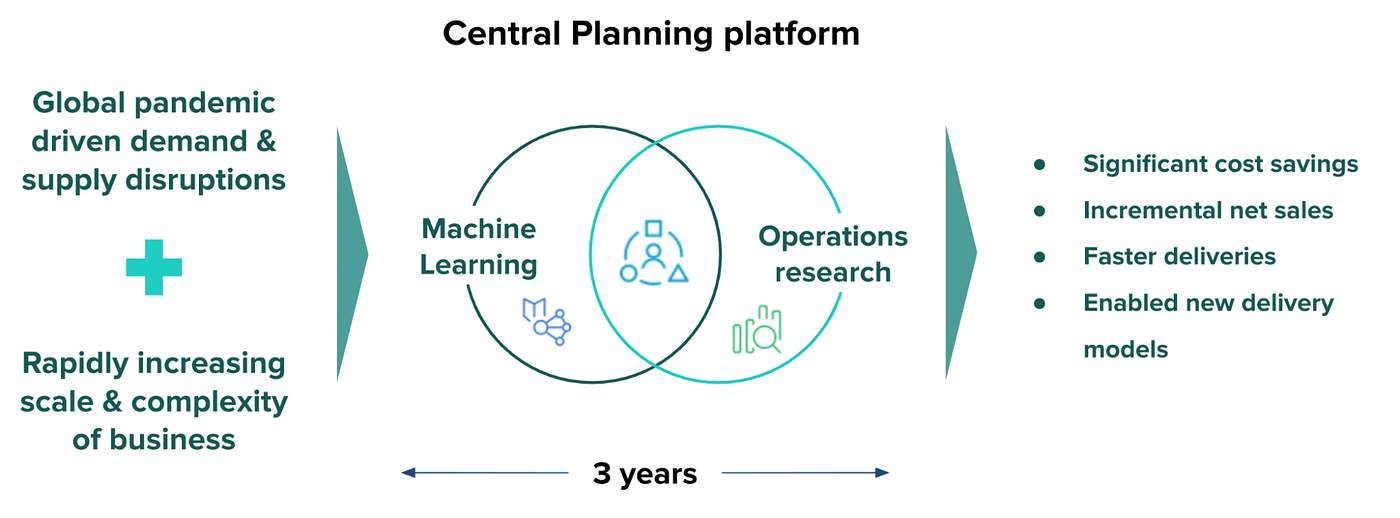
Figure 1: Flipkart’s journey of Central Planning Platform
The Anatomy: How the Flipkart Supply Chain Moves
To understand how we optimize the supply chain, you must first see how it flows. Figure 2 shows our network through two core “life cycles” that must work in perfect harmony. Every step of these journeys requires a complex set of operational choices, listed below.

Figure 2: The Flipkart supply chain. The Flipkart supply chain includes fulfillment centers (FCs) for inventory storage, connected to Mother hubs (MHs) for sorting and aggregation. Shipments are either offloaded to third-party carriers for direct customer delivery or routed through Flipkart’s network of MHs to delivery hubs (DHs) for last-mile delivery.
Lifecycle 1: The Inventory Journey (Getting It Close)
Before a product is ever searched for, our Inventory Procurement & Placement flow is already at work. This is the foundation of our speed.
- The Goal: Goods move from 1.4 million sellers into our national network of Fulfillment Centers (FCs). We do not just store items anywhere. We aim to place inventory in an FC as close to you as possible. When you order, the item should only have a “short hop” to your door.
Lifecycle 2: The Package Journey (Getting It to You)
Once you place an order, the Customer Delivery Flow takes over. This is the race against time.
- The Pack & Sort: The item is picked and packed at the Fulfillment Center. It travels to a Mother Hub (MH), massive facilities where shipments are aggregated and sorted for different parts of the country.
- The Last Mile: From the Mother Hub, packages travel to local Delivery Hubs (DHs). This is the final stop before a delivery hero gets the package to your doorstep.
Table 1 lists some of the critical planning decisions that connect these lifecycles. None of these actions — from hiring a delivery associate to fine-tuning carrier selection — can happen in a vacuum. They all need to be powered by high-precision, multi-grain demand forecasting. These forecasts act as the essential fuel for our entire operational engine.
Without an accurate forecast, even the most advanced logistics network remains paralyzed. For instance, we rely on long-horizon, national-level forecasts for strategic decisions like hiring manpower months in advance. Simultaneously, we require hyper-local, pincode-level forecasts to decide exactly how much inventory of a specific product category to stock in a neighborhood hub to meet tomorrow’s demand. In the next section, we will look into challenges in making these decisions.

Table 1: Decisions to make as part of Flipkart Supply Chain Planning
The Strategic Challenge: Planning at Scale
If you’ve ever heard of the “butterfly effect,” supply chain planning is the perfect real-world example. A small ripple, like a few trucks delayed by weather or a localized holiday, can create cascading bottlenecks across the entire network. At Flipkart’s scale, these ripples quickly turn into missed deliveries and lost revenue.
To build a truly resilient network, we had to move beyond the limitations of manual, siloed planning and solve for three core structural challenges:
- Systemic Interdependence: In a massive network, no component exists in a vacuum. Historically, individual teams optimized for their own specific goals, but a “win” in one area often created a bottleneck in another. For example, the Warehouse team might successfully speed up packing to clear their backlog; however, if the Transport team isn’t synchronized to move those packages, the outbound docks become overwhelmed, halting the entire flow. True optimization requires a harmonized, holistic view where every link moves in sync.
- Predictive Precision vs. Lead Times: Many critical decisions — such as hiring staff, sourcing fleet, or placing inventory orders — require months of lead time. This creates a massive gap between planning and execution. We needed a solution that provides reliability across time horizons, moving from reactive firefighting to proactive, data-driven foresight.
- Dynamic Scalability & Agility: A static plan cannot survive the volatility of 500 million customers. With millions of shipments daily across 19,000+ pincodes, manual processes were simply too time-consuming to remain agile. We required a robust, automated “Strategic Brain” capable of adapting in real-time logistics disruptions (eg. covid) and sudden shifts in demand (eg. due to holidays or festivals).
Earlier, Flipkart’s supply chain relied on manual planning across fragmented silos, which often led to mismatched objectives and reduced agility. Manual processes struggled to account for the high-dimensional complexity of millions of products which resulted in sub-optimal solutions. To bridge these gaps, we built the Central Planning Platform (CPP) — the unified engine designed to synchronise our entire ecosystem.
The Solution: The Central Planning Platform (CPP)
We set out to build the Central Planning Platform — the “Strategic Brain” of Flipkart in 2021. It replaces fragmented guesses with a single, synchronized decision-making engine built on three fundamental objectives:
- Standardization & Automation: Moving away from hundreds of siloed spreadsheets to create a single automated “Source of Truth” for the entire business plan.
- Integrated Decision-Making: Connecting previously isolated decisions so that a forecast for “Grocery” automatically informs the localized warehouse how many people to hire and tells the transport fleet how many trucks to send.
- Advanced Optimization (The Eyes and Muscle): Using sophisticated Machine Learning (ML) to predict demand volatility and Operational Research (OR) to analyze millions of operational constraints (vehicle speeds, warehouse capacity, and labor laws) to find the perfect optimal plan.

Figure 3: Central Planning Platform “The Strategic Brain”
Introducing the 2 Technology Layers of the CPP
The CPP is a sophisticated, two-layered system. Figure 3 demonstrates how by integrating these layers, the CPP acts as a unified “Strategic Brain” that transforms granular, multi-grain demand forecasts into a synchronized, mathematically optimal execution plan across our entire network.
1. The Forecasting Layer: The Eyes of the System
To plan for the future, you must see it clearly. However, forecasting at Flipkart’s scale is far from a trivial task. Our predictive engine must handle “high-dimensional complexity” i.e. millions of products subject to sudden shifts from regional festivals, flash sales, or logistics disruptions.
- Multi-Grain Demand Signals: Using Machine Learning and Deep Learning, the system estimates sales at multiple granularities simultaneously. Different teams require different “views” of the same future: the Warehouse team needs high-level regional volumes to plan labor, while the Inventory team requires specific pincode-level demand to procure and place products.
- Hierarchical Reconciliation: A major technical challenge is ensuring total consistency across these views. The “Strategic Brain” automatically reconciles these different grains so that the sum of local pincode forecasts always aligns with the national strategic outlook. This creates a single, mathematically consistent “source of truth” for the entire company.
- Contextual Intelligence (DNA & Saliency): The models account for “Product DNA”, the unique behavior of 150 million items (e.g., a smartphone has a sharp launch peak, while white T-shirts have steady, season-long demand). It then layers in “Localized Saliency” to capture uniquely Indian trends. This allows the system to predict hyper-local demand spikes such as a surge in ethnic wear in Kolkata during Durga Puja or kitchen appliances in Kerala during Onam, adapting to the dynamic Indian market without losing sight of the big picture.
2. The Optimization Layer: The Muscle of the System
Once the “Eyes” see the demand, the Optimization Layer acts as the “Muscle,” using sophisticated Operations Research (OR) to turn predictions into executable plans.
- Global Harmony: It solves for the entire network simultaneously. It ensures that a “win” in one area like a Warehouse successfully speeding up packing, doesn’t become a bottleneck for the Transport team by overwhelming the outbound docks.
- Solving at Scale: The system processes millions of variables — truck capacities, labor shifts, and dock constraints — evaluating billions of permutations to find the mathematically optimal path.
- Constraint-Aware: It isn’t just theoretical; it respects the physical limits of our ecosystem, ensuring every plan is realistic and executable on the ground. Where pure mathematical optimization meets extreme real-world complexity, we also use advanced heuristics to ensure the final plan is 100% executable on the ground.
The Impact: A Transformed Flipkart
The shift from manual silos to the Central Planning Platform fundamentally redefined our agility and customer experience. By turning on this “Strategic Brain,” we unlocked massive efficiencies across the entire network:
Operational Velocity
- 90% Drop in Planning Cycle Time: We slashed our planning window from 10 days to 1 day, allowing for hyper-responsive cycles that reflect real-time market shifts.
- Faster Deliveries: Achieved a 50% increase in 1-day deliveries and a 43% increase in 2-day deliveries by mathematically optimizing inventory placement closer to the customer.
- Inventory & Capital Health: Reduced “unhealthy inventory” by 50%, which contributed to a 10% increase in Working Capital (WC) efficiency and freed up significant warehouse space.
- Resource Efficiency: Improved manpower utilisation, leading to a 10% reduction in required manpower through better workload balancing and synchronised scheduling.
Empowering Our Ecosystem
- Seller Success: By providing sharper demand signals and smarter placement, we enabled a leaner inventory model for our sellers, reducing their holding costs and improving their capital turnover.
- From “Doer” to “Strategist”: Our planners transitioned from manual data stitching to Exception-Based Management, focusing on high-level strategic decisions rather than routine calculations.
- Scenario Simulation: Teams now use the CPP as a “What-If” engine, simulating the network-wide impact of demand surges or new warehouse openings in seconds to stay ahead of the curve.
Conclusion & The Road Ahead
Flipkart’s Central Planning Platform didn’t just solve a logistics problem; it built a scalable, mathematical foundation for the future of Indian e-commerce.
By replacing silos with synchronization and turning manual guesswork into precise optimization, we’ve empowered our people to focus on proactive strategy and exception-based management. This journey from fragmented operations to an integrated “Strategic Brain” is a testament to what happens when world-class engineering and data science are applied to uniquely complex Indian challenges.
What’s Next?
Our journey to the 2025 Edelman Award finalist stage is just the beginning. As we continue to evolve the CPP, we are integrating even more advanced simulation capabilities and real-time visibility to create an even more responsive network.
In our upcoming posts/series, we’ll peel back the curtain on the specific layers of “The Strategic Brain.” We will explore the deep-tech architecture that powers our predictions and the sophisticated engines that solve millions of constraints in seconds. Meanwhile, you can read our Capacity management blog series (The Race Against the Clock: Optimizing Supply Chain Capacity for Faster Deliveries — Part 1) aimed at making faster deliveries.
Stay tuned as we dive deeper into the technology that moves India.
References
- Shubham Agarwal, Prateek Agrawal, Anurag Allamsetty, Adarsh Attavar, Deekshith B, Gowtham Bellala, Shobhit Bhatnagar, Hardik Choudhari, Vikas Goel, Praveen Gupta, Ananth Kachroo, Jay Kothadiya, Nagesh KM, Sai Anjani Kumar Kudupudi, Mayank Kumar, Naidu KVM, Tanu Modi, Ramkumar Moorthy, Rakesh S. Nair, Goutham Sai Panyam, Avijit Shukla, Piyush Vyas (2026) Faster, Smarter, Leaner: How Flipkart Optimized Its Supply Chain to Unlock Growth. INFORMS Journal on Applied Analytics 56(1):42–57. https://doi.org/10.1287/inte.2025.0282
메타데이터
- post_id
- 50d241ca494f
- slug
- the-pulse-of-indias-supply-chain-how-flipkart-plans-for-500-million-customers-part-1-50d241ca494f
- url
- https://blog.flipkart.tech/the-pulse-of-indias-supply-chain-how-flipkart-plans-for-500-million-customers-part-1-50d241ca494f
- canonical_url
- https://blog.flipkart.tech/the-pulse-of-indias-supply-chain-how-flipkart-plans-for-500-million-customers-part-1-50d241ca494f
- author_url
- https://medium.com/@pivyas09
- status
- ok
- fetched_at
- 2026-06-14 11:28:49