Improving Participant Outcomes with Real-Time Digital Progress Logs
Delivering exceptional disability support services requires balancing hands-on, empathetic care with stringent operational documentation…
Real Time Digital Logs Progress — Checkster
Improving Participant Outcomes with Real-Time Digital Progress Logs
Delivering exceptional disability support services requires balancing hands-on, empathetic care with stringent operational documentation. For providers operating under the National Disability Insurance Scheme (NDIS), capturing clear proof of goal progression, daily activities, and compliance markers is a daily operational mandate. Traditional paper logs, word documents, and manual spreadsheets create administrative lag, pull support workers away from direct care, and hide valuable insights from care coordinators. Transitioning to modern digital collection tools allows your organization to elevate participant outcomes while maintaining continuous compliance.
Implementing specialized disability service compliance software changes how data flows from the field to the administrative team. When documentation is digitized, information becomes actionable evidence that directly demonstrates the value of your services. Moving to an ecosystem built on digital progress logs removes manual bottlenecks and turns regulatory obligations into clear roadmaps for participant development.
1. Shifting Focus from Administration to Participant Care
Tracking daily support notes and participant progress logs shouldn’t be an administrative bottleneck that disrupts human connection. Under the guidelines of the National Disability Insurance Scheme, providers must show consistent documentation detailing how funding directly maps to improved participant outcomes. When support workers update participant progress logs directly from their mobile devices, it ensures that important life details and developmental milestones are recorded instantly.
By centralizing participant progress logs, managers can quickly review trends over time, helping them make data-driven adjustments to behavioral support plans. Utilizing a versatile digital checklist app allows caretakers to systematically document routines, medications, and therapeutic exercises without spending hours filling out physical paperwork at the end of a shift. A robust digital checklist app ensures that shift handovers and medical verifications are accurate, leaving zero room for dangerous oversight. Deploying a digital checklist app simplifies field workflows for support coordinators, keeping care delivery centered completely on the participant.
2. Creating Tailored Records with Code-Free Tools
Every NDIS participant has unique goals, communication preferences, and care requirements, meaning a one-size-fits-all paperwork template will always fall short. Frontline workers prefer customizable mobile forms because they adapt to the participant’s direct needs, allowing teams to toggle fields based on whether they are providing supported independent living (SIL) or community access support. Building customizable mobile forms allows you to capture photographs and digital signatures smoothly, establishing a rich narrative of the care provided. Replacing static PDFs with customizable mobile forms elevates the accuracy of collected data, ensuring that support workers fill out only relevant information.
With a drag-and-drop online form builder, non-technical teams can build complex questionnaires tailored to specific operational requirements. An intuitive online form builder empowers operations managers to adjust templates on the fly as safety guidelines or legislative frameworks change. Every template created within the online form builder remains safe and accessible, giving administrative staff total control over version histories. Checkster functions as a code-free ecosystem, powered by a flexible no-code form creator that bridges the gap between field documentation and database management. A customizable no-code form creator means compliance teams can update their forms instantly without relying on specialized software developers. Leveraging a no-code form creator ensures that tech barriers never slow down your workforce, letting your administrative staff iterate layouts at a moment’s notice.
3. Supporting Remote Care Teams in the Field
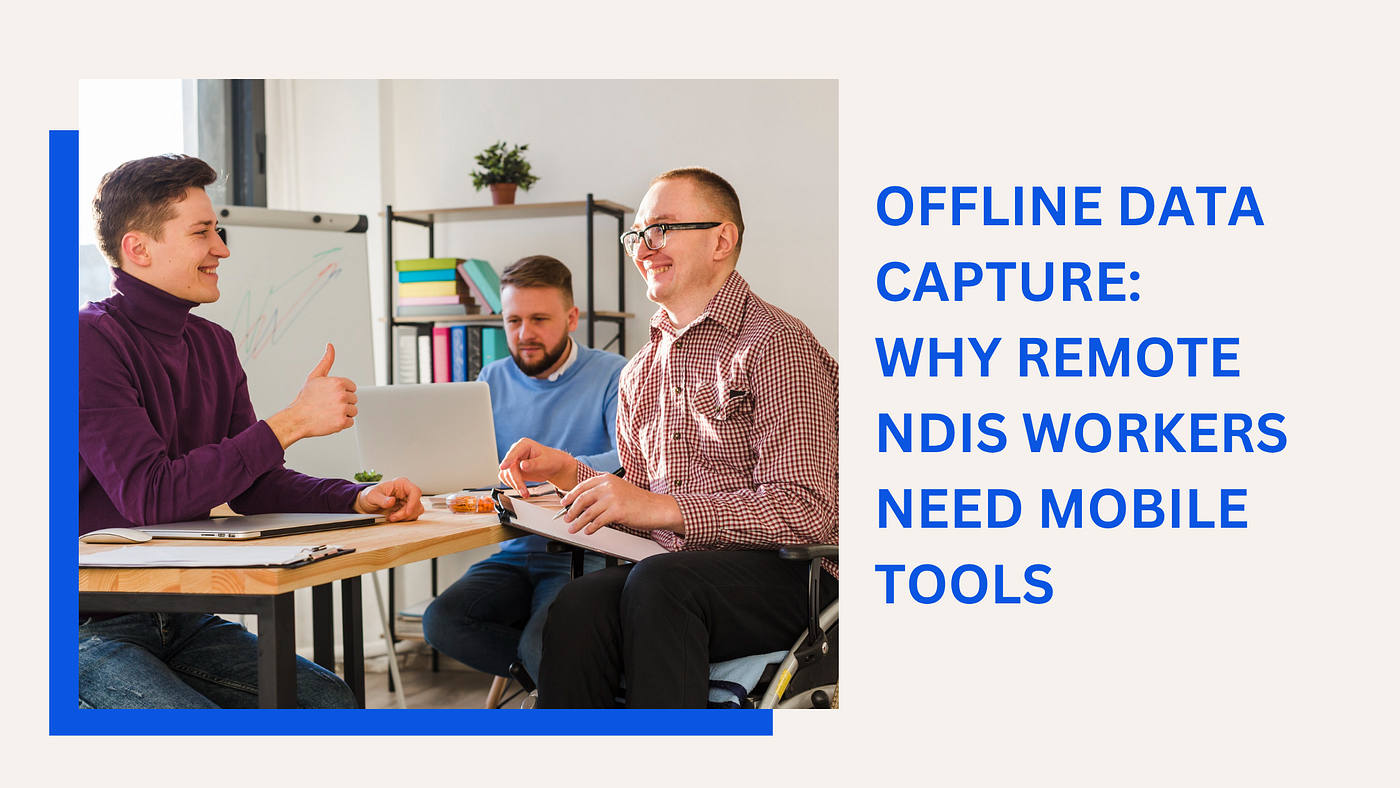
Disability support workers often operate in suburban communities, regional centers, or remote settings where wireless internet infrastructure can be unreliable. For a remote team, a lack of immediate cellular connection cannot stand in the way of documenting a critical care event or tracking progress. Community support often takes place in areas without service, highlighting the value of offline data capture for modern workforces. With dependable offline data capture, data is saved locally until a connection is restored, shielding care teams from accidental data loss. Relying on software that handles offline data capture prevents data loss in remote regions, making sure every support note is logged while details are perfectly fresh.
Field managers rely on mobile inspection software to review accommodation facilities, vehicle safety, and community access environments. Using responsive mobile inspection software removes the need for physical clipboards during safety checks, giving workers the freedom to file hazard updates directly from their screens. Integrating mobile inspection software into your care routine standardizes operational metrics across your entire team. To see how these tools operate in diverse care environments, take a look at our dedicated use cases directory.
4. Automating Operational Workflows and Quality Control
When critical events or positive milestones occur on the floor, the speed at which that data reaches internal coordinators dictates your operational responsiveness. Management teams can access real-time data reporting to review organizational performance across multiple housing locations simultaneously. Utilizing real-time data reporting dashboards helps supervisors spot compliance errors instantly, reducing the risk of audit failures. The ultimate benefit of real-time data reporting is the ability to adapt care plans proactively, making sure participant funding is optimized for maximum independent growth.
Whenever a serious incident occurs, automated email notifications warn key management staff before communication gaps create compliance risks. Setting up automated email notifications minimizes communication gaps between shifts, keeping your care community completely synchronized. Our system sends automated email notifications once a progress log indicates a milestone has been met, ensuring families and support coordinators can celebrate successes together.
Integrating business process automation into your routine ensures that critical shifts trigger appropriate responses across your team without manual intervention. With advanced business process automation, tedious paperwork tasks are completely eliminated, saving your supervisors hours of administrative labor. Leveraging business process automation reduces operational delays across multiple housing sites, keeping back-office data perfectly aligned with frontline needs. When an issue is flagged, multi-user task assignment coordinates the corrective actions automatically, ensuring nothing slips through the cracks. Streamlining operations requires multi-user task assignment to keep shift leads fully accountable for specific care deliverables. Features like multi-user task assignment clarify exact responsibilities during complex incident rollouts, protecting the safety of everyone involved.
5. Driving Accountability and Audit Readiness
Preparing for an NDIS Quality and Safeguards Commission audit can be an overwhelming task if your records are scattered across paper folders and disconnected messaging apps. Supervisors regularly complete quality assurance forms to verify that service standards remain high and that support staff match organizational benchmarks. Compiling your internal review data through quality assurance forms simplifies audit preparation by keeping historical data organized. Digital quality assurance forms ensure that service delivery remains aligned with NDIS standards, creating a reliable archive of your company’s continuous improvement efforts.
Conducting safety checks across shared housing is much simpler using site audit software tailored to home environments. Advanced site audit software tracks physical hazards in real time across multiple facilities, helping maintenance teams address risks before they cause injuries. Using specialized site audit software gives leadership a transparent view of facility compliance, protecting participants and your organization’s registration.
Verifying support hours requires secure electronic signature forms signed by the participant or guardian at the end of a session. Using electronic signature forms guarantees that compliance evidence is legally verifiable and fully prepared for financial reconciliation. Implementing electronic signature forms protects your organization from billing disputes, establishing absolute trust with your participants and funding bodies. To explore plans that accommodate your team’s operational tracking size, visit our clear pricing options page.
6. Elevating Team Preparedness from Day One
Maintaining consistent participant care standards depends entirely on how well your frontline staff are trained and onboarded. Bringing new support workers into the organization is simplified using digital employee onboarding forms that capture credentials, background checks, and certifications cleanly. Standardizing your employee onboarding forms ensures that mandatory background checks are never missed during rapid expansions. Managing initial compliance training via modern employee onboarding forms builds a strong compliance culture before a new employee ever steps into a participant’s home.
Investing in comprehensive disability service compliance software protects providers from structural compliance issues while modernizing daily service tracking. Our disability service compliance software bridges the gap between frontline service delivery and back-office governance, giving your administrative leaders a unified view of your business. For answers regarding user access levels, mobile installation, or form construction, take a look at our complete FAQ page.
The Power of Code-Free Documentation with Checkster
At Checkster, we build digital tools that remove the operational friction from human-centered services. Our code-free digital forms platform gives NDIS providers total control over their data collection process without requiring any technical development teams.
- Complete Customization: Transform your existing paper forms into responsive digital layouts built for field conditions.
- Continuous Accuracy: Ensure your progress logs, hazard reports, and shift handovers are complete, timestamped, and secure.
- Total Accountability: Build automated escalation rules that protect participant safety and secure your regulatory standing.
Providing care is your primary passion; keeping your documentation organized is ours. If you are ready to modernize your documentation and improve your participant outcomes, contact us today to start your digital transformation journey.
메타데이터
- post_id
- 50dc321ad34e
- slug
- improving-participant-outcomes-with-real-time-digital-progress-logs-50dc321ad34e
- url
- https://medium.com/@social_66246/improving-participant-outcomes-with-real-time-digital-progress-logs-50dc321ad34e
- canonical_url
- https://medium.com/@social_66246/improving-participant-outcomes-with-real-time-digital-progress-logs-50dc321ad34e
- author_url
- https://medium.com/@social_66246
- status
- ok
- fetched_at
- 2026-06-20 20:29:01