BLE-NB-IoT Wearable Electrical Safety System: An IoT-Based Smart Mining Innovation for Enhancing…
The climate crisis has become one of the most critical challenges of the 21st century. Beyond the environmental damage it causes, its most…
BLE-NB-IoT Wearable Electrical Safety System: An IoT-Based Smart Mining Innovation for Enhancing Electrical Safety in Indonesia’s Nickel Mining Industry
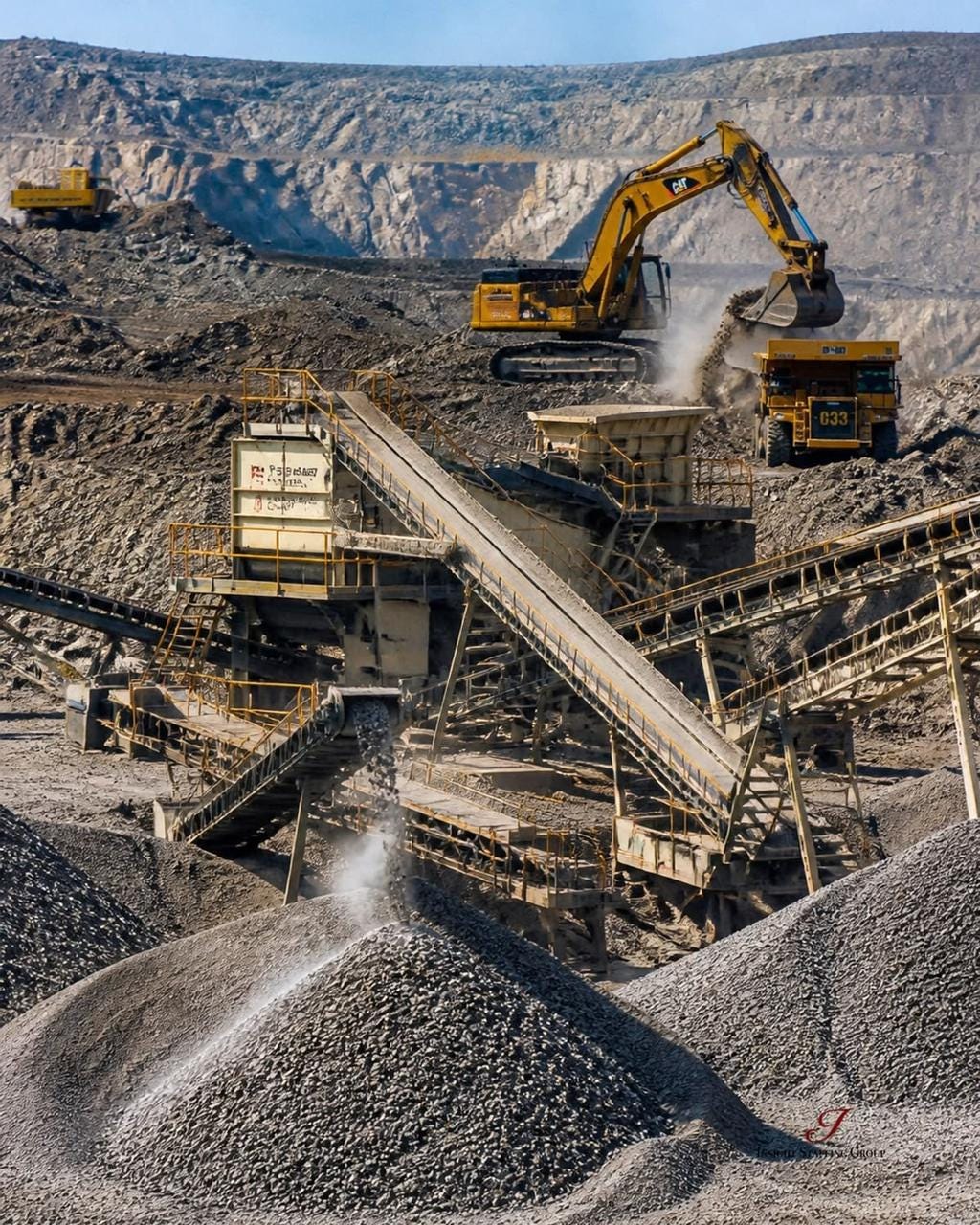
Nickel Industry
The climate crisis has become one of the most critical challenges of the 21st century. Beyond the environmental damage it causes, its most severe consequence is the potential threat to human survival on Earth. The urgency of climate change has compelled global stakeholders to transition toward a greener and more sustainable way of life. One of the most widely adopted initiatives is the transformation from extractive energy sources to clean and renewable energy.
Through its Nationally Determined Contribution (NDC), Indonesia has demonstrated its commitment to renewable energy development. One notable example is the ongoing transition from fossil fuel-powered vehicles to electric vehicles (EVs).
Nickel serves as one of the primary components in battery production for electric vehicles, making it one of the world’s most sought-after commodities. As a country possessing one of the largest nickel reserves globally, Indonesia has implemented downstream processing policies, including a ban on raw nickel ore exports and the development of domestic smelter facilities. These policies aim to strengthen the national economy and support the government’s vision often expressed through the slogan, “Control nickel, control the world.”
The government’s prioritization of nickel downstreaming can be observed through the increasing number of nickel mining companies receiving operational permits. Smelter construction has also been accelerated to maximize domestic nickel ore processing, particularly in major industrial hubs located in Eastern Indonesia, such as Morowali in Central Sulawesi and Weda in Central Halmahera.
The rapid growth of Indonesia’s nickel downstreaming industry is supported by thousands of workers across the country. Mining is inherently a high-risk occupation due to its hazardous working environment. Consequently, occupational safety regulations in mining operations are generally stricter and more rigorously enforced than in many other industries.
One critical yet often overlooked safety issue among workers is electrical safety. Nickel mining operations present greater electrical hazards compared to gold or coal mining. This is largely due to the presence of high-current smelter facilities, which are susceptible to arc flashes and major electrical short circuits. Additionally, nickel dust and metallic particles can accumulate on busbars and insulators, creating conductive pathways that may result in flashovers and arc flash incidents within electrical panels.
These hazards represent significant risks, as numerous incidents have endangered workers and, in some cases, resulted in fatalities. A recent example occurred on November 6, 2025, when a worker at PT Lestari Smelter Indonesia (LSI), located within the Indonesia Morowali Industrial Park (IMIP), reportedly died from an electric shock while opening a ferronickel water pump. Furthermore, data from Indonesia’s Ministry of Manpower indicates that more than 100 fatalities have occurred in smelter operations across the country. This demonstrates that although electrical safety receives relatively limited attention, it remains one of the most serious issues within Indonesia’s nickel mining industry.
The persistence of fatal workplace accidents highlights the inadequacy of existing safety systems within Indonesia’s mining sector, particularly regarding electrical safety, which has not received sufficient attention. In leading nickel-producing regions such as North America, Europe, and other advanced industrial nations, the implementation of IoT-based wearable safety technologies in mining operations has become standard practice. In North America, such systems are often mandatory due to stringent occupational safety regulations.
In simple terms, a wearable electrical safety system is an intelligent safety device integrated into workers’ personal protective equipment (PPE), such as safety helmets, safety vests, and safety bands. Its primary function is to detect electrical hazards and prevent fatalities caused by electric shock or arc flash incidents.
Although Indonesia has implemented several digital technologies in mining operations, including RFID systems, AI-powered dashcams, underground smart mining solutions, and private communication networks, no system has specifically focused on addressing electrical safety risks. Therefore, the development and implementation of an IoT-based wearable electrical safety system are highly relevant and necessary for Indonesia’s mining industry.
When compared to South Korea, the country has successfully implemented a Proximity Warning System (PWS) utilizing Bluetooth beacon RECO devices as Bluetooth Low Energy (BLE) transmitters. This technology incorporates radio-frequency identification (RFID), electromagnetic fields, and wireless communication signals. BLE technology is particularly effective for early warning and proximity detection applications due to its extremely low latency and real-time performance, making it suitable for high-risk environments such as high-voltage areas.
This system offers significant advantages for implementation in Indonesia, including relatively low deployment costs, real-time operation without requiring internet connectivity, and ease of integration into workers’ PPE.
Meanwhile, North American and European countries have increasingly adopted Internet of Things (IoT) technologies, particularly Narrowband IoT (NB-IoT), for environmental monitoring applications such as gas concentration measurement, temperature and humidity monitoring, electrical voltage monitoring, and other operational parameters. NB-IoT provides broader coverage compared to BLE, making it highly suitable for occupational health and safety monitoring and reporting systems. Since NB-IoT is integrated with cloud-based infrastructure and centralized servers, it enables comprehensive data collection and analysis. However, it requires cellular network connectivity to function effectively.
Both BLE and NB-IoT technologies possess distinct advantages and limitations. For underground mining operations, BLE is particularly suitable due to its wireless and real-time capabilities, making it highly effective as an early warning system to prevent fatalities, especially those associated with electrical hazards. However, BLE systems are generally limited in scope, operate primarily as one-way communication systems, and lack direct cloud connectivity, making large-scale data collection more challenging.
Conversely, NB-IoT systems utilize intelligent sensors connected to cloud platforms and internet networks, enabling seamless data integration from field operations to centralized monitoring centers. This capability supports both early warning mechanisms and preventive measures against workplace fatalities.
Both technologies hold significant potential for deployment within Indonesia’s nickel mining industry. The development of private communication networks would further facilitate the implementation of IoT solutions that require internet connectivity.
In practical application, the wearable electrical safety system would be integrated into miners’ PPE, particularly safety helmets and safety vests. BLE technology would primarily be utilized by personnel working in high-voltage environments and other designated high-risk areas, while NB-IoT could be employed across broader operational areas for workers in lower-risk environments, including equipment operators, mechanics, and office personnel.
The integrated BLE-NB-IoT system would be connected to a centralized Control Room, serving as both a data receiver and a real-time safety monitoring and notification center for the entire mining operation.
The implementation of a smart mining wearable electrical safety system based on Bluetooth Low Energy (BLE) and Narrowband IoT (NB-IoT) technologies is crucial for Indonesia’s mining sector. This innovation directly addresses the high rate of workplace fatalities, particularly those related to electrical hazards. It represents an engineering control measure aligned with corporate obligations to prevent occupational accidents as stipulated under Indonesia’s Occupational Safety Law and mining occupational health and safety regulations.
Ultimately, it is hoped that the government’s commitment to advancing the nickel industry and downstream processing initiatives will be accompanied by an equally strong commitment to protecting the safety and well-being of mining workers, who serve as the primary drivers of this strategic industry. Through the adoption of BLE-NB-IoT innovations, informed by successful implementations in leading industrialized countries, Indonesia has the opportunity to establish a new benchmark for smart mining innovation within the global nickel industry.
메타데이터
- post_id
- 50e3e65ccf87
- slug
- ble-nb-iot-wearable-electrical-safety-system-an-iot-based-smart-mining-innovation-for-enhancing-50e3e65ccf87
- url
- https://medium.com/@jessieeee/ble-nb-iot-wearable-electrical-safety-system-an-iot-based-smart-mining-innovation-for-enhancing-50e3e65ccf87
- canonical_url
- https://medium.com/@jessieeee/ble-nb-iot-wearable-electrical-safety-system-an-iot-based-smart-mining-innovation-for-enhancing-50e3e65ccf87
- author_url
- https://medium.com/@jessieeee
- status
- ok
- fetched_at
- 2026-07-13 06:23:13



