Website Defacement and the Risk of Deception
A defacement banner may show what the attacker wanted people to see, but it should not be treated as verified attribution on its own
Website Defacement and the Risk of Deception
A defacement banner may show what the attacker wanted people to see, but it should not be treated as verified attribution on its own
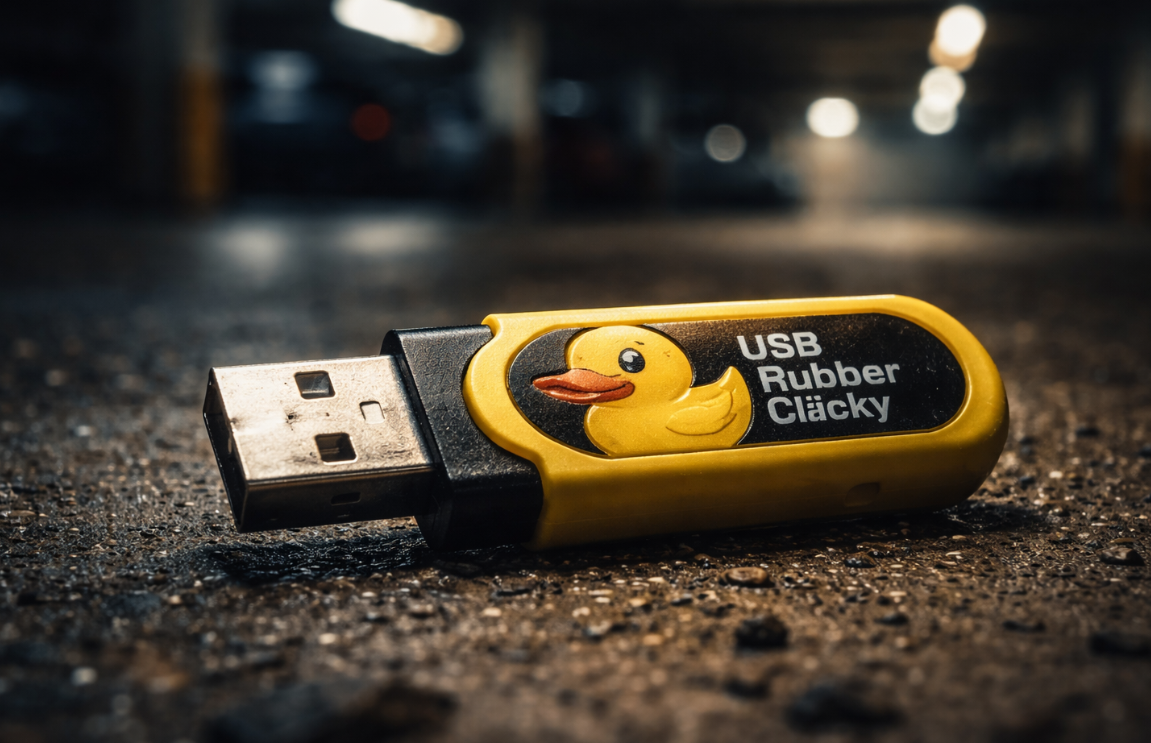
Photo by Mick Haupt on Unsplash
When a website is defaced, the message is usually the first thing people notice.
Sometimes it is a group name, flag, slogan, political message, or claim of responsibility.
The public reaction can be immediate:
“This website was hacked by Team Z.”
That may sound reasonable at first. The name is on the page. The message is visible. The claim looks direct.
But in cybersecurity, that is not the same as verified attribution.
A defacement message can show that someone gained enough access to change the visible content of a website. It does not automatically prove who performed the intrusion.
That distinction matters, especially when blame, public anger, or retaliation starts forming around a message that may not have been verified.
What website defacement actually proves
Website defacement is usually a visible change to a website’s appearance or content. The Canadian Centre for Cyber Security describes it as a form of cyber attack where a hacker changes a website’s appearance or content, often like virtual graffiti or vandalism. It also notes that attackers may be motivated by politics, profit, data theft, or simply the challenge of compromising a site.
In plain language, a verified defacement can prove a few things:
- The website’s visible content was changed.
- The change was not part of the normal website operation.
- A message, image, slogan, or claim was displayed.
- The website owner may need to investigate how the change happened.
But it does not prove everything.
It does not automatically prove that:
- the named group was responsible
- data was stolen
- the attack was politically motivated
- the attacker is from the country, community, or movement shown in the banner
The page is controlled by whoever gained access. That person can write almost anything on it.
Why the banner feels convincing
A defacement banner feels convincing because it is direct.
If a page says:
“Hacked by Team Z”
many people read it like a confession.
But technically, it is still only content placed on a compromised website.
That content may be genuine. It may be a boast. It may be a joke. It may be an attempt to borrow another group’s name. It may also be an attempt to push public anger in a certain direction.
The message is evidence from the incident, but it is not enough by itself to prove attribution.
It tells us what was displayed.
It does not necessarily tell us who was actually behind the intrusion.
The Malaysian context
This issue is especially relevant when defacements happen during periods of public attention.
In June 2026, public reporting in Malaysia said that several government websites, including the Health Ministry’s website, had been hacked. The report also stated that the MOH website appeared to have been hacked by a group calling themselves “Mushr00w.”
Separately, MyCERT issued an alert about active exploitation of CVE-2026–48907, a critical unauthenticated remote code execution vulnerability affecting the Joomla Content Editor extension. MyCERT said successful exploitation could allow arbitrary PHP code execution and may lead to web shell deployment, persistent backdoor access, defacement, data theft, credential exposure, lateral movement, and service disruption.
That technical detail does not answer every attribution question.
But it does show why the root cause matters.
If some incidents are linked to broad scanning for vulnerable Joomla/JCE installations, then affected sites may not always be carefully selected ideological targets. Some may simply be exposed systems caught in wider exploitation activity.
This does not make the incident harmless.
It only means the public should be careful before turning a visible message into a confirmed identity.
Mass exploitation can make attribution messier
Not every defacement is a targeted attack against one specific organization.
Some campaigns affect large numbers of websites because many sites share the same vulnerable software, plugin, hosting pattern, or configuration mistake.
Netcraft reported a large-scale Magento defacement campaign where attackers deployed defacement files across approximately 15,000 hostnames spanning 7,500 domains. In that campaign, even some high-profile domains appeared to be affected as part of broad exploitation against vulnerable infrastructure, rather than because they were specifically singled out. Netcraft also noted that defacers often use compromised pages to claim responsibility, deliver political or ideological messages, or build public counts of defacements.
This is one reason attribution should not rely only on the message displayed.
A page can look political even when the initial access was opportunistic.
A high-profile website can be affected even when it was not the main target.
A group name can appear on many sites because one actor is claiming them, because multiple actors are copying each other, or because someone wants the public to believe a certain story.
Attribution is a different question
Attribution is not the same as noticing a message.
Attribution asks a deeper question:
Who actually carried out the intrusion?
To answer that, investigators usually need more than a screenshot. They may need server logs, malicious files, timestamps, access paths, compromised accounts, infrastructure links, malware behavior, reused tools, victim patterns, and sometimes intelligence that is not public.
Even then, attribution is not always simple.
The UK National Cyber Security Centre has previously noted that attribution can become harder when attackers use techniques such as fileless malware, bespoke malware, off-the-shelf malware, and false flags. The same report describes false flags as misdirection tactics used to deceive or misguide attribution attempts.
This is the part that many public discussions skip.
People see the banner first.
Investigators need to understand the attack path.
Those are not the same thing.
False flags are not just theoretical
A useful historical example is Olympic Destroyer, the malware associated with the 2018 PyeongChang Winter Olympics cyberattack.
Cisco Talos wrote at the time that the available evidence linking Olympic Destroyer to a specific threat actor was contradictory and did not allow clear attribution based only on the available technical evidence. Talos also said the actor appeared to have included evidence that could frustrate analysts and lead to false attribution flags.
Later, the U.S. Department of Justice charged six Russian GRU officers in connection with disruptive cyber operations that included Olympic Destroyer.
The lesson is not that every defacement is a complex nation-state deception operation.
Most are not.
The lesson is narrower and more practical:
Attackers can plant misleading signals, and attribution often needs time, evidence, and careful analysis.
If that is true for malware, it is even easier to understand with defacement banners. Text on a page is one of the easiest parts of an incident for an attacker to control.
The risk of public retaliation
Attribution by assumption can also create another problem.
It can trigger retaliation against the wrong target.
In 2017, during the Kuala Lumpur SEA Games flag issue, The Straits Times reported that an Indonesian hacker group defaced 27 Malaysian websites in response to an error involving the Indonesian flag in an official souvenir booklet. The defaced sites carried a message related to the flag issue, and the report noted that the affected sites were mostly relatively unknown and not affiliated with official bodies or large corporations.
That example shows how quickly symbolic anger can move into website attacks.
The problem is that retaliation in cyberspace often lands on systems that are easy to attack, not necessarily systems that are responsible for the original issue.
A small website, outdated CMS, or weak plugin can become the target simply because it is exposed.
That does not create justice.
It creates another incident.
What the public should separate
When reading about a website defacement, it helps to separate four things.
What is visible
The website showed a message, name, slogan, flag, image, or claim.
What is confirmed
The website content was changed without authorization, if the defacement has been verified by the owner or a reliable source.
What is possible
The attacker may have exploited a vulnerability, used stolen credentials, uploaded a web shell, abused a plugin, or gained access through hosting infrastructure.
What is not yet proven
The named group may or may not be responsible. Data may or may not have been stolen. The attack may or may not be part of a larger campaign.
This separation keeps the discussion more accurate.
It also prevents people from turning a visible claim into a confirmed conclusion too early.
What organizations should learn
There is also a practical lesson for website owners.
The priority should not be only to remove the defacement page.
Restoring the homepage may fix the appearance, but it may not fix the compromise.
MyCERT specifically warned that patching alone may not remove web shells, rogue editor profiles, or other artifacts if a site was already compromised. It advised administrators to update affected components, perform compromise assessment, review administrator accounts, check for suspicious PHP files, review logs, rotate credentials, and restore from known-clean backups if needed.
That is the more useful lesson for organizations.
A defacement should be treated as an incident, not just a content problem.
The question is not only:
“How do we put the page back?”
The better question is:
“How did this happen, what access did the attacker have, and what evidence do we need to preserve?”
A better way to read defacement claims
A defacement message should not be ignored.
It is part of the evidence.
But it should be read carefully.
If a website says “Hacked by Team Z,” the careful interpretation is:
Someone who accessed the website chose to display “Team Z.”
That is different from saying:
Team Z has been proven responsible.
Sometimes the claim may be true.
Sometimes it may be borrowed.
Sometimes it may be planted.
Sometimes it may be noise.
The real answer depends on the evidence behind the visible message.
Final takeaway
Website defacement is public by design. It is meant to be seen.
That is why it can influence public perception quickly.
But the visible message is not the same as verified attribution.
A defacement banner may show what the attacker wanted people to see. It should not be ignored, but it should also not be treated as verified attribution on its own.
The better approach is to separate the message from the attribution, wait for evidence, and avoid turning claims of responsibility into proof before the facts are established.
This article is based only on public reporting and publicly available information. It does not rely on internal findings.
References
- Canadian Centre for Cyber Security, “Website defacement (ITSAP.00.060).”
- MyCERT, “Critical Unauthenticated Remote Code Execution in Joomla Content Editor (JCE) Actively Exploited Against Malaysian Websites.”
- The Star, “Govt websites hacked, says Nacsa.”
- NIST National Vulnerability Database, “CVE-2026–48907.”
- Netcraft, “Large-Scale Magento Defacement Campaign Impacts 15,000+ Sites.”
- UK National Cyber Security Centre, “The cyber threat to UK business 2016/2017 Report.”
- Cisco Talos, “Who Wasn’t Responsible for Olympic Destroyer?”
- U.S. Department of Justice, “Six Russian GRU Officers Charged in Connection with Worldwide Deployment of Destructive Malware and Other Disruptive Actions in Cyberspace.”
- The Straits Times, “Indonesian hacker group defaces Malaysian websites following flag blunder.”
메타데이터
- post_id
- 511b17a7f59d
- slug
- website-defacement-risk-deception-511b17a7f59d
- url
- https://meetcyber.net/website-defacement-risk-deception-511b17a7f59d
- canonical_url
- https://meetcyber.net/website-defacement-risk-deception-511b17a7f59d
- author_url
- https://medium.com/@sayyidishaarani
- status
- ok
- fetched_at
- 2026-07-09 00:50:33