Scaling Your E-commerce Business in Challenging Economic Times
Fact. 46% of small businesses don’t survive beyond 5 years.
Scaling Your E-commerce Business in Challenging Economic Times
Fact. 46% of small businesses don’t survive beyond 5 years.
During a recession? That number jumps to 65%.
But here’s something interesting: while most businesses struggle during economic downturns, some ecommerce companies actually thrive. Amazon grew by 28% during the 2009 recession, and Walmart’s online sales surged by 74% during the 2020 economic crisis. Their success stories aren’t just luck. They result from strategic planning, smart operations, and adaptable business models. The key difference between businesses that survive recessions and those that don’t often comes down to preparation and strategy.
Whether you’re running a small Shopify store or managing a multi-million dollar ecommerce operation, recession-proofing your business while maintaining growth is possible. In this article you’ll find some proven strategies to protect and grow your ecommerce business during economic uncertainty.
Building Financial Resilience for Economic Uncertainty
Financial resilience is the key to surviving and thriving during economic uncertainty and studies show maintaining a robust cash flow is crucial for weathering economic downturns and ensuring business stability.
Creating Emergency Cash Reserves
Plan to have a well-structured emergency fund as your business’s financial safety net. Financial experts recommend maintaining 3–6 months’ worth of operating expenses in your cash reserves, however, in the post-COVID era, some advisors suggest extending this to 8–12 months of expenses.
Need to build your emergency fund?
- Set up automated monthly transfers to your reserve account
- Start with small, consistent deposits if necessary
- Regularly assess and adjust your savings goals based on business growth
- Keep funds in easily accessible, liquid accounts
Optimising Operating Costs
Cost optimisation isn’t only about shaving expenses, it’s just as much about smart resource allocation and careful monitoring. Inefficient inventory management can alone significantly drain resources, while manual tracking systems are highly prone to errors. So, implement automated processes for order processing and inventory management to streamline workflows and improve efficiency. Consider outsourcing non-core functions, which can reduce operating expenses significantly while allowing you to focus on growth opportunities.
Diversifying Revenue Streams
Revenue diversification is essential for financial stability and sustainable growth. Multiple income sources help mitigate risks during market fluctuations and create more predictable cash flow patterns.
Some proven diversification strategies that may suit your business:
- Expanding product or service offerings to complement existing lines
- Implementing subscription models for recurring revenue
- Exploring digital products and services with lower production costs
- Developing strategic partnerships and joint ventures
By adopting automation tools and streamlining operations, it’s possible to reduce unnecessary expenses while maintaining quality. Data analytics will ensure you can identify cost-saving opportunities and optimise pricing strategies for maximum profitability.
Agility is becoming a defining factor between successful and struggling ecommerce brands, so have a financial structure that’s flexible enough to handle unexpected changes without compromising your ability to capitalise on growth opportunities.
Strengthening Your Supply Chain
Recent global events have highlighted how vulnerable supply chains can be, with studies showing that nearly all businesses have faced significant supply chain disruptions in the past year. An even more concerning thought is that just one extended supply chain disruption can cause companies to lose 30–50% of their earnings.
Supply chain risks typically fall into four main categories:
- Economic risks: Supplier bankruptcies, market fluctuations
- Environmental risks: Natural disasters, climate events
- Political risks: Trade restrictions, regulatory changes
- Ethical risks: Labor practices, compliance issues
To mitigate these risks effectively, start with comprehensive supply chain mapping to identify potential vulnerabilities. This will help identify critical dependencies and potential bottlenecks in your supply network.
Diversifying your supplier base is crucial for building resilience. However, it’s not just about having multiple suppliers, it’s about building healthy relationships with them through regular communication and transparency.
Key Relationship Building Strategies:
- Maintain consistent payment schedules to build trust
- Establish regular communication channels
- Create self-service supplier portals for better information sharing
- Develop collaborative problem-solving approaches
Implementing Inventory Management Systems
Modern inventory management systems are essential for maintaining optimal stock levels and preventing disruptions and an optimised system can help track inventory levels, automate reordering processes, and provide real-time visibility into your stock supply and management.
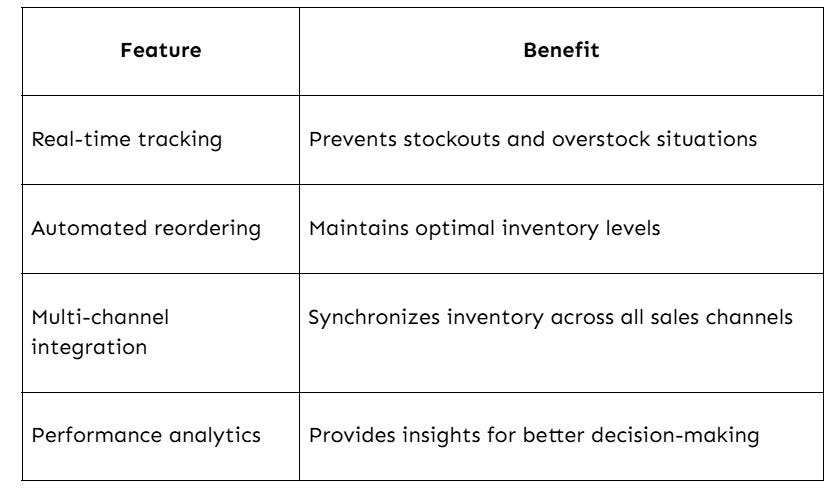
Advanced tracking and monitoring gives comprehensive visibility into your entire supply chain and allows you to identify potential disruptions before they impact your operations. You’ll be a step ahead and able to take proactive measures to maintain business continuity.
But building supply chain resilience isn’t a one-time effort. It requires continuous monitoring and improvement, with regular assessments of supplier performance and risk factors. It’s worth it though to ensure your ecommerce business is better positioned to weather economic uncertainties and maintain growth even during challenging times.
Leveraging Data Analytics for Recession-Proof Growth
Data analytics should sit behind all recession-proof business strategies. And during economic uncertainty, focusing on the right metrics becomes crucial. Here are the essential metrics to monitor:

Using Predictive Analytics for Demand Forecasting
Predictive analytics has revolutionised demand forecasting in ecommerce. ML-powered predictive models can analyse hundreds of factors impacting demand requirements, including price fluctuations, promotions, and even weather conditions.
This technology now enables businesses to:
- Optimise inventory levels and prevent stockouts
- Anticipate seasonal demand fluctuations
- Reduce excess inventory costs
- Improve supply chain efficiency
Optimising Pricing Strategies with Data
Dynamic pricing has emerged as a powerful tool for maintaining competitiveness during economic downturns. Studies indicate that price optimisation using data analysis can significantly impact profitability.
Key considerations for data-driven pricing include:
- Price elasticity analysis to determine optimal price points for different market segments. This involves analysing historical sales data, demographic information, and market conditions to set prices that maximise both sales and profitability.
- Machine learning algorithms can now process multiple data points simultaneously, enabling real-time price adjustments based on market conditions, competitor pricing, and customer behavior patterns. However, it’s crucial to maintain a balance — research shows that while dynamic pricing can boost profits, it requires continuous testing and refinement to avoid customer confusion and dissatisfaction.
Implementing Smart Marketing Strategies
Smart marketing during economic uncertainty involves a strategic reallocation of resources. Research shows that brands that maintained or increased marketing spend during past recessions grew 275% more than those that cut budgets in this crucial area.
The key to recession-proof marketing lies in data-driven budget allocation and it’s suggested that companies ideally should typically invest 7–10% of their revenue in marketing activities, with approximately half dedicated to digital initiatives.
Strategic Budget Distribution:
- Core proven strategies (70% of budget)
- Improved existing channels (20% of budget)
- Experimental marketing (10% of budget)
During economic uncertainty, focusing on channels with proven returns becomes crucial. Here’s how different digital channels currently compare in terms of ROI:

Email marketing emerges as the most cost-effective channel, with 50% of customers making monthly purchases through email campaigns while SEO provides sustainable long-term results, capturing more than 40% of revenue through organic traffic.
Building Customer Trust Through Content Marketing
Trust becomes particularly crucial during recessions, with 44% of consumers willing to spend an additional $500 with brands they trust. But, trust is fragile and 71% of consumers will stop buying from a brand if trust is broken.
Lasting trust can be built through content marketing:
- Create educational content that addresses customer pain points
- Focus on providing value rather than promotional content
- Share authentic customer stories and testimonials
- Maintain transparent communication about products and services
It’s suggested that 61% of consumers’ buying decisions are influenced by custom content so by prioritising relationships over immediate conversions, you can create lasting brand loyalty that withstands economic uncertainties.
Automating Operations for Efficiency
Automation has emerged as a critical factor for business survival and growth. Studies show that businesses implementing automation can reduce operational costs by 40–75% while significantly improving efficiency.
But identifying the right processes for automation is crucial for maximising return on investment. A good place to start is with processes involving three or more people, as these are typically 60% less efficient and prime candidates for automation.
Priority Processes for Automation:
- Inventory Management: Automated systems can provide real-time tracking and prevent stockouts
- Order Processing: Streamline from sale to shipment with automated workflows
- Customer Service: AI-powered chatbots and automated response systems
- Marketing Campaigns: Automated email flows and personalised messaging
Choosing the Right Automation Tools
The success of any automation strategy depends heavily on selecting appropriate tools, paying attention to integration capabilities for maximum impact.

Measuring Automation ROI
Calculating automation ROI can be done using the basic formula: ROI = (Savings ÷ Investment) × 100. However, the true value of automated systems extends beyond direct cost savings.
Key metrics to track when measuring automation ROI:
- Time saved on manual processes (measured in hours)
- Error reduction rates (typically 65% lower with automation)
- Customer satisfaction improvements
- Employee productivity gains
Automated systems can operate effectively for 18–20 hours daily, compared to 8 hours for manual processes and this increased operational capacity translates to significant productivity gains.
When implementing automation, consider both immediate and long-term benefits. While the initial investment in tools can be substantial, the cost of not automating during economic uncertainty can be even higher. Automated systems can process orders 24/7, maintain consistent accuracy levels, and scale operations without proportional increases in overhead costs.
For optimal results, focus on automating processes that occur frequently or are triggered by specific actions. This will ensure maximum impact on operational efficiency while still maintaining service quality.
Final Thoughts
Recession-proofing your ecommerce business requires a comprehensive approach across multiple areas, all needing to seamlessly work together to protect and grow your business during economic uncertainty. Success during challenging times comes from preparation and adaptability and businesses that do this well can not only survive economic downturns but often emerge stronger.
Remember though, recession-proofing isn’t a one-time effort — it requires consistent monitoring and adjustment of strategies for your ecommerce business to stay competitive and continue growing, regardless of economic conditions. Reach out and let’s chat if you’d like help to assess your business’s capacity to thrive in difficult times.
메타데이터
- post_id
- 51357758f4e4
- slug
- scaling-your-ecommerce-business-in-challenging-economic-times-51357758f4e4
- url
- https://blog.cubed.run/scaling-your-ecommerce-business-in-challenging-economic-times-51357758f4e4
- canonical_url
- https://blog.cubed.run/scaling-your-ecommerce-business-in-challenging-economic-times-51357758f4e4
- author_url
- https://medium.com/@colin-cooper
- status
- ok
- fetched_at
- 2026-07-08 14:06:06