Digital Dignity in Healthcare: Reflections on Patient Privacy
A social media post recently caught my attention. It celebrated what was undoubtedly a remarkable medical achievement: an eight-hour…
Digital Dignity in Healthcare: Reflections on Patient Privacy
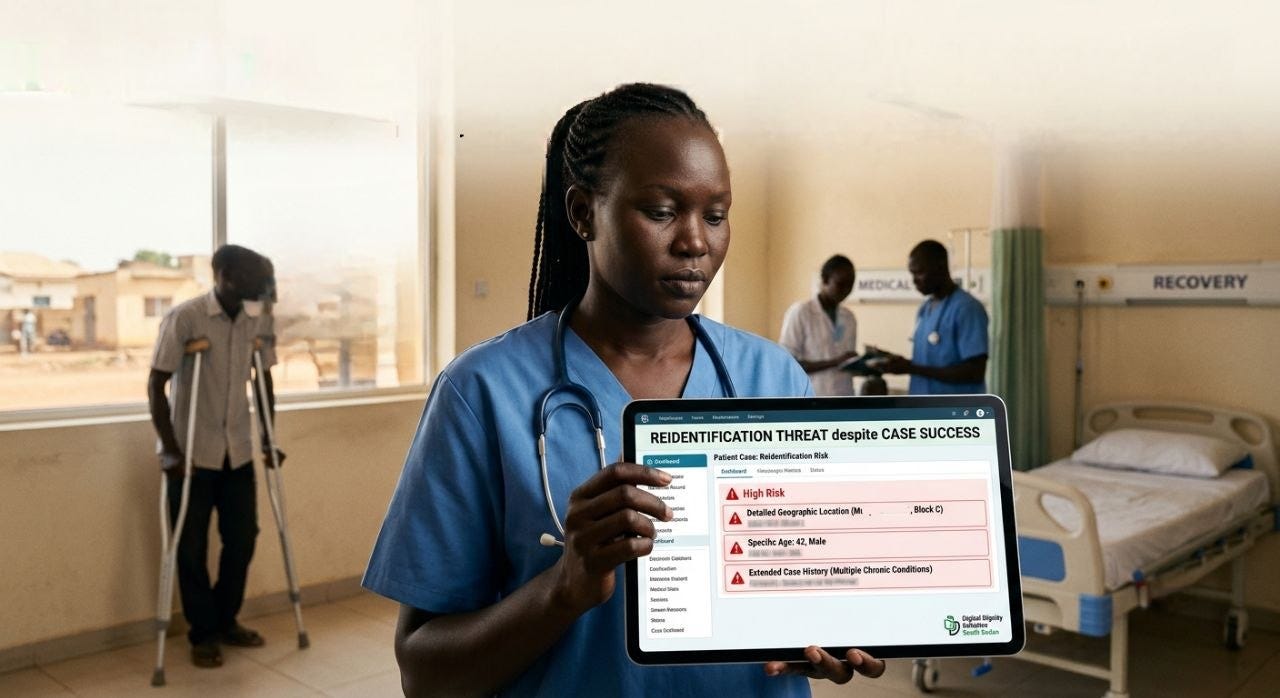
AI Generated Image
A social media post recently caught my attention. It celebrated what was undoubtedly a remarkable medical achievement: an eight-hour operation performed on a 17-year-old girl who had sustained a gunshot wound. The post described her age, the hospital where she was treated, the nature and location of her injuries, and even included medical images documenting the procedure. Like many others, I was impressed by the dedication, skill, and commitment of the healthcare professionals involved. Saving a life under such circumstances deserves recognition.
But as I scrolled through the post, another question began to trouble me.In celebrating medical success, are we unintentionally compromising a patient’s digital rights?
This is not an attack on any individual healthcare worker. Nor is it an attempt to diminish the incredible work medical professionals do every day. Rather, it is an opportunity to examine a growing challenge in our increasingly connected world: the blurred line between professional achievement, public storytelling, and digital responsibility. And when that line becomes blurred, vulnerable individuals, especially children, can become unintended casualties.
Understanding privacy, consent and data
Before going further, it is important to define a few concepts.
Privacy is the ability of an individual to control access to themselves and their personal information.
Consent occurs when a person voluntarily agrees to a specific action or decision after understanding what it involves.
Data refers to information that can be collected, processed, stored, and shared. The patient’s age, medical scans, hospital information, injury details, photographs, and treatment records are all forms of data.
Yet an important question remains. How often do patients truly have a say in who takes their information, photographs them, publishes their stories online, or decides how their information is used?
In today’s digital environment, where social media rewards visibility, engagement, and reach, it has become increasingly common for individuals and institutions to share content in pursuit of likes, shares, comments, and followers.
Unfortunately, this has also created a culture where many people no longer stop to ask a critical question: Just because something can be posted online, should it be?
In countries with strong privacy and data protection laws, safeguards exist to help answer that question. Accountability mechanisms, ethical standards, and legal frameworks help protect individuals from misuse of their personal information.
However, where such safeguards are weak, poorly enforced, or not widely understood, the risk of exposing sensitive information becomes significantly higher.
As I read through the comments on the post, I noticed something striking. Most people saw nothing wrong with it. That, perhaps, is part of the problem.
A patient is not content.Medical information is among the most sensitive forms of personal data a person possesses.
Health records reveal intimate details about our bodies, our circumstances, our vulnerabilities, and sometimes our trauma.
Even when names are omitted, details such as age, hospital location, date of treatment, nature of injuries, scans, photographs, and circumstances surrounding an incident can make an individual identifiable, particularly in smaller communities. This is known as re-identification.
Digital rights are not only about protecting names, phone numbers, or identity cards. They are also about protecting people from being identified through the combination of seemingly harmless information. When enough pieces of data are brought together, anonymity disappears.
What if this were a scenario of targeted shooting? The assailants or those with malicious intent could trace the individual for whatever interest- for now some may argue that this only happens in movies but movies are a recreation of pieces of real life stories.
And in this case, the post could still have celebrated the medical achievement without disclosing details that increased the risk of identifying the patient.
The overlooked issue: This patient is a child
One detail deserves special attention.The patient described in the post is 17 years old. That means she is a child.
Globally, children are entitled to heightened protections regarding their privacy, dignity, and personal information. Whether online or offline, children have a right to protection from unnecessary exposure. Once information is published online, control over it is effectively lost. A screenshot can be taken in seconds.
Content can be copied, shared, archived, downloaded, reposted, and redistributed indefinitely. Years later, that digital footprint may still exist. The young patient may one day have to live with a traumatic chapter of her life permanently attached to her digital identity;without ever having chosen to make it public.
Digital footprints do not disappear
Many professionals underestimate the permanence of online information. Deleting a post does not necessarily remove it from the internet. By the time a post is removed, it may already exist in screenshots, social media shares, search engine caches, archives, or third-party platforms.
This is why conversations about cyber safety cannot be limited to hacking, cybercrime, and malware. Cyber safety is also about protecting individuals from unnecessary digital exposure. Not every cyber safety risk comes from a malicious actor. Sometimes, the risk comes from good intentions.
Medical confidentiality as a digital rights issue
Historically, patient confidentiality was viewed primarily as a matter of professional ethics. Today, it is also a digital rights issue. Healthcare professionals are no longer only caregivers. They are digital actors. Their phones have become publishing tools. Their social media accounts have become public communication channels. And with that visibility comes responsibility.
A simple principle should guide all online sharing: If a patient, family member, neighbour, classmate, or community member could identify the individual from the information shared, then too much information has been disclosed.
Modern day hospitals hire public relations officers supervising social media managers for compliance to their laid policies. This helps them filter content for safeguarding- some individuals may sue too so for legal protection as well.
We Need Stronger Digital Governance in Healthcare
This incident is not isolated.Across the world, healthcare professionals increasingly use social media to educate the public, document procedures, raise awareness, build professional brands, and share success stories. These objectives can be valuable. But they require safeguards. Healthcare institutions should consider implementing:
1. Social media governance. Hospitals should establish clear policies defining what healthcare workers can and cannot publish online.
2. Mandatory digital rights training. Healthcare professionals should receive regular training on privacy, digital ethics, cyber safety, data protection, and responsible social media use.
3. Stronger child protection protocols. Cases involving minors should be subject to additional scrutiny and safeguards.
In South Sudan, this raises an important question: How adequately does the Child Act 2008 address child protection in the digital era? As digital devices become more accessible and online participation becomes part of everyday life, this conversation is becoming increasingly urgent.
4. Informed consent procedures. Consent should be explicit, informed, documented, and specific. Patients and guardians should understand exactly what information is being shared, where it will appear, and how it may be used.
5. Data minimisation practices. Where educational or awareness purposes exist, only the minimum amount of information necessary should be disclosed.
What law do we have in South Sudan that would be relevant perhaps?
That question prompted me to examine an interesting aspect of this discussion: the relevance of South Sudan’s Cybercrime and Computer Misuse Act, 2026. Chapter Six addresses offences and penalties.
Section 33 focuses on unauthorised data transmission and includes provisions relating to the disclosure or transmission of data without lawful authority or consent.
This raises important questions: If sensitive patient information is shared publicly without appropriate consent, could such provisions apply? Is the issue primarily one of legal enforcement? Or is it a broader challenge of public awareness and professional understanding of digital rights obligations? These are conversations we must begin having more openly.
As African countries continue building digital economies, discussions about digital rights cannot stop at cybersecurity, internet access, or artificial intelligence. We must also talk about digital dignity.
Digital dignity means protecting people’s humanity when their lives intersect with technology.Whether someone is a student, a survivor of violence, a patient, or a child, their story should never become public property simply because it can be uploaded.Technology has made publishing effortless. Ethics should make us pause before clicking “Post.”
In our desire to celebrate heroism, educate others, and share success stories, have we created a culture where patients are unknowingly becoming digital subjects rather than protected individuals? Saving a life is a remarkable achievement. Protecting a person’s dignity afterward is equally important. In the digital age, healthcare excellence must include both.
Because a patient is not content. A medical case is not a social media story. And privacy is not optional. It is a fundamental digital right. What do you think? Where should we draw the line between public education, professional recognition, and patient privacy in the digital age?
메타데이터
- post_id
- 5135bb5b0b44
- slug
- digital-dignity-in-healthcare-reflections-on-patient-privacy-5135bb5b0b44
- url
- https://medium.com/@yineyenki/digital-dignity-in-healthcare-reflections-on-patient-privacy-5135bb5b0b44
- canonical_url
- https://medium.com/@yineyenki/digital-dignity-in-healthcare-reflections-on-patient-privacy-5135bb5b0b44
- author_url
- https://medium.com/@yineyenki
- status
- ok
- fetched_at
- 2026-06-28 04:42:08



