Why Does a Game Need a UX Designer?
Part 1 of a series on Game UX and VR UX, exploring why Game UX is more than just making interfaces look good.
Why Does a Game Need a UX Designer?
Part 1 of a series on Game UX and VR UX, exploring why Game UX is more than just making interfaces look good.
By Caleb Otudeko
The question my developer asked me
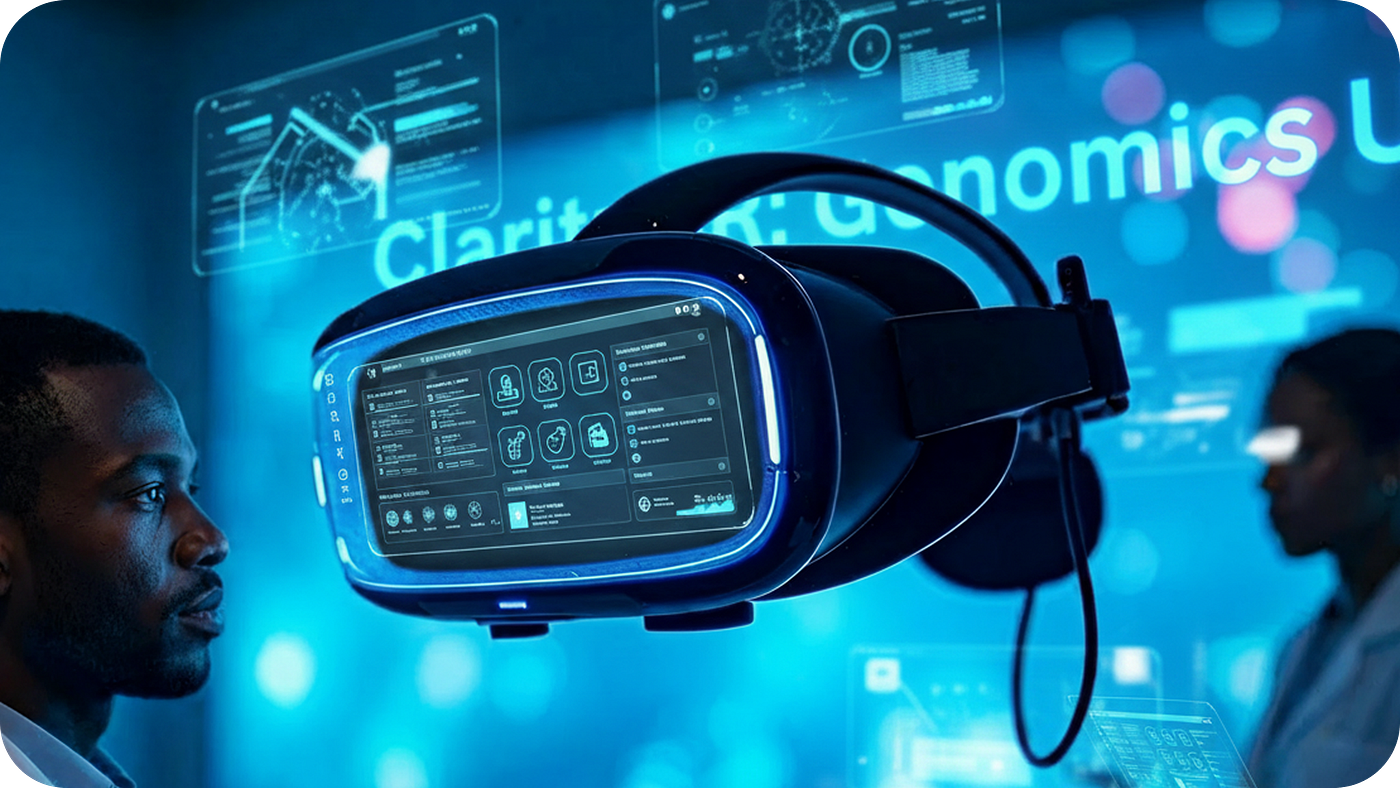
A few months ago, I had the opportunity to work on a VR development project, specifically the GenomicsXR simulation lab experience with IGH. My role was User Interface and Experience design. At some point during the project, my friend Daniel, the Unity developer on the team, raised a question that I’ve thought about ever since.
Why does a project need a UX designer? He could design the UI. He could integrate everything technically. Why bring in someone whose job title sounds like it overlaps with his?
It’s a fair question. And I want to answer it properly, because I think it gets to the heart of what Game UX and VR UX actually are, and why they matter.
What Game UX and VR UX actually mean
Let me define the territory first.
Game UX (and VR UX, which I’m treating together here because the principles are closely related) is how a player feels when they play. It’s how they understand what’s happening, how they learn the mechanics, and how the whole experience guides them without either overwhelming them or boring them. It’s that moment when the help bar teaches you to fight without you realising you were being taught or when the panel guides you on how to use a scientific tool you have not used before and you do it so well. It’s the difference between a player who quits in frustration in the first five minutes and one who keeps coming back.
UI design, icons, colour, and layout are a part of UX. But UX is the larger thing. UI is what you see. UX is what you experience.
Game UX is still UX at its core. The same foundational principles apply: empathy, clarity, structure, and feedback. What changes is the context in which you apply them.
Why the developer can’t just do it himself
Here’s my honest answer to Daniel’s question.
A Unity developer is brilliant at building systems. They think in terms of what is technically possible, what the engine can render, and what integrations are stable. That’s exactly the expertise a project needs.
But that’s a different kind of thinking from asking, “How will a human being experience this? ”
A developer choosing what to build is not the same as a UX designer choosing how players should experience it. One is optimising for technical execution. The other is optimising for human cognition, for how the mind processes information under pressure, in motion, and in a world that doesn’t exist.
The clearest example I can give you is from our own project. While testing the GenomicsXR VR lab, one of my biggest concerns was nausea. Players were experiencing motion sickness during the simulation. That was not a Unity problem. The engine was working exactly as intended. It was a human experience problem: the way movement was designed, how camera motion interacted with the player’s vestibular system, and how the environment gave (or failed to give) visual anchors. Solving it required someone who was thinking about the person inside the headset, not just the code running behind the scene.
That’s what a UX designer does. We think about the people.
Next in this series: The CIE framework, a simple way of thinking about clarity, intention, and empathy in game design.
Caleb Otudeko is a product designer and UX practitioner. He is the founder of Ikre8ins and a contributor to the IGH GenomicsXR project.
메타데이터
- post_id
- 513dc8a262ea
- slug
- why-does-a-game-need-a-ux-designer-513dc8a262ea
- url
- https://medium.com/@Calebtdk/why-does-a-game-need-a-ux-designer-513dc8a262ea
- canonical_url
- https://medium.com/@Calebtdk/why-does-a-game-need-a-ux-designer-513dc8a262ea
- author_url
- https://medium.com/@Calebtdk
- status
- ok
- fetched_at
- 2026-06-14 11:28:49