How Cities Are Becoming Greener and More Livable
For decades, cities have been viewed as symbols of economic growth and human progress — but also as centers of pollution, congestion, and…
How Cities Are Becoming Greener and More Livable
For decades, cities have been viewed as symbols of economic growth and human progress — but also as centers of pollution, congestion, and environmental stress. Today, that narrative is beginning to shift. Across the world, urban areas are undergoing a transformation that is not only focused on reducing environmental impact but also on improving the quality of everyday life for the people who live in them.
This evolution is not driven solely by climate policy or regulatory pressure. It is increasingly shaped by a simple reality: cities that are greener are often more comfortable, healthier, and more efficient places to live. As a result, sustainability is becoming deeply connected with livability.
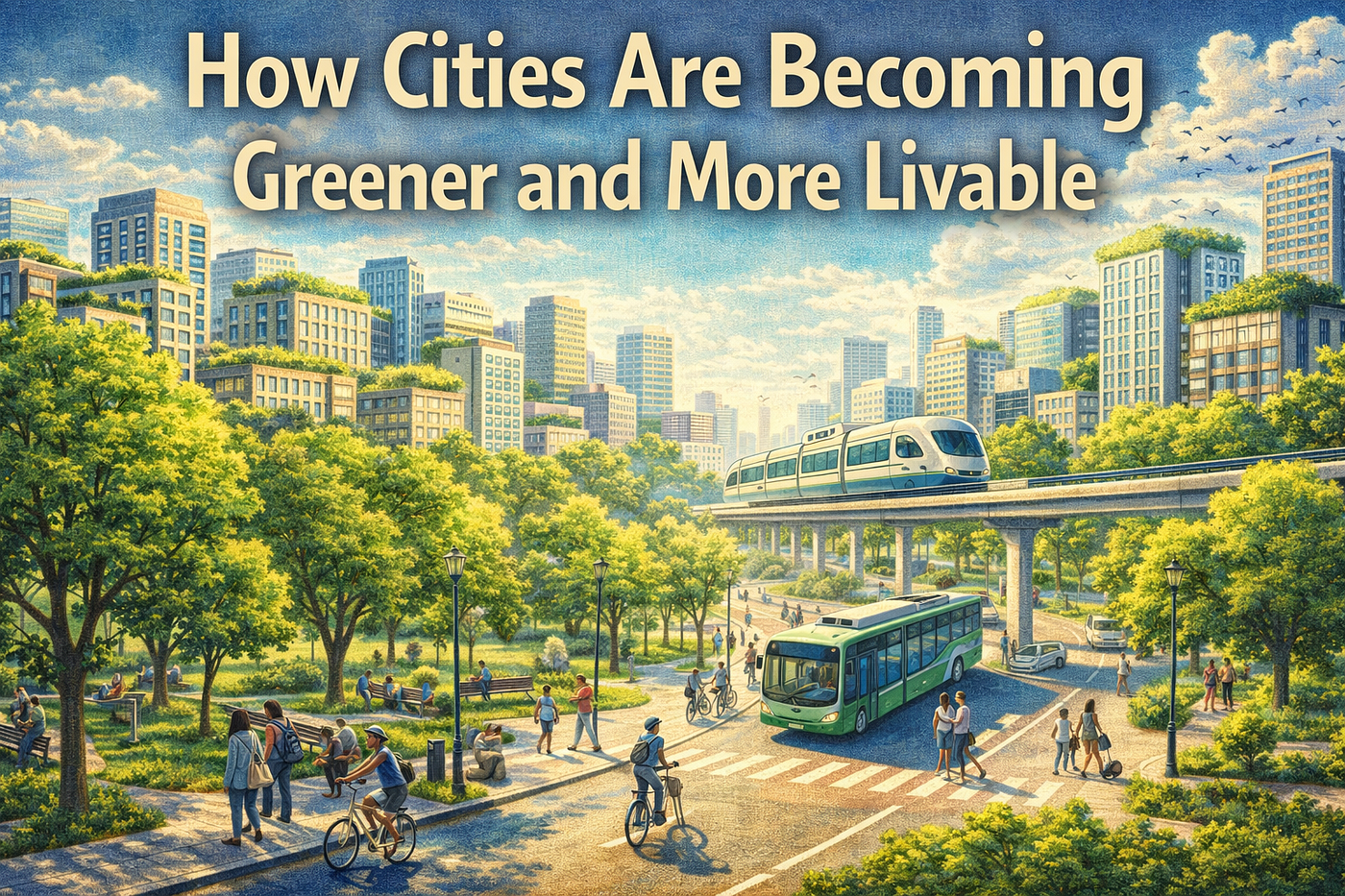
One of the most visible changes in modern cities is the expansion of urban tree cover and green spaces. Urban tree programs are no longer seen as aesthetic improvements alone; they are now recognized as critical infrastructure. Trees provide shade, reduce surface and air temperatures, and help counter the urban heat island effect — a phenomenon where cities become significantly hotter than surrounding areas due to dense construction and limited vegetation.
In practical terms, this means cooler streets, more comfortable outdoor environments, and reduced reliance on air conditioning. For residents, especially in densely populated neighborhoods, the presence of trees and parks can significantly improve daily comfort during hot seasons. Over time, this also translates into lower energy consumption and reduced electricity costs for cooling.
Green spaces also contribute to improved air quality by filtering pollutants and producing oxygen. For individuals, this leads to better respiratory health and a more pleasant living environment. Parks, green corridors, and tree-lined streets are increasingly being integrated into urban planning not just as recreational areas, but as essential components of public health infrastructure.
Another major shift is taking place in how people move within cities. Public transport systems are being electrified at an accelerating pace, replacing diesel-powered buses and older transit systems with cleaner alternatives. Electric buses, metro systems, and light rail networks are helping reduce emissions while also improving the commuting experience.
For residents, the benefits are immediate. Electric public transport is typically quieter, smoother, and less polluting. Reduced noise levels make urban environments more pleasant, while cleaner air improves overall health outcomes. At the same time, reliable and efficient public transport reduces dependence on private vehicles, helping individuals save money on fuel and maintenance.
Walkability is another key element of greener and more livable cities. Urban design is increasingly prioritizing pedestrians over cars, with wider sidewalks, safer crossings, and mixed-use neighborhoods that bring essential services closer to where people live. The goal is to make daily life less dependent on long commutes and more centered around accessible, local environments.
When cities are designed to be walkable, the impact goes beyond environmental benefits. Residents experience less traffic stress, spend less time commuting, and have more opportunities for physical activity. Local businesses also benefit from increased foot traffic, creating more vibrant community spaces.
Cycling infrastructure is often integrated into this approach, with dedicated bike lanes and shared mobility options making it easier for people to choose alternatives to driving. These changes collectively contribute to reduced congestion, lower emissions, and a higher quality of urban life.
Buildings themselves are also evolving as part of this transformation. Green building standards are becoming more widely adopted, focusing on energy efficiency, water conservation, and sustainable materials. Modern buildings are designed to use less energy for heating, cooling, and lighting, often incorporating smart systems that optimize resource use automatically.
For occupants, this translates into more comfortable indoor environments with better temperature control, improved air quality, and lower utility costs. For businesses, energy-efficient buildings reduce operating expenses while also supporting sustainability goals.
메타데이터
- post_id
- 513f8c152279
- slug
- how-cities-are-becoming-greener-and-more-livable-513f8c152279
- url
- https://medium.com/@anandv_62921/how-cities-are-becoming-greener-and-more-livable-513f8c152279
- canonical_url
- https://medium.com/@anandv_62921/how-cities-are-becoming-greener-and-more-livable-513f8c152279
- author_url
- https://medium.com/@anandv_62921
- status
- ok
- fetched_at
- 2026-07-14 07:47:58