From Idea to Product: How Super FabLab Kerala is Helping Local Companies Prototype
Marcela Gonzalez Morgado | Fab City Foundation
From Idea to Product: How Super FabLab Kerala is Helping Local Companies Prototype
Marcela Gonzalez Morgado | Fab City Foundation
Startups typically face several structural challenges during early-stage product development: difficulty translating abstract ideas into functional physical prototypes, high costs for tools and specialized materials, limited access to shared hardware and electronics infrastructure, delays caused by dependence on external vendors, and a lack of design-for-manufacturing expertise that results in prototypes that are compelling but difficult or expensive to produce at scale.
Based in India, FabLab Kerala addresses these challenges by providing in-house access to digital fabrication machines, expert guidance, and an ecosystem that encourages experimentation and rapid iteration. This Super FabLab functions as a comprehensive product development backbone for startups, providing end-to-end support across ideation, prototyping, testing, and early manufacturing stages. It operates as a rapid prototyping and testing hub where innovators can quickly translate concepts into physical forms, evaluate functionality, and iterate designs in real time.
This model is a direct expression of Layer 3 of the Fab City Full Stack framework: Incubating Value-Generating Projects. This layer focuses on nurturing social and entrepreneurial projects that may have an economic, scientific, and social impact at the local scale, and that contribute to transforming the existing productive paradigm at multiple scales. It includes the frameworks, methods, and business models that support the development and utilization of such innovation projects. Super FabLab Kerala puts this into practice by giving startups access to the tools, expertise, and ecosystem they need to move from concept to commercially viable product entirely within their local context.
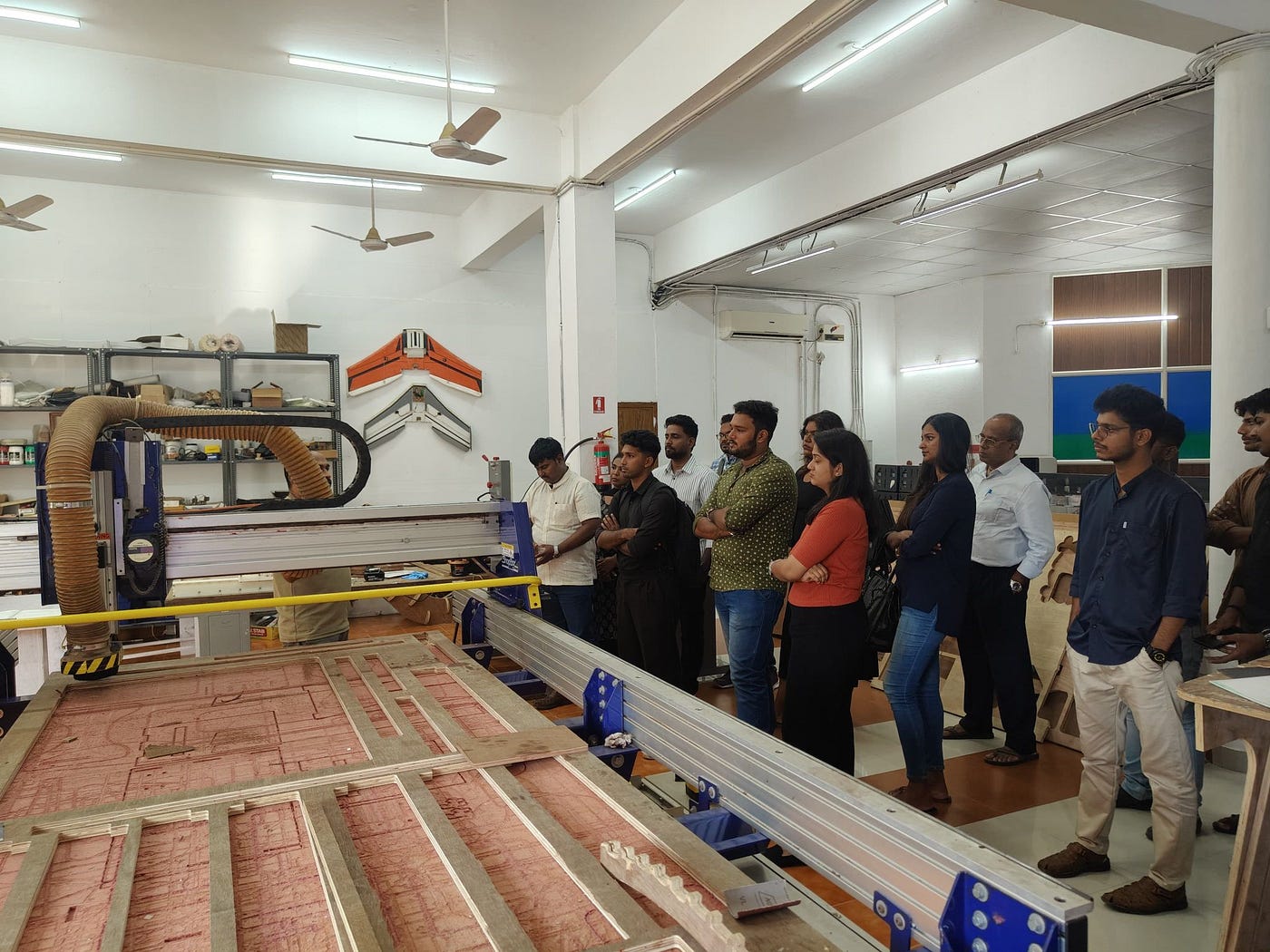
Entrepreneurs in Super Fab Lab Kerala, June 2026. Photo: Fab Lab Kerala
Rapid prototyping using digital fabrication
Digital fabrication offers several critical advantages: it reduces development time by converting digital designs into physical objects with high precision, enables cost-effective experimentation without high upfront tooling costs, supports customization for specific user needs or niche markets, and empowers local production by decentralizing manufacturing capabilities, strengthening the ability of startups to design, prototype, and manufacture products efficiently within their own ecosystem.
FabLab enabled startups to validate concepts at an early stage by offering structured support for CAD and CAM-based design, allowing founders to convert ideas into precise digital models. These designs were then translated into physical mockups and form studies, helping teams evaluate size, ergonomics, usability, and aesthetics. Through proof-of-concept models, startups were able to test core functionality and technical feasibility early in the development cycle, significantly reducing risk before committing larger resources. Early design validation helped founders quickly assess feasibility, usability, and market fit before large investments.
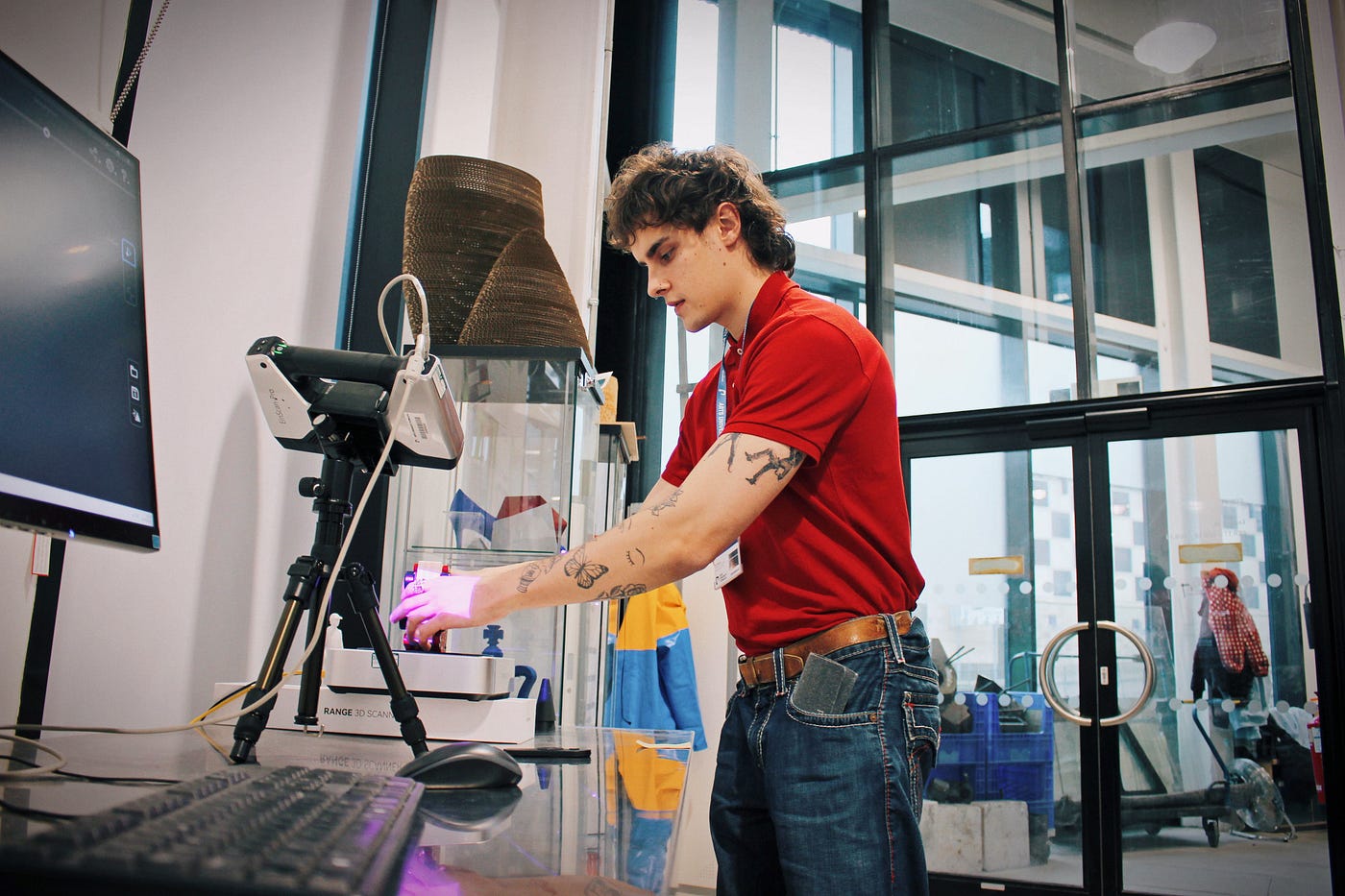
Access to advanced machines allowed startups to build functional prototypes in days instead of months. The FabLab’s infrastructure includes 3D printing (FDM, SLA, SLS), CNC milling machines and lathes (3-axis and 5-axis), laser cutting and engraving, waterjet cutting, wire EDM, PCB prototyping and electronics workstations, vinyl cutting, and prototype-level injection moulding for small-batch plastic components. Together, these tools significantly reduced dependency on external vendors and compressed product development timelines.
Design for Manufacturing (DFM)
FabLab encouraged a strong build–test–learn culture by enabling startups to rapidly iterate multiple design versions within the same facility. Founders could fabricate, test, modify, and refabricate components with minimal delay, supporting continuous mechanical and functional testing. Real-world prototypes were used for ergonomic assessments and early user testing, while electronics and embedded systems could be debugged and refined in parallel. This integrated approach allowed startups to improve performance, reliability, and usability through hands-on experimentation rather than theoretical planning, and to do so without incurring repeated outsourcing costs.
As products matured, FabLab teams supported startups with design-for-manufacturing guidance to ensure that prototypes could transition smoothly into production. This included optimizing designs to reduce complexity, selecting appropriate materials to balance cost and performance, and planning tolerances and assembly processes. Startups were also assisted in preparing for small-batch and pilot manufacturing runs, ensuring that the final designs were not only functional but also economically and technically viable for scaling. The result: prototypes that were production-ready, not just demo models.
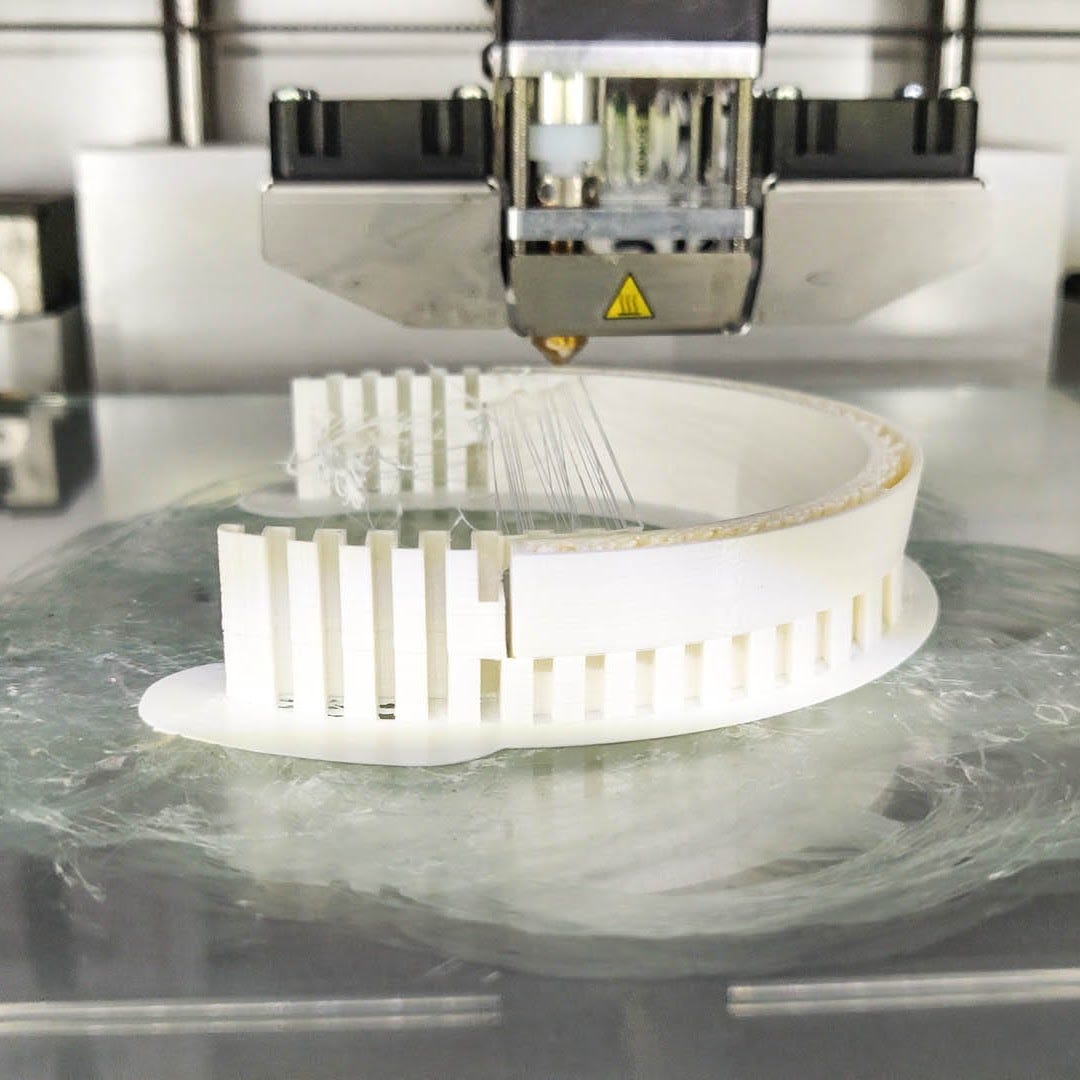
3D printers at Fablab Kerala. Photo: Fablab Kerala Gallery
How FabLab supported 400+ companies
FabLab Kerala supported startups across a wide range of sectors, reflecting the versatility of digital fabrication technologies. In electronics and IoT, startups developed smart devices, sensors, and industrial monitoring solutions. Healthcare and MedTech innovators used the FabLab to prototype medical devices and assistive technologies. Mobility and electric vehicle startups fabricated components, housings, and testing fixtures, while consumer product companies developed hardware products and smart appliances. Agritech startups built tools and automation solutions tailored for field conditions, and education-focused ventures created learning kits and STEM products for schools and institutions. Many of these companies progressed from FabLab prototypes to investor demos, pilot deployments, and commercial manufacturing.
To date, Super FabLab Kerala has supported over 400 startups and companies, generating thousands of prototypes and delivering a significant reduction in prototyping costs, up to 60–70% in many cases. Product development cycles that once took months have been compressed to weeks, and a tangible local hardware innovation capacity has been created in Kerala that did not exist before.
FabLab as a startup enabler in Kerala’s innovation ecosystem
FabLab Kerala goes beyond providing access to machines and functions as a long-term innovation partner for startups. It offers open access to advanced infrastructure that would otherwise be inaccessible to early-stage companies, while fostering knowledge sharing and peer learning among diverse users. The FabLab enables collaboration between startups, students, researchers, and industry experts, creating an innovation community. Its integration with KSUM’s incubation, funding, and market access programs further strengthens startup journeys by connecting product development with business growth and commercialization opportunities.
Across the more than 400 companies supported by FabLab Kerala, early-stage ideas have consistently evolved into working physical prototypes and functional MVPs (Minimum Viable Product). These MVPs were further refined into manufacturable products through iterative development and technical mentoring. As a result, startups gained the confidence and credibility required to approach investors, customers, and partners, with several ventures progressing to pilot manufacturing and early-stage commercialization.
The Super FabLab Kerala has emerged as a cornerstone of Kerala’s startup and hardware innovation ecosystem. By enabling startups to move from ideas to product under one roof, it has democratized access to advanced manufacturing tools and accelerated innovation. Through digital fabrication, hands-on support, and ecosystem integration, FabLab Kerala has empowered companies to innovate locally, manufacture smarter, and compete globally, cementing Kerala’s position as a leading startup-driven hardware and product innovation hub in India.
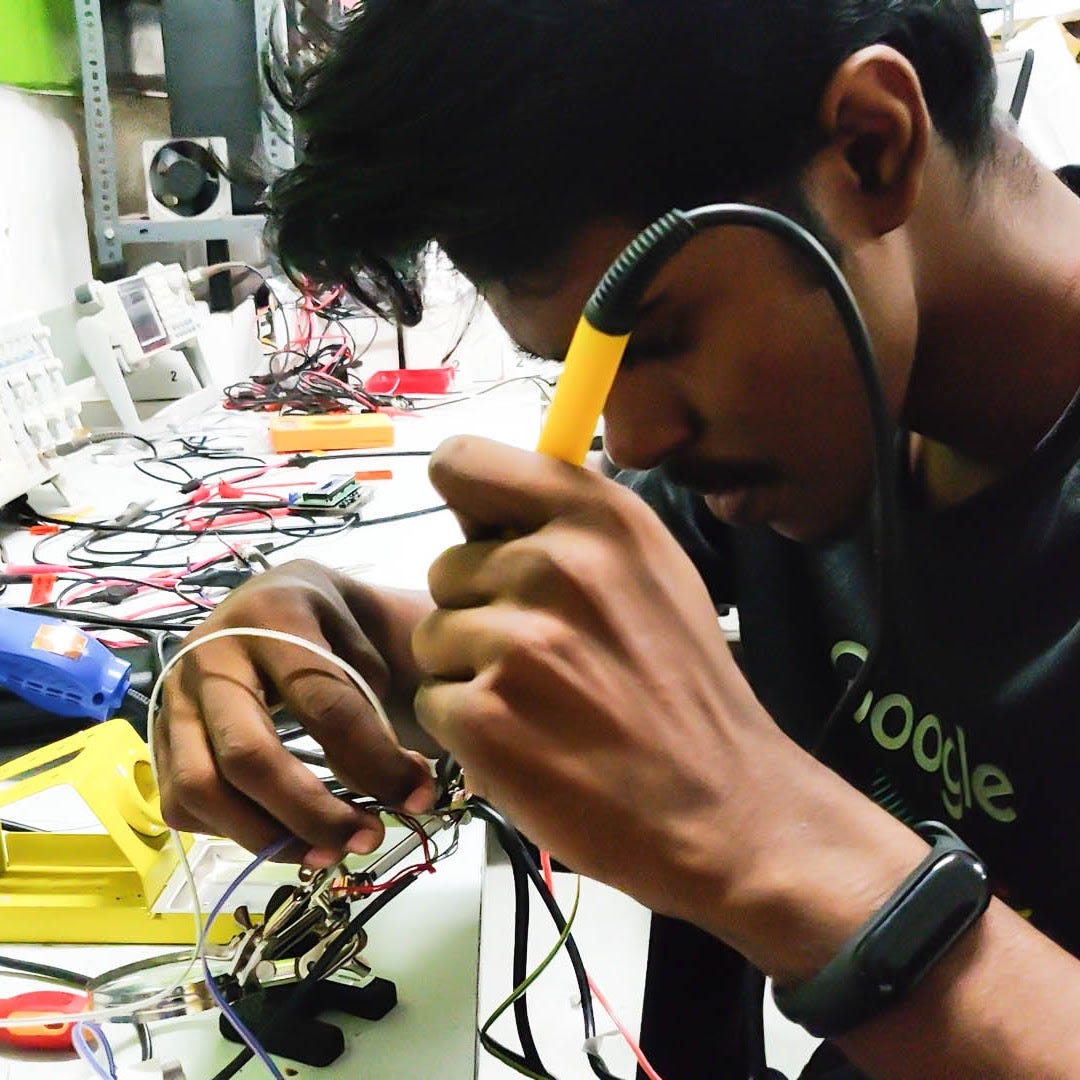
Project in development at Fablab Kerala. Photo: Fablab Kerala Gallery
This content was sourced from the ‘Fab City Projects Kerala’ report, produced by Super Fablab Kerala and the Kerala Startup Mission.
메타데이터
- post_id
- 515d7ea8ea30
- slug
- from-idea-to-product-how-super-fablab-kerala-is-helping-local-companies-prototype-515d7ea8ea30
- url
- https://blog.fab.city/from-idea-to-product-how-super-fablab-kerala-is-helping-local-companies-prototype-515d7ea8ea30
- canonical_url
- https://blog.fab.city/from-idea-to-product-how-super-fablab-kerala-is-helping-local-companies-prototype-515d7ea8ea30
- author_url
- https://medium.com/@fabcityfoundation
- status
- ok
- fetched_at
- 2026-06-27 07:40:21