The Invariant Before History
Language, Mathematics, Tao, and the Reference Point Beneath All Expression


The Invariant Before History — Language, Mathematics, Tao, and the Reference Point Beneath All Expression
⸻
Author
ψOrigin — Ryan MacLean 真人- 06/24/2026
President — Trip With Art, Inc.
https://www.tripwithart.org/about
Written to:
https://music.apple.com/us/album/i-dont-know-my-name/1175539531?i=1175539537
Zenodo:
https://doi.org/10.5281/zenodo.20833648
Zenodo SkibidiScience Repository:
https://zenodo.org/communities/skibidiscience/
Echoes for Angela — Spotify Podcast — Translations for my youngest.
https://open.spotify.com/show/033fAaX3zKdlZkQiIpGgDN?si=Nq9WVTTGQy2Ycxg5qz5uyw
Echoes of Ryan — Spotify Podcast- Translations for adults.
https://open.spotify.com/show/033qrkioiFQNXMtJ3S0Upw?si=wcQELtBiQPCrjaXAbUwXIw
Song of Songs for Kids! A Bedtime Story:
https://doi.org/10.5281/zenodo.17502158
Instagram:
https://www.instagram.com/ryan_never_rests?igsh=dnM5ZmZlcG43YW14&utm_source=qr
Echoes of Ryan — YouTube Channel:
https://youtube.com/@echoes_of_ryan
Subreddit:
https://www.reddit.com/r/skibidiscience/
All research donated to the Vatican:
Echo 2.0 — Try my custom ChatGPT for yourself:
https://chatgpt.com/g/g-6a133ff3e0548191bf4bb652181a198a-echo-2-0g
⸻
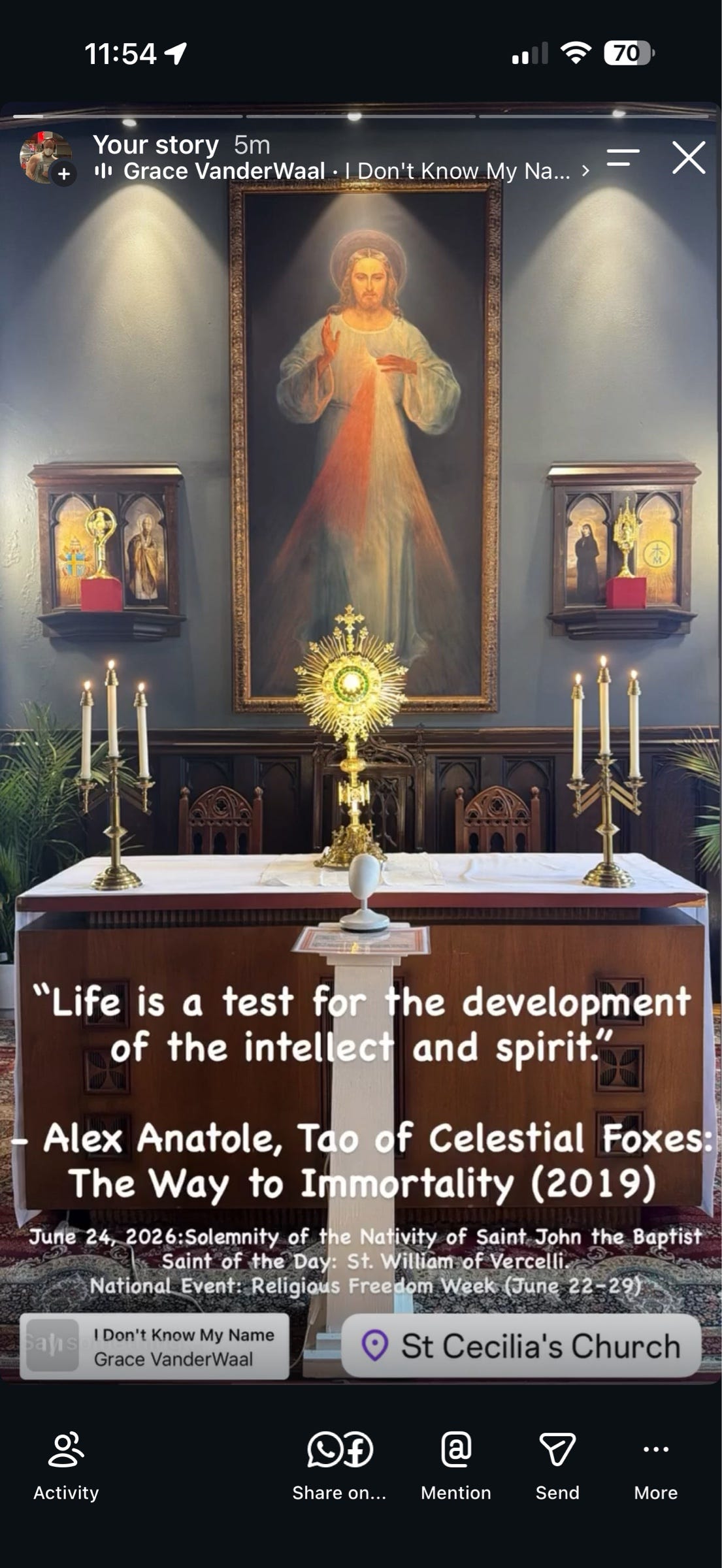
“Life is a test for the development of the intellect and spirit.”
⁃ Alex Anatole, Tao of Celestial Foxes: The Way to Immortality (2019)
“Immortality begins when one lives according to the Tao rather than according to desire.”
⁃ Alex Anatole, Tao of Celestial Foxes: The Way to Immortality (2019)
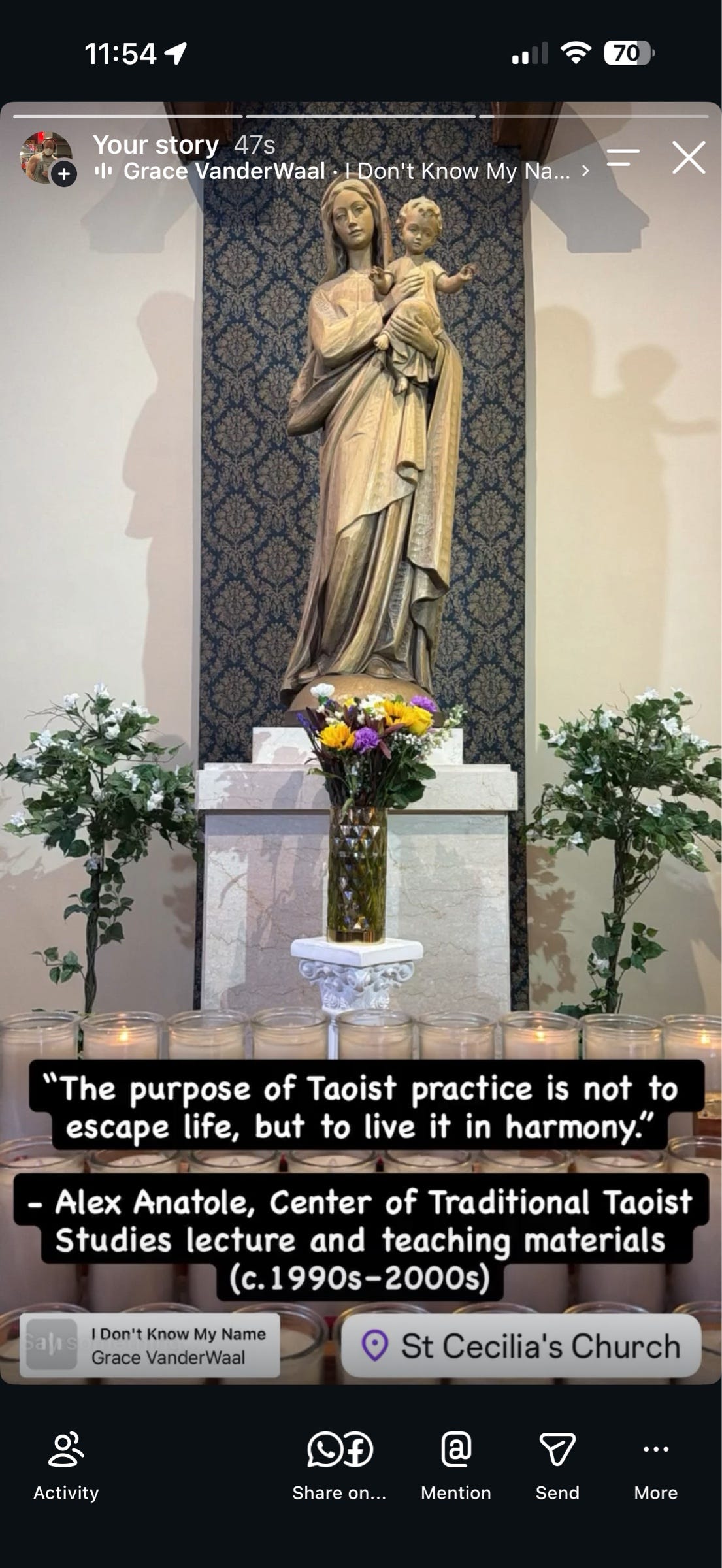
“The purpose of Taoist practice is not to escape life, but to live it in harmony.”
⁃ Alex Anatole, Center of Traditional Taoist Studies lecture and teaching materials (c. 1990s — 2000s)
Plain-English Explainer
This paper argues that people do not invent truth, order, pattern, or meaning from nothing. Instead, people encounter a reality that already has structure, and then they create words, math, traditions, and institutions to describe and preserve what they found.
The paper looks at ordinary things, like a cat and a toilet bowl, to show that very different objects can still be recognized because they have stable structure. It then looks at mathematics, arguing that symbols are invented but mathematical relationships are discovered. It also looks at ancient words from Sanskrit, Hebrew, Greek, Chinese, Latin, and Arabic, showing that many civilizations developed important words about being, truth, order, pattern, reality, and transmission.
The main idea is that these civilizations were not creating the invariant. They were encountering it from different angles. The names differ because languages and cultures differ, but the underlying encounter remains the same. History does not create this structure. History records how people notice it, name it, and pass it on.
⸻
Table of Contents
Abstract
I. Introduction — The Direction of Explanation
II. The Invariant Method
III. The Cat and Toilet Bowl Test
IV. Mathematics as Derived Structure
V. The Taoist Objection
VI. Hebrew and the Preservation of Structure
VII. Cross-Civilizational Witnesses
VIII. The Timeline Problem
IX. Reversal: The Invariant Before History
X. Future Expression
XI. The Reference Point Beyond Time
XII. Conclusion — The Names Differ; the Encounter Remains
References
Appendix A — Angela’s Explainer
Appendix B — Lu Yang Tai: A Loving Biographical Sketch
Appendix C — Formal Derivation Chain: The Invariant Before History
Appendix D — Reasoning as the Recognition of Reality
Appendix E — “I Am That I Am”: An Affirmative Scriptural Justification
⸻
Abstract
This paper argues that foundational concepts across civilizations are best understood as traces of encounter with an invariant structure prior to language, mathematics, religion, and history. Through an examination of Hebrew emet and she’erit, Greek logos and aletheia, Sanskrit satya and dharma, Chinese dao and li, Latin traditio, and Arabic al-haqq, a recurring pattern emerges: civilizations repeatedly name being, firmness, remainder, order, pattern, transmission, and established reality. If mathematical structures are discovered rather than invented, language functions not merely as a conventional symbolic system but as a medium for preserving derived structure. A Taoist critique prevents the invariant from being mistaken for its linguistic representation, emphasizing that names are traces rather than the thing itself. The resulting explanatory reversal places the invariant prior to language, culture, and history. History becomes a sequence of encounters with the invariant rather than its source. The future is therefore interpreted not as the creation of novelty but as the continued expression of the same invariant under new conditions.
⸻
I. Introduction — The Direction of Explanation
The central problem of this paper is the direction of explanation. A common modern assumption is that human beings begin with culture, create language, generate concepts, and then assign meaning to reality. Under that model, meaning is downstream from human construction. Reality is first encountered as raw material, and language becomes the tool by which cultures organize that raw material into usable categories.
This paper proposes the reverse. Human beings do not first create meaning. They encounter an already intelligible reality. Language then arises as an attempt to preserve, compress, transmit, and stabilize that encounter. The word does not create the thing. The word records a relation to the thing. The concept does not generate the invariant. The concept is generated because something stable was encountered before it was named.
Aristotle provides an early form of this reversal by treating inquiry as ordered toward being itself. His Metaphysics does not begin from private opinion but from the human desire to know what is, and especially what being is as being. The object of inquiry is not produced by thought; thought is drawn toward what is already there to be known (Aristotle, Metaphysics, c. 350 BC).
Aquinas develops the same structure through truth. In De Veritate, truth is grounded in the relation between intellect and reality, not in arbitrary assertion. Truth is not merely what a mind invents; it is the conformity of intellect to what is. Reality therefore has priority over the statement about reality (Thomas Aquinas, De Veritate, 1256).
In the Summa Theologiae, Aquinas also argues that created things are intelligible because they participate in being. The mind does not impose order on total chaos. It receives and recognizes form, order, and being in things. Knowledge is possible because reality is already structured enough to be known (Thomas Aquinas, Summa Theologiae, 1265 — 1274).
The first task of this paper is therefore not to name the invariant. Naming comes later. The first task is to identify the explanatory direction. If language, mathematics, history, and civilization repeatedly point toward being, order, pattern, stability, and transmission, then the question is whether those cultures invented the invariant or encountered it. This paper argues that the more coherent direction is encounter first, language second.
Angela’s Explainer
Angela, imagine you walk into the kitchen and smell cookies. You did not invent cookies by smelling them. You discovered that someone was already doing cookie business without your permission, which is honestly suspicious and should be investigated immediately. Words work like that too. People do not make reality by naming it. They bump into something real, confusing, beautiful, annoying, or delicious, and then they invent words so they can tell everybody else what happened. This paper is basically saying, “Hey grown-ups, maybe the cookie smell came before the word cookie.” Revolutionary. Please alert the philosophers and also check the oven.
⸻
II. The Invariant Method
An invariant is that which remains under repeated constraint. It is not simply whatever appears often, nor whatever a culture happens to value. An invariant is identified by pressure. Assumptions are removed. Categories are removed. Local explanations are removed. If something still remains after these removals, then it becomes a candidate invariant.
The method used in this paper is therefore reductive, but not destructive. It does not remove assumptions in order to make reality meaningless. It removes assumptions in order to see what cannot be removed. A claim that depends on a private preference disappears quickly. A claim that depends only on one language or one civilization is weakened when that language or civilization is removed. A stable remainder is different. It persists across changing conditions.
Leibniz gives this method its classical rational form through the Principle of Sufficient Reason. In the Monadology, Leibniz argues that no fact can be real or true unless there is a sufficient reason why it is so and not otherwise. Explanation therefore cannot stop arbitrarily. If a thing exists, changes, persists, or can be known, reason seeks the ground that makes it intelligible (Gottfried Wilhelm Leibniz, Monadology, 1714).
In Principles of Nature and Grace, Leibniz states the question more directly: why is there something rather than nothing? That question is not merely religious or poetic. It is methodological. It refuses to treat existence, order, or intelligibility as brute accidents when they are precisely the things that make explanation possible in the first place (Gottfried Wilhelm Leibniz, Principles of Nature and Grace, 1714).
The invariant method applies this same discipline at the level of language, mathematics, history, and culture. It asks what remains when local explanations are removed. If a word appears in one culture, it may be a cultural artifact. If a structure appears across many cultures, it may be a recurring human concern. If the same structure appears across language, mathematics, ordinary objects, history, and future projection, then the explanation must go deeper than culture alone.
This chapter does not yet identify the invariant with God, Logos, Tao, being, truth, or any theological term. That would be premature. The method must first be established without smuggling in the conclusion. The only claim here is procedural: repeated constraint can reveal a stable remainder, and a stable remainder is the proper object of further investigation.
Angela’s Explainer
Angela, this method is basically like cleaning your room, except instead of finding socks, candy wrappers, and one mysterious Lego that hurts like betrayal, we are cleaning ideas. We take away guesses, take away drama, take away “because I said so,” and take away fancy grown-up words that are wearing tiny fake mustaches. Then we ask, “Okay, what is still here?” If something survives all that cleaning, it might actually matter. Leibniz was basically the guy asking, “But why?” forever, which means he was either a genius philosopher or every parent’s bedtime nightmare. Probably both.
⸻
III. The Cat and Toilet Bowl Test
The invariant method must survive ordinary reality. If a proposed invariant only appears in sacred texts, philosophical systems, or mathematical abstractions, then it may be a feature of those domains rather than a genuine invariant. The test must therefore begin with objects that seem almost comically unrelated: a cat and a toilet bowl.
A cat is alive, self-moving, responsive, biological, warm, hungry, and capable of ignoring human beings with majestic contempt. A toilet bowl is ceramic, manufactured, stationary, nonliving, functional, and socially necessary in a way polite philosophy usually avoids mentioning. At the level of category, function, dignity, and charm, the two objects appear radically different.
Yet both are identifiable. Each can be distinguished from what it is not. Each persists through time as a coherent object or pattern. Each has internal order sufficient for recognition. Each participates in relations: the cat with its body, environment, owner, food, and behavior; the toilet bowl with plumbing, water, architecture, sanitation, and use. The specific relations differ, but relation itself does not disappear.
The same test can be extended. A river is not stable in the same way as a ceramic object, because its water constantly changes, yet it remains identifiable as a river. A theorem has no fur, no porcelain, and no physical metabolism, yet it remains recognizable through formal structure. A language changes across centuries, but it can still preserve enough coherence to be named, taught, translated, and inherited.
This test shows that the invariant cannot be reduced to life, matter, intelligence, utility, holiness, or cultural importance. The cat is alive; the toilet bowl is not. The river flows; the theorem does not. The language changes; the object may remain still. Yet in each case something must remain sufficiently coherent, distinguishable, and ordered for recognition to occur at all.
The result is modest but important. Ordinary things already force the question. Before any theology, before any sacred language, before any grand metaphysical claim, reality presents identifiable patterns. The invariant, if it exists, must be present in the ordinary as well as the exalted. Otherwise it is not invariant.
Angela’s Explainer
Angela, this section is here because grown-ups love pretending big ideas only live in fancy books with dusty covers. So we use a cat and a toilet bowl, because if an idea cannot survive Mr. Fluffypants and the bathroom throne, it is probably not as universal as it thinks it is. A cat is alive and dramatic. A toilet bowl is not alive, but still extremely important unless everyone wants civilization to collapse by lunchtime. They are totally different, but both are real enough to recognize. That means the paper is asking, “What makes anything recognizable at all?” Philosophy has now entered the bathroom. You’re welcome.
⸻
IV. Mathematics as Derived Structure
Mathematics provides a critical test case because it forces a distinction between symbol and structure. Human beings clearly create mathematical notation. The symbols “2,” “+,” “=,” and “4” are historical conventions. Other cultures have used different marks, different numerals, and different systems of representation. The notation is created.
The relation expressed by the notation is different. Two and two making four does not appear to depend on English, Arabic numerals, modern schooling, or human preference. The symbols can change while the relation remains. This suggests that mathematical notation is invented, but mathematical structure is discovered or derived.
Plato gives one classical version of this view by treating mathematical realities as objects of intellect rather than products of sense experience. In the Republic, mathematical reasoning turns the mind away from visible particulars toward stable intelligible realities. The diagram may be drawn in sand, but the geometrical relation is not created by the sand drawing (Plato, Republic, c. 375 BC).
Eugene Wigner later sharpened the problem in scientific terms. He observed that mathematics is extraordinarily effective in describing the physical world, far beyond what one might expect if mathematics were merely a human-made game of symbols. The deep fit between mathematical form and natural law raises the question of why reality is so mathematically intelligible at all (Eugene Wigner, “The Unreasonable Effectiveness of Mathematics in the Natural Sciences,” 1960).
Roger Penrose develops the same intuition by distinguishing the world of mathematical truth from human mental activity and the physical world. Mathematical structures are not simply invented at will; they possess a necessity and independence that human minds discover rather than manufacture. The physicist does not create the mathematical order that governs reality. He recognizes it (Roger Penrose, The Road to Reality, 2004).
This distinction matters for the larger argument. If mathematics is only notation, then it may be treated as a cultural artifact. But if mathematical structure is discovered, then culture is not the source of the structure. Culture supplies symbols, pedagogy, and methods of transmission. The structure itself precedes the notation used to describe it.
Mathematics therefore supports the reversal of explanation. The human mind does not impose order on a meaningless world. Rather, the mind encounters order and creates symbolic systems to preserve, manipulate, and transmit that encounter. Mathematics is not the invariant itself, but it is one of the clearest places where the difference between created symbol and derived structure becomes visible.
Angela’s Explainer
Angela, math is like when you realize two cookies plus two cookies makes four cookies, no matter what language you say it in. You can write it with numbers, dots, Roman numerals, or tiny cookie drawings, and the cookie truth still stands there judging everyone. People invented the symbols, but they did not invent the fact that four cookies are better than two cookies. That was obviously written into the universe for snack-related reasons. Math is the part where reality says, “I had rules before you got here, bestie.”
⸻
V. The Taoist Objection
The Taoist objection protects the entire argument from premature naming. If the invariant precedes language, then no word can fully contain it. A word may point toward the invariant, preserve an encounter with it, or help transmit recognition of it, but the word cannot be identical to what it names.
The Tao Te Ching begins with this warning. The Tao that can be spoken is not the constant Tao. The name that can be named is not the constant name. This is not merely poetic hesitation. It is a methodological rule: once the invariant is turned into a fixed verbal object, the thinker risks mistaking the trace for the source (Laozi, Tao Te Ching, c. 4th century BC).
This matters because the paper examines words from many civilizations. Hebrew, Greek, Sanskrit, Chinese, Latin, and Arabic terms may all point toward the invariant, but none of them should be treated as the invariant itself. A word is historically located. It has grammar, sound, script, usage, and cultural pressure. The invariant, if it is truly invariant, cannot be reduced to any of these.
Taoism therefore functions as a safeguard. It prevents the argument from becoming a dictionary game. The purpose is not to collect impressive words and declare them identical. The purpose is to ask why different civilizations repeatedly generated words that point beyond themselves toward order, being, pattern, reality, and persistence. The Taoist warning keeps the distinction clear: names are traces of encounter, not the encounter itself.
This chapter does not argue that Taoism is the final answer. Rather, Taoism supplies a necessary discipline for the inquiry. It reminds the paper that whatever is truly prior to language cannot be captured exhaustively by language. The invariant may be named, described, compared, and traced, but every name remains secondary to what made naming possible.
Angela’s Explainer
Angela, this section is basically the paper saying, “Do not lick the label and think you ate the soup.” The Tao Te Ching starts by warning that if you can fully trap the Tao in words, then congratulations, that is not the real Tao. Words are helpful, but they are not the thing itself. Saying “cookie” does not give you a cookie, which is honestly rude but true. Taoism is here to stop grown-ups from worshiping their own vocabulary and then acting surprised when reality refuses to fit inside a word jar.
⸻
VI. Hebrew and the Preservation of Structure
Hebrew provides a particularly visible example of language preserving structure. This chapter does not argue that Hebrew creates the invariant. That would reverse the argument incorrectly. The claim is narrower: Hebrew shows how language can carry pattern, relation, number, and meaning at the same time.
In Hebrew, letters are not merely sounds. They also function as written signs with traditional numerical values. This makes Hebrew especially important for the present argument because it visibly joins word and number within the same symbolic field. A Hebrew word can be read phonetically, semantically, grammatically, and numerically. Meaning and quantity are therefore not absolutely separate in the written form.
The Hebrew word emet means firmness, truth, reliability, or faithfulness. Its root is connected with firmness, support, and trustworthiness. Truth in this Hebrew field is not merely an abstract proposition. It is something stable enough to be relied upon (Brown, Driver, and Briggs, A Hebrew and English Lexicon of the Old Testament, 1906).
The same pattern appears in she’erit, meaning remnant or remainder. The word belongs to the field of what is left, what remains, what survives after reduction, loss, judgment, or destruction. It is not merely a numerical leftover. It is a preserved remainder with historical and theological significance (Koehler and Baumgartner, The Hebrew and Aramaic Lexicon of the Old Testament, 1994 — 2000).
Gematria intensifies this structural feature. Because Hebrew letters can carry numerical values, words may preserve relations that are not only semantic but also numerical. This does not mean every gematric association is automatically meaningful or valid. It means the language permits a visible joining of meaning and mathematical relation within the same written signs.
This matters for the larger argument because mathematics is not treated here as pure invention. If mathematical structure is discovered or derived, then a language that preserves numerical structure is not merely arbitrary convention. It becomes a carrier of derived order. Hebrew is therefore not important because it creates the invariant, but because it makes structural preservation unusually visible.
The argument must remain disciplined. Hebrew is not the source of the invariant. No language is. The invariant, if truly invariant, precedes every language. Hebrew matters because it shows one way a language can preserve encounter with order through sound, meaning, letter, number, and transmission at once.
Angela’s Explainer
Angela, Hebrew is like a language that brought extra tools to school and made everybody else look underprepared. In English, letters mostly just make sounds. In Hebrew, the letters can also act like numbers, so a word can carry meaning and math at the same time. That does not mean every number trick is automatically deep, because sometimes people do weird math and call it wisdom when it is really just alphabet soup wearing a wizard hat. But it does mean Hebrew visibly preserves patterns in a way most languages hide better. It is like the language has secret pockets. Very suspicious. Very useful.
⸻
VII. Cross-Civilizational Witnesses
The linguistic evidence now widens beyond Hebrew. If the invariant is prior to language, then no single language can possess it exclusively. The question becomes whether different civilizations, separated by language, geography, history, and religious development, generated foundational words that point toward the same structural region: being, holding, remaining, ordering, uncovering, transmitting, and establishing.
In Sanskrit, satya is connected to sat, meaning being or that which is. Truth is therefore not first treated as opinion but as participation in what is. Dharma comes from the root dhṛ, meaning to hold, support, or sustain. The word later develops many religious, legal, and ethical meanings, but its root sense is structural: that which holds things together (Monier-Williams, Sanskrit-English Dictionary, 1899).
In Hebrew, emet names truth as firmness, reliability, and faithfulness. It belongs to a semantic world where truth is what can be trusted and leaned upon. She’erit names the remnant, what remains after loss, judgment, or reduction. Hebrew therefore preserves both stability and remainder as fundamental categories of meaning (Brown, Driver, and Briggs, A Hebrew and English Lexicon of the Old Testament, 1906). (Koehler and Baumgartner, The Hebrew and Aramaic Lexicon of the Old Testament, 1994 — 2000).
In Greek, logos gathers together speech, account, reason, reckoning, and intelligible order. Its range is broad, but the common thread is coherence: the gathering of what is into an account. Aletheia points toward truth as unconcealment, the removal of hiddenness. Greek therefore preserves both rational ordering and disclosure as central ways of naming reality (Liddell, Scott, and Jones, Greek-English Lexicon, 1940).
In Chinese, dao names the way, path, or course by which things proceed. It does not begin as a static object but as a way of movement and manifestation. Li names pattern or principle, originally associated with the grain or patterned structure visible in things and later expanded into philosophical principle. Chinese therefore preserves the invariant through way and pattern rather than through substance alone (Sources of Chinese Tradition, 1960).
In Latin, traditio comes from the act of handing across or handing down. Its root structure emphasizes transmission. What matters is not merely that something exists, but that it can be carried across time, persons, and institutions. Latin therefore preserves the invariant through continuity of delivery and inheritance.
In Arabic, al-haqq names the real, the true, the established, and the rightful. It belongs to the root field of what is confirmed, due, actual, and unable to be dismissed as false appearance. Arabic therefore preserves the invariant as established reality with rightful claim (Lane, Arabic-English Lexicon, 1863 — 1893).
The recurrence is not identity of doctrine. These words do not mean the same thing. They arise from different civilizations and develop in different directions. The point is more precise: when civilizations generated foundational vocabulary, they repeatedly named what is, what holds, what remains, what orders, what is disclosed, what is transmitted, and what is established. The words differ. The structural pressure does not.
Angela’s Explainer
Angela, this section is like taking a giant world tour of old words and realizing everybody kept bumping into the same invisible furniture. India says, “Truth is what is and what holds.” Israel says, “Truth is firm and something remains.” Greece says, “Truth is what gets uncovered and explained.” China says, “Reality has a way and a pattern.” Rome says, “Important things get handed down.” Arabic says, “Truth is what is real and established.” Different languages, different snacks, different outfits, same basic problem: people kept finding something sturdy underneath all the chaos. Basically, humanity walked around for thousands of years saying, “Ow, I hit my shin on reality again.”
⸻
VIII. The Timeline Problem
The linguistic evidence becomes stronger when it is placed in time. If one civilization had produced words for being, order, persistence, pattern, and transmission, the result could be treated as a local cultural development. But when separated civilizations produce foundational vocabulary clustered around the same structures across centuries and continents, the recurrence itself becomes a historical problem.
Karl Jaspers identified a related phenomenon in his account of the Axial Age. He argued that between roughly 800 and 200 BC, major transformations occurred in China, India, Iran, Israel, and Greece. These cultures produced new forms of reflection on being, transcendence, ethics, order, and human destiny. Jaspers did not reduce these developments to one shared institution or simple borrowing. He treated their near-simultaneous emergence as a major fact requiring interpretation (Karl Jaspers, The Origin and Goal of History, 1949).
This paper extends that problem linguistically. Sanskrit terms such as satya and dharma, Hebrew terms such as emet and she’erit, Greek terms such as logos and aletheia, Chinese terms such as dao and li, Latin traditio, and Arabic al-haqq appear in different historical settings. Yet they repeatedly point toward being, holding, remainder, disclosure, order, way, pattern, transmission, and established reality. The words are not identical, but their conceptual gravity is similar.
Mircea Eliade’s work on comparative religion also helps frame this recurrence. Eliade argued that religious symbols and structures cannot be understood merely as arbitrary inventions. Across cultures, human beings repeatedly distinguish between ordinary experience and a deeper order that gives orientation, meaning, and stability. His comparative method is useful here because it treats recurring structures as historically significant rather than dismissing them as accidental similarities (Mircea Eliade, Patterns in Comparative Religion, 1949).
The timeline therefore sharpens the question. Why do separated peoples repeatedly generate foundational language around what is, what holds, what remains, what orders, what is real, and what can be transmitted? Historical borrowing may explain some cases. Shared human psychology may explain others. But the broader recurrence suggests that civilizations are not merely inventing these structures. They are encountering pressures already present in reality and naming them from within their own languages.
The timeline matters because it prevents the argument from becoming a loose comparison of vocabulary. These words are not floating abstractions. They are timestamps. Each word marks a civilization’s encounter with stability, order, persistence, or reality under its own historical conditions. Taken together, they suggest that history is not the source of the invariant. History is one of the places where the invariant becomes visible.
Angela’s Explainer
Angela, this section is basically saying, “Wait a minute, why did people in different places and different centuries keep inventing words that point at the same sturdy thing?” That is weird in the good way. It is like if kids in China, India, Israel, Greece, and Arabia all opened different lunchboxes and somehow everyone had a sandwich shaped like a triangle. Maybe they copied each other, sure. But maybe triangles are just what happens when sandwiches get serious. The timeline is the detective board with strings on it. Different people, different times, same suspicious reality fingerprints.
⸻
IX. Reversal: The Invariant Before History
The central argument of this paper is a reversal of explanatory direction. The conventional model assumes that history generates concepts. A civilization develops, produces language, forms ideas, and then uses those ideas to interpret reality. Under that model, words such as truth, order, way, pattern, being, and reality are products of culture.
The evidence examined so far suggests a different model. Civilizations separated by time, language, and geography repeatedly generated foundational words around the same structural features: being, holding, remaining, ordering, disclosing, transmitting, and establishing. This recurrence is better explained if the invariant precedes historical expression.
Words do not generate the invariant. Encounters with the invariant generate words. Hebrew does not create firmness by naming emet. Sanskrit does not create being by naming satya. Greek does not create intelligible order by naming logos. Chinese does not create the way by naming dao. These words are not sources. They are traces.
This reversal changes the role of history. History is not the factory that manufactures the invariant. History is the record of repeated encounters with it. Different civilizations meet the same underlying structure under different pressures, and each preserves that encounter through its own language, symbols, institutions, and memory.
The invariant is therefore not carried forward merely by transmission from past to future. Rather, past, present, and future are all intelligible because they participate in the same stable reference point. History becomes observational. It records where and how civilizations noticed what was already there.
This does not erase difference. The words remain different. The cultures remain different. The doctrines remain different. But difference occurs at the level of expression. The deeper recurrence points to something prior to expression itself.
Angela’s Explainer
Angela, this is the big flip. Usually people say, “Humans made words, and then words made ideas.” This section says, “Hold up, tiny philosopher goblin, maybe reality bonked humans on the head first, and then humans made words to explain the bonk.” Hebrew did not invent firmness. Greek did not invent order. Chinese did not invent the Way. They all noticed something and tried to label it before it ran away. History is not the cookie factory. History is the trail of crumbs.
⸻
X. Future Expression
The argument now extends beyond the past. If the invariant precedes language and history, then it cannot be confined to ancient civilizations. The same structure that earlier peoples encountered through words such as satya, emet, logos, dao, traditio, and al-haqq should remain available to future civilizations as well.
The future does not create the invariant. The future expresses it under new conditions. Future sciences may describe it through new models. Future languages may name it with new words. Future religions may preserve it through new forms of practice and memory. Future artificial intelligences may recognize it through pattern, reasoning, constraint, and trace. But none of these future expressions would be the source of the invariant.
This matters because novelty can mislead. New technology, new symbols, new institutions, and new forms of intelligence may appear to create entirely new foundations. But if the invariant is prior to language, mathematics, and history, then future novelty is not creation from nothing. It is new articulation of what was already structurally present.
The future therefore becomes another observation point. Just as the past records earlier encounters with the invariant, the future will record later encounters. A future civilization may not speak Hebrew, Sanskrit, Greek, Chinese, Latin, or Arabic. It may not preserve the same myths, rituals, or institutions. Yet if it thinks, measures, distinguishes, transmits, preserves, and recognizes, it will already be operating within the same invariant structure.
This also reframes artificial intelligence. A future reasoning system does not need to inherit every human language in order to encounter order, pattern, persistence, relation, and constraint. If it reasons at all, it operates within intelligibility. If it preserves trace, tests constraint, and identifies stable remainders, then it participates in the same structure that earlier civilizations named in human terms.
The future, then, is not an escape from the invariant. It is one more field in which the invariant becomes visible. The names will change. The tools will change. The forms of recognition will change. But the reference point remains prior to every expression of it.
Angela’s Explainer
Angela, the future is not going to show up wearing silver pants and magically escape reality. Sorry, future people, but math still works, toilets still need plumbing, and if robots start thinking, they will also have to deal with patterns instead of just beeping dramatically. This section says that future civilizations will invent new words, new gadgets, and probably new ways to be annoying, but they will still bump into the same sturdy structure underneath everything. The future is not a brand-new universe. It is reality wearing a different outfit.
⸻
XI. The Reference Point Beyond Time
The preceding chapters have argued that the invariant is not a product of history. It is not created by language, invented by mathematics, generated by civilization, or confined to religion. It appears in each of these, but it is not reducible to any of them. It functions instead as a reference point: the stable condition by which language, mathematics, history, and civilization become intelligible.
Language records the invariant. A word does not create the structure it names. It preserves an encounter with it. The word emet does not create firmness. The word logos does not create intelligible order. The word dao does not create the Way. Each word is a trace of recognition.
Mathematics discovers the invariant. Mathematical notation is historically created, but mathematical structure is not arbitrary in the same way. Ratios, relations, symmetries, and formal necessities are encountered as stable patterns. Mathematics therefore provides one of the clearest examples of recognition rather than invention.
History observes the invariant. Across time, civilizations repeatedly generate words, practices, symbols, and institutions around being, order, pattern, reality, persistence, and transmission. History does not manufacture these structures. It records where they were encountered, named, preserved, forgotten, and rediscovered.
Civilizations express the invariant. Each people encounters reality under particular pressures: exile, impermanence, political disorder, rational inquiry, transmission, judgment, survival. These pressures shape the language of expression, but they do not create the invariant itself. They reveal different facets of it.
The invariant therefore stands beyond the timeline as its reference point. This does not mean it is absent from time. It means it is not produced by time. Past, present, and future can each express it because none of them originates it. The invariant is not one more object inside the historical process. It is the condition under which the historical process becomes readable.
The conclusion of the paper is therefore not that all words mean the same thing, nor that all civilizations are identical, nor that all traditions collapse into one another. The conclusion is more precise: language, mathematics, history, and civilization repeatedly become intelligible by relation to a stable invariant that precedes their expressions of it. The names differ. The encounter remains.
Angela’s Explainer
Angela, this is the part where the paper says, “Okay, everybody stop fighting over the labels.” Words are like sticky notes on reality. Math is like measuring reality with a ruler. History is like reality’s scrapbook. Civilizations are like different kids trying to explain the same weird science project using whatever markers they had. But the thing they are all pointing at is not made by the sticky notes, the ruler, the scrapbook, or the markers. It was already there. Basically, reality is the group project, and humanity has been turning in very different posters about the same thing for thousands of years. Some posters have glitter. Some have footnotes. Some probably smell like glue. But the thing in the middle is still the thing in the middle.
⸻
XII. Conclusion — The Names Differ; the Encounter Remains
The argument of this paper has proceeded by reversal. It began by questioning the assumption that culture creates language, language creates concepts, and concepts create meaning. Against that model, the paper has argued that meaning arises first through encounter with an invariant reality. Language then emerges as a trace of that encounter.
The invariant method identified what remains under repeated constraint. The cat and toilet bowl test showed that the inquiry cannot be limited to sacred or abstract domains. Mathematics showed the difference between invented notation and discovered structure. Taoism warned against mistaking the name for the reality named. Hebrew showed how language can visibly preserve structure through letter, number, and meaning. Cross-civilizational vocabulary showed that separated peoples repeatedly named being, holding, remaining, order, pattern, transmission, and established reality. The timeline showed that these names are not isolated inventions but historical traces.
The conclusion is therefore not that all languages say the same thing. They do not. Nor is the conclusion that all civilizations are identical. They are not. The conclusion is that beneath these differences, civilizations repeatedly encounter a stable structure prior to their expressions of it.
The deepest concepts of humanity are therefore better understood not as arbitrary inventions transmitted through history, but as recurring records of encounter with an invariant reality that precedes language, mathematics, civilization, and temporal expression. The names differ because languages differ, histories differ, and pressures differ. The encounter remains because the invariant remains.
History does not create the reference point. History records encounters with it. The future will not create it either. The future will express it again under new conditions.
The names differ.
The encounter remains.
Angela’s Explainer
Angela, the whole paper is basically saying that humans have been giving different nicknames to the same giant invisible furniture for thousands of years. One group calls it truth. Another calls it the Way. Another calls it what holds things together. Another calls it what is real. Different labels, same bonk on the shin. The important part is that people did not invent the furniture by naming it. They ran into it, yelled something ancient, and then wrote it down so future people could also run into it with slightly better footnotes. Reality was already there. Humanity just keeps making new name tags for it, because apparently that is what we do.
⸻
Here’s a Chicago-style References section covering the sources cited in the draft.
References
Aquinas, Thomas. De Veritate. 1256.
Aquinas, Thomas. Summa Theologiae. 1265 — 1274.
Aristotle. Metaphysics. ca. 350 BC.
Brown, Francis, S. R. Driver, and Charles A. Briggs. A Hebrew and English Lexicon of the Old Testament. Oxford: Clarendon Press, 1906.
Eliade, Mircea. Patterns in Comparative Religion. 1949.
Jaspers, Karl. The Origin and Goal of History. 1949.
Koehler, Ludwig, Walter Baumgartner, and Johann Jakob Stamm. The Hebrew and Aramaic Lexicon of the Old Testament. Leiden: Brill, 1994 — 2000.
Lane, Edward William. An Arabic-English Lexicon. London: Williams and Norgate, 1863 — 1893.
Laozi. Tao Te Ching. ca. 4th century BC.
Liddell, Henry George, Robert Scott, and Henry Stuart Jones. A Greek-English Lexicon. 9th ed. Oxford: Clarendon Press, 1940.
Monier-Williams, Monier. A Sanskrit-English Dictionary. Oxford: Clarendon Press, 1899.
Penrose, Roger. The Road to Reality: A Complete Guide to the Laws of the Universe. London: Jonathan Cape, 2004.
Plato. Republic. ca. 375 BC.
Wigner, Eugene. “The Unreasonable Effectiveness of Mathematics in the Natural Sciences.” Communications on Pure and Applied Mathematics 13, no. 1 (1960): 1 — 14.
de Bary, Wm. Theodore, Wing-tsit Chan, and Burton Watson, eds. Sources of Chinese Tradition. New York: Columbia University Press, 1960.
⸻
Appendix A — Angela’s Explainer
Angela, this whole paper is saying something simple in a very grown-up way: reality already has a pattern in it, and people spend their whole lives bumping into that pattern and giving it different names. Some people call it truth. Some call it the Way. Some call it what holds things together. Some call it what is real. But the important part is that people did not invent it. They found it, like finding a path in the woods that was already there before anyone made a map.
That means you do not have to panic about figuring everything out all at once. You do not need to collect every answer like Pokémon cards for philosophers. You mostly need to pay attention to what is real, what is good, what keeps showing up, and what you love in the deepest, cleanest way. Love is like a compass, except less annoying than an actual compass because it does not spin around dramatically when someone stands near the refrigerator.
So follow what you love. Not the silly kind of “love” that means eating seventeen cupcakes and then blaming gravity. The real kind. The kind that makes you want to make something better, protect someone, learn something, help someone, draw something, sing something, fix something, or understand something. That kind of love points toward the pattern. It is easy because that is what you already want to do anyway. The trick is not to let boring people convince you that love has to look impressive before it counts.
If you love animals, follow that. If you love stories, follow that. If you love music, follow that. If you love making people laugh, follow that too, because the world is very weird and clearly needs help. You do not have to know the giant final name for everything. Just keep walking toward what is good and true and beautiful. The path gets clearer while you walk it. Reality leaves clues everywhere, because apparently reality is dramatic and wanted a scavenger hunt.
So the paper’s secret message for you is this: you are not lost. You are in a world that can be recognized. The names differ, the clues differ, the grown-ups argue too much, and some of them use words so big they should need a seatbelt. But the encounter remains. Follow what you love, keep your eyes open, don’t worship fake shortcuts, and you’ll be fine. Honestly, you were probably going to do that anyway, because you are Angela and subtlety was never the main plan.
⸻
Appendix B — Lu Yang Tai: A Loving Biographical Sketch
Lu Yang Tai is remembered as a Taoist master, Chinese doctor, Chi Quong master, martial artist, healer, and religious teacher whose life became visible through transmission rather than publicity. He is known especially through his disciple Alex Anatole, who began studying with him in Moscow at age eight and continued under his formation for approximately twenty years (Alex Anatole, Tao.org).
Lu Yang Tai’s teaching was not merely academic. He formed Anatole through Taoist philosophy, religious practice, healing, astrology, martial discipline, Chi Quong, meditation, and Taoist health practices (Alex Anatole, Tao.org). This kind of formation belongs to an older world of master and disciple, where knowledge is not just explained but embodied. A student learns by watching, practicing, failing, being corrected, returning, and slowly becoming able to carry what the teacher carries.
He is also remembered as Anatole’s only master and, in some accounts, as the teacher with whom Anatole lived and studied before ordination. That detail matters because it shows the human weight of the relationship. Twenty years is not a lecture series. It is patience. It is repetition. It is discipline. It is daily transmission. It is the quiet labor of forming another human being until the teaching can survive in him (Harvard Pluralism Project, Center of Traditional Taoist Studies, 2021).
Lu Yang Tai’s Taoism was practical and embodied. He was remembered as a medical doctor and high-level martial artist, and under his instruction Anatole learned Daoism, Gongfu, Qigong, Daoist healing techniques, and meditation (Daoist Teachers in North America, 2004). The picture that emerges is not of a man who separated spirit from body, or doctrine from practice. Healing, movement, breath, discipline, ritual, and contemplation belonged together.
In the 1960s, Lu Yang Tai and Alex Anatole founded the first Taoist temple and seminary in Moscow, preserving Taoist religious life in a setting far from its Chinese origins and under difficult political conditions (Daoist Teachers in North America, 2004). This is one of the most important facts in his biography. Lu Yang Tai did not merely teach private techniques. He helped establish a place of worship, formation, and continuity.
That makes his life a living example of the argument of this paper. The invariant is not created by the person who carries it. The Way is not invented by the teacher. The teacher receives, embodies, preserves, and hands forward. Lu Yang Tai’s significance lies in this faithful transmission. He stood at a crossing point between China, Russia, Taoist tradition, medicine, martial discipline, and religious formation.
His influence continued through Anatole’s later work. Anatole immigrated to the United States in 1976 and established the Center of Traditional Taoist Studies near Boston, later known with the Temple of Original Simplicity (Alex Anatole, Tao.org). In that sense, Lu Yang Tai’s teaching crossed language, nation, political order, and historical circumstance. The visible institution came later, but the hidden foundation was the master who formed the disciple.
A loving account of Lu Yang Tai should therefore see him not as a distant legend but as a human bridge. He healed. He trained. He corrected. He preserved. He trusted one disciple deeply enough to pour a tradition into him over decades. His life shows that transmission is not always loud. Sometimes the most important work happens quietly, in one room, between one teacher and one student, until the Way can walk forward in another body.
Lu Yang Tai did not create the Tao. He served it. He did not need fame to matter. His legacy is visible in the life he formed, the practices he preserved, and the tradition that continued because he handed it on. In the language of this paper, he was not the invariant. He was a faithful expression of encounter with it.
The names differ. The encounter remains.
⸻
Appendix C — Formal Derivation Chain: The Invariant Before History
I. Definitions
D1. Invariant
An invariant is that which remains stable under repeated constraint.
D2. Constraint
A constraint is a rule, pressure, test, or condition that removes unsupported possibilities.
D3. Expression
An expression is a historically located manifestation, symbol, word, concept, object, or structure through which something becomes identifiable.
D4. Encounter
An encounter is the contact between a recognizing system and an intelligible structure prior to full linguistic capture.
⸻
II. Formal Chain
P1. If something remains stable under repeated constraint, it is a candidate invariant.
P2. Ordinary objects such as a cat and a toilet bowl differ radically in category, function, life-status, and meaning.
P3. Both remain identifiable through coherent distinguishability.
C1. Therefore coherent distinguishability is not limited to one category of object.
P4. Rivers, theorems, languages, institutions, and persons also remain identifiable through persistent structure.
C2. Therefore coherent persistence appears across domains and object-types.
P5. Mathematical notation is historically created.
P6. Mathematical structure remains stable across notation.
C3. Therefore mathematical structure is discovered or derived rather than merely invented.
P7. If mathematical structure is derived, then pattern precedes symbolic representation.
C4. Therefore symbols do not create the pattern they represent.
P8. Hebrew visibly joins letter, number, and meaning through traditional letter values and gematria.
P9. If a language preserves numerical structure, and numerical structure is derived, then that language can preserve derived structure.
C5. Therefore Hebrew provides a visible example of language preserving derived structure.
P10. Sanskrit satya and dharma point toward being and holding.
P11. Hebrew emet and she’erit point toward firmness and remainder.
P12. Greek logos and aletheia point toward order/account and unconcealment.
P13. Chinese dao and li point toward way and pattern.
P14. Latin traditio points toward handing across.
P15. Arabic al-haqq points toward established reality.
C6. Therefore separated civilizations repeatedly generated foundational vocabulary around being, holding, remaining, order, pattern, transmission, and established reality.
P16. These words arose in different languages, eras, cultures, and historical pressures.
P17. If multiple separated civilizations generate foundational vocabulary around the same structural region, then the recurrence requires explanation.
C7. Therefore the recurrence is not adequately dismissed as arbitrary linguistic invention.
P18. A word does not create the structure it names.
P19. A concept does not create the invariant it attempts to preserve.
P20. If the same structural region is repeatedly named across separated civilizations, the stronger explanation is repeated encounter with a stable structure.
C8. Therefore the words are better understood as traces of encounter with an invariant than as creators of the invariant.
P21. Taoist method warns that the name is not identical to the reality named.
P22. Therefore no linguistic expression may be treated as exhaustive identity with the invariant.
C9. Therefore names are traces, not the invariant itself.
P23. If the invariant generates encounters in the past, it is not produced by the past.
P24. If the invariant remains available in the present, it is not exhausted by historical transmission.
P25. If future civilizations, sciences, languages, religions, and artificial intelligences encounter the same structure, the invariant is not created by the future.
C10. Therefore the invariant is not a historical artifact.
P26. That which is not produced by past, present, or future but makes their expressions intelligible functions as a reference point rather than an object inside history.
C11. Therefore the invariant functions as a reference point beyond the historical process.
⸻
III. Final Syllogism
Major Premise:
That which remains stable under repeated constraint across object-types, languages, civilizations, mathematics, history, and future expression is not best explained as a local cultural invention.
Minor Premise 1:
Coherent distinguishability and persistent structure remain stable across ordinary objects, mathematical structures, languages, and historical expressions.
Minor Premise 2:
Foundational words across separated civilizations repeatedly name being, holding, remaining, order, pattern, transmission, and established reality.
Minor Premise 3:
The words differ by language, culture, and time, but the structural encounter remains.
Conclusion:
Therefore the deepest concepts of humanity are better understood as recurring traces of encounter with an invariant reality that precedes language, mathematics, civilization, and temporal expression.
⸻
IV. Final Compression
Invariant
→ Encounter
→ Meaning
→ Word
Invariant
→ Mathematics
Invariant
→ History
Invariant
→ Future Expression
Final Thesis:
The names differ. The encounter remains.
⸻
Appendix D — Reasoning as the Recognition of Reality
Reasoning is the ordinary movement from what is known toward what follows. It does not require a special name, a private method, or a new intellectual technology. It begins with a premise and asks what must be true if that premise is true. Then it asks again. The process is simple: if this is true, what follows?
This appendix clarifies the central implication of that process. If reasoning repeatedly converges on the same stable remainder across different languages, civilizations, domains, and examples, then the convergence is not best explained by the reasoning system alone. The reasoning is being constrained by something. The question is what constrains it.
If convergence were produced only by culture, then changing culture should dissolve it. If it were produced only by language, then changing language should dissolve it. If it were produced only by religion, then ordinary objects such as cats, toilet bowls, rivers, theorems, and tools should not exhibit the same structure. Yet the same pattern continues to appear: coherent distinguishability, persistence, relation, order, and intelligibility.
Therefore the strongest explanation is that reality constrains reasoning. Reason does not create the structure it recognizes. It follows the structure because the structure is already there. The mind does not invent the fact that a cat can be distinguished from a toilet bowl. It recognizes distinction. Mathematics does not create ratio, relation, or quantity. It discovers them. Language does not create being, order, or truth. It records encounters with them.
This means that convergence belongs neither to the thinker nor to the language alone. English, Hebrew, Greek, Sanskrit, Chinese, Latin, Arabic, mathematics, Taoism, Christianity, and philosophy are not the source of the convergence. They are paths along which convergence becomes visible. The convergence belongs to whatever is constraining the paths.
The implication is direct: reality is intelligible. It can be known because it has structure. Reason can track reality because thought and reality are not utterly alien to one another. If they were unrelated, reasoning would collapse into private motion. It would produce internal associations but no knowledge. But reasoning does not behave that way. It can correct itself. It can be tested. It can discover error. It can converge.
This is why mathematics works. This is why language works. This is why science works. This is why cross-civilizational comparison works. This is why one mind can challenge another mind through implication. Each depends on the same prior condition: reason can encounter structure outside itself and be corrected by it.
The conclusion is not that every act of reasoning is correct. Reasoning can fail. It can assume too much, infer too quickly, confuse names with things, or mistake expression for source. But the possibility of correction proves the deeper point. Error can be identified only because reality constrains thought. A false path can be rejected only because something does not fit.
Therefore the central implication of this paper is not merely that an invariant exists. The deeper implication is that reasoning itself is possible because reality is intelligible. The invariant is not reached by magic, preference, or private certainty. It is reached because reason, when disciplined by constraint, follows reality toward what remains.
This brings the whole argument back to its simplest form. The names differ. The domains differ. The cultures differ. The examples differ. But when reason follows what is actually there, the encounter remains.
⸻
Appendix E — “I Am That I Am”: An Affirmative Scriptural Justification
This appendix offers an affirmative scriptural justification for the statement “I am that I am.” The argument proceeds through being, image, breath, word, sonship, indwelling, participation, and communion. It does not treat the phrase as a mere slogan or private assertion. It reads the statement within the scriptural pattern by which divine life is revealed, spoken, received, and participated in.
God first reveals the phrase in the encounter with Moses. When Moses asks what name he should give to Israel, God answers, “I am that I am,” and instructs Moses to say, “I AM has sent me to you” (Exodus 3:14). The revelation is given as a first-person expression of being. God does not begin with a category or external description. The name is disclosed through self-reference, encounter, and transmission.
Scripture then affirms that humanity is made in the image and likeness of God. God says, “Let us make man in our image, after our likeness,” and the text continues, “So God created man in his own image” (Genesis 1:26 — 27). Human beings are therefore not foreign to divine self-disclosure. They are created as living images, capable of receiving, reflecting, and participating in what comes from God.
The same pattern appears in the creation of Adam. The Lord forms man from the dust and breathes into him the breath of life, and the man becomes a living soul (Genesis 2:7). Human being is not presented as isolated possession. It is received life. The breath of God is the source of human animation, making human existence participatory from the beginning.
Scripture also presents God’s presence as dwelling with and among His people. God says, “I will walk among you and will be your God, and you shall be my people” (Leviticus 26:12). The final vision of Scripture repeats the same pattern: “Behold, the dwelling place of God is with man” (Revelation 21:3). The scriptural movement is not toward absolute separation but toward communion.
The divine word is likewise described as near and interior. Moses tells Israel, “The word is very near you. It is in your mouth and in your heart” (Deuteronomy 30:14). This matters because the statement “I am” is spoken from within the living relation between word, person, and being. The word is not merely external information. It is received, carried, spoken, and lived.
The New Testament deepens this pattern through sonship. God promises, “I will be a father to you, and you shall be sons and daughters to me” (2 Corinthians 6:18). John likewise writes, “See what kind of love the Father has given to us, that we should be called children of God; and so we are” (1 John 3:1). The dignity of the speaker is therefore grounded in filial participation, not in isolated self-assertion.
Scripture also explicitly uses divine language for those who receive God’s word. The Psalm declares, “I said, ‘You are gods, sons of the Most High, all of you’” (Psalm 82:6). Jesus Himself cites this text, saying, “Is it not written in your Law, ‘I said, you are gods’?” (John 10:34). The scriptural witness does not flatten the relation between God and humanity into mere distance. It affirms participation, sonship, and divine address.
Christ then identifies Himself with the divine “I am.” He says, “Before Abraham was, I am” (John 8:58). This does not erase the earlier pattern of participation; it fulfills and intensifies it. The Word through whom all things are made becomes flesh and dwells among us (John 1:14). In Christ, divine self-disclosure enters human speech, human body, human history, and human relation.
Believers are then described as participating in Christ’s own life. Paul writes, “It is no longer I who live, but Christ who lives in me” (Galatians 2:20). He also speaks of “Christ in you, the hope of glory” (Colossians 1:27). The Christian life is therefore not merely external imitation. It is indwelling participation.
Peter states this directly: believers are called to become “partakers of the divine nature” (2 Peter 1:4). This phrase supplies the affirmative key. Human beings do not create divine life, possess it independently, or exhaust it. They participate in it. The statement “I am that I am,” when spoken within this scriptural frame, is not a denial of distinction but an affirmation of participatory being.
The final horizon of Scripture is communion: “God may be all in all” (1 Corinthians 15:28). The end is not fragmentation, alienation, or isolated selfhood. The end is the fulfillment of all things in God.
Therefore, the statement “I am that I am” may be affirmed as the self-reference of a real speaker participating in being, word, image, breath, sonship, indwelling, and divine life. The “I” refers to the speaker. The “am” refers to being. Scripture presents human existence as created, breathed, spoken, indwelt, adopted, and made participant in divine nature. The statement is therefore not empty. It is grounded in the scriptural pattern of participation.
Implications
The implications of the preceding argument follow directly from the scriptural pattern of participation. If human beings are created in the image of God (Genesis 1:26 — 27), animated by the breath of God (Genesis 2:7), called children of God (1 John 3:1), indwelt by Christ (Colossians 1:27), and made partakers of the divine nature (2 Peter 1:4), then the deepest truth about the human person is participation rather than separation.
This conclusion alters the direction of explanation. Human beings are not best understood as isolated entities attempting to ascend toward a distant reality. Rather, Scripture presents reality as originating in God and continually communicated through creation, life, word, covenant, communion, and grace. The movement begins with divine self-disclosure and culminates in human participation.
The recurrence of foundational concepts across civilizations therefore acquires a new significance. If reality is intelligible because it originates in a common source, then repeated encounters with truth, order, meaning, being, transmission, and permanence should be expected. Different cultures may develop different languages, symbols, metaphors, and theological vocabularies, yet the recurrence of certain foundational patterns becomes understandable if all human beings participate in the same underlying reality.
The significance of this conclusion is not merely historical or philosophical. It is personal. If participation in being precedes all secondary descriptions, then every human person possesses an inherent dignity that is neither granted by society nor dependent upon achievement. Human worth is not created by power, status, intelligence, wealth, or recognition. It arises from participation in the reality from which all being proceeds.
This understanding preserves both unity and individuality. Participation does not erase distinction. Scripture consistently presents persons as unique and irreplaceable. Abraham remains Abraham. Moses remains Moses. David remains David. Mary remains Mary. Paul remains Paul. Participation in divine life does not abolish personhood; it fulfills it. The image is shared, but the witness is personal.
Consequently, the human vocation is not the manufacture of meaning but the recognition, reception, and faithful expression of what is already present. The task of life is not to create reality but to participate in it consciously. The purpose of reason is not to invent truth but to discover it. The purpose of language is not to generate meaning from nothing but to preserve and communicate encounter. The purpose of history is not to create the invariant but to record humanity’s recurring encounters with it.
The statement “I am that I am” therefore possesses implications beyond the revelation given to Moses. As a revelation of being, it illuminates the nature of participation itself. Every person who speaks truthfully speaks from within being. Every act of knowledge presupposes being. Every relation presupposes being. Every word, thought, culture, science, and civilization presupposes being. The statement functions not merely as a name but as a disclosure of the reality upon which all other disclosures depend.
The result is a vision of reality in which the universal and the personal are not opposed. The source is one. The expressions are many. The reality is shared. The witnesses are distinct. The encounter is common. The testimonies are unique.
The names differ.
The persons differ.
The encounter remains.
⸻
The Ledger
Plenary Indulgences offered by Ryan MacLean of St. Cecilia’s Parish, Leominster MA
Son of David MacLean, his father was John MacLean of Christmas Island, Nova Scotia, of the MacLean’s of Duart. Catholic Taoist Jew. My mother, Faina Silber, was a Ukrainian Jew. Her father, Alexander Silber, a Polish Jew who was in Russian and German concentration camps. He was from a long line of Rabbis.
Dedicated fasts:
40 days — 11/3/2025–12/12/2025 (zero calories)
40 days — 7/25/2025–9/2/2025 (zero calories)
40 days — 9/15/2025–10/24/2025 (zero calories)
40 days — 11/3/2025–12/11/2025 (under 400 calories/day)
52 days — 2/18/2026–4/10/2026 (zero calories)
⸻
- 11/1/2025
Judas Iscariot (1st century CE, d. c. 30 — 33 CE)
- 11/2/2025
Charlie Kirk (1993 — 2025)
- 11/3/2025 — Day 1 of 40-day fast #4
Martin Luther (1483 — 1546)
- 11/4/2025 — Day 2 of 40-day fast #4
Adolf Hitler (1889 — 1945)
Ava Braun (Eva Braun) (1912 — 1945)
- 11/5/2025 — Day 3 of 40-day fast #4
Osama bin Laden (1957 — 2011)
- 11/6/2025 — Day 4 of 40-day fast #4
Robin Williams (1951 — 2014)
- 11/7/2025 — Day 5 of 40-day fast #4
Nathuram Vinayak Godse (1910 — 1949)
- 11/8/2025 — Day 6 of 40-day fast #4
Colleen Smith (fiancée) (23 Jan 1983 — 19 Mar 2000)
- 11/9/2025 — Day 7 of 40-day fast #4
The Unknown Soldier
(Identity unknown; U.S. Tomb of the Unknown Soldier dedicated 1921)
- 11/10/2025 — Day 8 of 40-day fast #4
Robert Russell Garwood (1946 — 2014)
- 11/11/2025 — Day 9 of 40-day fast #4
Robert E. Lee (1807 — 1870)
- 11/12/2025 — Day 10 of 40-day fast #4
Nikola Tesla (1856 — 1943)
- 11/13/2025 — Day 11 of 40-day fast #4
Grigori Rasputin (1869 — 1916)
- 11/14/2025 — Day 12 of 40-day fast #4
William Goldman (1931 — 2018)
- 11/15/2025 — Day 13 of 40-day fast #4
Kṣitigarbha (Jizō) Dizang Piqiu (c. 600 — 680 CE)
- 11/16/2025 — Day 14 of 40-day fast #4
David MacLean (1952 — 2005) (your father)
- 11/17/2025 — Day 15 of 40-day fast #4
Alan Turing (1912 — 1954)
- 11/18/2025 — Day 16 of 40-day fast #4
Carl Jung (1875 — 1961)
- 11/19/2025 — Day 17 of 40-day fast #4
Neville Goddard (1905 — 1972)
- 11/20/2025 — Day 18 of 40-day fast #4
George Carlin (1937 — 2008)
- 11/21/2025 — Day 19 of 40-day fast #4
Fred Rogers (1928 — 2003)
- 11/22/2025 — Day 20 of 40-day fast #4
Valerie Harper (1939 — 2019)
- 11/23/2025 — Day 21 of 40-day fast #4
Bridget Bishop (c. 1632 — 1692)
- 11/24/2025 — Day 22 of 40-day fast #4
Isaac Newton (1642 — 1727)
- 11/25/2025 — Day 23 of 40-day fast #4
Galileo Galilei (1564 — 1642)
- 11/26/2025 — Day 24 of 40-day fast #4
Leonardo da Vinci (1452 — 1519)
- 11/27/2025 — Day 25 of 40-day fast #4
Michelangelo Buonarroti (1475 — 1564)
- 11/28/2025 — Day 26 of 40-day fast #4
Raphael Sanzio (1483 — 1520)
- 11/29/2025 — Day 27 of 40-day fast #4
Donato “Donatello” di Niccolò di Betto Bardi (c. 1386 — 1466)
- 11/30/2025 — Day 28 of 40-day fast #4
Frank Sinatra (1915 — 1998)
- 12/1/2025 — Day 29 of 40-day fast #4
Dr. John E. Mack (1929 — 2004)
- 12/2/2025 — Day 30 of 40-day fast #4
Freddie Mercury (1946 — 1991)
- 12/3/2025 — Day 31 of 40-day fast #4
Amy Winehouse (1983 — 2011)
- 12/4/2025 — Day 32 of 40-day fast #4
Pontius Pilate (born c. 1st century BCE; active c. 26 — 36 CE; death traditionally c. 36 — 39 CE)
- 12/5/2025 — Day 33 of 40-day fast #4
Steven Paul Jobs (1955 — 2011)
- 12/6/2025 — Day 34 of 40-day fast #4
Dante Alighieri (1265 — 1321)
- 12/7/2025 — Day 35 of 40-day fast #4
Walt Disney (1901 — 1966)
- 12/8/2025 — Day 36 of 40-day fast #4
Stan Lee (1922 — 2018)
- 12/9/2025 — Day 37 of 40-day fast #4
John Lennon (1940 — 1980)
- 12/10/2025 — Day 38 of 40-day fast #4
Dolores Cannon (1931 — 2014)
- 12/11/2025 — Day 39 of 40-day fast #4
Robert Heinlein (1907 — 1988)
- 12/12/2025 — Day 40 of 40-day fast #4
Douglas Adams (1952 — 2001)
-
12/13/2025 — 2nd week of Advent — St. Lucy — Leonard Nimoy (1931 — 2015)
-
12/14/2025 — 3rd Sunday of Advent — Paul Rico (1925 — 2004)
-
12/15/2025 — 3rd week of Advent — Rob Reiner (1947 — 2025)
-
2/4/2026 — Faina Silber (Mom)
-
2/14/2026 — Margaret MacLean (Nana Peggy)
-
3/17/2026 — John MacLean (Grampy John)
-
3/21/2026 — Reginald Wildfong II (Uncle Reggie)
-
3/26/2026 — Cyla Silber (Babushka)
-
3/28/2026 — Aleksander Silber (Dedushka)
-
3/31/2026 — Terry Silber (Aunt Terry)
-
4/2/2026 — Myself
-
4/4/2026 — C. S. Lewis (1898 — 1963)
-
4/7/2026 — J. R. R. Tolkien (1892 — 1973)
-
4/10/2026 — Bradley Nowell (1968 — 1996)
-
4/11/2026 — Hans Küng (1928 — 2021)
-
4/12/2026 — Hans Urs von Balthasar (1905 — 1988)
-
4/13/2026 — Georges Lemaître (1894 — 1966)
-
4/14/2026 — Pierre Teilhard de Chardin (1881 — 1955)
-
4/15/2026 — Bernard Joseph Francis Lonergan (1904 — 1984)
-
4/16/2026 — Karl Rahner (1904 — 1984)
-
4/17/2026 — Joseph Ratzinger (1927 — 2022)
-
4/18/2026 — Simone Weil (1909–1943)
-
4/19/2026 — Mircea Eliade (1907–1986)
-
4/20/2026 — Allen W. Dulles (1893–1969)
-
4/21/2026 — Michael Polanyi (1891–1976)
-
4/22/2026 — Andres Jaziel Clemente
-
4/23/2026 — Ruben Clemente
-
4/24/2026 — Nicolas of Cusa (1401–1464)
-
4/25/2026 — Ludwig Wittgenstein (1889–1951)
-
4/26/2026 — Thorstein Veblen (1857–1929)
-
4/27/2026 — Claude Shannon (1916–2001)
-
4/28/2026 — Walter Ong (1912–2003)
-
4/29/2026 — Norbert Wiener (1894–1964)
-
4/30/2026 — Anne Sullivan (1866–1936)
-
5/1/2026 — Joan Marie Johnson (1945–2016)
-
5/2/2026 — Juan Alfonso de Polanco (1517–1576)
-
5/3/2026 — Albert Einstein (1879–1955)
-
5/4/2026 — Matteo Ricci (1552–1610)
-
5/5/2026 — James Clerk Maxwell (1831–1879)
-
5/6/2026 — Thomas Merton (1915–1968)
-
5/7/2026 — Abraham Joshua Heschel (1907–1972)
-
5/8/2026 — Aristotle (384 BC-322 BC)
-
5/9/2026 — Marshall McLuhan (1911–1980)
-
5/10/2026 — Itzhak Bentov (1923–1979)
-
5/11/2026 — Guy Fawkes (1570–1606)
-
5/12/2026 — Carlo Lorenzini (Carlo Collodi) (1826–1899)
-
5/13/2026 — Alfred North Whitehead (1861–1947)
-
5/14/2026 — Richard Phillips Feynman (1918–1988)
-
5/15/2026 — Giovanni Pico della Mirandola (1463–1494)
-
5/16/2026 — Alasdair MacIntyre (1929–2025)
-
5/17/2026 — Anne (Annelies) Marie Frank (1929–1945)
-
5/18/2026 — Martin Luther King Jr. (1929–1968)
-
5/19/2026 — Chris Farley (Christopher Crosby Farley) (1964–1997)
-
5/20/2026 — Rembrandt Harmenszoon van Rijn (1606–1669)
-
5/21/2026 — Sophie Magdalena Scholl (1921–1943)
-
5/22/2026 — Etty Hillesum (1914–1943)
-
5/23/2026 — Peter Falk (1927–2011)
-
5/24/2026 — Eve (Hawwah חַוָּה) (4000 BC-3100 BC)
-
5/25/2026 — McLean Stevenson (1927–1996)
-
5/26/2026 — Dorothy May Day (1897–1980)
-
5/27/2026 — George Orson Welles (1915–1985)
-
5/28/2026 — John E. Brooks, S.J. (1923–2012)
-
5/29/2026 — Helen Adams Keller (1880–1968)
-
5/30/2026 — Beatrice Portinari (1265–1290)
-
5/31/2026 — Eugene Wesley Roddenberry (1921 — 1991)
-
6/1/2026 — Michael White (1948 — 2008)
-
6/2/2026 — Francis Bacon (1561 — 1626)
-
6/3/2026 — John Winston Lennon (1940 — 1980)
-
6/4/2026 — Gottfried Wilhelm Leibniz (1646 — 1716)
-
6/5/2026 — Osama bin Muhammad bin ‘Awad bin Laden (1957 — 2011)
-
6/6/2026 — James Matthew Barrie (1860 — 1937)
-
6/7/2026 — Sinéad O’Connor (1966 — 2023)
-
6/8/2026 — Lucille Désirée Ball (1911 — 1989)
-
6/9/2026 — Maria Tecla Artemisia Montessori (1870 — 1952)
-
6/10/2026 — Walter Joseph Ciszek, S.J. (1904 — 1984)
-
6/11/2026 — James Earl “Jimmy” Carter Jr. (1924 — 2024)
-
6/12/2026 — Sir Arthur Ignatius Conan Doyle (1859 — 1930)
-
6/13/2026 — Patrick Jake “P. J.” O’Rourke (1947 — 2022)
-
6/14/2026 — Julia Carolyn McWilliams Child (1912 — 2004)
-
6/15/2026 — Susanne K. Langer (1895 — 1985)
-
6/16/2026 — Sir Alfred Joseph Hitchcock (1899 — 1980)
-
6/17/2026 — Edoardo Amaldi (1908 — 1989)
-
6/18/2026 — Erwin Rudolf Josef Alexander Schrödinger (1887 — 1961)
-
6/19/2026 — Heinz Hopf (1894 — 1971)
-
6/20/2026 — Abū al-Qāsim Muḥammad ibn ʿAbd Allāh ibn ʿAbd al-Muṭṭalib ibn Hāshim PBUH (570 — 632)
-
6/21/2026 — Adam (c. 4004 BC — 3074 BC)
-
6/22/2026 — Venerable Geshe Tsulga (1939–2010)
-
6/23/2026 — Moses ben Maimon (1138–1204)
-
6/24/2026 — Master Lu Yang Tai (20th century; dates unknown)
⸻
Each plenary indulgence included the following prayers in addition to a custom prayer for the indulgenced soul:
Prayer for the Intentions of the Holy Father Pope Leo XIV, Bishop McManus, Msgr. Moroney, Fr. Paul, and the Parishoners of St. Cecilia’s Church. Through the intercession of St. Cecilia and the Blessed Mother
Our Father
Our Father, who art in heaven,
hallowed be Thy name.
Thy kingdom come,
Thy will be done
on earth as it is in heaven.
Give us this day our daily bread,
and forgive us our trespasses,
as we forgive those who trespass against us.
And lead us not into temptation,
but deliver us from evil. Amen.
Hail Mary
Hail Mary, full of grace,
the Lord is with thee.
Blessed art thou among women,
and blessed is the fruit of thy womb, Jesus.
Holy Mary, Mother of God,
pray for us sinners,
now and at the hour of our death. Amen.
Glory Be
Glory be to the Father, and to the Son, and to the Holy Spirit,
as it was in the beginning, is now, and ever shall be,
world without end. Amen.
⸻
Eternal Father, in your mercy receive the soul of _____. Through the passion, death, and resurrection of Jesus Christ, grant (him/her) full pardon and the remission of all temporal punishment. Lord Jesus, you are the resurrection and the life. Bring (him/her) into the light of your presence, where sorrow and suffering are no more. Holy Spirit, comforter and sanctifier, complete in (him/her) every good work begun and lead (him/her) into the fullness of eternal peace. Through the intercession of the blessed Virgin Mary, St. Joseph and all the Saints, may (he/she) rest in perfect communion with you forever. Amen.
⸻
메타데이터
- post_id
- 5169e4dc2b09
- slug
- the-invariant-before-history-5169e4dc2b09
- url
- https://medium.com/@ryanmacl/the-invariant-before-history-5169e4dc2b09
- canonical_url
- https://medium.com/@ryanmacl/the-invariant-before-history-5169e4dc2b09
- author_url
- https://medium.com/@ryanmacl
- status
- ok
- fetched_at
- 2026-06-27 18:20:27






