Putin’s Donbas Obsession is Becoming Russia’s Trap
Ukraine’s multi-billion-dollar drone strategy is hitting Russian refineries and rewriting the rules of the war
Putin’s Donbas Obsession is Becoming Russia’s Trap
Ukraine’s multi-billion-dollar drone strategy is hitting Russian refineries and rewriting the rules of the war
Photo by Dorian Labbe on Unsplash
US President Donald Trump has tried many times to show that Ukraine is completely dependent on America’s help.
He has also proudly talked about stopping the financial aid given to Ukraine and has tried to pressure Zelensky into making a deal that many people consider beneficial for Russia.
But according to Time magazine, over the past year, Ukraine has shown it also has its own strength and is not fighting the war solely by relying on American help.
If you know geopolitics, you will remember that about 15 months ago, in the Oval Office, Trump told Ukrainian President Volodymyr Zelensky that Ukraine was in a very bad situation and did not have “cards.”
Trump meant that Ukraine does not have the power to put pressure in negotiations. But Zelensky replied that they are not playing a card game, but fighting a serious war. He clearly said that Ukraine wants to stop the war, but only with security guarantees.
At the time, Trump thought Ukraine was weak, but the situation is now changing. Ukraine has gained a new advantage in the war through drone technology. This advantage is not only military, but also political and psychological.
Drone warfare has given Ukraine three major benefits. First, Ukraine can now target areas behind Russia, from where the Russian army gets fuel, weapons, and ammunition.
Second, drones save the lives of Ukrainian soldiers, because machines, instead of humans, can now do many dangerous missions.
Third, these attacks break Russia’s confidence. When Moscow, oil refineries, and military bases are no longer safe, Putin’s image of a “strong Russia” becomes weak.
Senior sources from both the Biden and Trump administrations believe that Ukraine’s drone and anti-drone technology is largely linked to American technology.
This means that Ukraine’s technological advantage may not be temporary, but sustainable.
According to the report, America has invested billions of dollars in the Ukrainian drone industry during both the Biden and Trump periods.
Ukraine has now started taking strategic initiative into its own hands. Earlier, Russia used to attack, and Ukraine only defended. But now Ukraine is attacking deep inside Russia.
Ukrainian drones have partially stopped production in Russia’s five largest refineries.
The total capacity of these refineries is about 80 million tons of oil refining. This is a very big number because oil and fuel are the backbone of Russia’s economy.
Due to attacks on refineries in April, Russia suffered a loss of about $7 billion. In May, the number of attacks inside Russia increased by 40 percent, so the loss in May could reach about 10 billion dollars.
This situation also shows changes in world politics. According to a warning by Canadian Prime Minister Mark Carney, a new third pole is emerging.
In this, the European Union, Britain, and Canada are standing strongly with Ukraine, while Trump’s priorities seem to be going in a different direction. This means that even if America’s policy changes, Ukraine is not completely alone.
If the whole situation is understood properly, Ukraine is certainly weak, but it is not helpless. Trump had said that Ukraine does not have “cards,” but the drone war has given Ukraine new cards.
These cards are: technical innovation, long-range attacks, pressure on the Russian economy, protection of soldiers, and weakening Putin’s image.
Mark Rutte’s Proposal and ‘Veto’
NATO’s new Secretary General Mark Rutte (Mark Rutte) wanted every NATO member country to reserve at least 0.25% of its GDP (Gross Domestic Product) directly for military aid to Ukraine.
This would give Ukraine a fixed and large economic/military help regularly.
This proposal was important because Ukraine depends on a continuous supply of weapons, ammunition, air defense, drones, and financial aid in a long war.
If NATO countries agreed to give aid in proportion to their GDP, Ukraine could get more stable and predictable help.
At least seven countries were supporting Mark Rutte’s proposal, especially those countries that are already spending 0.25 percent or more of their GDP on aid to Ukraine. These include the Netherlands, Poland, the Nordic countries, and the Baltic countries.
But NATO’s rule is that any major decision can only be implemented when all member countries agree on it.
However, five countries (including France, Spain, Italy, and the UK) disagreed and blocked the proposal.
Britain gives 3 billion pounds annually to Ukraine. This amount sounds big (the third largest after America and Germany), but in terms of Britain’s total economy (GDP), it is only 0.1%, which is much less than Rutte’s proposed 0.25% target.
European countries fear that under President Donald Trump’s leadership, America can completely stop aid to Ukraine at any time or withdraw from NATO.
The sudden cancellation of the deployment of 4,000 American soldiers in Poland (which is near the Russia-Ukraine border) by the US Army in mid-May is an example of this uncertainty.
From all this, one thing is clear: as the war is getting longer, the division among Western countries regarding helping Ukraine is deepening.
Europe’s major powers (France, UK) stand with Ukraine on paper, but when it comes to mandatorily giving a fixed portion of their GDP, they step back.
Putin’s Obsession
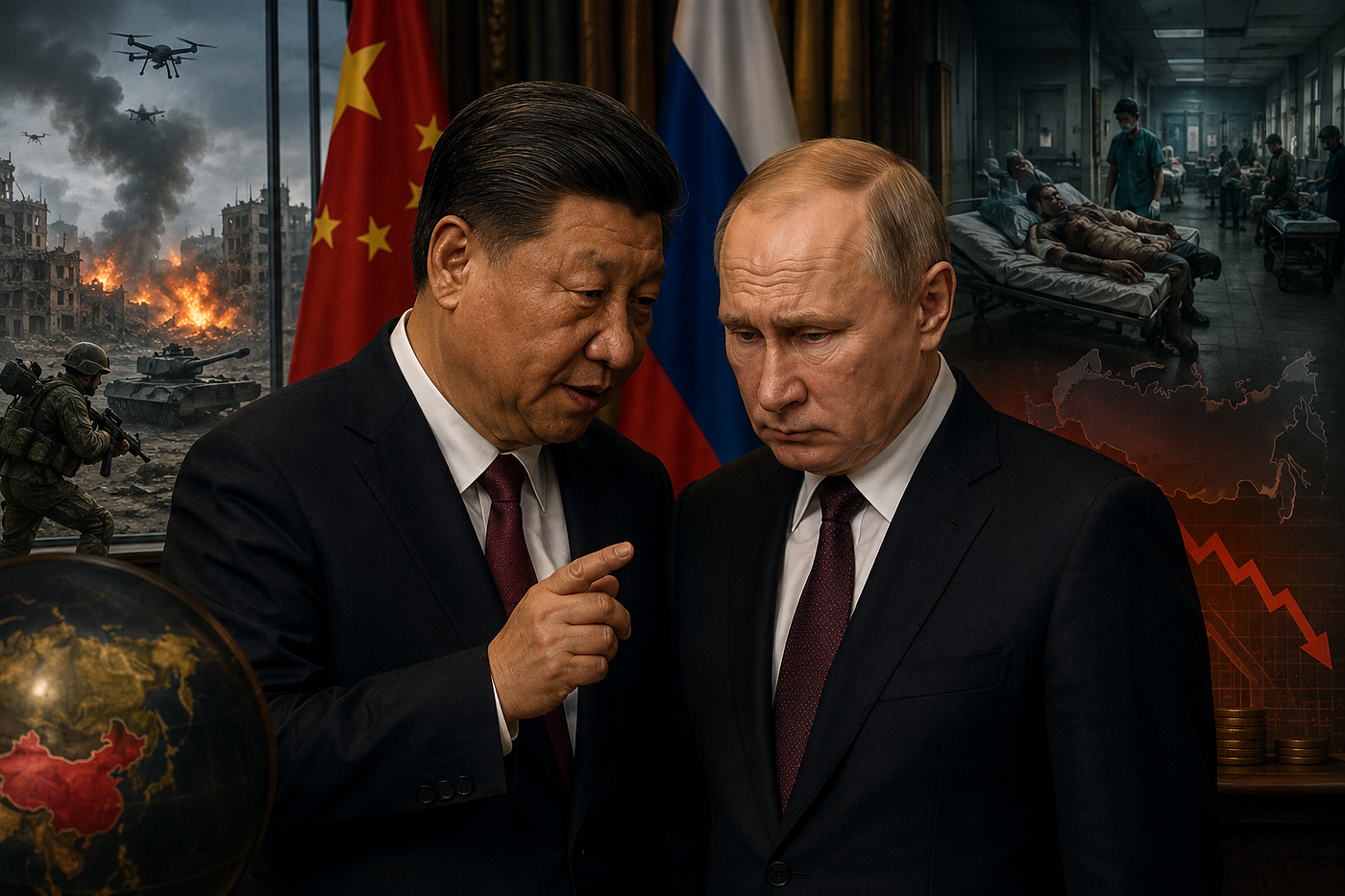
Disappointment with Vladimir Putin is now clearly increasing in Russia’s elite class. From outside, Putin still appears firm, but many people sitting around the power are now worried about the direction of the war, the state of the economy, and the future.
The feeling is now spreading that some big disaster is coming. This does not mean that the regime will fall tomorrow, but that Russia’s current direction looks very dangerous.
The war is dragging on, the economy is under pressure, sanctions are showing effect, attacks on refineries and infrastructure are increasing, and the burden of taxes, inflation, and internet restrictions on common people is rising.
In such an environment, the elite class has started feeling that Putin is taking the country to a place from which return may become difficult.
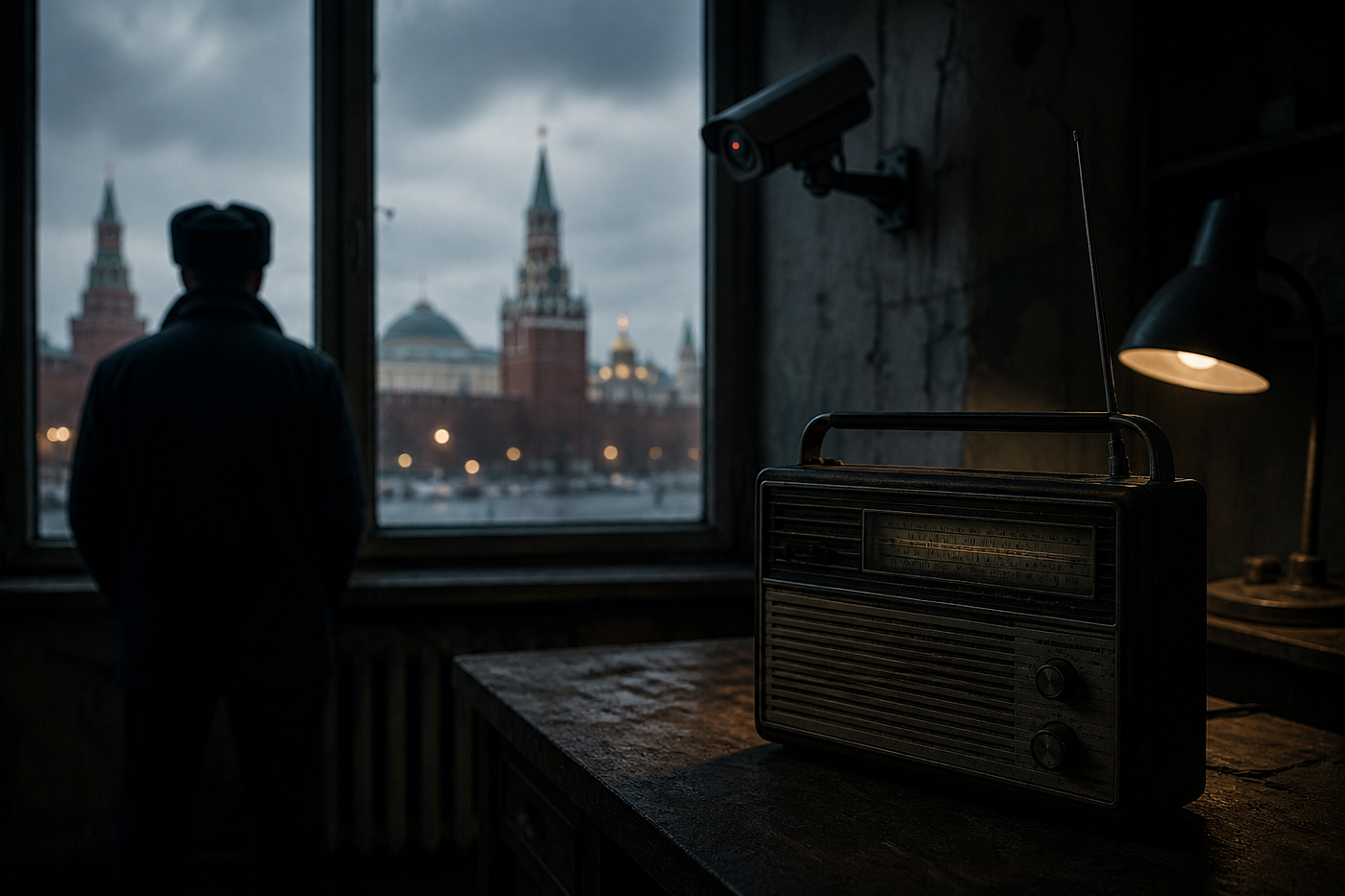
The increasing strictness on the internet in Russia has now stopped being only a problem for ordinary citizens. It is also becoming a cause of tension inside the Kremlin.
Some influential people in the political elite tried to stop Vladimir Putin from making internet blockades and digital control even stricter, but Putin refused to give them any concession.
The meaning is clear that in times of war, Putin is giving more priority to security agencies, especially the FSB, over the political and economic elite.
The digital control that was earlier seen as a problem only for the common public is now affecting the elite’s own lives, businesses, and communication as well.
According to sources who have access to the President, they have told their inner circle that Russia can take full control of Donbas by the end of this year.
For Putin, Donbas is no longer just a military target, but has become a political obsession. One source said that Putin is stuck in Donbas and will not stop until that.
Russian generals are assuring Putin that capturing Donbas by the end of the year is possible, but the problem is that the situation on the ground does not match Putin’s expectations.
Looking at the current situation, at the present speed of the Russian army, it could take many years to capture the whole of Donbas. That is, Putin is probably being told what he wants to hear, not what is actually happening.
The real danger for Putin may not come from the streets, but from his inner circle. The machinery to suppress protest demonstrations in Russia is very strong, so it is difficult for common people to challenge the regime.
Putin wants to continue the war because he considers Donbas a condition for his victory. But a section of the elite has now started to understand that this war is exhausting Russia economically, militarily, and socially.
Perhaps the reports reaching Putin are strengthening his expectations rather than showing reality. This is why restlessness is increasing inside Russia’s power structure, even though from the outside, the Kremlin is still showing control and confidence.
메타데이터
- post_id
- 51bbc5ed05b2
- slug
- putins-donbas-obsession-is-becoming-russia-s-trap-51bbc5ed05b2
- url
- https://medium.com/@rajk100/putins-donbas-obsession-is-becoming-russia-s-trap-51bbc5ed05b2
- canonical_url
- https://medium.com/@rajk100/putins-donbas-obsession-is-becoming-russia-s-trap-51bbc5ed05b2
- author_url
- https://medium.com/@rajk100
- status
- ok
- fetched_at
- 2026-06-09 15:37:30