Best Supplements for Energy: An Evidence-Based Guide
Fatigue is one of the most common modern health complaints. Most energy supplements rely on marketing rather than physiology. Here is what…
Best Supplements for Energy: An Evidence-Based Guide
Fatigue is one of the most common modern health complaints. Most energy supplements rely on marketing rather than physiology. Here is what actually works — and why.
Real energy depends on oxygen delivery, mitochondrial function, blood glucose regulation, neurotransmitter balance, stress hormones, and sleep quality. A good energy supplement supports one or more of these systems. A weak one simply overstimulates the nervous system for a few hours and leaves you worse off than before.
The best supplements for energy are the ones that support real biology. Here is what that looks like in practice.
What energy actually means biologically
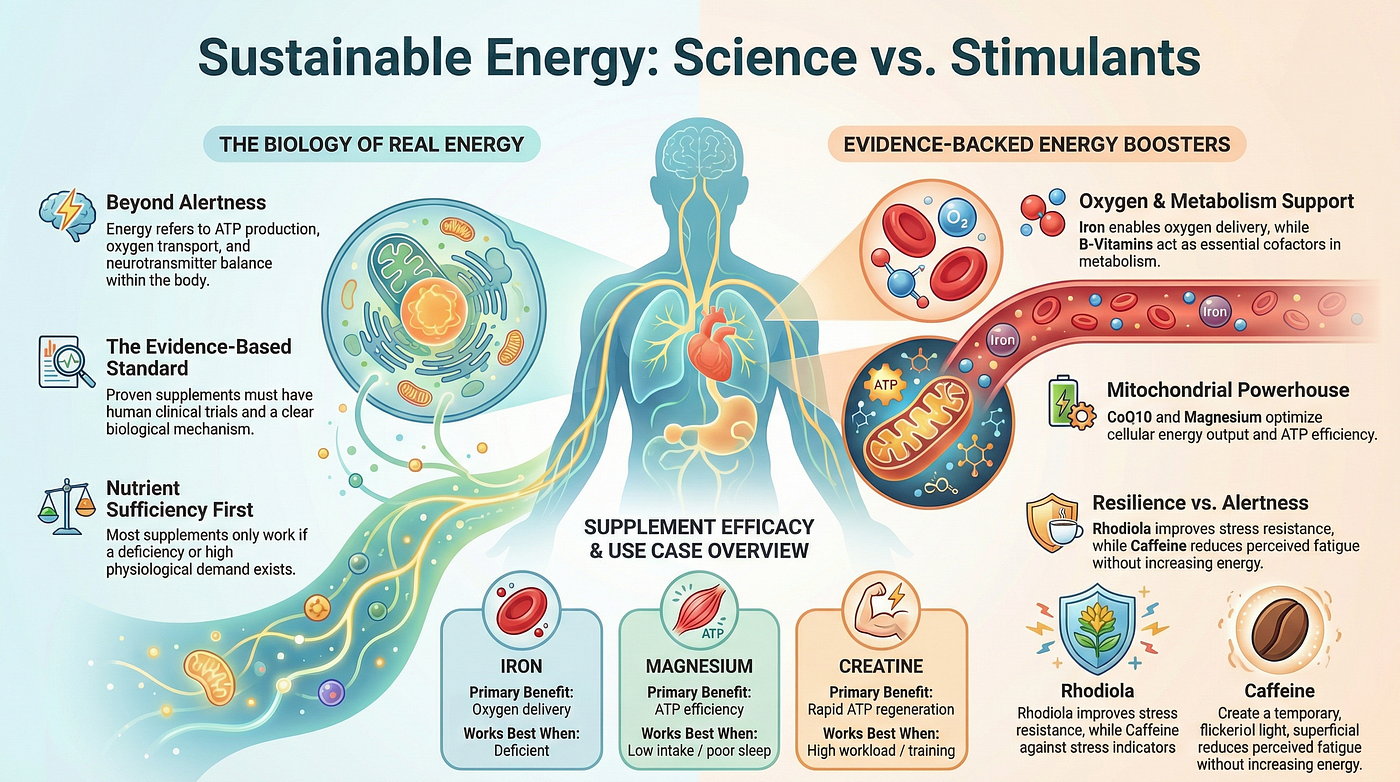
Energy is not just how alert you feel after caffeine. In human physiology, sustainable energy comes from multiple systems working together: ATP production inside mitochondria, oxygen transport through healthy red blood cells, neurotransmitter balance for focus and motivation, blood glucose regulation for steady fuel availability, stress hormone control, and sleep quality and circadian rhythm stability.
The best energy supplements support the systems that produce energy. The weakest ones only mask fatigue for a few hours.
The evidence-based options — matched to their mechanisms
Iron — only when deficient — Iron is essential for hemoglobin and oxygen delivery. When iron status is low, the body cannot transport oxygen efficiently — leading to fatigue, weakness, poor endurance, and brain fog. Iron is most useful when deficiency is confirmed or strongly suspected. Unnecessary iron intake can be harmful, so this is not a supplement to take casually.
B vitamins and B12 — B vitamins act as cofactors in cellular energy metabolism, helping the body convert food into usable energy and supporting red blood cell formation, nervous system function, and amino acid metabolism. They are most effective for energy when intake is low, demand is high, diet is restricted, or deficiency is present. If B12 status is already adequate, taking more does not create extra energy.
Magnesium — Participates in hundreds of enzymatic reactions including ATP metabolism. Also supports muscle function, nervous system balance, and sleep quality — three systems directly relevant to both daytime energy and overnight recovery.
CoQ10 — A core component of the mitochondrial electron transport chain. Helps cells generate energy and is particularly relevant in high-demand tissues like the heart and muscles. Most applicable for adults over 35, people using statins, or anyone with cardiovascular concerns.
Creatine — Increases phosphocreatine stores, helping regenerate ATP rapidly during high-demand activity. Often associated with sport but also relevant for cognitive and cellular energy support during high workload periods.
Rhodiola Rosea — An adaptogenic herb most relevant when fatigue is linked to burnout, high workload, or psychological stress. May reduce stress-related fatigue, support mental stamina, and support mood during demanding periods.
Caffeine — when used strategically — Caffeine does not increase cellular energy production directly. It blocks adenosine signaling, reducing perceived fatigue and increasing alertness. Works best when timed early in the day and used moderately. Too much leads to tolerance, crashes, anxiety, and sleep disruption — which undermines the energy goal entirely. Pairing caffeine with L-Theanine creates a smoother, more sustained focus effect for most people.
The honest comparison
Iron — Very high evidence. Best when deficient. Primary benefit: oxygen delivery.
B12 and B complex — High evidence. Best with low intake or high stress. Primary benefit: cellular metabolism.
Magnesium — High evidence. Best with low intake or poor sleep. Primary benefit: ATP efficiency.
CoQ10 — High evidence. Best for older adults or statin use. Primary benefit: mitochondrial energy.
Creatine — High evidence. Best during training or high workload. Primary benefit: ATP regeneration.
Rhodiola — Medium to high evidence. Best for mental exhaustion. Primary benefit: stress fatigue.
Caffeine — Very high evidence. Best for acute fatigue. Primary benefit: alertness.
What doesn’t reliably increase energy
Mega-dose multivitamins when no deficiency exists. Proprietary energy blends with unclear or undisclosed dosing. Sugar-based energy boosters. Unstudied exotic herbs. High-stimulant formulas that disrupt sleep — which creates the very fatigue they claim to solve.
Smarter combinations
B complex plus magnesium — for metabolism, nervous system support, and recovery. CoQ10 plus creatine — for mitochondrial and rapid ATP support. Rhodiola plus low-dose caffeine — for mental stamina and acute alertness. Iron plus B12 — only when deficiency or low status is confirmed.
The most effective approach is matching the supplement to the biological reason behind the fatigue.
Frequently asked questions
What is the best supplement for energy? The best supplement depends on the cause of fatigue. Iron helps when deficient, B vitamins support energy metabolism, magnesium supports ATP function, CoQ10 supports mitochondria, creatine supports ATP regeneration, Rhodiola supports stress fatigue, and caffeine supports alertness.
Do energy supplements actually work? They can — when they match the underlying cause of fatigue. Supplements are most useful when they correct deficiencies, support mitochondrial function, improve recovery, or provide strategic alertness support. Generic “energy blend” formulas without clear dosing rarely deliver meaningful results.
Is caffeine a real energy supplement? Caffeine improves alertness and reduces perceived fatigue, but it does not directly increase cellular energy production. It works best when used moderately and early enough to avoid sleep disruption.
Can B12 increase energy? B12 can improve energy when B12 status is low. If B12 status is already adequate, taking more does not create additional energy — the effect is specific to correcting deficiency.
What supplements help mitochondrial energy? CoQ10, magnesium, and creatine are the most relevant for mitochondrial and ATP-related energy support, depending on the individual context.
Tags: Energy · Supplements · CoQ10 · B Vitamins · Magnesium · Creatine · Rhodiola · Fatigue · Mitochondria
Ready for number 6 — Vitamin D, Vitamin C and Zinc for Immune Support. Just say next.
You said: next
next
20 May
Claude responded: Here’s number 6, ready to paste:
GraphQL Query (Advanced)
GraphQL Query (Advanced)
Here’s number 6, ready to paste:
Vitamin D, Vitamin C, and Zinc for Immune Support
The immune system is not one single switch. It is a coordinated network — which is why the best immune support addresses multiple layers simultaneously.
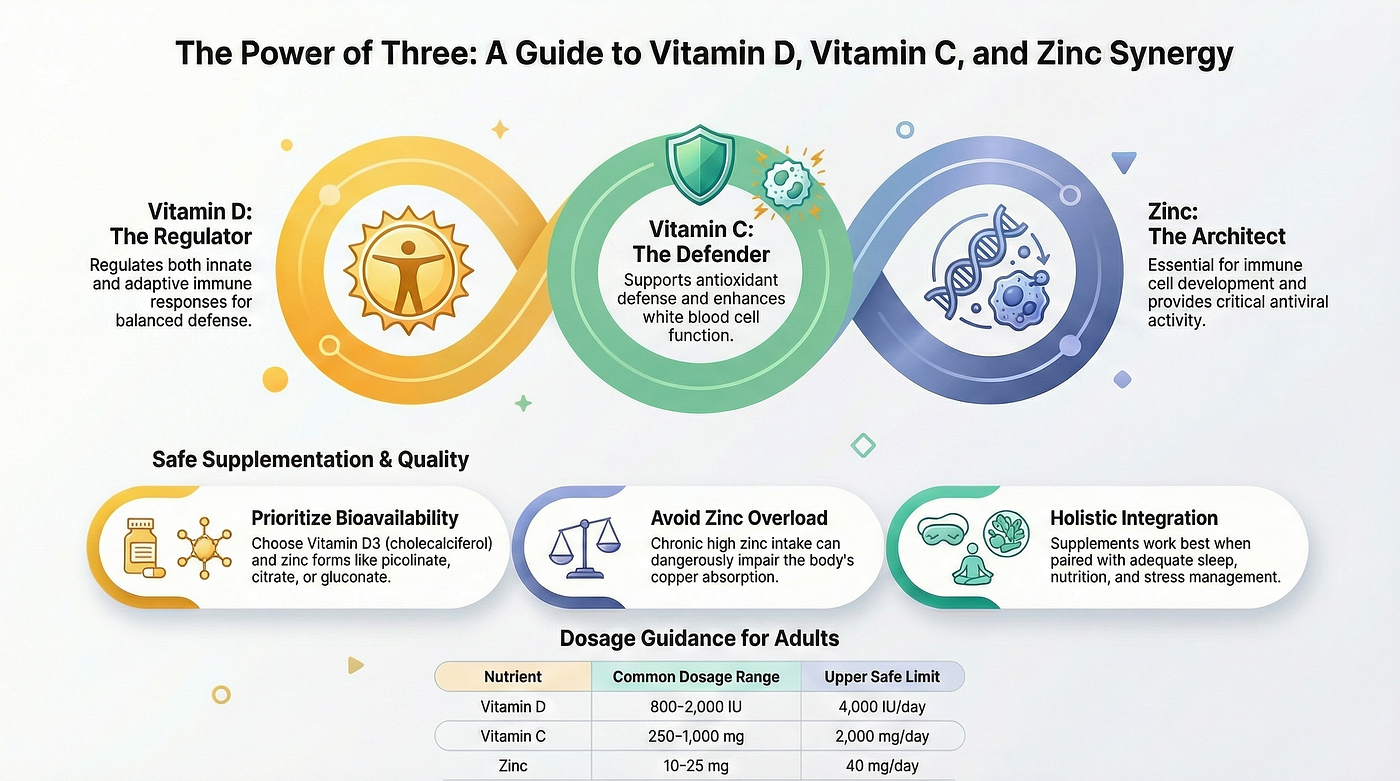
Vitamin D, vitamin C, and zinc appear together in so many immune formulas for a straightforward biological reason: they do not all do the same thing. They support complementary pathways, which means the combination provides broader immune coverage than any single micronutrient alone.
Understanding what each one actually does — and what realistic expectations look like — is more useful than the marketing claims most immune supplements lead with.
How each nutrient supports immune function
Vitamin D — immune regulation — Vitamin D supports immune function by influencing gene expression in immune cells and helping coordinate immune responses. Its key role is regulation: supporting balanced immune signaling rather than simply pushing the immune system to become more active. This distinction matters. Immune overactivation is as problematic as underactivation. Vitamin D helps maintain the balance.
Low vitamin D status is more common than most people realize — particularly during winter, with limited sun exposure, indoor lifestyles, darker skin tones, higher body weight, or low dietary intake.
Vitamin C — cellular protection — Vitamin C accumulates in white blood cells and supports antioxidant protection during immune stress. It contributes to normal immune cell function during periods of higher physiological demand. Because vitamin C is water-soluble and not stored in the body the same way as fat-soluble nutrients, consistent daily intake is more useful than occasional high-dose use.
Zinc — immune cell development — Zinc is essential for immune cell development, maturation, and normal immune signaling — particularly for T cell function and several mechanisms involved in antiviral defense. Zinc balance matters here. Excessive long-term zinc intake may interfere with copper status, which is why smart dosing is more important than aggressive dosing.
These three nutrients support immune readiness. They do not guarantee infection prevention and do not replace sleep, nutrition, or medical care.
Evidence-based dosage ranges
The goal is consistent, moderate intake within well-tolerated ranges. Higher doses do not automatically mean better immune outcomes.
Vitamin D — 800 to 2,000 IU daily. Upper safe limit: 4,000 IU.
Vitamin C — 250 to 1,000 mg daily. Upper safe limit: 2,000 mg.
Zinc — 10 to 25 mg daily. Upper safe limit: 40 mg.
For long-term vitamin D use, testing 25-OH-D blood levels helps personalize dosing. For zinc, avoid stacking multiple products that all contain zinc — the cumulative total matters.
Who benefits most
This combination is most relevant when baseline intake or nutrient status is suboptimal. People with confirmed or likely vitamin D deficiency, limited dietary diversity, low sun exposure, indoor lifestyles, older adults, and those under high physiological or psychological stress are the clearest candidates.
The strongest benefits consistently appear when someone has low intake, low blood levels, or higher demand — not when levels are already adequate.
Common mistakes to avoid
Using high-dose zinc for long periods without considering copper balance. Taking high-dose vitamin D long-term without testing blood levels. Assuming an immune supplement can compensate for chronic sleep deprivation — it cannot. Choosing products with unclear dosing or vague proprietary blends. Stacking several immune products without checking the combined daily intake of each nutrient.
Frequently asked questions
Why are vitamin D, vitamin C, and zinc combined for immune support? They support different immune layers. Vitamin D supports immune signaling balance, vitamin C supports antioxidant defense and white blood cell function, and zinc supports immune cell development and antiviral defense. The combination is broader and more biologically coherent than any single ingredient alone.
What are typical daily doses? Vitamin D 800 to 2,000 IU, vitamin C 250 to 1,000 mg, and zinc 10 to 25 mg — depending on diet, lifestyle, and deficiency status.
Who benefits most? People with low sun exposure, likely vitamin D deficiency, limited dietary diversity, older adults, and high-stress individuals benefit most, particularly when baseline intake is suboptimal.
What is the main mistake with zinc? Taking high-dose zinc for extended periods or stacking multiple zinc-containing products. Excess zinc intake can interfere with copper balance over time.
Do vitamin D, vitamin C, and zinc prevent infections? They support immune readiness when deficiency exists, but they do not guarantee infection prevention and do not replace sleep, balanced nutrition, vaccination, or medical care.
메타데이터
- post_id
- 51eea911e1e2
- slug
- best-supplements-for-energy-an-evidence-based-guide-51eea911e1e2
- url
- https://medium.com/@contact_26220/best-supplements-for-energy-an-evidence-based-guide-51eea911e1e2
- canonical_url
- https://medium.com/@contact_26220/best-supplements-for-energy-an-evidence-based-guide-51eea911e1e2
- author_url
- https://medium.com/@contact_26220
- status
- ok
- fetched_at
- 2026-06-23 17:05:31