4 Times Autism Made Me “Overreact” (It Was Actually Justice Sensitivity)
Four moments that looked like overreactions to other people — and felt like moral emergencies to me.
4 Times Autism Made Me “Overreact” (It Was Actually Justice Sensitivity)
Four moments that looked like overreactions to other people — and felt like moral emergencies to me.
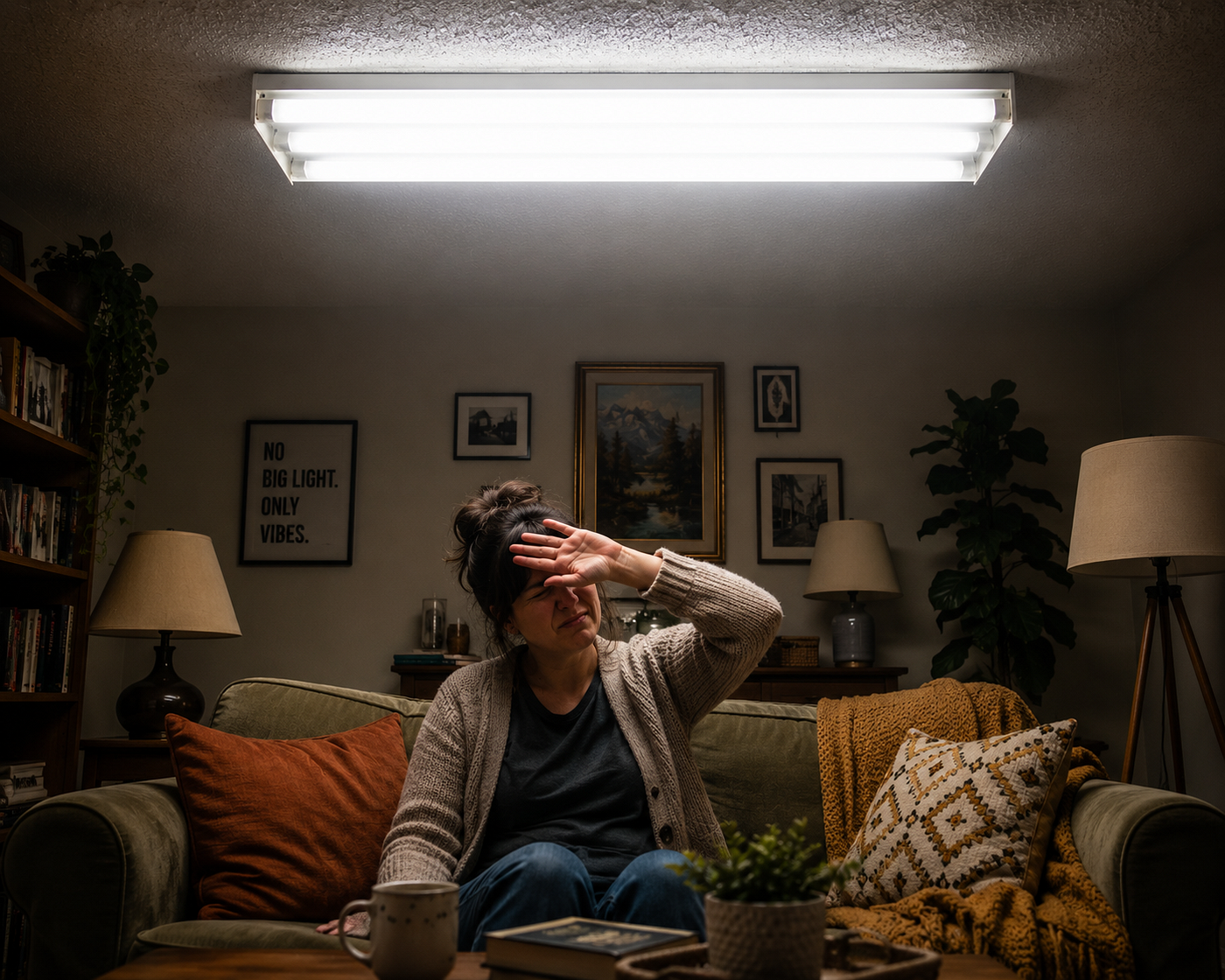
Photo by mari lezhava on Unsplash
My entire life, people have told me I overreact.
They said I overreacted to bullying. I overreacted to racism. I overreacted to dishonesty. I overreacted when people abused power. After my autism diagnosis at 49, I stumbled across a concept called *justice sensitivity* — a heightened sensitivity to unfairness and a powerful drive to correct it, even when everyone else seems willing to let it slide.
Research — and the experiences of many autistic people — suggest we’re more likely to experience high levels of justice sensitivity than neurotypical people.
Suddenly, my history looked different.
Here are four moments when injustice felt painful to me, and how people around me thought I was overreacting.
1. Dehumanization
“Did you see that guy that got shot?” I’d just come back from lunch, and Karen was laughing, like she couldn’t wait to share a joke she’d just heard.
I was shaking already, because at lunch I had seen the video I knew she was talking about.
“I’m not sure what you’re talking about,” I stuttered, trying to buy time. I was going to be stuck in this room with this woman for the rest of the afternoon, and I wanted to believe she wasn’t laughing about the televised death of an innocent man.
She turned to her computer and started typing into the Google search bar. “You’ve got to see this. He was in a car, he was up to something, I’m sure, and the cop had to shoot him. His girlfriend was there, she was on something, it was so weird and funny.”
Every muscle in me seized up. I tried to keep my voice steady. This woman was my supervisor and we worked alone together in the same room.
“I saw it. It wasn’t funny. He was murdered.”
She looked as if I’d slapped her.
“Oh my God, are you kidding me? He wasn’t murdered. He was up to something. You’ve got it all wrong. I know cops. You have no idea what they have to put up with with these thugs. I’m just glad the cop didn’t get hurt.”
I didn’t say anything. Trembling, I sat down at my desk.
I felt my stomach turn as my hands dripped sweat onto my keyboard.
I had just watched Philando Castile get shot to death on my phone, and this woman was laughing about it.
Were we even the same species?
“His stupid girlfriend was so obviously on something, too. Did you hear her?” She repeated the woman’s words, dramatically mocking the trauma of a Black woman.
“Oh no,” she said robotically. “Oh no, stop.” Karen laughed. “She was definitely up to something. They both were.”
My back was turned to her and I could feel her eyes on me, waiting for me to say something.
What could I possibly say? All I could think was “you’re a racist and you make me sick.”
Instead I said, “it’s unseasonably warm today.” My voice was a monotone, my words clipped.
I wasn’t upset because someone disagreed with me politically. I was upset because another human being’s suffering had been transformed into entertainment. My brain couldn’t file that under “difference of opinion.” It filed it under “something is terribly wrong.
2. Cruelty
Debbie from security burst into the writers’ room at the office one day, doubled over with laughter.
“I made Raj eat meat!” Raj was a computer programmer and recent immigrant from India.
“I got a hamburger from Smashburger and brought it to his desk,” she could barely speak, she was laughing so hard.
“I lied. I told him it was a special new kind of veggie burger. He didn’t believe me at first, but I kept a straight face! I kept insisting it was a veggie burger and I got him to take a big bite. After he swallowed I said ‘YOU JUST ATE YOUR GOD!’” she squealed with delight, her hand resting on the taser at her hip. “You should have seen his face!”
I turned quickly back to my computer, shaking.
When she left, one of my two office mates said “that was really uncool.” The other agreed. But then they went back to work and didn’t seem to think of it again.
On the other hand, I felt sick, and not just because I’m a vegetarian. Raj was an observant Hindu. His religion dictated that he not consume beef, and Debbie knew that. But he couldn’t safely complain. He was in the country on a Visa, and complaining to HR would jeopardize not only his job, but his presence in the country.
So I complained to HR on his behalf, without him knowing about it.
3. Institutional retaliation
“Oh, is that how I should do that? Wow, I never would have known if you hadn’t told me. Do you think I’m stupid or something?”
We were on a conference call, and Carol was lobbing sarcastic bombs at Brad. He was the tech guy, and he had been innocently explaining how to add something to a client’s website when she started getting tetchy.
Carol was consistently demeaning and dismissive to everyone but our boss, Pam, but still she went after Brad as if he was mansplaining to her how to take a sip of water.
I couldn’t stand it.
“Look, Carol, there’s no reason for you to talk to him like that. He was trying to be helpful, and you’re attacking him. It’s not fair.”
Brad interrupted me.
“It’s cool Leah, I’m not upset.”
“But it’s not cool, Brad. She has no reason to be so hostile to you.”
And suddenly the call dropped.
Or so I thought.
I assumed everyone had been disconnected and went back to work. I was utterly unprepared for Pam’s fury.
She called me in rage, accusing me of bullying Carol. I was bewildered. How could my actions possibly be construed as bullying?
I told Pam I hadn’t meant any harm. I apologized.
But the damage was done.
I no longer felt safe at the company. Not professionally, and not personally. Pam said that I’d been such a bully to Carol that, in order for me to keep my job, I’d have to take a special “sensitivity training course.” I refused. And so I was fired two days before Christmas in 2021.
The entire thing was so traumatic and shameful, it’s hard to even write about it. I know that some might characterize me as being dramatic and overly sensitive. It certainly wouldn’t be the first time, and likely not the last, that I’ve been called that.
4. Abuse of legal power
The prosecutor admitted she’d used a fish-eye lens to photograph the crime scene — or at least she didn’t deny it. She’d made it look like the shooter was closer to the victim than they actually were. I wasn’t stunned that the young man I’d sat in a courtroom with for two weeks was convicted. But I was angry.
The murder had happened at a house party in Compton, and no one disputed the fact that it was a case of gang warfare. A Crip had murdered a Blood in a drive-by shooting, and nobody who’d been at the party would say a word to the cops. It felt as though investigators had decided they just needed someone to convict .
The murder weapon had been a gun that all the guys in the neighborhood owned in common. They kept it in a rusted-out water heater in the alley, and it had fingerprints from at least a dozen people on it. The young man on trial had been just one of them.
I was an alternate juror, and when the jury went to deliberate, I wanted to call after them, “remember what the prosecution did with the camera lens!” But I knew I’d probably get arrested so I kept my mouth shut, and it pained me.
I was furious. This was a 19 year old man’s life we were talking about.
They’d established that he was one of four or five people who might have done it, but for me, that wasn’t nearly enough to lock a kid up for the rest of his life.
I was so upset by the whole thing that when it was over I emailed the defense attorney and told him what a travesty I thought it was (incidentally, he has a one man show about being a defense attorney in LA — no joke). He wrote back and thanked me, and we even met for a coffee to talk about the trial.
I think I was more upset than he was.
I spent decades being told I had an anger problem, a control problem, or a maturity problem.
But I knew I didn’t enjoy confrontation. In fact, I usually avoided it until it no longer felt possible. Justice sensitivity wasn’t an urge to argue — it was that remaining silent in the face of unfairness had become physically painful for me.
In reality, my nervous system responded to unfairness, even when it had nothing to do with me, as though it were an immediate danger. Learning about justice sensitivity didn’t make me less committed to fairness — but it finally explained why injustice had always felt physically impossible to ignore.
메타데이터
- post_id
- 521c835fde40
- slug
- 4-times-autism-made-me-overreact-it-was-actually-justice-sensitivity-521c835fde40
- url
- https://medium.com/invisible-illness/4-times-autism-made-me-overreact-it-was-actually-justice-sensitivity-521c835fde40
- canonical_url
- https://medium.com/invisible-illness/4-times-autism-made-me-overreact-it-was-actually-justice-sensitivity-521c835fde40
- author_url
- https://medium.com/@leahwelborn
- status
- ok
- fetched_at
- 2026-07-16 12:02:46