The Throw Blanket Guide: Choose, Style, and Keep It for Years
The One Thing All Living Rooms Are Lacking
The Throw Blanket Guide: Choose, Style, and Keep It for Years
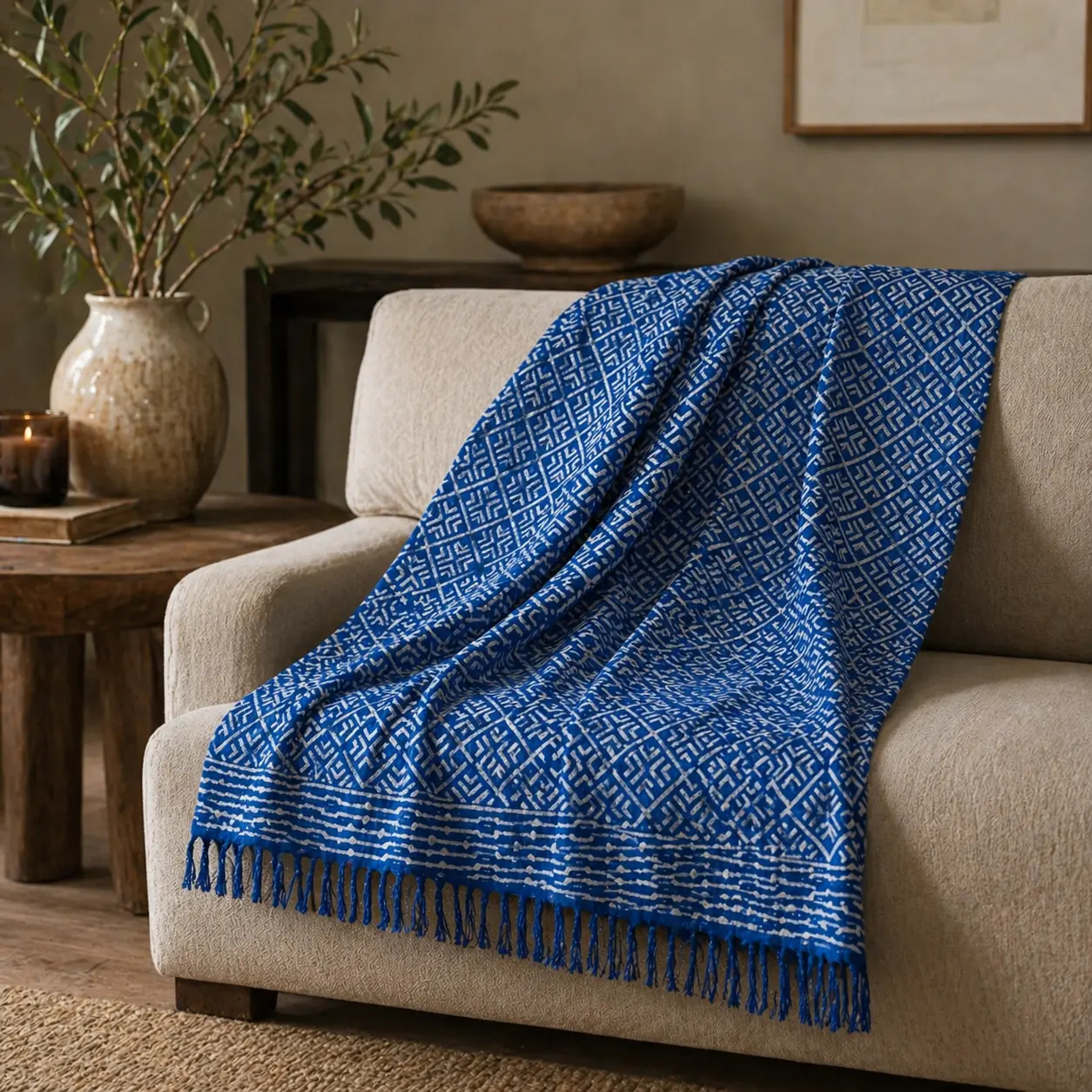
Discover how to choose the right throw blanket for your home — materials, styling scenarios, care tips, and honest buying advice from someone who’s tested them all.
The One Thing All Living Rooms Are Lacking
Walk into a room that feels genuinely comfortable — the kind where you instinctively slow down — and there’s almost always a throw somewhere in it.
Not because someone styled it for a magazine shoot. Because someone lives there and that throw gets used.
A throw blanket helps homeowners add warmth, texture, and a sense of ease to any room because it does something no other accessory can: it makes a space feel occupied and cared for without looking arranged.
That’s more difficult to do than it appears, though. And it’s why choosing the right throw matters more than most people think when they’re standing in a shop holding two options that look basically the same.
What Really Distinguishes a Great throw From an Average one
Most throws look appealing on a shelf or in a photo. The real differences show up six months in.
Does it pill after the third wash? Does it stretch out of shape when someone uses it? Does the colour hold, or does it start looking washed-out by February?
These aren’t things you can judge from a product photo. But they’re predictable if you know what to look for.
Material Is Everything
Wool and wool blends are the benchmark. Merino is soft enough for direct skin contact, warm without being heavy, and naturally resistant to odours between washes. A good merino throw is a genuinely long-term investment — the kind of thing that still looks good a decade from now.
Cotton throws are lighter, more breathable, and easier to wash. They suit warmer climates and summer months where you want something on the sofa without committing to actual warmth. The weave matters here — a tightly woven cotton throw holds up significantly better than a loose, open-knit version.
Faux fur and teddy fleece are almost impossible to resist in a shop. They’re incredibly soft, they photograph beautifully, and they’re genuinely cosy for the first season or two. The honest caveat: most faux fur throws start to mat and look flat after regular washing. They work well as occasional-use accent pieces, less well as everyday throws.
Acrylic and polyester blends dominate the budget end of the market. They’re warm and cheap to produce, but they pill quickly and don’t breathe well. Suitable for a spare bedroom that will not be used that much. Less ideal for anywhere a throw is going to live.
Linen throws are underrated. They’re not the warmest option, but they have a natural, effortless quality that makes a room look like less effort went into it — which is exactly the right effect for a casual throw draped over the arm of a sofa.
Weight and Drape
A throw’s weight determines how it moves and how it looks when it’s not in use.
Heavy throws — thick knits, dense wool — tend to stay where you put them and read as substantial and cosy. They work well folded over the back of an armchair or at the foot of a bed.
Lighter throws — fine merino, linen, open-weave cotton — drape more naturally. They look effortless when half-on, half-off a sofa arm. They suit rooms where you want texture and warmth without visual weight.
Neither is better. It depends on the room, the furniture, and what you want the throw to do.
Three Real Styling Scenarios
Scenario One: The Neutral Sofa That Needs a Personality
A pale grey linen sofa is one of the most common starting points in British and Northern European interiors. It’s versatile, it goes with almost everything, and it photographs beautifully. It also tends to look flat and slightly corporate without the right layering.
A chunky knit throw in a warm oatmeal or mustard, draped casually over one armrest with the end pooling slightly on the seat cushion, changes everything. It introduces texture the sofa can’t provide, adds warmth to the colour palette, and — crucially — makes the sofa look like someone sits there.
Add two cushion covers in a complementary tone, and the sofa goes from showroom to sitting room.
Scenario Two: The Reading Corner That Isn’t Quite Working
Most people have a chair they intended as a reading spot that ended up as a place to put things. If that sounds familiar, a throw is the fastest way to reclaim it.
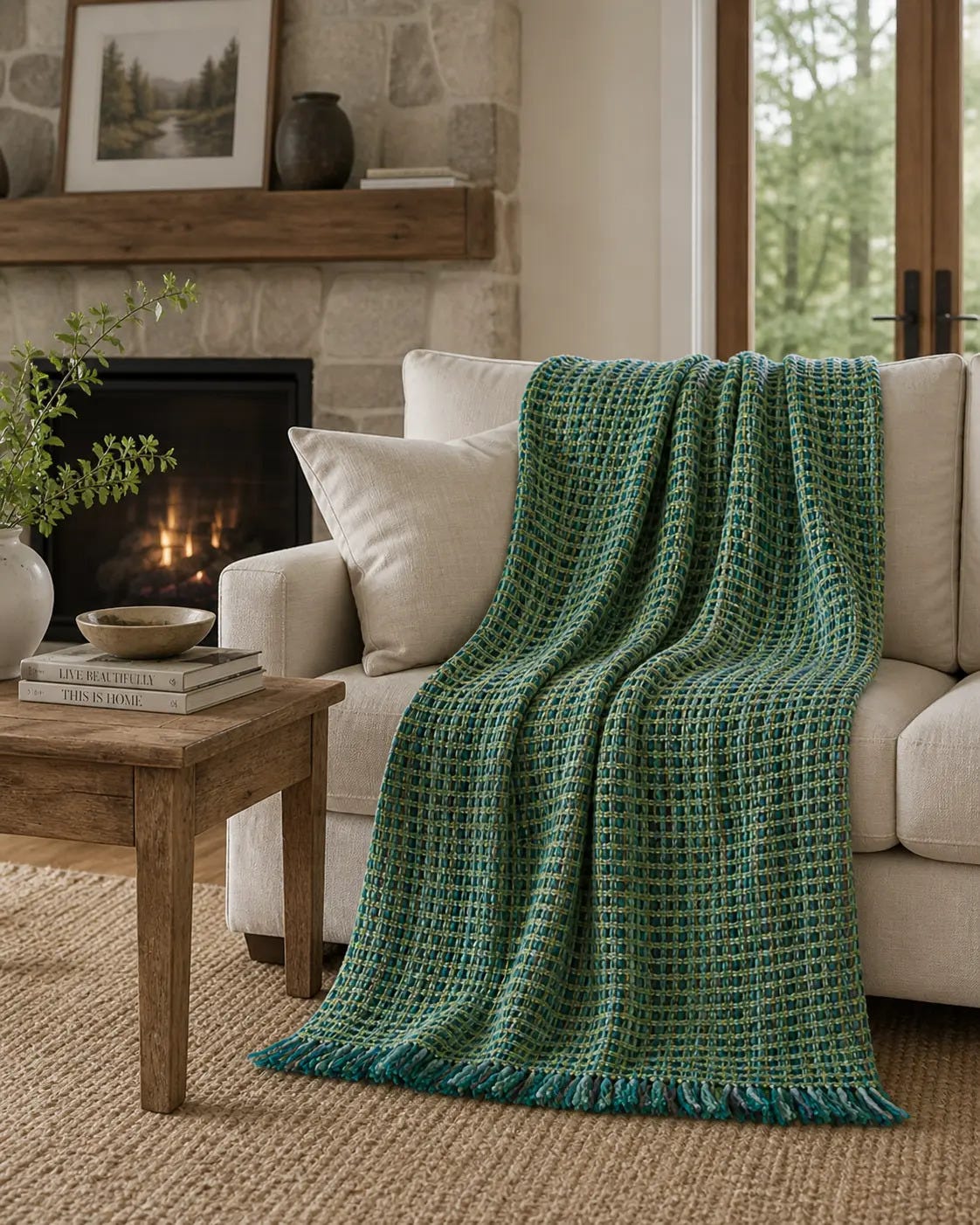
Choose something genuinely inviting — a soft merino in a warm rust or forest green, folded loosely over the seat and backrest. Add a small side table with a lamp and whatever you’re currently reading. The throw signals, physically and visually, that this chair is for sitting in. It creates permission to use the space.
This works particularly well in rooms where the reading chair is positioned slightly away from the main seating area. The throw gives it its own identity within the room.
Scenario Three: The Bedroom That Feels Unfinished at the Foot
A bed that’s been made but has nothing at the foot of it looks like a hotel room — technically tidy, without character.
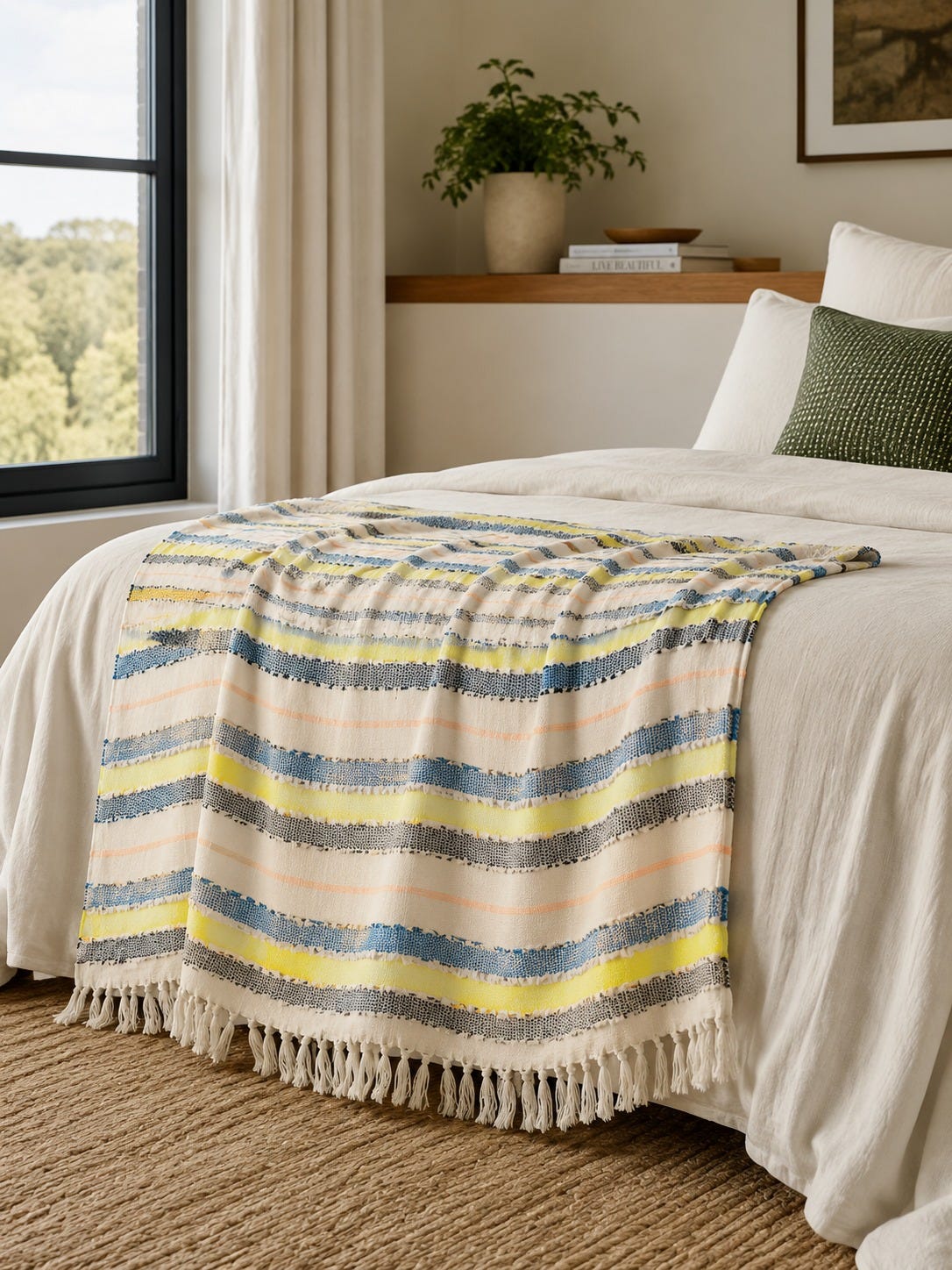
A throw folded in thirds and laid across the foot of the bed does two things. Practically, it gives you something to pull up without disturbing the duvet. Visually, it adds a horizontal layer that grounds the whole composition.
For this use, weight matters. A heavy wool or cotton throw won’t slip when sat on. A lighter, drapier option slides. Choose accordingly. Colour-wise, this is a good place to introduce something slightly bolder than your bedding — it’s a small surface area and a considered contrast always reads better than a near-match.
Seasonal Considerations
A throw blanket isn’t a year-round constant for most households. It gets rotated.
Heavy wool throws earn their place from October through to March. Lighter cotton or linen throws make sense from April onwards — still useful on cool evenings, not so much that they feel oppressive in warmer weather.
This is also where having two or three throws becomes practical rather than excessive. Different weights for different seasons mean you’re always reaching for the right one rather than making do with whatever’s accessible.
For seasonal pieces specifically — throws and cushion covers chosen for autumn and winter — the throw blanket range at Urbane Hide is built around quality materials that hold up through multiple seasons of real use.
Honest Buying Advice
A few things worth knowing before you spend money:
Avoid buying throws purely based on colour swatches. Texture is something you need to feel, not see. If you can visit a shop or order from a brand with a reasonable return policy, do that before committing.
Check the care instructions before you buy, not after. Some materials that look low-maintenance — faux fur, heavily embellished throws — are genuinely inconvenient to wash properly. If you know a throw is going on a sofa that sees daily use, make sure cleaning it isn’t going to be a project.
Consider the long game. A throw that costs three times as much but lasts ten years is considerably cheaper than a budget throw that needs replacing every eighteen months. Natural fibres tend to age beautifully rather than wearing out.
Don’t over-coordinate. A throw that exactly matches your cushion covers looks considered in a mood board and slightly stiff in a real room. A near-match or a deliberate contrast almost always looks better than a perfect match.
Key Takeaways
- Material determines longevity more than any other factor. Natural fibres — wool, merino, cotton, linen — consistently outperform synthetics over time.
- Weight and drape affect how a throw looks when it’s not in use, which is most of the time. Choose accordingly.
- A throw works harder in a room when it’s styled with intent — draped rather than folded, positioned to be reached for rather than admired.
- Seasonal rotation extends the life of individual throws and keeps a room feeling current without redecorating.
- Avoid over-coordinating. The most effective throws create contrast, not camouflage.
Useful Resource
Looking for quality throws and seasonal cushion covers built from natural materials?
👉 Explore the Collection at Urbane Hide
Frequently Asked Questions
What’s the best material for a throw blanket if I want it to last?
Merino wool is the strongest all-round choice for longevity — it’s soft, warm, naturally odour-resistant, and holds its shape well across years of regular use. For something lighter that still lasts, tightly woven cotton is a close second.
How do I stop a throw from looking messy on a sofa?
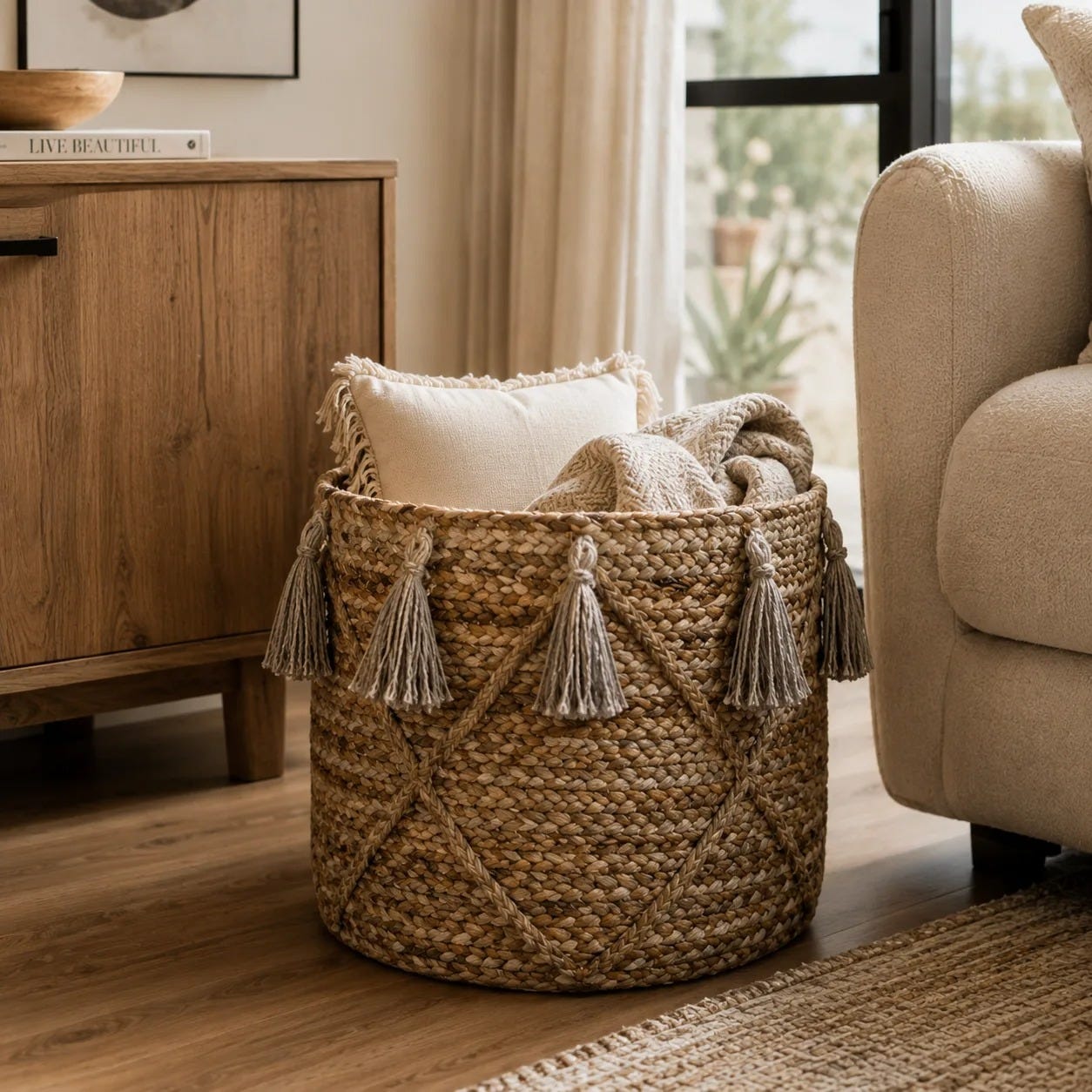
The goal isn’t neatness — it’s controlled casualness. Drape the throw over one armrest with a natural fold or fold it loosely in thirds and lay it across one seat cushion. Avoid stuffing it into a basket between uses, as this tends to crease structured fabrics permanently.
Can I use a throw blanket outdoors?
Standard indoor throws aren’t designed for outdoor conditions. UV exposure fades colour, and moisture can cause natural fibres to felt or mildew. If you want something for an outdoor sofa or garden seating, look for throws specifically designed for outdoor use with treated or synthetic fabrics.
How often should I wash a throw blanket?
For throws that are used regularly — pulled over legs while watching television, slept under — once a month is a reasonable guide. Decorative throws that are handled less frequently can go longer between washes. Always check the care label, particularly for wool and faux fur, which often require cold or hand-wash treatment.
How do I choose the right size throw?
For a sofa, a throw that measures roughly 125x150cm to 150x180cm gives you enough fabric to drape naturally without looking skimpy or overwhelming the furniture. For a bed, something closer to 150x200cm works well laid across the foot. For an armchair, a smaller 120x150cm is usually proportionate.
Is it worth spending more on a quality throw?
If you’re buying for a room you use regularly, yes. Quality throws from natural materials maintain their appearance, wash without significant degradation, and develop character over time. Budget throws often look good initially but show wear quickly — pilling, stretching, and colour fading being the most common issues.
Throw, Throw blanket, Throws for sofa, Wool throw blanket, Merino throw
메타데이터
- post_id
- 5225780ac41a
- slug
- the-throw-blanket-guide-choose-style-and-keep-it-for-years-5225780ac41a
- url
- https://medium.com/@wisdomworld78/the-throw-blanket-guide-choose-style-and-keep-it-for-years-5225780ac41a
- canonical_url
- https://medium.com/@wisdomworld78/the-throw-blanket-guide-choose-style-and-keep-it-for-years-5225780ac41a
- author_url
- https://medium.com/@wisdomworld78
- status
- ok
- fetched_at
- 2026-07-10 11:40:45