The Feature I Hope to See in myResponder One Day
Why gratitude, not gamification, may be the most powerful motivator in civic tech.
The Feature I Hope to See in myResponder One Day
Why gratitude, not gamification, may be the most powerful motivator in civic tech.
By Zhou Yansheng, former Product Lead of myResponder
The Question Every Responder Asks
Every time I spoke with a community responder after they had helped in an emergency, the most frequently asked question was:
“How is the patient?”
Not about themselves, not about recognition — but about the person whose life they tried to save.
And yet, we cannot answer them. We cite data privacy laws. Even if we wanted to, we imagine it would require policy changes and complex data connections with hospitals. The result: responders walk away quietly, wondering whether their actions mattered.
But there is actually an easier way.
The Quiet Exit, and the Lack of Closure
Most emergencies on myResponder — especially cardiac arrest cases — play out the same way.
The family is distraught. A few myResponders rush in. Together, we begin CPR until paramedics arrive. And then, just as quickly as they came, we each slip away. Silently acknowledging each other.
The responders feel good, yes — but there’s always that gnawing absence of closure.
I’ve spoken to responders who admitted they would look out at the HDB block in the following days, hoping not to see a funeral wake. To them, no funeral meant hope that the person they helped survived. Some even attended wakes when they did happen, quietly introducing themselves to the family. More often than not, they were greeted with gratitude — sometimes sparking conversations about how they were activated in the first place. I believe that word-of-mouth spread myResponder more effectively than any official campaign.
Families who received help sometimes felt so moved that they became responders themselves.
There is something profoundly human here: gratitude fuels participation.
The Missed Opportunity
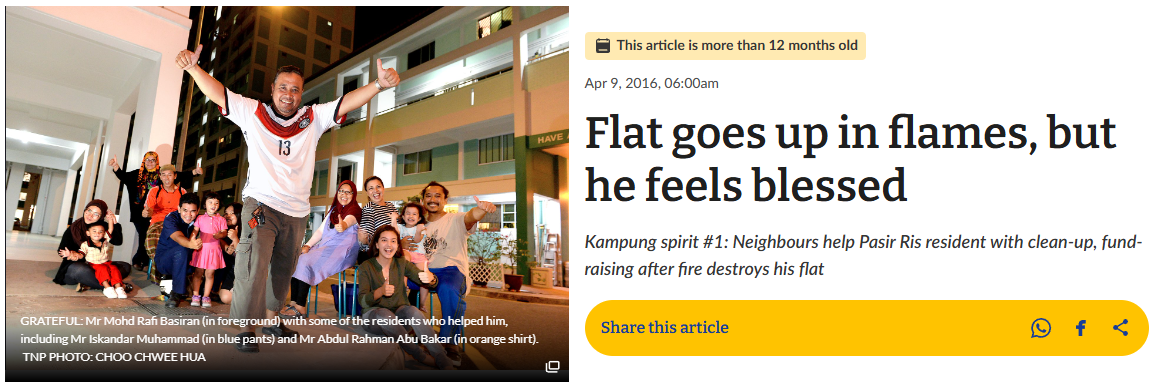
Today, publicity about community responders often takes the form of mass media stories, public awards, or recognition ceremonies. These are important — but they usually tell only one side: the responder’s heroism.
The voices of families — the ones who received help in their darkest hour — are mostly absent. Yet their perspective may be the most powerful story of all.
And there is another missed opportunity: most responders don’t get to know each other either. After sharing a high-stakes, life-saving experience, they simply walk away. What if they could connect, build friendships, and form like-minded networks?
A Vision for a New Feature
What if we could build a feature that finally closed this loop?
Here’s the idea:
- After an incident, SCDF already records the next-of-kin details.
- A few days later, the family receives a message: “These community responders assisted your loved one. If you wish, you can send them a thank-you message through the app.”
- The choice rests entirely with the family. If they want to reach out, they can message the responders directly.
It would work much like how you can contact your Grab driver anonymously through the in-app chat function.
This way:
- No PDPA issue — because it is family-initiated contact.
- No operational burden — the data already exists.
- A safe, structured bridge between people who shared a life-changing moment.
Why It Matters
- For responders: it gives closure. Even a short “thank you” validates their effort and keeps them motivated to respond again.
- For families: it offers a meaningful way to express gratitude, to transform helplessness into appreciation.
- For the platform: it creates a flywheel. Responders who feel appreciated stay active. They begin to form organic communities. Families who experience help are often inspired to join and become responders themselves.
In fact, this might be the most powerful retention and recruitment tool we can design — not gamification, not badges, but the simple human connection of gratitude.
Beyond Closure: A New Kind of Storytelling
This feature could also change how we think about publicity. Today, mass media articles and official campaigns almost always focus on the responder’s side of the story.
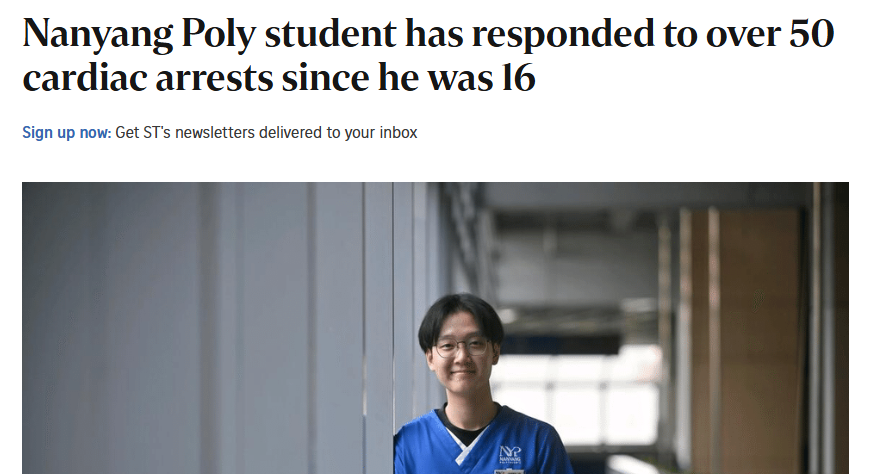
Recent article from The Straits Times
But what if, instead of relying only on top-down recognition, we built a living archive of gratitude — real families, real responders, real voices?
- A daughter saying: “A stranger kept my mother alive until SCDF arrived.”
- A grandmother recalling: “Neighbors I had never met rushed in with CPR.”
- A responder reflecting: “Hearing thank you made me want to keep going.”
We could even encourage families and responders to share these stories publicly through the app.
These stories would not be manufactured — they would be authentic, raw, and deeply human. They could become the most compelling form of promotion for myResponder: community-generated content, powered by gratitude.
Beyond Emergencies: A Universal Design Pattern
While I’ve been describing this feature in the context of myResponder, I think its potential can go much further.
At its core, it solves a universal challenge in community platforms: how to give closure and meaning to acts of help.
Think about it:
- In a lost and found app, someone returns a wallet. The owner may never meet them again. But if the app could enable a “thank you” message, it builds trust and loyalty.
- In neighbourhood assistance apps (help with groceries, errands, caregiving), families could acknowledge small but meaningful gestures.
- Even in donation platforms, where items or food are passed anonymously, a lightweight gratitude loop could make the experience more personal and sustaining.
In all these cases, the challenge is the same: helpers often vanish into the background. By creating a channel for gratitude, we don’t just solve for closure — we create community, continuity, and culture.
Closing Thought
Technology brought us together in those critical minutes — a phone alert, a GPS location, a call to action. But it is gratitude that will keep us together for the years to come.

Sometimes, the most powerful feature is not one that saves lives in the moment, but one that reminds us why we keep showing up.
A simple “thank you” could change everything.
메타데이터
- post_id
- 5230fc7cbbde
- slug
- the-feature-i-hope-to-see-in-myresponder-one-day-5230fc7cbbde
- url
- https://medium.com/@doidyboy/the-feature-i-hope-to-see-in-myresponder-one-day-5230fc7cbbde
- canonical_url
- https://medium.com/@doidyboy/the-feature-i-hope-to-see-in-myresponder-one-day-5230fc7cbbde
- author_url
- https://medium.com/@doidyboy
- status
- ok
- fetched_at
- 2026-06-24 11:06:28