Why Multi-Cloud Logging Keeps Failing — and What Enterprises Are Getting Wrong
Multi-cloud has become the default operating model for modern data platforms. AWS, Azure, and Google Cloud coexist inside the same…
Why Multi-Cloud Logging Keeps Failing — and What Enterprises Are Getting Wrong
Multi-cloud has become the default operating model for modern data platforms. AWS, Azure, and Google Cloud coexist inside the same enterprise not because teams enjoy complexity, but because different workloads demand different capabilities, pricing models, and regulatory postures.
Yet as infrastructure spreads across clouds, one foundational capability consistently fails to scale with it: logging.
When logging fails, observability degrades. When observability degrades, governance, trust, and operational confidence quietly erode.
The 3 AM Failure That Reveals the Truth
Every experienced data or platform leader has encountered a version of this moment.
It’s 3 AM. A production pipeline has failed. Alerts are firing. Teams are online. The environment spans AWS, Azure, and GCP, and the expectation is that answers should be available quickly.
You begin with metrics and dashboards. Nothing stands out. You turn to logs, expecting clarity, only to discover that the information you need is missing or incomplete.
Spark execution logs from AWS are unavailable. Azure resource activity is barely visible due to broken audit trails. Failures that everyone knows occurred leave no reliable trace in any system of record.
The system didn’t crash. The job did run. But the evidence never arrived where it was supposed to.
This is the moment when multi-cloud complexity stops being theoretical and becomes operationally painful.
Why Logs Go Missing in Multi-Cloud Environments
In most organizations, missing logs are not the result of negligence. They are the result of assumption.
One team assumes log forwarding was configured. Another assumes it’s being monitored. Pipelines break silently. New workloads launch without observability wired in. Over time, entire categories of telemetry simply stop being collected.
Multi-cloud environments amplify this problem. Each provider has its own logging systems, formats, retention models, and access controls. What begins as fragmentation gradually turns into absence.
Engineers then spend hours reconstructing events that should have been captured automatically. Incident response slows. Confidence drops. Observability becomes reactive instead of reliable.
The Compounding Cost of Fragmented Visibility
The impact of incomplete logging rarely stays contained within engineering teams.
Incident response is the first casualty. Engineers lose meaningful time simply locating logs across disconnected systems before real troubleshooting can begin. Compliance teams feel the strain next, forced to manually correlate cloud audit logs across providers with inconsistent formats and retention policies.
Finance and platform leaders encounter a different symptom: fragmented cost visibility. Without consistent execution logs, cloud spend cannot be reliably tied back to workloads, making optimization decisions less precise and more conservative.
Most damaging, however, is the erosion of trust. When leaders and engineers no longer fully trust observability data, decision-making slows and multi-cloud governance begins to feel fragile rather than empowering.
Observability Must Be a Platform Responsibility
Traditional approaches to multi-cloud logging typically address the problem after the fact, relying on custom forwarding pipelines, agents, or centralized aggregators layered on top of infrastructure. These solutions often work initially, but they introduce operational complexity and new points of failure.
Yeedu approaches the problem at the source.
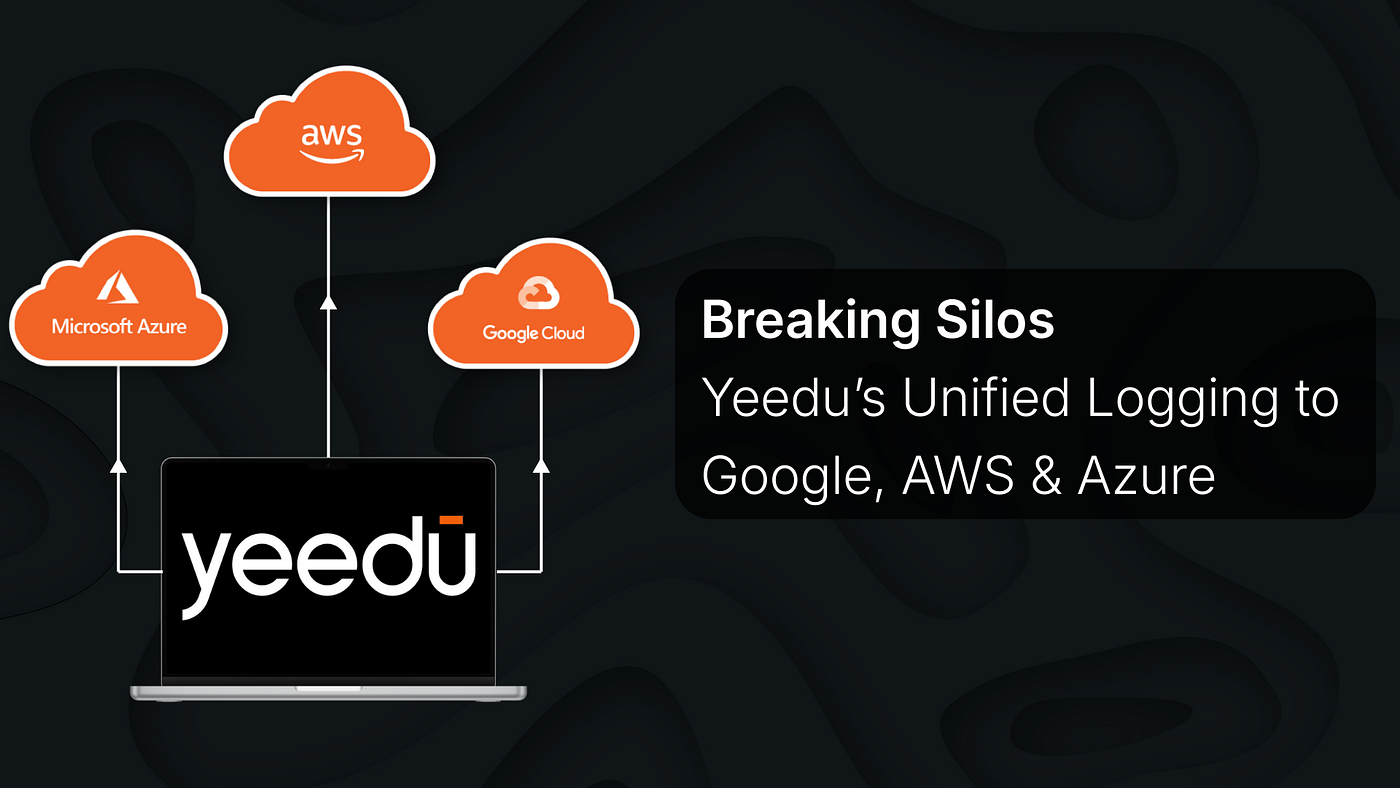
When Yeedu orchestrates data workloads — whether running Spark jobs on AWS, provisioning resources in Azure, or executing workloads on GCP — logging is enabled by default. Logs are streamed directly into each cloud provider’s native observability systems without additional configuration or maintenance.
Execution logs, error traces, and audit events land where teams already work: in CloudWatch, Azure Log Analytics, and Google Cloud Logs Explorer.
Consistency Across Clouds Changes Everything
The practical outcome of this approach is consistency.
A Spark job running on AWS produces complete execution logs in CloudWatch. The same level of detail appears in Azure Log Analytics when managing Azure resources, ready for Kusto queries. In Google Cloud, operations surface transparently in Logs Explorer without extra instrumentation.
Teams do not need new tools. They do not depend on brittle pipelines. Observability remains cloud-native, predictable, and complete regardless of where workloads execute.
In a multi-cloud environment, this consistency is what transforms visibility from an aspiration into an operational guarantee.
Outcomes That Matter Beyond Engineering
When logging becomes universal rather than conditional, the benefits extend well beyond faster debugging.
Mean time to resolution drops significantly as engineers troubleshoot within familiar tools backed by complete telemetry. SLAs stabilize because issues are detected earlier and resolved with greater confidence.
Compliance teams gain access to end-to-end cloud audit logging through enterprise-grade systems with established retention and access controls. Platform and finance leaders can finally correlate cost with execution, understanding not just what was spent, but why.
Observability stops being a constraint and becomes an enabler of disciplined operations.
Eliminating Cloud Silos Enables Strategic Flexibility
Multi-cloud adoption is accelerating, not retreating. Enterprises are intentionally distributing workloads to optimize cost, resilience, and regulatory alignment while maintaining leverage across providers.
The question is no longer whether organizations will operate across clouds, but whether their governance and observability models can keep up.
When logging remains consistent regardless of cloud, collaboration becomes easier, talent becomes more portable, and compliance becomes manageable even as workloads span regions and jurisdictions. Most importantly, trust in the platform becomes universal — from engineers to compliance teams to executive leadership.
The Yeedu Difference
For Yeedu, multi-cloud observability is not a feature checkbox. It is an architectural principle rooted in how large enterprises actually operate.
By embedding multi-cloud log management directly into workload orchestration, Yeedu removes visibility gaps that traditional platforms often accept as inevitable. This is not about adding another monitoring layer, but about ensuring observability scales alongside complexity rather than breaking under it.
Closing Thought
Enterprises do not need another log aggregator. They need unified cloud logging they can trust when systems are under pressure.
By streaming logs natively into CloudWatch, Azure Log Analytics, and Google Cloud Logs Explorer, Yeedu delivers multi-cloud logging that strengthens audit readiness, supports governance, and removes operational blind spots — without fragile pipelines or rewrites.
If multi-cloud is your strategy, observability cannot be optional. Yeedu makes it operational.
Read more similar blogs on https://yeedu.com/resources
메타데이터
- post_id
- 523cb0412e46
- slug
- why-multi-cloud-logging-keeps-failing-and-what-enterprises-are-getting-wrong-523cb0412e46
- url
- https://medium.com/@yeedu/why-multi-cloud-logging-keeps-failing-and-what-enterprises-are-getting-wrong-523cb0412e46
- canonical_url
- https://medium.com/@yeedu/why-multi-cloud-logging-keeps-failing-and-what-enterprises-are-getting-wrong-523cb0412e46
- author_url
- https://medium.com/@yeedu
- status
- ok
- fetched_at
- 2026-06-10 09:45:17