The 9 Questions People Asked Me as a Pastor (That I Couldn’t Answer)
The conversations that revealed what people are really searching for beneath faith and doubt
The 9 Questions People Asked Me as a Pastor (That I Couldn’t Answer)
The conversations that revealed what people are really searching for beneath faith and doubt

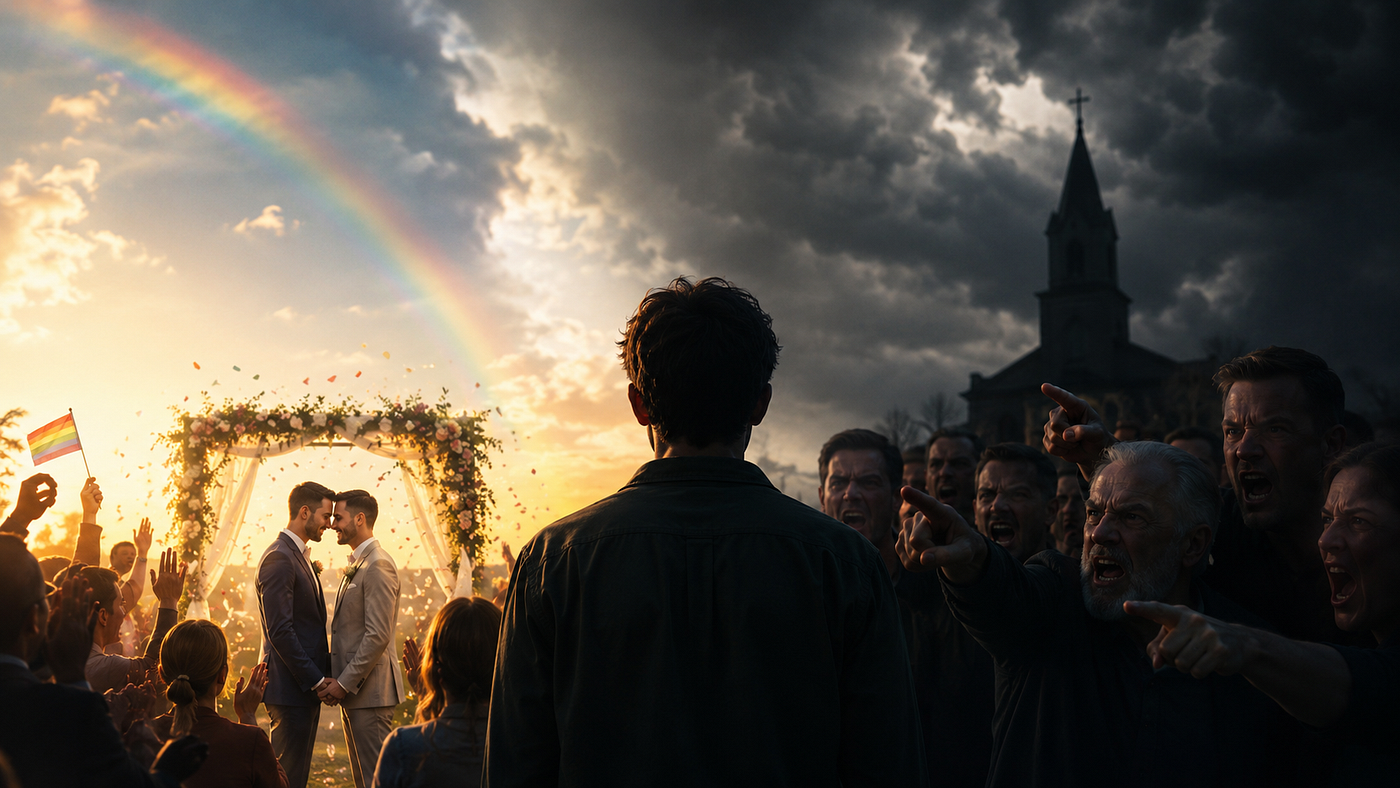
Image by Inside Creative House on iStock
One of the hardest things about being a pastor is that people assume you have answers.
Not just answers to Bible questions. Answers to life’s biggest questions.
Why do bad things happen to good people?
Does prayer actually work?
What happens after we die?
As a pastor, people would bring me these questions all the time. They would sit across from me in my office, meet me after church, or catch me in the supermarket aisle and ask me things they were often too afraid to ask anyone else.
The awkward part was that many of the questions they asked were the very same questions I was asking myself.
Despite what many people imagine, pastors don’t walk around with a secret hotline to God. We wrestle with uncertainty, doubt, grief, and confusion just like everyone else. The only difference is that we’re often expected to help other people navigate those questions while trying to make sense of them ourselves.
Looking back, there were certain questions that came up again and again during my years in ministry. They weren’t just theological puzzles. They were deeply human questions. Questions about suffering, purpose, love, death, and meaning.
Here are nine of the questions I was asked most often as a pastor and why I think they reveal something important about all of us.
1. Why do bad things happen to good people?
Hands down, this question was the one question that was asked most often, with daylight separating it from the rest. Usually, when this question is asked, it is by someone who has a deeply personal reason to seek an answer. It’s often posed not just out of curiosity but from the rawness of personal experience — a job lost, a diagnosis given, a relationship broken beyond repair. These individuals aren’t just seeking philosophical musings; they’re grappling with the collision of their faith and the harsh realities of life.
I asked this question when my wife was diagnosed with Stage 4 cancer.
It’s natural, I suppose, to search for some semblance of reason or meaning in the face of adversity, but what does it teach us about being human? I think the fact that we ask this question shows that most of us assume, subconsciously or otherwise, that the universe is somehow on our side. And when it is not, we get angry. The fact that we feel this profound sense of injustice points us to a truth: Human beings struggle with the idea that maybe there isn’t someone steering the ship.
When something goes wrong, we scream at the universe, “I demand to speak to the manager!” And the reason we do this is that we believe that there is one… or at least there should be.
2. What is the purpose of suffering and pain?
This question often followed closely behind the first. It goes further than just asking why bad things happen. It asks what possible meaning or growth could come from such experiences. The fact that we ask this question reflects a universal desire for all the struggle, pain, and hurt that we’ve been through to have some kind of reason. We want to understand how our suffering fits into the larger narrative of our lives.
And the hardest thing, as a pastor, is to look into someone’s eyes and tell them that sometimes there is, or appears to be, no discernible reason. Maybe, in retrospect, we will come to view our suffering as the very thing that “made us,” but not always. That’s the hard truth.
3. How can I know God’s will for my life?
I was asked this question a lot, usually by younger people who were trying to figure out what to do with their lives. The fact that so many in the church ask this question reveals that, somehow, the church has inadvertently taught many of those who grace the pews that there is only one path of blessing, and we need to find it.
That’s an awful lot of pressure.
I have watched more people get stuck and become paralyzed in their life’s journey than I care to remember — all because they are too frightened to step out and take a risk in case it’s not “God’s will.” But maybe it’s ok for you to have a vision for your own life. And maybe God isn’t out to quash your dreams and your personal autonomy.
4. How do I know I’ve found the “one?”
You would be amazed at how often, as a pastor, I was asked for relationship advice. In particular, people really wanted to know whether their prospective suitor was the right person to marry (as if the pastor carried the divine seal of approval). This, again, feeds into a poor theology that says, “There is only one person for me, and it’s my job to find them!”
Back when I was 19, I fancied a particular girl, but when the girl went to the pastor to seek advice on whether I was the “one,” he advised her that I was not right for her, and we broke it off. At the time, I was rightly annoyed at the pastor for exercising his authority in a way that I believed was inappropriate. My advice is don’t ask the pastor for advice on whether a person is right for you. Ask someone who knows you best!
At the end of the day, I ended up with a much better girl anyway!
5. “Does prayer really work?”
The problem with this question is that the truthful answer is “sometimes.” There are times when prayer really does seem to change things — a truth that I’ve seen unfold in ways that can only be described as supernatural. And then, at other times, prayer seems to do nothing at all.
I can’t explain why. I can’t tell you what you need to do to make your prayer “work.” And, as a person who is reasonably addicted to answers, I find that incredibly frustrating.
However, I’ve come to understand that prayer isn’t just about changing our external circumstances; it’s mainly about changing us — our perspectives, our hearts, and our willingness to accept what we cannot change.
6. “What happens after we die?”
Perhaps this question doesn’t trouble you, but for the majority of people, it lingers like a shadow in the corner of their minds, especially in moments when people are confronted with death or loss. Back when I was fully immersed in the evangelical church world, I had a black-and-white answer to this question, and I was ready and waiting to deliver it.
The answer was straightforward: if you believed in Jesus and accepted him as your savior, you would go to heaven for eternity. If not, then the alternative wasn’t so appealing. This belief provided comfort and assurance at the time because it always placed me in the “in-crowd” with the “winners.” One can only continue to believe this if one doesn’t really think too hard about what such a belief says about the God who supposedly set up such a system.
The more I read and studied the Bible, the more convinced I became that we will all ultimately arrive safely in God’s arms.
7. “Is _____ a sin?”
This was another question that predominately came from younger people who were still developing their sense of right and wrong. It’s a strange question, really, because it’s actually the same as asking, “What can I get away with without making God mad?”
So when someone asked if something was a sin, I’d usually start by asking why they were curious about it. Because behind every question about sin, there’s either a desire to do the right thing or a fear of messing up big time. Most often, it was the fear of messing up — people ask this question because they want to avoid punishment from God.
And that’s a tragedy.
Somehow, the church painted God as having unachievably high standards and being notoriously difficult to please rather than as a loving father, eager to forgive and embrace his children.
8. “Why are there so many religions, and which one is right?”
Whenever I was asked this question, back when I was a pastor, I would launch into an oration about the exclusivity and uniqueness of Christianity and why it was supposedly superior to every other religion. However, now, I believe that pretty much all religion is a genuine expression of the pursuit of God. And, what is more, I think God rewards all who earnestly seek him — even if they don’t all have the semantics exactly the same.
At the heart of this question is the desire to be reassured that “my religion” is the “right religion.” Usually, this question is answered in a way that promotes tribalism and exclusivity, pitting one belief system against another in a competition for divine favor. And that is a great pity.
9. What is the meaning of life?
When I was asked this, I would usually spout some lines about how we were created to love God and enjoy him forever. That was what I was taught in the Seminary.
And, I don’t think that’s an altogether bad definition of the meaning of life. However, I think it’s incomplete. What makes life meaningful is not just about how we view and enjoy God. It’s the depth of the connections and relationships that we have with people.
Life gains meaning through the laughter shared with friends, the tears shed with loved ones, and the moments of profound connection that remind us we are not alone. It’s about the impact we make, however small, in the lives of others — whether through acts of kindness, words of encouragement, or simply being present in someone’s time of need.
It’s not that hard, really.
What’s in a Question?
If I am honest, I think that we ought to pay just as much attention to the questions that we ask as we do to the answers we seek. Questions like these, whether profound or whimsical, reflect our curiosity, our doubts, and our longing for understanding. They reveal our quest for meaning and our desire to connect with something greater than ourselves.
And the hard thing about each of these questions is — although you may ask them of as many spiritual gurus as you can — many of them have no answers at all or at least none that would come anywhere near satisfying our quest for certainty and closure. We grapple with them, wrestle with them, and occasionally find ourselves at peace with the unknown.
Rest assured if I were a pastor still, and I were asked these questions nowadays, I would simply reply with, “I’ve been asking myself the same thing, and I don’t have an answer. But, I suppose the not-knowingness is what strengthens my faith.”
Dan Foster is the author of “The Bible is Your Story: What the characters of Scripture reveal about the patterns shaping your life.”
The Backyard Church is not just a blog. It’s a real online community for people who have faith but can’t, don’t, or won’t go to church. Join today.
If you’re a writer or blogger who wants to grow your voice and build momentum online, I also run Bloggers Academy — a smaller community where I teach what I’ve learned growing from zero to 100,000+ followers. Learn more here
For more articles on life, faith, and spirituality, Sign-up for my newsletter. Also, feel free to send questions and story ideas to thebackyardchurch@gmail.com
메타데이터
- post_id
- 5278d69eb4d5
- slug
- the-9-questions-people-asked-me-as-a-pastor-that-i-couldnt-answer-5278d69eb4d5
- url
- https://medium.com/backyard-theology/the-9-questions-people-asked-me-as-a-pastor-that-i-couldnt-answer-5278d69eb4d5
- canonical_url
- https://medium.com/backyard-theology/the-9-questions-people-asked-me-as-a-pastor-that-i-couldnt-answer-5278d69eb4d5
- author_url
- https://medium.com/@danfosterwriter
- status
- ok
- fetched_at
- 2026-07-14 04:43:44