Unreal’s 2 Million-Car Dashboard Bet Has a Security Catch
Unreal HMI crossed from showroom polish into runtime control, while Auto-ISAC’s 2025 guides show why secure development must move upstream.
Dashboard Liability
Unreal’s 2 Million-Car Dashboard Bet Has a Security Catch
Unreal HMI crossed from showroom polish into runtime control, while Auto-ISAC’s 2025 guides show why secure development must move upstream.
Share free access to this member-only story with a friend: Read it free here.
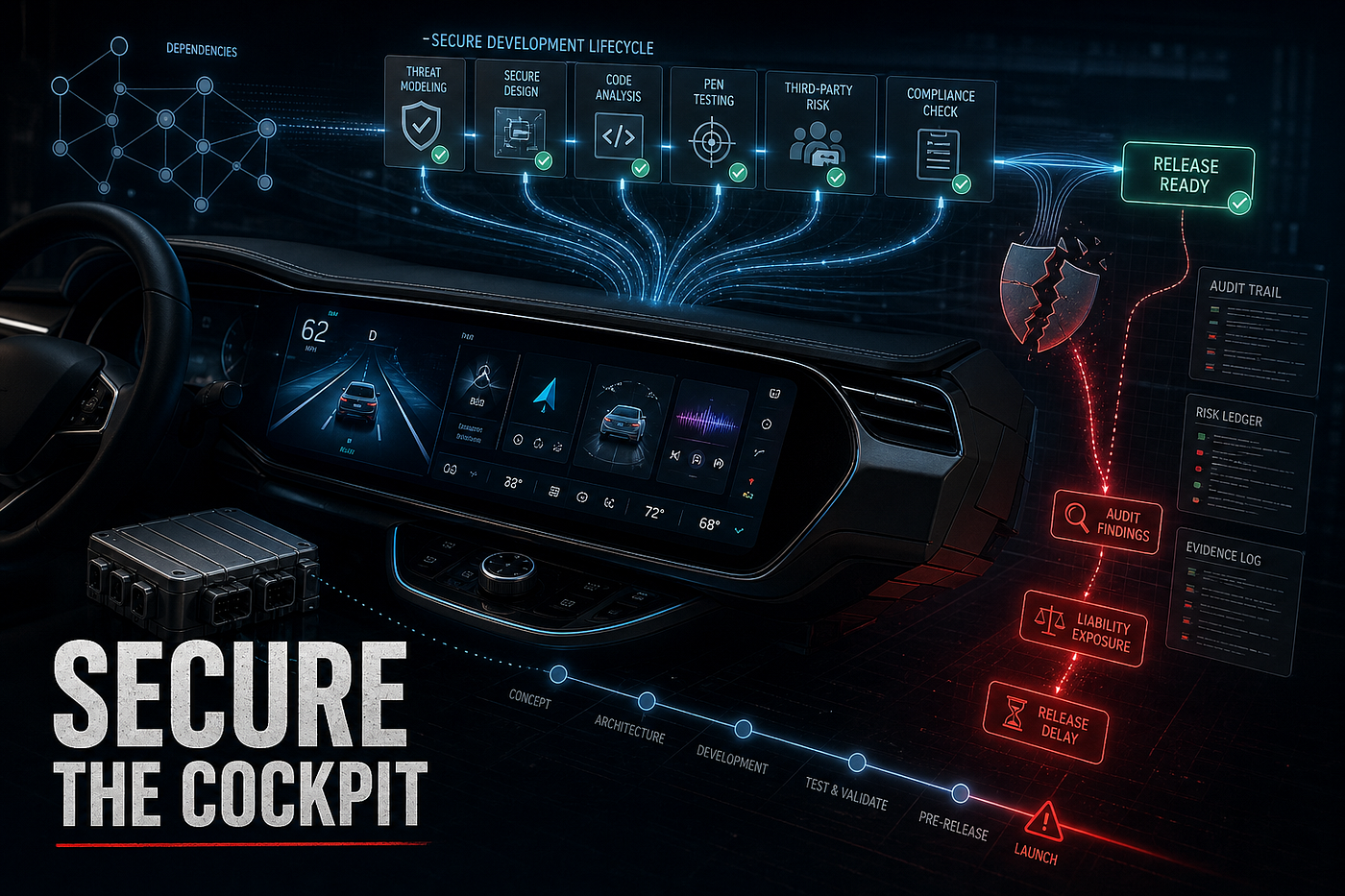
Figure 1. Auto-ISAC’s 2025 Warning Lands Inside Epic’s Dashboard Boom. Image created by the author with diffusion-synthesis and Python post-processing.
Epic’s Unreal Engine HMI is already inside the dashboard your product team wants to treat like a sales screen. Approve the wrong cockpit layer, and the cost does not stay with a design review; it lands in liability, audit exposure, and release delay.
This is not concept-car theater anymore. In an October 9, 2025 adoption note, Epic said more than 35 car models had shipped with Unreal Engine HMI, powering digital dashboard experiences in more than 2 million cars.
That number changes the decision for founders, CTOs, and senior engineers building hardware-adjacent software. A beautiful interface can help close the buyer, but the harder test starts when that interface reaches maps, ADAS views, doors, lighting, drive modes, personalization, or third-party apps.
At that point, polish is no longer a design win. It is an operating surface.
The dashboard stopped being trim
The old digital dashboard was a display with attitude. Epic’s own history nods to early LCD dashboards in the 1983 Nissan 300ZX and Buick Riviera, then jumps to the 2020 GMC HUMMER EV as Unreal’s first automotive cockpit proof point. That arc matters because it shows the trap: the screen moved from decoration to behavior.
By 2025, Epic wasn’t describing one dramatic launch. It named Ford, GM, Rivian, Geely, Lotus, Lincoln, and Volvo among brands with Unreal Engine HMI on the road. Rivian’s R1T became the first commercial vehicle to ship to the mass market with a UE-powered cockpit, according to Epic’s account.
The showroom loves pixels. The recall room counts dependencies.
That is the line founders miss. A gorgeous HMI can shorten the sales conversation because the buyer sees the future through glass: a car model that responds, a map that feels alive, a cabin that looks as expensive as the chassis. The better the interface gets, the more buyers expect it to govern real functions, not merely decorate them.
Epic’s HMI product page makes the jump visible. Lotus HMIs mirror physical vehicle changes, such as opening a door, inside an interactive dashboard model. Epic also says Unreal supports Snapdragon automotive platforms using Linux and Android, with QNX Hypervisor compositing, and works with partners including Siili, Elektrobit, and Bosch.
That is not a wallpaper engine. It is a dependency graph behind glass.
One engine now wants the whole cockpit
The pressure sharpened at CES 2026. Epic’s January 30, 2026 CES write-up described the Unreal Engine 5 Next-Gen HMI Experience as one UE5 instance driving every pixel inside a digital automotive cockpit.
The demo rendered the instrument cluster, maps, mini map, control panel, and 3D backgrounds on high-resolution displays at 60 fps. Epic also listed third-party applications, games, streaming, Chromium-based apps, native maps, ADAS visualization, and an assistant moving across HMI components.
That is the practical hinge. A single rendering layer can give design and engineering teams a coherent cockpit. It can also turn an elegant demo into a shared failure domain.
The incentives are obvious. Sales wants the screen to feel finished. Product wants a story that beats the other booth.
Engineering wants fewer duplicated rendering paths. Suppliers want a platform that makes integration cheaper. Each player has a rational move, and the combined payoff pushes toward a richer cockpit faster than the risk model matures.
No villain is required. The system rewards the team that ships the dazzling interface first.
Epic’s February 2025 Qualcomm Snapdragon announcement deepened that point. Unreal Engine would be deployed directly into Qualcomm’s Snapdragon automotive platforms for the first time, giving automakers that adopt Snapdragon Digital Chassis solutions access to pre-integrated Unreal features. Qualcomm’s Arvin Chander said more than 350 million cars on the road used Snapdragon Digital Chassis solutions.
That number is not an Unreal install base claim. It is still a scale signal. Once a premium interface stack rides inside a widely used cockpit platform, the design choice starts behaving like infrastructure.
Speed is the bargain, not the whole bill
The strongest case for Unreal HMI is speed. Epic’s adoption note quotes Siili Auto describing an old mismatch: designers used one tool, developers used another, and teams burned time chasing differences between designs and implementation. Epic says that cycle could take about five years and that working in Unreal cut it to three.
A two-year reduction is not cosmetic. In automotive, that can decide whether a feature launches with the vehicle or arrives as an apology after the market has moved. Blueprints, desktop previews, source access, profiling tools, and direct design contribution all make sense when the cockpit has to feel modern before the buyer gets bored.
The hidden cost is that faster convergence can hide more coupling.
When design, assets, logic, maps, personalization, and supplier integrations move through the same cockpit experience, the release conversation changes. A theme update is no longer only a brand refresh. A map panel is no longer only a navigation surface.
A voice assistant is no longer only convenience. Each one can become a path into data, permissions, update policy, incident response, and supplier accountability.
This is where game theory becomes practical. If the buyer rewards the team for visible polish and the risk only appears later, teams underinvest in the invisible work unless leadership changes the payoff. Security has to become a launch condition, not a department that gets invited after the demo wins.
That means the demo room needs a second script. When a founder shows the cockpit, someone should be able to answer what happens when the map SDK changes, a third-party app requests more permissions, a Chromium component needs a patch, an asset package comes from a supplier, or an ADAS visualization falls out of sync with the vehicle state.
If that answer is trapped in someone’s head, the screen is already too expensive.
Auto-ISAC is the counterweight

Figure 2. Proof of research footing: The cited source, Auto-ISAC Issues “Software Bill of Materials” Informational, gives the article external evidence instead of campaign language. Source: Automotiveisac
Auto-ISAC’s 2025 Best Practice Guides are the serious counterweight to the cockpit hype cycle. On April 2, 2025, Auto-ISAC announced updated BPGs built with a global membership of 80 automotive companies. The group said the guides support risk and resiliency across product, IT, and operational technology lifecycles.
Two areas matter most for Unreal HMI decisions: third-party risk management and secure development lifecycle. Auto-ISAC’s release says third-party risk is critical because vehicle manufacturers depend on a vast supplier network. It says secure development means integrating cybersecurity into every phase from inception to release.
That language can sound polite until it touches a cockpit backlog. Then it becomes a shipping rule.
Auto-ISAC also says its Best Practice Guides are not mandatory, are aspirational, and are living documents. That voluntary posture is important. It means a startup cannot hide behind “not required” when selling into a market where automakers, suppliers, fleets, and regulators expect evidence of disciplined risk handling.
The operating move is simple: treat Unreal Engine in software-defined vehicles as an architecture choice, not only a design tool choice. If the HMI is connected to vehicle state, safety-adjacent displays, personal data, third-party apps, or post-sale updates, the security case belongs in the roadmap before the buyer sees the polished cockpit.
That security case does not have to kill speed. It has to price speed honestly.
A practical action can happen today. Take the next cockpit demo and mark every pixel that can trigger, display, infer, store, or route something beyond decoration. Then ask who owns the test, the dependency, the patch path, and the failure behavior for that pixel.
Any unanswered mark is not a design issue. It is future work pretending to be finished.
Pwn2Own shows what adjacent systems inherit
Pwn2Own Automotive 2026 does not prove Unreal cockpits are unsafe. It proves automotive-adjacent software remains a rich attack surface while the cockpit keeps absorbing more functions.
Trend Micro’s Zero Day Initiative reported that over three days of Pwn2Own Automotive 2026, researchers earned $1,047,000 for 76 unique 0-day vulnerabilities. The targets included automotive systems such as infotainment units and EV charging hardware. Fuzzware.io won Master of Pwn with $215,500.
Those numbers should sit beside the HMI roadmap because they show the adversary’s incentive structure. Attackers do not care whether a surface began as a delightful experience. They care whether it carries code, trust, permissions, network access, user behavior, update paths, or supplier seams.
The cleanest interface in the vehicle can still inherit the messiest dependency.
Epic’s own developer documentation for automotive HMI frames these projects as highly optimized mobile applications with special requirements for responsiveness, stability, and reliability. It also notes that failures in those areas can create frustration and safety issues for users. That is the right standard.
The screen is judged by how it behaves under stress, not how it looks under booth lights.
For founders, this creates a harsh but useful decision rule. If your interface can confuse the driver, obscure vehicle state, delay a critical control, widen third-party code exposure, or complicate post-sale patching, it belongs in the secure development lifecycle from day one.
The first version of the product is where this is cheapest. After procurement, supplier contracts, brand commitments, and customer expectations harden, every missing control becomes a negotiation. Every patch becomes a schedule fight.
Every undocumented dependency becomes a hunt.
The demo needs a refusal point
The best product leaders do not reject beauty. They put a refusal point under it.
Before the cockpit leaves the demo room, ask four questions:
-
What vehicle functions can this interface influence, display, or misrepresent?
-
Which suppliers, SDKs, assets, apps, browsers, maps, and operating systems sit behind it?
-
How will the team test degraded behavior, update failure, permission abuse, and driver confusion?
-
Who owns the patch path after the car ships?
These questions are not paperwork. They change the payoff table. They stop the team from winning the buyer with a screen that creates years of unpriced obligations.
The historical pattern is familiar. Every mature software market starts by celebrating capability, then pays for the missing discipline later. Web apps learned it with third-party scripts.
Mobile apps learned it with permissions. Cloud teams learned it with dependency sprawl. Automotive HMI is now learning it on a screen bolted into a moving machine.
The end state is easy to see if the habit scales without correction. Every cockpit becomes an app platform, every app platform becomes a supplier market, every supplier market becomes a patch and disclosure system, and every missed boundary becomes a liability conversation after the customer already owns the vehicle.
That is not an argument against Unreal. It is an argument against pretending a game-grade cockpit can enter safety-adjacent vehicle control with game-grade accountability.
Epic’s 2 million-car HMI milestone is a genuine platform win. It is also the moment founders and engineering leads have to stop asking whether the screen looks premium and start asking whether the organization can govern what the screen now touches.
Thanks to the engineers who keep the cockpit beautiful without letting it become the next uncontrolled risk surface.
If you’re carrying this with your team, thank you for reading and for doing the careful work most people never see.
Related reading
메타데이터
- post_id
- 52bdb57962d8
- slug
- unreals-2-million-car-dashboard-bet-has-a-security-catch-52bdb57962d8
- url
- https://medium.com/kairi-ai/unreals-2-million-car-dashboard-bet-has-a-security-catch-52bdb57962d8
- canonical_url
- https://medium.com/kairi-ai/unreals-2-million-car-dashboard-bet-has-a-security-catch-52bdb57962d8
- author_url
- https://medium.com/@james.kuhman
- status
- ok
- fetched_at
- 2026-06-10 09:45:17