AMR vs AMI: Key Differences, Benefits, and When to Use Each
Automated Meter Reading (AMR) and Advanced Metering Infrastructure (AMI) are often used interchangeably in discussions around smart…
AMR vs AMI: Key Differences, Benefits, and When to Use Each
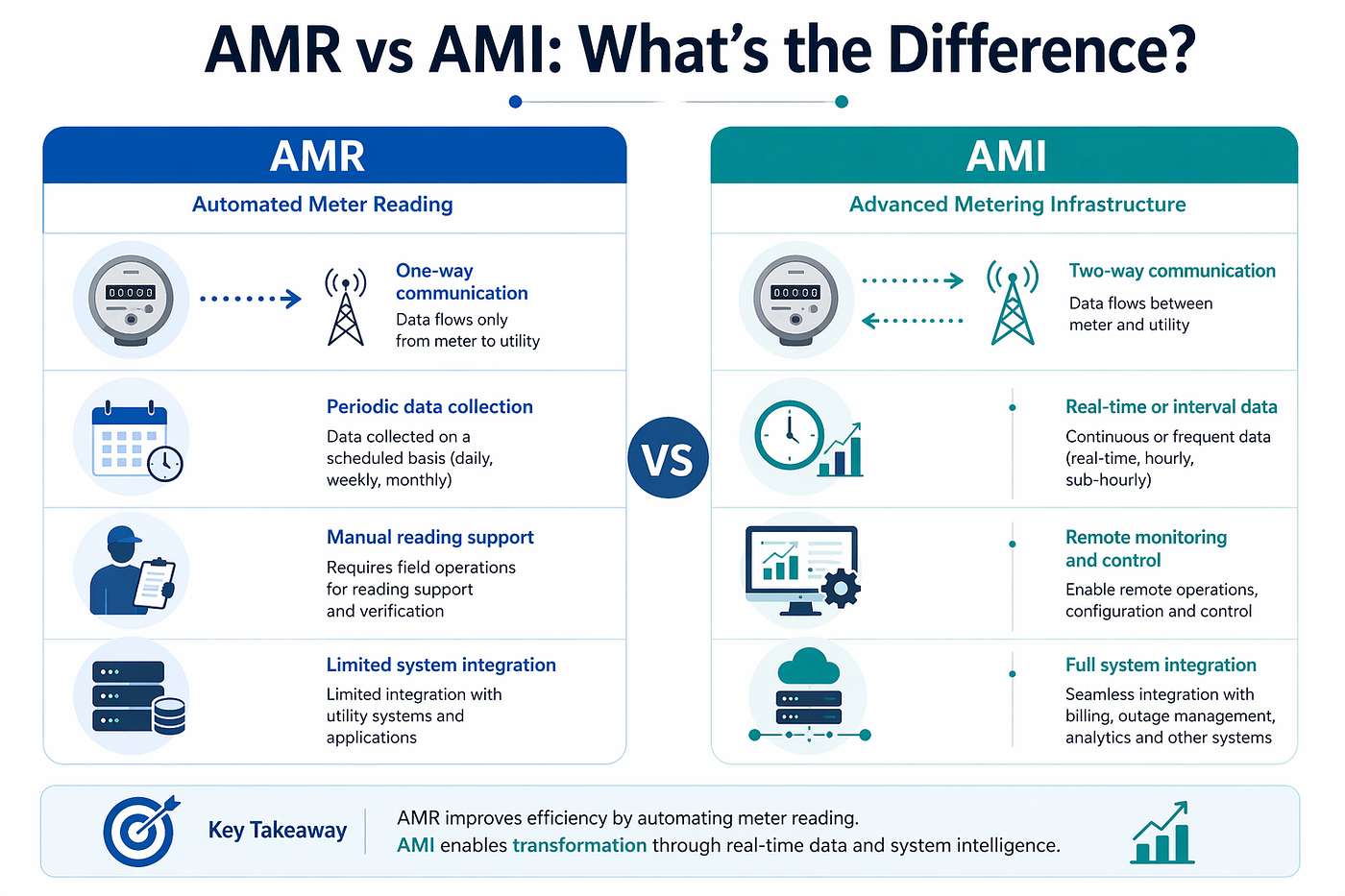
Automated Meter Reading (AMR) and Advanced Metering Infrastructure (AMI) are often used interchangeably in discussions around smart metering.
However, they represent different levels of capability and system maturity.
Understanding the distinction between AMR and AMI is critical for utilities planning digital metering deployments.
This article outlines the key differences, benefits, and practical considerations for choosing between AMR and AMI.
For a practical introduction to smart metering systems, see: **What Is Smart Metering? A Practical Guide for Utilities and Smart Cities**
What Is AMR (Automated Meter Reading)?

Field example of AMR deployment: handheld reader showing batch meter readings (299 completed, 91 pending). This illustrates how AMR improves efficiency, but data collection remains periodic rather than continuous.
AMR refers to systems that automatically collect meter readings without manual intervention.
Data is typically:
- Collected periodically
- Transmitted in one direction (from meter to utility)
Common AMR methods include:
- Drive-by or walk-by reading
- Scheduled remote data collection
AMR improves operational efficiency by eliminating manual meter reading, but its capabilities are limited.
What Is AMI (Advanced Metering Infrastructure)?
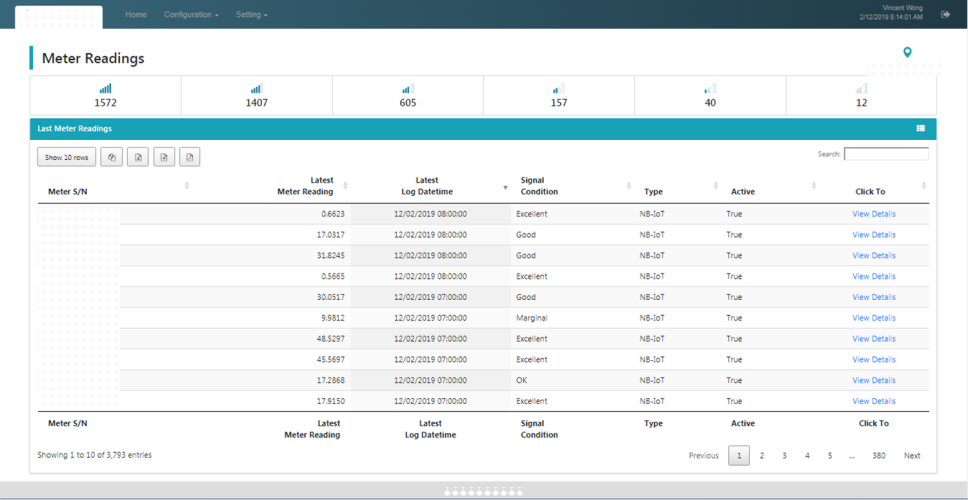
Example of an AMI system interface: meter data collected across thousands of devices with varying timestamps, signal levels, and NB-IoT connectivity status. Unlike AMR, data is continuously updated and available for system-wide monitoring and analysis.
AMI is a fully integrated system that enables two-way communication between meters and utility systems.
It includes:
- Smart meters
- Communication networks
- Data management systems
AMI supports:
- Real-time or near real-time data
- Remote configuration and control
- Integration with operational systems
AMI represents a significant step beyond AMR in terms of functionality and value.
AMR vs AMI: Key Differences
Communication
- AMR: One-way communication (meter → utility)
- AMI: Two-way communication (meter ↔ utility)
Data Frequency
- AMR: Periodic data collection (daily or monthly)
- AMI: Interval data (hourly, sub-hourly, or near real-time)
System Integration
- AMR: Limited integration with backend systems
- AMI: Fully integrated with billing, analytics, and operational platforms
Operational Capability
- AMR: Primarily supports automated billing
- AMI: Enables monitoring, control, and analytics
Scalability and Future Readiness
- AMR: Suitable for basic efficiency improvements
- AMI: Designed for long-term digital transformation
Benefits of AMR
AMR provides:
- Reduced manual meter reading costs
- Improved billing accuracy
- Faster data collection compared to manual processes
For utilities transitioning from manual systems, AMR offers a relatively simple and cost-effective upgrade.
Benefits of AMI
AMI enables:
- Continuous data visibility
- Early detection of anomalies (leaks, outages)
- Remote device management
- Data-driven decision-making
It supports both operational efficiency and strategic transformation.
When to Use AMR
AMR may be suitable when:
- Budget constraints limit large-scale investment
- Infrastructure readiness is limited
- The primary objective is reducing manual meter reading
AMR can serve as a transitional step toward more advanced systems.
When to Use AMI
AMI is more appropriate when:
- Utilities require real-time visibility
- Operational efficiency and analytics are priorities
- Long-term digital transformation is a strategic goal
AMI is typically the preferred choice for new large-scale deployments.
Key Considerations in Decision-Making
Choosing between AMR and AMI depends on multiple factors:
Cost vs Value
AMR has lower upfront costs, but AMI delivers greater long-term value.
Infrastructure Readiness
AMI requires:
- Reliable communication networks
- Backend system integration
Operational Objectives
If the goal is:
- Efficiency → AMR may suffice
- Transformation → AMI is required
From AMR to AMI: A Common Evolution Path
Many utilities adopt AMR as an initial step before transitioning to AMI.
However, this approach should be carefully evaluated.
In some cases:
- Upgrading from AMR to AMI later can be more complex and costly
- Direct AMI deployment may be more efficient long-term
Conclusion
AMR and AMI serve different purposes within the evolution of smart metering.
- AMR improves efficiency by automating meter reading
- AMI enables full digital transformation through data and system integration
For utilities planning long-term infrastructure, the decision should be based not only on cost, but on the desired level of operational capability and future readiness.
For a detailed explanation of AMI architecture and how it works, see: **What Is AMI (Advanced Metering Infrastructure)? Architecture, Components, and How It Works**
For connectivity considerations in AMI deployments, see: **NB-IoT vs LoRaWAN vs LTE-M: Choosing the Right IoT Connectivity for Smart Utilities**
메타데이터
- post_id
- 52bf735c787f
- slug
- amr-vs-ami-key-differences-benefits-and-when-to-use-each-52bf735c787f
- url
- https://blog.stackademic.com/amr-vs-ami-key-differences-benefits-and-when-to-use-each-52bf735c787f
- canonical_url
- https://blog.stackademic.com/amr-vs-ami-key-differences-benefits-and-when-to-use-each-52bf735c787f
- author_url
- https://medium.com/@smartinfra.insights
- status
- ok
- fetched_at
- 2026-06-09 15:37:30