What Every Game Studio Could Learn From Nihon Falcom
What is the most important thing a developer can get from players? Money, playtime, and community support are all important, but I think…
What Every Game Studio Could Learn From Nihon Falcom
What is the most important thing a developer can get from players? Money, playtime, and community support are all important, but I think the most essential thing a developer can earn is trust. This aspect of the dynamic between developers and players has been carefully cultivated by a Japanese studio named Nihon Falcom. an achievement even the biggest AAA developers struggle to achieve nowadays.
What Is the Trails Series?
I thought it would be fitting to take a quick look back and understand how Falcom has instilled such faith in their player base, and what that means for their games. Before I dive into what makes Falcom special, it’s worth explaining what this series actually is, because its structure is key to understanding the trust it builds with players. The Trails series (part of the wider Legend of Heroes franchise) is a long-running set of Japanese role-playing games (JRPGs) known for their rich worldbuilding, turn-based combat, and deeply interconnected stories. Each game is part of a larger, serialized narrative spanning multiple arcs and regions within the same world.
These games focus on character-driven storytelling, strategic battles, and exploring towns and dungeons, often with a political or mystery-driven twist. While each story arc has its own cast, events and characters carry over between games and converge at certain points, rewarding long-term players with big payoffs and continuity rarely seen in the genre. The series currently has 13 games, with more on the way, along with a remake of the first installment coming later this year titled Trails in the Sky 1st Chapter.
All but the latest Japanese release, Trails Beyond the Horizon which is getting it’s release in the west early next year.
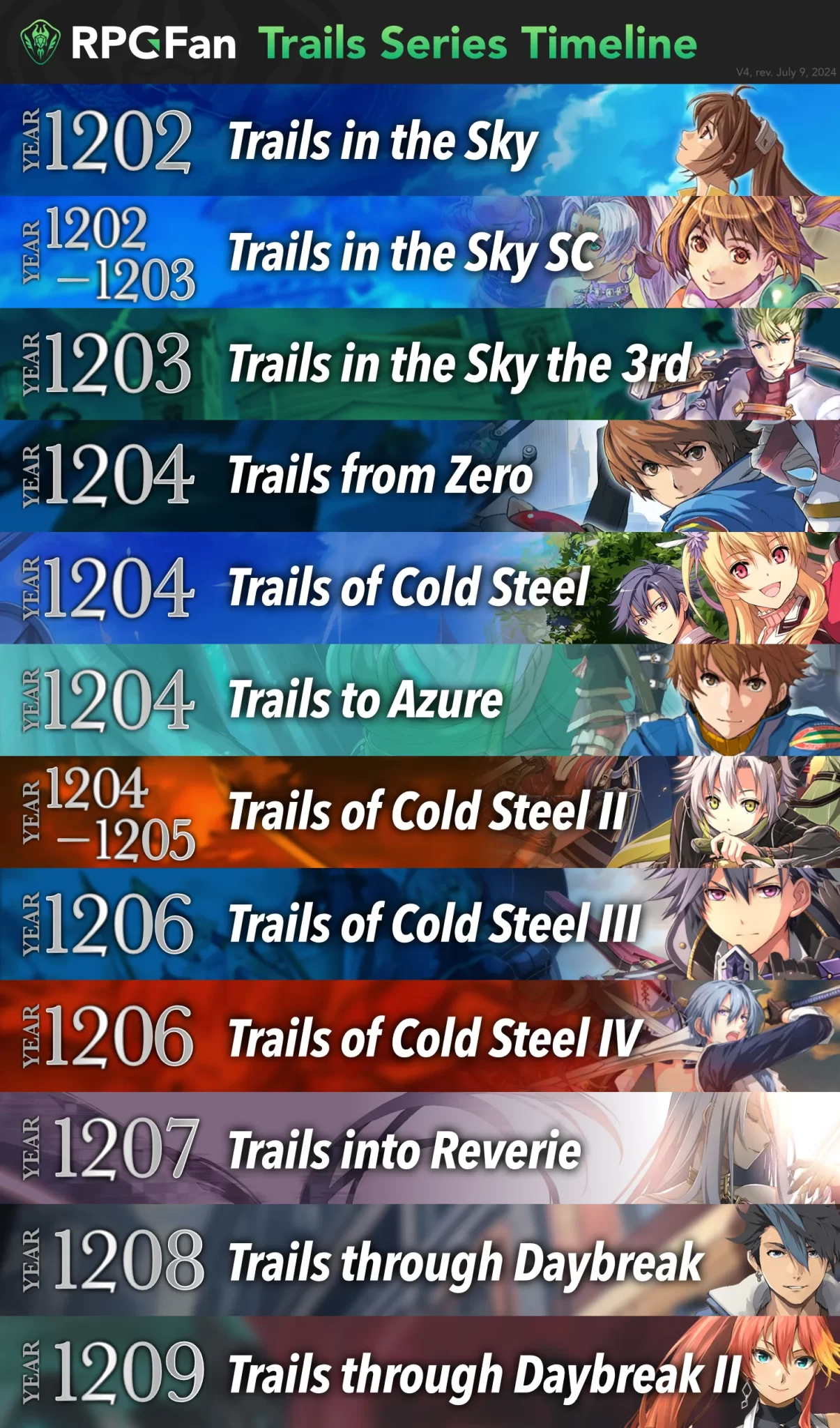
All but the latest Japanese release, Trails Beyond the Horizon which is getting it’s release in the west early next year.
My journey started with Trails in the Sky in December of 2023, and I have just completed Trails of Cold Steel I, the sixth installment in the series. Not my favorite, but I never let up. Why? Because Falcom gives players something rare in gaming: a reason to stick with the journey, even when it falters.
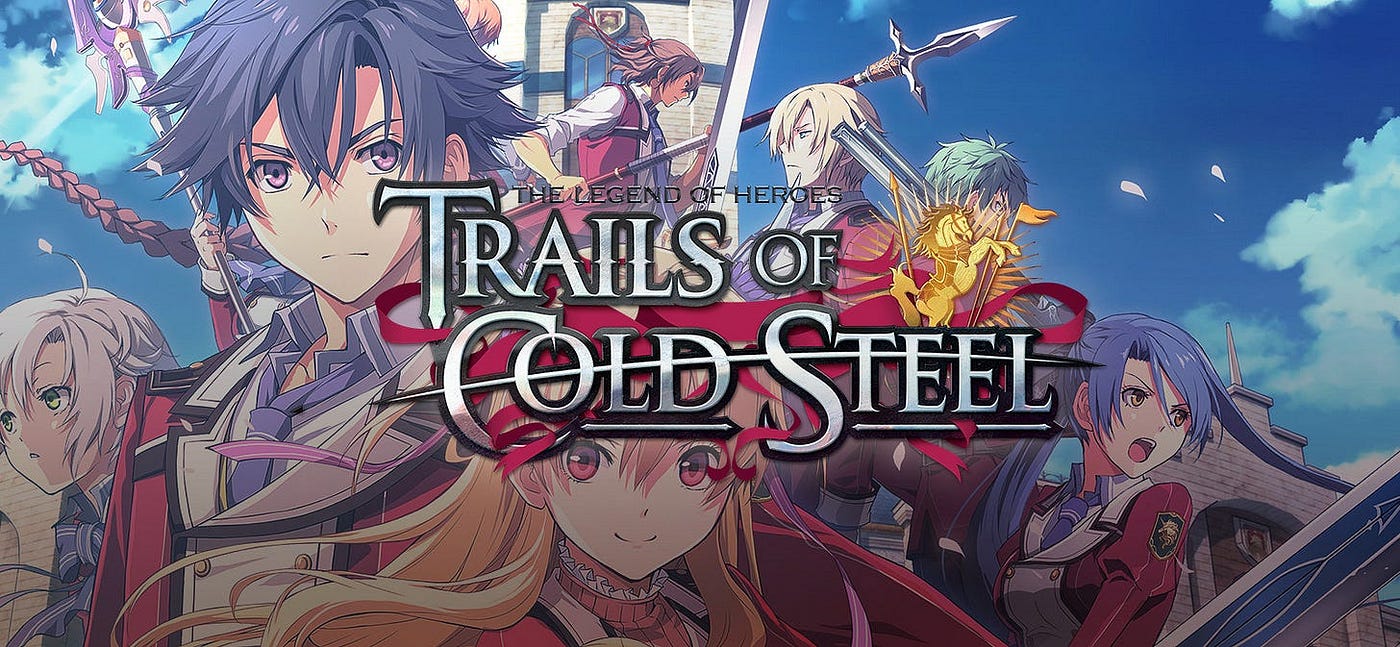
NPCs: The Beating Heart of Falcom’s Worldbuilding
That trust I mentioned starts small, with the world itself. One reason Falcom has built such a dedicated fanbase is the sheer care put into how their world is built and evolves — particularly through something many games treat as background noise: their NPCs. NPC interactions are a central pillar of the series, and what makes them different from other games is the attention to detail. NPCs will have their own stories, with conflict and resolution, without your input. Because you aren’t forced to interact with them and see their stories through, you are rewarded for re-engaging with the world. There are more NPCs than you can reasonably keep track of, and Falcom takes full advantage of that, making the world feel alive. With this, the player trusts the developers to keep rewarding them for taking the time to seek out these characters and learn more about their lives.
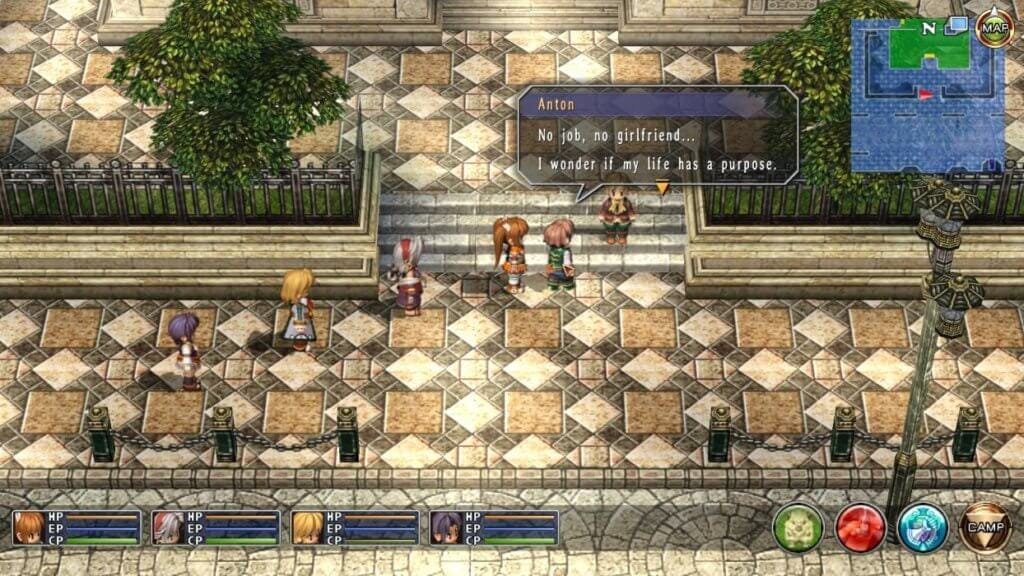
A recurring NPC by the name of Anton who you’ll witness going through love and heartbreak
Beyond worldbuilding, another way Falcom rewards players’ patience is through its use of foreshadowing — a narrative weapon they’ve truly mastered. The use of this narrative device yields the feeling of a massive return on investment, delivering moments that can only exist in long-form storytelling. Often giving just enough information to keep you going without revealing their entire hand yet. They leave a trail of breadcrumbs — and as you follow, the payoffs get bigger and more satisfying.
Time and Trust: Falcom’s Secret Advantage
So what does all this trust actually do for Falcom? In short, it gives them freedom and room to make deliberate creative choices other studios can’t. One special affordance Falcom has that many developers do not enjoy is the ability to take their time. What I mean by this is not development timelines, but the writing and design of their games. Establishing an entirely new world and expanding on it while delivering a satisfying story for players to experience is difficult, because you need to keep the player engaged. This is especially true nowadays, with such an emphasis on short-form content — but how this relates to games is a whole other discussion for another time. But by taking their time fleshing out the world and establishing characters and their relationships, that gives a foundation that few other games can afford to build. As a result, players become so deeply connected with the world and the people who live in it, because so much care and time is poured into character development. It feels natural — because like real life, people don’t change so quickly.
This also allows later installments to waste absolutely no time spewing exposition or setting up large plot points, players can hop right into the action. Due to the continuous overarching story of the series, many games cannot do this because they haven’t put in the groundwork that Falcom has, carefully setting the stage for incredible stories and journeys. For example, there is a character by the name of Renne who is introduced in the second game, but over the course of the next three games and later entries, you slowly learn more and more about her — like her motivations and circumstances — going through her own story you get the chance to see glimpses of, and eventually come full circle, giving you the resolution you’ve been so desperately wanting for her across all of these games.

Renne and her evolution through the story
Why I’m Invested in Falcom as a Studio, Not Just Their Games
As a fan, Falcom has had me locked in. Trust from the player is an affordance that every game strives to achieve in some way, and faith in the developer is a dream for devs to have. With a long-running series like this, as each game increases the level of investment, it becomes easier to reach those emotional peaks that stick in players’ minds. The challenge that comes with that is you can’t just do the same thing or harp on the same emotion — you need to peak again and again. This is something I believe these games do very well, while also doing a great job of raising the stakes.
As I look ahead to more Trails games, I realize I’m not just invested in the story or characters. I’m invested in Falcom itself. And that’s the kind of trust most studios dream of building. It allows them to be meticulous and intentional in their creative process, which I believe is one of the most important things when making not only games, but any form of media.
메타데이터
- post_id
- 52c3c8bb70ea
- slug
- what-every-game-studio-could-learn-from-nihon-falcom-52c3c8bb70ea
- url
- https://medium.com/@faraidhalle/what-every-game-studio-could-learn-from-nihon-falcom-52c3c8bb70ea
- canonical_url
- https://medium.com/@faraidhalle/what-every-game-studio-could-learn-from-nihon-falcom-52c3c8bb70ea
- author_url
- https://medium.com/@faraidhalle
- status
- ok
- fetched_at
- 2026-07-19 07:34:01



