Beyond the Sun’s Reach: 4 Surprising Truths About the Interstellar Visitor 3I/ATLAS
When the interstellar object 3I/ATLAS arrived in 2025, it instantly became one of the most important discoveries in modern astronomy. But…
Beyond the Sun’s Reach: 4 Surprising Truths About the Interstellar Visitor 3I/ATLAS
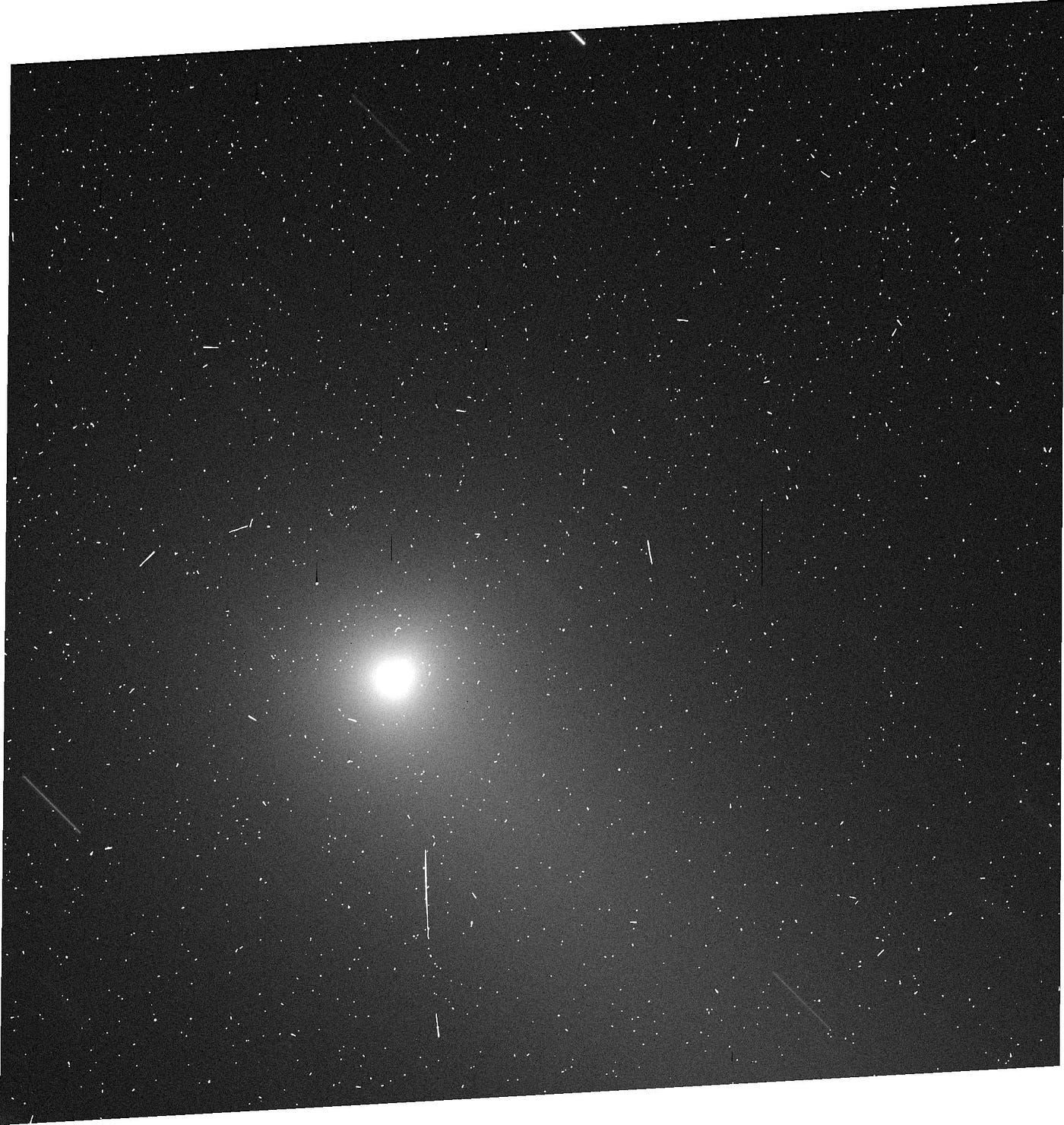
When the interstellar object 3I/ATLAS arrived in 2025, it instantly became one of the most important discoveries in modern astronomy. But it also created an immediate mystery.
Most scientists expected something familiar: a comet-like body full of volatile ice, heating up and reacting the way comets in our own solar system do.
That’s not what happened.
As 3I/ATLAS passed close to the Sun, thermal maps revealed something strange. Beneath a surface darker than coal, the object showed a structural complexity that doesn’t match our usual models of how icy interstellar fragments survive near a star.
[embed]
1. A 6,500-Day Descent Into Stability
The story of 3I/ATLAS begins long before it was ever seen through a telescope.
Thermal simulations start about 6,500 days before perihelion, when the object was more than 100 AU from the Sun, so far away that sunlight barely mattered.
At that distance, the entire body sits in near-perfect equilibrium with the cold background of space. This is the ideal baseline for understanding what the object was like before solar heating ever touched it.
To track what happened as it fell inward, scientists modeled the object using 5 mm layers down to 10 meters deep. That resolution lets us see the exact moment the Sun’s heat begins to move into this untouched relic from another star system.
2. The 20-Centimeter Barrier
By October 2025, when 3I/ATLAS reached perihelion, researchers expected water ice deep inside to start sublimating.
Water ice typically activates around 150 K, and at that solar distance, heat should have penetrated much farther.
Instead, observations showed something shocking.
Water ice activity stayed locked into only the top 15 to 20 centimeters of the surface.
That means most of the interior remained ancient and cold, untouched even at maximum solar heating. The surface may have been warming, but the deep interior acted like a preserved time capsule, still holding the chemistry of a distant star system.
As one researcher put it: The heat simply cannot penetrate far enough, even when the surface is at its warmest.
3. The Regime Shift of Carbon Volatiles
The biggest surprise came from how carbon-based volatiles behaved.
In typical solar-system comets, water and carbon activity often rise together. But 3I/ATLAS showed a sharp divide.
Water stayed shallow, while carbon volatiles behaved like a delayed fuse.
- Carbon Monoxide (CO) activates around 30 K
- Carbon Dioxide (CO₂) activates around 80 K
Observations from SPHEREx in December 2025, months after perihelion, confirmed these volatiles were sublimating from meters below the surface.
So even after surface water activity stabilized, deep carbon-driven outgassing continued. That separation between a shallow active layer and a deeper carbon-active interior is unlike anything we normally see in local comets.
4. The Paradox of the Dark Insulator
So what explains all this?
The key is what scientists call an insulation paradox.
3I/ATLAS absorbs heat extremely well, but it refuses to let that heat travel inward.
Its physical properties paint a clear picture:
- Albedo below 0.2, meaning it’s very dark
- Thermal conductivity extremely low, only 0.1 to 0.5 W/m/K
- Bulk density around 1,000 kg/m³
- Specific heat capacity about 550 J/kg/K
- Surface emissivity near 0.95
What this really means is simple: the surface gets hot, but the interior stays protected.
The material is likely porous and organic-rich, so heat has no efficient path downward. And because emissivity is so high, most absorbed energy is quickly radiated back into space instead of sinking deeper.
It’s like a frozen core wrapped in an ultra-light insulating blanket.
Conclusion: A Silent Fragment’s Record
3I/ATLAS is not just a drifting chunk of ice and rock.
It’s a physical record of a solar system we may never see firsthand. Its sharp divide between surface water activity and deep carbon reserves shows that interstellar objects evolve under rules that may be very different from the ones we know.
It reminds us that our comet models might only explain what’s local, not what’s universal.
The universe’s secrets rarely match our expectations.
Before you go, quick bonus for anyone who values privacy online. Right now, AdGuard VPN is available with up to 80% off for a limited time. If you want a simple way to stay safer, browse privately, and block trackers while streaming or traveling, this is a great deal to grab.

Check it out here: https://www.w3toys.com/blog/deals/adguard-vpn-80-off-promo-code/
메타데이터
- post_id
- 52d827ef6964
- slug
- beyond-the-suns-reach-4-surprising-truths-about-the-interstellar-visitor-3i-atlas-52d827ef6964
- url
- https://medium.com/@blogpranshu/beyond-the-suns-reach-4-surprising-truths-about-the-interstellar-visitor-3i-atlas-52d827ef6964
- canonical_url
- https://medium.com/@blogpranshu/beyond-the-suns-reach-4-surprising-truths-about-the-interstellar-visitor-3i-atlas-52d827ef6964
- author_url
- https://medium.com/@blogpranshu
- status
- ok
- fetched_at
- 2026-07-13 06:23:13