Stuxnet: The Malware That Secretly Destroyed Machines Without Anyone Noticing
Imagine this.
Stuxnet: The Malware That Secretly Destroyed Machines Without Anyone Noticing
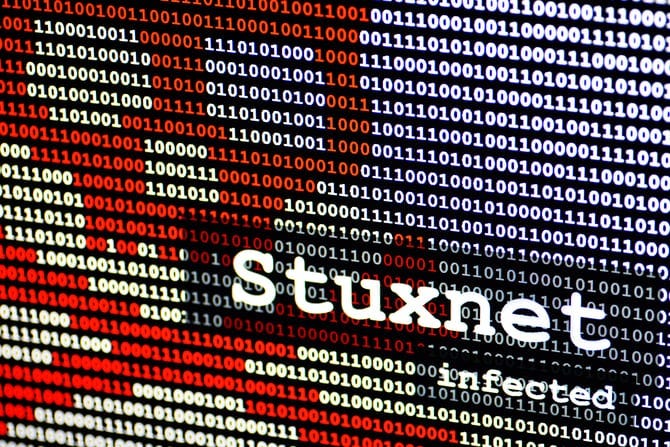
Imagine this.
You are an engineer working at one of the most secure facilities in the world.
Every morning, you check the control systems.
Everything looks normal.
The screens show normal readings.
The alarms are silent.
The machines appear healthy.
Yet, deep inside the facility, expensive equipment is slowly tearing itself apart.
Nobody knows why.
Nobody sees the attack.
Nobody even realizes an attack is happening.
It sounds like a Hollywood movie.
But in 2010, this was real.
And the culprit wasn’t a missile, a bomb, or a commando team.
It was a computer worm called Stuxnet.
A piece of code so advanced that cybersecurity experts spent years trying to understand how it worked.
Some even called it the world’s first true cyberweapon.
Before Stuxnet, Hacking Was Different
Let’s travel back to the early 2000s.
Most malware had simple goals.
Hackers wanted to:
- Steal passwords
- Steal bank details
- Create botnets
- Show annoying popups
The cybercriminal business model was simple:
“Give me your money.”
Then Stuxnet arrived and said:
“Money is nice, but have you considered sabotaging a nuclear facility?”
Security researchers immediately realized something was wrong.
This malware was far too sophisticated.
It wasn’t targeting random people.
It wasn’t interested in credit card numbers.
It was hunting something very specific.
Like a sniper hidden in a crowd.
The Target: Iran’s Nuclear Program
To understand Stuxnet, we first need to understand what it was hunting.
Iran had been developing its nuclear program for years.
One of the most important facilities was located in Natanz.
Inside the facility were thousands of centrifuges.
Now, centrifuge sounds like a scary science-fiction word, but the idea is simple.
Imagine a washing machine spinning clothes.
Now imagine it spinning at incredible speeds.
Extremely fast.
Any small mistake can damage it.
These machines were used to enrich uranium.
And because they were so important, the facility was heavily protected.
The systems controlling them were largely isolated from the internet.
Cybersecurity professionals call this an air-gapped network.
In simple words:
No internet.
No emails.
No Facebook.
No YouTube.
No cat videos.
The idea was simple:
“If hackers can’t reach the network, they can’t attack it.”
Unfortunately, humans invented USB drives.
The Most Expensive USB Stick in History
This is where the story becomes almost unbelievable.
Since the target systems weren’t connected to the internet, the attackers needed another route.
According to investigations, Stuxnet likely entered through infected USB drives.
Think about that for a second.
One small USB device.
Something small enough to fit inside your pocket.
And it eventually became part of an operation that changed cybersecurity history.
Every cybersecurity trainer reading this is probably smiling right now.
Because after Stuxnet, security awareness training suddenly had a perfect example.
“Don’t plug random USB drives into critical systems.”
A lesson that cost somebody millions of dollars to demonstrate.
The Genius Part Nobody Expected
Most malware announces itself.
Your files disappear.
Your computer crashes.
Something obvious happens.
Stuxnet did the opposite.
It wanted to remain invisible.
Imagine a thief entering your house every night.
Instead of stealing your TV, he slightly loosens one screw.
Then leaves.
Night after night.
Week after week.
Month after month.
Eventually something breaks.
And nobody knows why.
That was Stuxnet’s strategy.
It secretly altered how centrifuges operated.
Sometimes making them spin too fast.
Sometimes too slow.
Enough to cause stress and damage.
But here is the truly terrifying part.
The malware also manipulated monitoring data.
Engineers looked at their screens.
Everything appeared normal.
The machines were screaming.
The dashboards were smiling.
The Cybersecurity World’s “Wait…WHAT?” Moment
When researchers finally dissected Stuxnet, they couldn’t believe what they were seeing.
The worm contained multiple zero-day exploits.
A zero-day vulnerability is a software flaw that the vendor doesn’t know about.
Finding one is valuable.
Finding multiple is extraordinary.
Using multiple together in a single attack?
That suggested enormous resources.
This wasn’t the work of a teenager in a basement eating instant noodles.
This looked like something much bigger.
Something that had planning.
Funding.
Engineers.
Researchers.
Possibly governments.
The cybersecurity community had never seen anything quite like it.
The Discovery That Changed Everything
Eventually, security researchers started connecting the dots.
The worm wasn’t trying to infect the whole world.
It was looking for a very specific industrial setup.
If the target wasn’t present, it mostly stayed quiet.
Imagine sending a trained assassin into a city.
The assassin ignores everyone else and waits for one particular person.
That level of precision was shocking.
And it changed how governments viewed cybersecurity forever.
Because suddenly the question wasn’t:
“Can hackers steal information?”
The question became:
“Can software destroy physical infrastructure?”
The answer was yes.
And that answer changed everything.
Why Stuxnet Still Matters Today
More than a decade later, Stuxnet remains one of the most important cybersecurity incidents ever discovered.
Not because it was the biggest.
Not because it infected the most computers.
But because it proved something terrifying.
A line had been crossed.
Code was no longer just digital.
Code could affect the physical world.
Power plants.
Factories.
Transportation systems.
Water treatment facilities.
Anything controlled by computers could potentially become a target.
And once the world realized that, cybersecurity was no longer just an IT problem.
It became a national security problem.
Final Thought
Most people think wars are fought with tanks, fighter jets, and missiles.
Stuxnet showed that sometimes a war can begin with something much smaller.
A few megabytes of code.
A USB drive.
And one engineer clicking “Run.”
메타데이터
- post_id
- 52e06b2b82e3
- slug
- stuxnet-the-malware-that-secretly-destroyed-machines-without-anyone-noticing-52e06b2b82e3
- url
- https://medium.com/@sanchitgangwar457/stuxnet-the-malware-that-secretly-destroyed-machines-without-anyone-noticing-52e06b2b82e3
- canonical_url
- https://medium.com/@sanchitgangwar457/stuxnet-the-malware-that-secretly-destroyed-machines-without-anyone-noticing-52e06b2b82e3
- author_url
- https://medium.com/@sanchitgangwar457
- status
- ok
- fetched_at
- 2026-07-14 13:54:22



