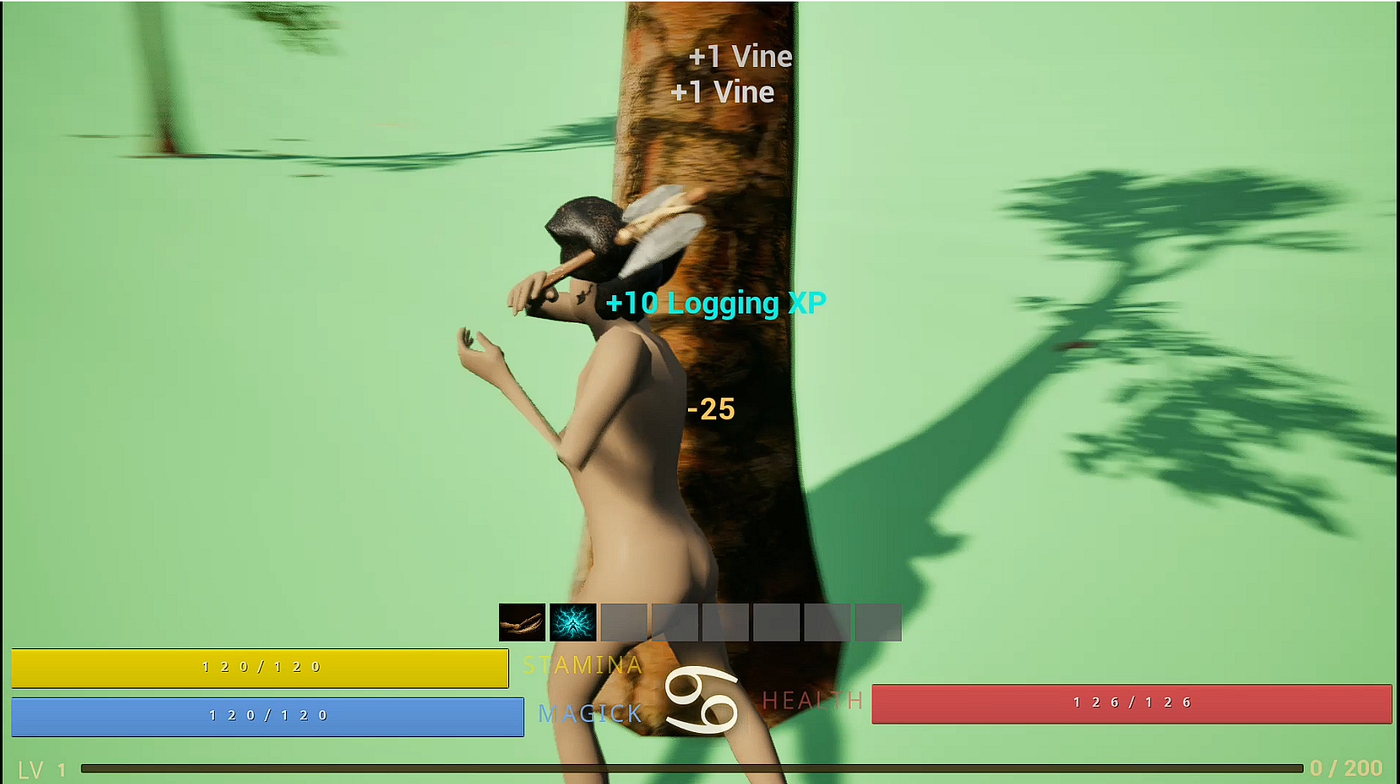
Magickness MMORPG Now Running on PC + Mobile Ahead of Open Demo
Magickness™ is now successfully running on both PC and Android using the same live multiplayer infrastructure, backend systems, and…
Magickness MMORPG Now Running on PC + Mobile Ahead of Open Demo
Magickness™ is now successfully running on both PC and Android using the same live multiplayer infrastructure, backend systems, and persistent world pipeline ahead of Open Demo.
For the past several months, development on Magickness™ has focused heavily on foundational systems rather than large-scale world content.
That work has now crossed a major milestone.
Magickness is now successfully running on both Windows PC and Android mobile using the same live multiplayer infrastructure, the same backend systems, and the same persistent world pipeline.
This was not a content milestone.
It was a production milestone.
What’s Currently Running
The current playable build now supports the full gameplay flow on both PC and Android:
- Account creation
- Email verification
- Character creation
- 2D HomeWorld login space
- Portal travel into the 3D world
- Dedicated multiplayer server connection
- Real-time movement and gameplay sync
- Character stats, abilities, inventory, morality systems, and HUD integration
Both platforms connect to the same live dedicated server running continuously on Oracle Cloud ARM64 infrastructure.
The current world — Pangea — is still in an early foundational state. Right now it primarily exists as a technical and gameplay environment rather than a finished content world.
But the infrastructure underneath it is now operational.
That changes development significantly moving forward.
The Current State of Pangea
Pangea is the primary open-world environment currently being developed for the Magickness Demo.
The world itself is built using a voxel terrain pipeline rather than a traditional static landscape workflow.
Current terrain generation includes:
- Rolling hills
- Mountain ridges
- River generation
- Lake basins
- Multi-material biome blending
- Runtime terrain chunk architecture
The terrain system uses smooth marching-cubes generation rather than block-based voxel terrain.
The current playable space spans approximately 2km × 2km with underground depth support already integrated into the terrain architecture.
At this stage, Pangea is intentionally minimal.
The goal right now is not world decoration.
The goal is proving that the core systems can survive real production conditions before large-scale content creation begins.
Pangea itself also plays an important role in the broader lore direction of Magickness™.
The Magickness universe explores the concept of alternate dimensions and connected realities. Within the current narrative framework, Pangea exists as a simulated world tied to experimental dimensional research surrounding a discovered Goldilocks planet and wormhole phenomena.
That larger worldbuilding layer will continue expanding over time as the project evolves beyond foundational infrastructure and into deeper narrative systems.

Why PC + Mobile Matters
Cross-platform support was always part of the long-term vision for Magickness.
Getting both platforms operational before Open Demo dramatically changes future iteration speed.
The current Android pipeline now supports:
- Vulkan SM5 devices
- OpenGL ES 3.1 fallback devices
- ARM64 deployment
- ASTC texture compression
- Shared backend authentication
- Shared multiplayer server connection
That means both PC and mobile clients are now interacting with the same backend systems and gameplay environment simultaneously.
This is important because many of the harder engineering problems happen before players ever see meaningful gameplay content.
- Authentication persistence across world travel
- Shader compatibility
- Dedicated server deployment
- Cross-platform packaging
- Backend synchronization
- Runtime networking
Those systems are now operational together in a live environment.
What Solo UE5 Development Actually Looks Like
One of the biggest realizations during this milestone was that the bottleneck was rarely “writing gameplay code.”
The real bottleneck was production infrastructure.
A large portion of the last several weeks involved:
- Unreal Engine packaging issues
- Android shader compatibility
- Dedicated server deployment
- ARM64 cross-compilation
- WebSocket authentication persistence
- Multiplayer synchronization
- Runtime build debugging
Some fixes took minutes to implement once identified.
Some took hours just to diagnose correctly.
That is the reality of shipping multiplayer software across multiple platforms simultaneously as a solo developer.

AI-assisted development tools have significantly accelerated iteration speed throughout development, particularly across:
- C++ systems
- Backend architecture
- Deployment scripts
- Tooling workflows
- Animation prototyping
But AI does not replace engine pipeline knowledge.
If anything, this milestone reinforced that Unreal Engine production knowledge and shipping experience are still the hardest part of the process.

Current Limitations
The current build is still considered pre-alpha and several systems remain unfinished or placeholder.
Current known limitations include:
- Mobile sprint input still needs implementation
- Mobile in-game menu close behavior still needs refinement
- Combat AI systems are still in active iteration
- Audio implementation has not started yet
- Some voxel networking systems are still non-replicated
That transparency matters.
The current milestone is about infrastructure stability and gameplay foundation — not polished content volume.
Expected Minimum Requirements
PC (Win64)
- Windows 10 or later
- DirectX 12 capable GPU (Shader Model 5)
- Approximately 1.2 GB download size (compressed staged build)
Android
- Android 10+ (API 29+)
- ARM64 device
- OpenGL ES 3.1 or Vulkan 1.1 support
- ASTC texture support (standard on modern Android GPUs)
The Android build currently supports both Vulkan and OpenGL ES 3.1 shader targets to maintain compatibility across a wider range of devices.
What Comes Next
With the cross-platform pipeline now operational, development focus can shift more aggressively toward worldbuilding and gameplay expansion.
The next major focus areas include:
- Resource systems
- Crafting systems
- Expanded combat behavior
- World interaction depth
- Environmental gameplay
- Economy foundations
- Larger Pangea world iteration
The goal is to move from “systems functioning independently” toward a more cohesive gameplay experience that feels alive, persistent, and worth exploring.
The long-term goal remains the same: build a discovery-driven online world where progression comes from experimentation, exploration, and player interaction rather than predefined paths.
That transition marks the point where Magickness™ begins evolving from foundational infrastructure into a living game world.
Magickness™ is a discovery-driven MMORPG currently in active development.
Website: https://magickness.com/
Support Development: https://ko-fi.com/domtechgaming
메타데이터
- post_id
- 52f623c0dae5
- slug
- magickness-mmorpg-now-running-on-pc-mobile-ahead-of-open-demo-52f623c0dae5
- url
- https://medium.com/magickness/magickness-mmorpg-now-running-on-pc-mobile-ahead-of-open-demo-52f623c0dae5
- canonical_url
- https://medium.com/magickness/magickness-mmorpg-now-running-on-pc-mobile-ahead-of-open-demo-52f623c0dae5
- author_url
- https://medium.com/@contact_29511
- status
- ok
- fetched_at
- 2026-06-09 14:34:10