The Power of Chowa
While binge-reading Japanese books in preparation for my Japanese adventure next month, I stumbled upon ‘ The Power of Chowa’ by Akemi…
The Power of Chowa
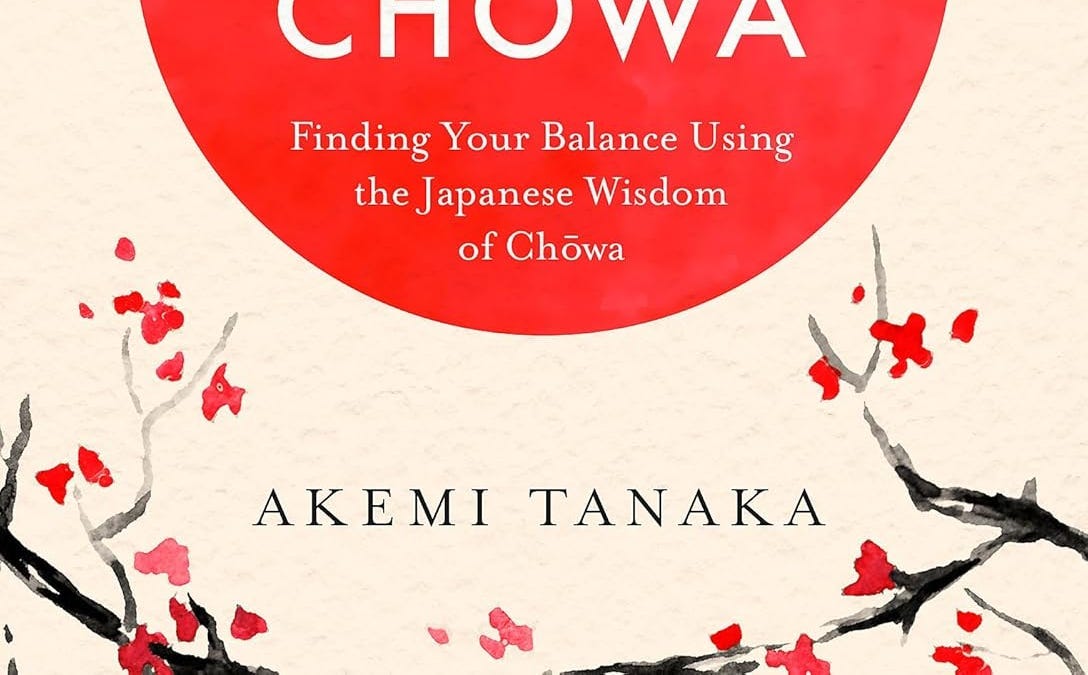
While binge-reading Japanese books in preparation for my Japanese adventure next month, I stumbled upon ‘ The Power of Chowa’ by Akemi Tanaka, and was immediately intrigued because I had never heard of chowa before.
Ikigai and Hygge — yes. Wabi-Sabi, Bushido and Kaizen — yes. But Chowa is something very new for me. So, I grabbed the beautifully designed book and finished it in one go that same evening.
According to the Western translation, chowa means harmony, but author Akemi Tanaka clarifies that it is more than just harmony. It is more accurately defined as “searching for” or “working at” balance. ‘Cho’ means ‘searching for’, ‘working at’, or ‘establishing’, and ‘Wa’ is harmony. So, rather than achieving a static, dormant state of peace, chowa is an active, ongoing practice of adjusting opposing forces — such as work and life, self and community, or conformity and individuality. And actively preparing for the future — anticipating, predicting, considering, preventing, getting ready. Continuous dynamic balance.
The book is multi-layered — it gives a wonderfully unique perspective that crosses between eastern and western cultures, while delivering incredibly practical and usable advice for modern living. It blends the historical Japanese philosophy beautifully with glimpses of Tanaka’s personal story — her upbringing in rural Musashi, her uncle’s house, her life in London. Her honest reflection on traditional Japanese society is admirable — she talks openly about the Japanese women’s fight for recognition and equality in society and family, examining gender dynamics and personal relationships, while simultaneously highlighting the cultural roots and the beauty of the ancient traditions. Through relating her own experiences, Tanaka paints a vivid picture of what life is really like for many Japanese women. There’s a sense of injustice that comes through and a hope for something better for women all over the world. From the Me Too movement to the case of Shiori Ito, Tanaka celebrates the resilience of others. She draws a comparison between the Western and the Eastern approaches to love, life, work, and relationships, highlighting opportunities for an active search for balance.
There are other valuable chowa lessons to be gleaned, such as bringing harmony into washoku (the art of food). Tanaka provides a lot of detail about the nature of Japanese food preparation and how ingredients and colours come together in haute cuisine like kaiseki.
“ Kaiseki is a meal of modest simplicity, perhaps unexpectedly simple or Japanese haute cuisine. But for a meal devised by monks, it is unexpectedly lavish. As well as the five flavours, kaiseki cooking seeks to balance the five colours of traditional cooking (red, green, yellow, white and black) and the five senses (smell, taste, touch, sound and sight).”
Tanaka successfully avoids Tokyo-centric clichés, grounding her lessons in rural Japan, history, tradition and modern, relatable, everyday experiences.
In addition to presenting the core principles of Chowa, the book also offers actionable steps anyone could take to bring more balance and harmony into their life:
- Mindful exercises: Simple, grounding habits, like aligning your shoes neatly by the door, to create physical and mental space.
- Chapter recaps: Bulleted summaries and introspective questions at the end of each chapter encourage you to reflect on your own life choices.
- Stress management: A practical framework for how to assess your needs versus the needs of others to weather challenging or stressful times.
The detailed description of the rituals surrounding a traditional tea ceremony was a revelation to me. I had no idea that the ceremony would be booked weeks in advance, that every guest would choose their kimono and outfit with so much care — matching the colours and motifs to the season, the occasion, and other considerations — or that the host would clean and prepare the entire house for the event. Before entering the room, guests would rinse their mouths and hands with fresh spring water and would then be offered food and sweets. There is also a specific protocol for the conversation to be held during the ceremony, and every guest has a role to play.
Akemi Tanaka takes her readers along with her, letting them sit quietly on the tatami mats and observe and savour every last detail: the carefully chosen artwork on the wall, the single sprig of flowers in an ancient vase, the grassy scent of the new tatami, the crispness of the freshly replaced rice paper on the sliding doors, and the slow, deliberate gestures of the tea master — gently cleaning each utensil in turn, whisking the matcha in its bowl, pouring it into cups, and serving the guests in the strict order that tradition dictates. To me, it felt like tea magic. And now I am more eager than ever to take part in a traditional tea ceremony in Japan.
And what does my cat Cricket think about Chowa?
As far as he is concerned, perfect balance was achieved long ago, and would remain eternal if it weren’t for the unreliable, clumsy two-legged giants who make lots of unpleasant noises and can never serve dinner on time. Cricket has been perfecting his own chowa for years and finds the book, frankly, a little remedial.
His practice rests on a few firm principles: the daily redistribution of small objects from tables to floors (gravity must be checked regularly, in case it has stopped working), the occupation of every warm surface in the house — keyboard, clean laundry, sleeping human — and the slow relocation of his body to follow the sun across the room, in gestures as deliberate as any tea master’s. Harmony, in his understanding, is simply everyone else rearranging their lives around him.
Which, on reflection, we mostly do.
Izabela Shopova is a Bulgarian-Australian non-fiction writer, passionate traveler, nonlinear thinker, amateur artist, avid reader, learning designer, science lover, analog astronaut, mother and daughter, cat lady, fighter for democracy and for a better future. She has survived two emigrations, one divorce, and one teenager, has 3 passports, 7 published books and a tiny apartment in Brisbane, Australia, which she shares with Cricket the Garden Cat.
You can find her books on Amazon or check them out on Goodreads. and read excerpts here on Substack
메타데이터
- post_id
- 537bcd4ab63a
- slug
- the-power-of-chowa-537bcd4ab63a
- url
- https://medium.com/infinite-impulse/the-power-of-chowa-537bcd4ab63a
- canonical_url
- https://medium.com/infinite-impulse/the-power-of-chowa-537bcd4ab63a
- author_url
- https://medium.com/@izabela.shopova.me
- status
- ok
- fetched_at
- 2026-07-16 11:26:35