Autocross, why waste the money?
“I don’t waste time at autocross, I only go to the track”.
Autocross, why waste the money?
“I don’t waste time at autocross, I only go to the track”.
Photo by Max Böttinger on Unsplash
I have heard this so many times from would be drivers that have never been involved in any sort of grassroots motor sport before. Depending on the location, yes an autocross slalom is relatively low speed. Most of the time you will not even be getting out of 2nd gear, which makes people with loads of power see it as as a frankly useless exercise. However, there are things to be learned here that can easily transfer over to the “big boy circuit”.
If you have never been to an event before, you likely are not aware how hard competing in your vehicle will actually be. Almost any “car person” will claim that they drive their car hard, and they know what they are doing. That being said, very few of them can actually put down fast times when pressured into coming to an event. Another large majority frankly would not pass a technical inspection, which means that the vehicle probably should not have been on the road to begin with. Realistically all you should ever need is: updated and current fluids (cooling, brake fluid, transmission, differential oil), recent tires with decent grip, and updated brake pads meant for sport driving rather than street.
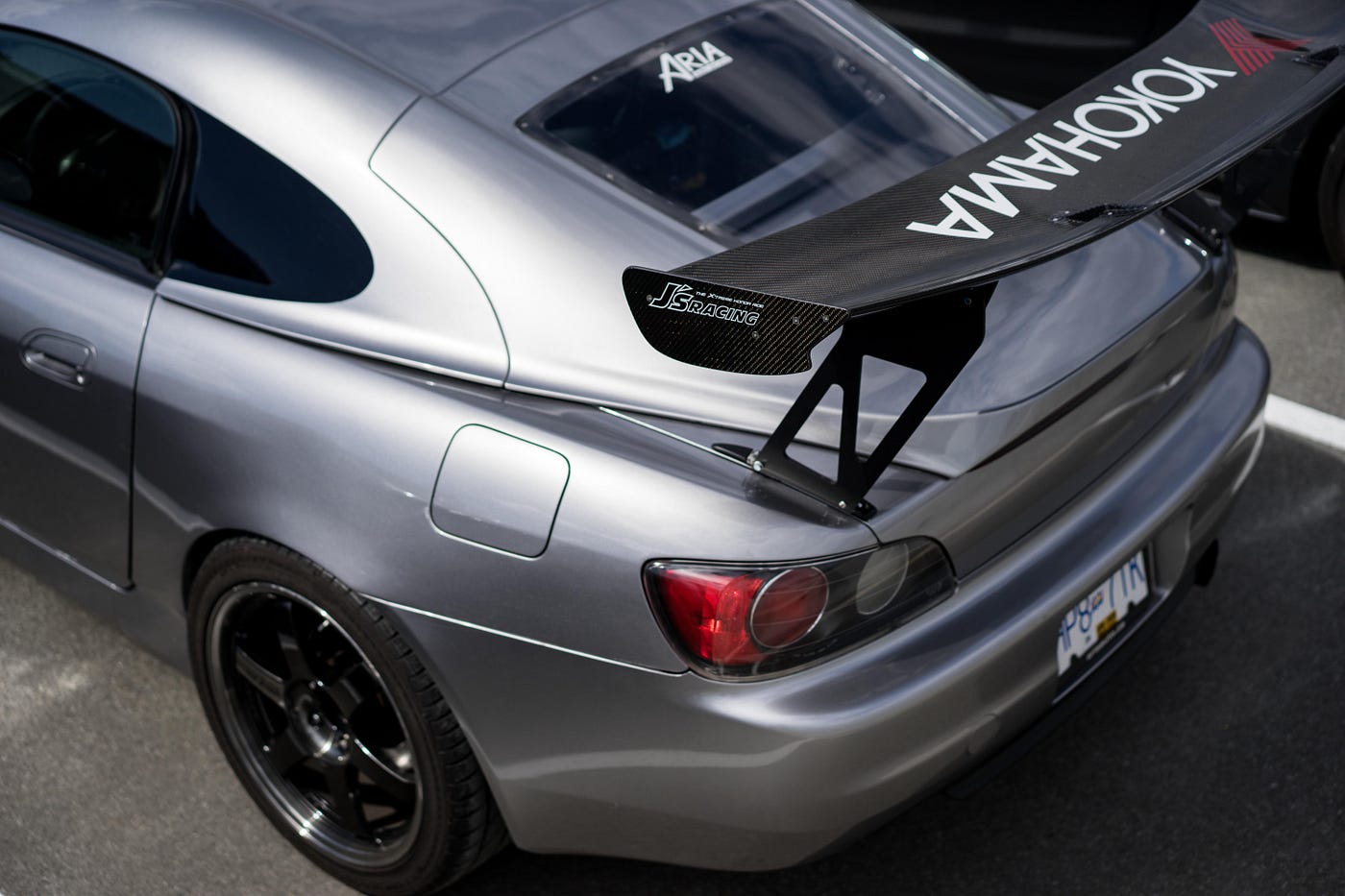
What people may think of as a “Track ready” S2000
Autocross is pretty easy on the car, typically you only drive 6–7 times with courses ranging from 40 seconds to 1 minute. The true test is how well the driver can react to quick turns, slaloms, and sweepers, while also keeping an eye on the weight and momentum transfer of their vehicle, tire grip and tread wear, any funny sounds, and remembering where to point their car. From the outside it doesn’t seem like much, but remember that an autocross course will usually be different every event. With a track day, you can drive the course a few times and know that in general, things won’t be changing much. With autocross, every event is a completely new experience.

A track day is quite rough on the car, as well as the driver. With an average of 5–6 heats at twenty minutes each, the drive back from the track to your home is often a scary one. The chassis feels tired, the engine feels lifeless, and since you would have had to be there from relatively early in the morning with full concentration to make sure you don’t hit anything (or anyone), the driver will often be exhausted as well. Much of this is obviously negated if you are more well off and have a tow truck and rig ready to take your toy to the track, but the majority of people will drive the same car to the track that they commute in.

A modified Exige S slaying The Ridge Motorsport Park’s infamous corkscrew
The point is, all seat time matters no matter how you digest it. Yes, a track day will give you more seat time in one heat than an entire autocross season likely will have. But most drivers arguably will not learn as much compared to competing in multiple events. Participants often will not have the same type of friendly competition or comradery that they might find when competing in an ES or HS series of an autocross series. Do not make excuses saying “I need X part” or “after I buy this upgrade”. Get out there and drive, then change what you need to afterwards. You aren’t going to be making any podium finishes on your first event anyways.

A-Mod cars can be seen on the tarmac regularly, and their consumables are nothing to scoff at
Since autocross is relatively low speed, it can also be said that it is more safe than a track day. Imagine wiping out on a large parking lot, or vacant airstrip. There’s not going to be much to hit, and even if you do collide with something, chances are you will be able to walk away from it with minimal injury. Wiping out on the track on the other hand can easily cost thousands, write off your vehicle, or seriously injure you or someone else if you collide with another participant.

Any car can be event ready as long as it is safe enough to pass an inspection
My recommendation is to not see the two types of events as opposites, rather see them as being complimentary to one another. Use autocross to get a feel for how the car will react to fast inputs, suspension shifts, and how tires will react under duress. Use track days to feel comfortable in your cabin, the vehicle should feel like an extension of yourself, without any second guessing or ambiguity on where you are on the track. Finally, consider supplementing any skill building through racing simulators. As immersive VR technology and sim rigs become more affordable, a small investment is all you will need to get a feel for how cars can react when exposed to steering, throttle, brake, and clutch inputs.

Things that will be learned and transferred when driving at any time are: car control, maintenance, the usefulness of modifications or upgrades, dynamic thinking, fast reactions, and knowing when to shift the weight around and how to do it quickly and effectively.

Run, Miata, Run.
If you are interested in attending an event near you, be sure to check out https://www.motorsportreg.com/ for local events that you can attend.
메타데이터
- post_id
- 5384431bcddd
- slug
- autocross-why-waste-the-money-5384431bcddd
- url
- https://medium.com/@nick.jxw.ho/autocross-why-waste-the-money-5384431bcddd
- canonical_url
- https://medium.com/@nick.jxw.ho/autocross-why-waste-the-money-5384431bcddd
- author_url
- https://medium.com/@nick.jxw.ho
- status
- ok
- fetched_at
- 2026-08-03 11:07:46



