Interdisciplinary collaboration within our research.
Reflection and analysis.
Interdisciplinary collaboration within our research.
Reflection and analysis.
Interdisciplinary collaboration is increasingly common in academic research through incorporating multiple perspectives from a range of expertise to work together to achieve a common goal. Annemarie, the PI of our programme, has structured the ICU-Heart research programme in a way that encourages as much collaboration between the research team and ICU staff as possible. There are multiple reasons for intentional interdisciplinary collaboration that will be beneficial to the teams and the research programme, as well as some challenges that may arise because of the partnership that we need to be aware of and ready to respond to. Below is a short discussion of interdisciplinary collaboration between our team and those working in ICU, and how we are exploring it within our research.
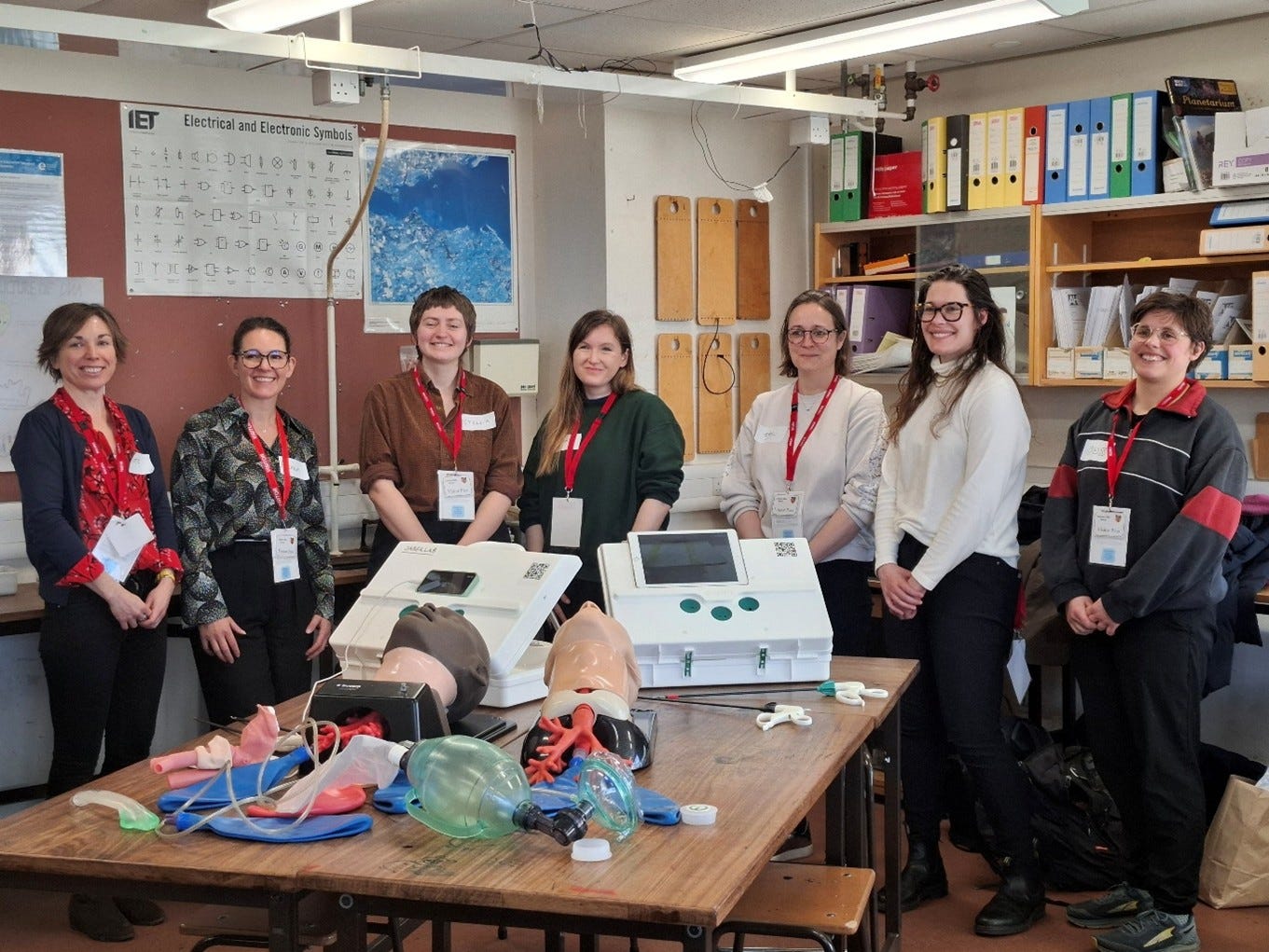
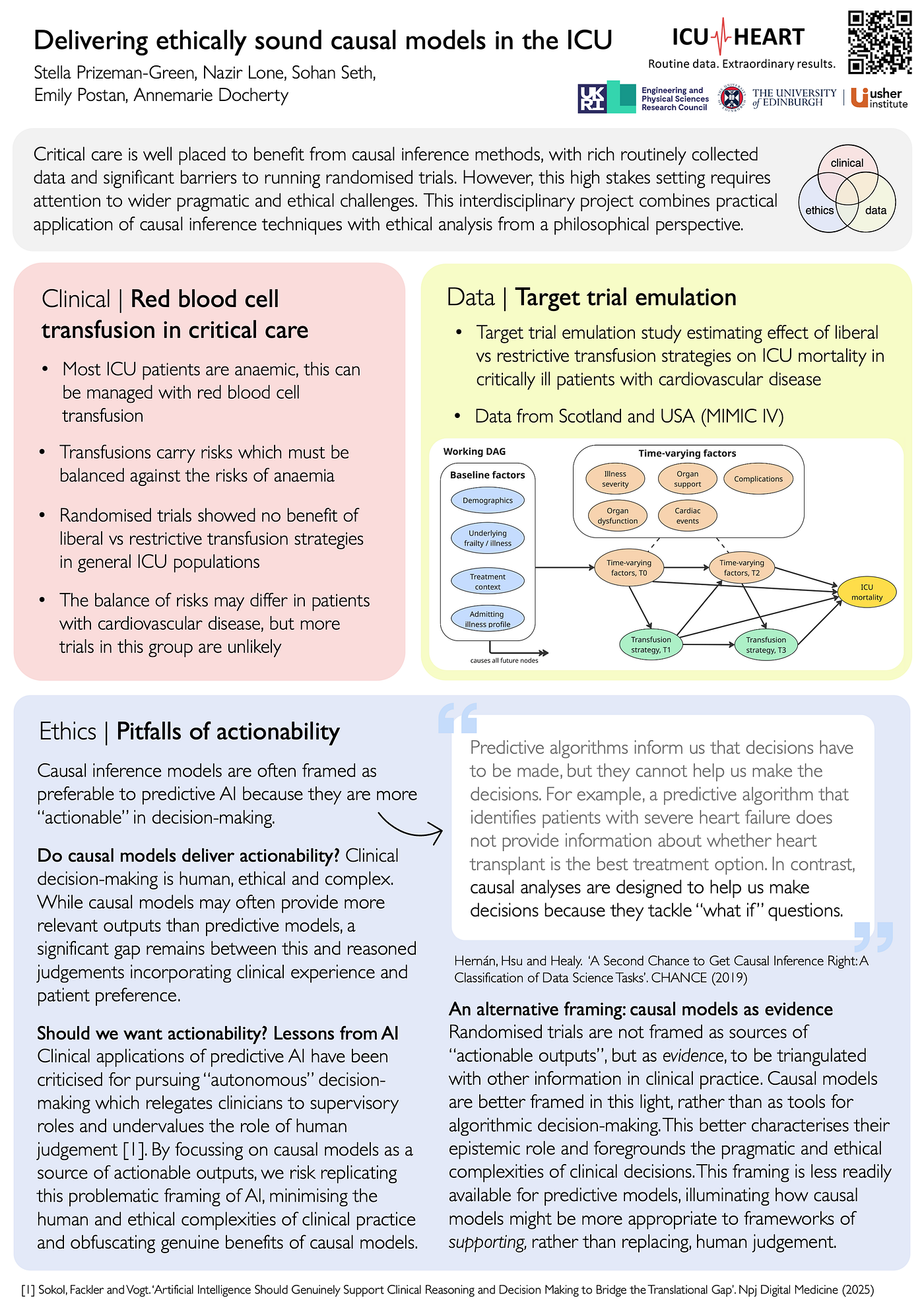
Clinical collaboration forms a fundamental part of the ICU-Heart programme. When considering the nature of the research it may appear that the purpose of this is to purely understand the needs and requirements of clinicians as the eventual end-users of the Myocardial Infarction (MI) tool. While this is important and ensuring the tool, upon implementation, works well with existing clinical practice is key, the reality of the collaboration is one that frames clinical staff as co-designers of the MI tool, not just as end-users. Including clinicians from the beginning of the programme as co-designers aligns with recommendations from existing literature and guidance on developing and implementing data-driven health information technology through a design-led approach (NHS England, 2023). Design-led approaches consider the rate and severity of the identified clinical problem to which the MI tool will support treatment, and the structural, behavioural, and technological changes that are likely to be required within the critical care environment alongside the development and implementation of the tool (Cresswell and Williams, 2024). Embedding clinical staff into the ICU-Heart unit allows for deeper insights into these elements and enables clinical staff to raise important points that the non-clinical research team may have missed.
Furthermore, the programme PI suggests that clinical collaboration will improve clinician data literacy. In this context ‘clinician data literacy’ refers to the upskilling of clinical staff in statistical data science skills through their embedding within the ICU-Heart team, and close collaboration with the data scientists to work on more granular projects with the Quality Improvement (QI) team in ICU. This is an opportunity for professional skill development for clinicians which is becoming increasingly relevant, and considerable steps have been taken to work towards this over the course of the ICU-Heart programme. We believe there will be a positive impact on the ICU-Heart team and the development process of the tool, not just for the clinician and their skill development. The embedding of clinical staff within the team to improve their statistical data literacy will in turn improve the clinical data literacy of the ICU-Heart data scientists through collaboration and continuous conversation about the work and the clinical impact it may have. Enabling this simultaneous skill development through establishing trading zones between the two groups is key for clinical buy-in, and the building of a tool that is co-designed by data scientists and clinical staff (Collins, Evans, and Gorman, 2007). This work will encourage the data scientists not only to consider the clinical staff as end-users, but as stakeholders directly involved in the design and development of the MI tool.

Image source: OfficeRND
However, we must consider if the simultaneous upskilling in this inter-disciplinary manner is worth pursuing, or if we may be adding more work onto those who already have a substantial workload. It is acknowledged in existing literature that when designing and developing health information technology (HIT) clinical end-users should be involved throughout the process on an iterative basis to provide insight into clinical practice and opportunities for successful adoption (Cresswell and Williams, 2024; Cresswell et al., 2023; NHS England, 2023). They suggest that not only does this encourage the development of a tool that will be interoperable with the existing information infrastructure within critical care (NHS England, 2023), but should enable understanding of how the HIT tool makes certain decisions or recommendations, leading to clinical end-user adoption and continued use of the tool (Cresswell et al., 2023).
Furthermore, there may be negative impact that the inter-disciplinary collaboration and hybridity working that has been embedded within the programme has on the teams involved, and the potential challenges this kind of collaboration may bring. Some academics suggest that engaging in interdisciplinary research can result in isolation from their original field and even go as far to suggest that working “on the fringes of a field…lowers an academic’s reputation in the eyes of his peers” (sic) (Kanakia, 2007, in Jones, 2009). While this article may be indicative of the development of interdisciplinary research over time as these strong assumptions may not be so explicitly proclaimed nearly 20 years later, the indication that engaging in interdisciplinary research may be a step away from their original field of research remains a concern for academics, though increasingly cross-discipline collaboration is perceived as a positive endeavour (Knapp et al., 2015). Often, in cases of successful inter-disciplinary research the outputs from collaboration have been greater than the sum of the individual parts if they were to work alone (Knapp et al., 2015). Nonetheless, there must be consideration of potential isolation from the rest of the clinical staff who are not engaged in research for those who are, and have support available if they begin to feel this way. Furthermore, clinicians working with the ICU-Heart staff tend to do so as part of their research training, and still commit a percentage of their time to clinical work and engage with other staff and patients as the core element of their original field. The continuation of their primary work while contributing to the hybridity of the ICU-Heart programme and developing their statistical data science skills may mitigate this concern.
To further understand what the challenges of interdisciplinary working between theoretical fields such as data scientists and more practical and front facing roles such as clinicians, Knapp et al. (2015) suggest a set of rules to ensure these collaborations are successful. Amongst these is the acknowledgement that while it is good for personal and professional development to leave your academic ‘comfort zones’, interdisciplinary collaborations risk frustrating those involved with too many obligations that are not related closely enough with their original field of work (Knapp et al., 2015). Regular meetings, conversations amongst the teams, and visits to the other’s workspace are all important requirements for creating and maintaining working bonds between collaborators, but it is equally important to keep these to a reasonable level (Knapp et al., 2015). Currently, the ICU-Heart team meet with the ICU QI and ICCA team once a week to discuss their collaborative projects, during which some of the clinical staff visit the Usher building where the data scientists conduct most of their work. Equally, the ICU-Heart team are encouraged to visit the ICU on regular occasions to understand where their data is sourced from. Knapp et al. (2015) refers to this as visiting the ‘wet lab’ to encourage understanding of the data source and set up of data collection, in this case this is the Mindray monitors collecting the waveform and other physiological data. This will develop data scientists’ understanding of the resources needed on the ward to collect this data and encourage the consideration of the patient as an actor within this interaction as the primary data source, as well as acknowledging the effort and importance of the data collection process by clinicians. The opportunity to use these meetings and spaces as trading zones to educate each other about their work while retaining and making accessible the relevant expertise (Collins, Evans, and Gorman, 2007) is fundamental to the success of this interdisciplinary collaboration and hybridity.
We must also consider, particularly for clinical staff who are entering a space and field entirely unfamiliar to them, if their involvement with the ICU-Heart team is considered a burden due to the additional work they are being asked to take part in. While there are certainly strong benefits to upskilling clinicians in statistical data science skills, some academics argue that “highly technical skills, like data science, require longer mastery periods, and the rapid evolution of skill requirements makes it challenging to stay up to date” (Gruenewald and Mueller, 2025). Training clinicians in statistical data science skills may appear to be beneficial but may introduce a cost in their learning capacity and workflow processes as they use time, energy, and resources to develop these skills that may not be frequently used in their day-to-day work. The training they undertake is likely to be additional work that is unpaid, time consuming, and may not appear to have individual benefit in the immediate instance. To build on the point posed by Gruenewald and Mueller (2025), the field of data science is highly technical and rapidly evolving. It requires iterative consolidation of skill development and learning in order to utilise to produce results that will be useful for the individual and for the wider ICU-Heart programme. As clinicians will be developing this skill set alongside their clinical work (which is also a role that requires a highly technical skill set maintained through consistent workflow and consolidation of skills), it may be done so on an irregular schedule and on their own time. Clinical staff may feel that there is an opportunity and short term ‘loss’ in the form of skill development in this way, with relatively little long-term gain if statistical data science continues to develop and evolve at its current rate. This is something that needs to be further engaged with in interviews with clinical staff from those who have gone through this process, like Marina, and others who are aware of the opportunity but have chosen not to take part.
The expectation from the ICU-Heart team is that this collaboration will continue throughout, and perhaps beyond, the duration of the research programme. While there are challenges to interdisciplinary collaboration amongst researchers and clinicians, through embedding data analysts within clinical units and clinical staff within the research group and nurturing these working relationships, the PI of the ICU-Heart programme has approached this process in a way that is conducive to success. It is important that these challenges continue to be recognised and addressed throughout the progression of the ICU-Heart programme and any outputs that may occur as a result of the collaboration
References
Collins, H., Evans, R., and Gorman, M. (2007). ‘Trading zones and interactional expertise.’, Studies in History and Philosophy of Science, 38(4): 657–666.
Cresswell, K., Rigby, M., and Magrabi, F., et al. (2023). ‘The need to strengthen the evaluation of the impact of Artificial Intelligence-based decision support systems on healthcare provision.’, Health Policy, 1136: e104889.
Cresswell, K. and Williams, R. (2024). ‘Essential strategic principles for planning and developing digitally enabled interventions in health and care settings.’, BMC Health Services Research, 24(1): 1399.
Gruenewald, H., Mueller, M. (2025). Challenges and Opportunities in Reskilling and Upskilling, In: Reskilling and Upskilling in a Globalized Economy. Future of Business and Finance. Springer, Wiesbaden.
Jones, C. (2009). ‘Interdisciplinary Approach — Advantages, Disadvantages, and the Future Benefits of Interdisciplinary Studies,’ ESSAI, 7(26).
Knapp, B., Bardenet, R., Bernabeu, M.O., et al. (2015) ‘Ten simple rules for a successful cross-disciplinary collaboration.’, PLOS Computational Biology, 11(4): e1004214.
NHS England (2023). “NHS England: Supporting clinical decisions with health information technology” Accessed: 05/11/25. Available at: NHS England » Supporting clinical decisions with health information technology
메타데이터
- post_id
- 53bb9bf3e4d3
- slug
- interdisciplinary-collaboration-within-our-research-53bb9bf3e4d3
- url
- https://medium.com/icu-heart/interdisciplinary-collaboration-within-our-research-53bb9bf3e4d3
- canonical_url
- https://medium.com/icu-heart/interdisciplinary-collaboration-within-our-research-53bb9bf3e4d3
- author_url
- https://medium.com/@sburns5
- status
- ok
- fetched_at
- 2026-06-10 15:53:41