Channel-Native SaaS Agents: The Technical Layer Between Customer Channels and SaaS Workflows
SaaS products have traditionally been designed around dashboards, forms, tables, filters, and admin screens. That model still matters, but…
Channel-Native SaaS Agents: The Technical Layer Between Customer Channels and SaaS Workflows
SaaS products have traditionally been designed around dashboards, forms, tables, filters, and admin screens. That model still matters, but it is no longer the only way users expect software to work.
A growing number of business workflows now begin outside the product interface. Customers ask questions through WhatsApp. Leads arrive through Instagram DMs. Support requests move through Zendesk. Internal teams respond through email. Some users may soon expect the same workflow to continue through voice or AI assistants.
This does not mean the SaaS dashboard disappears. It means the first point of interaction may shift away from the dashboard.
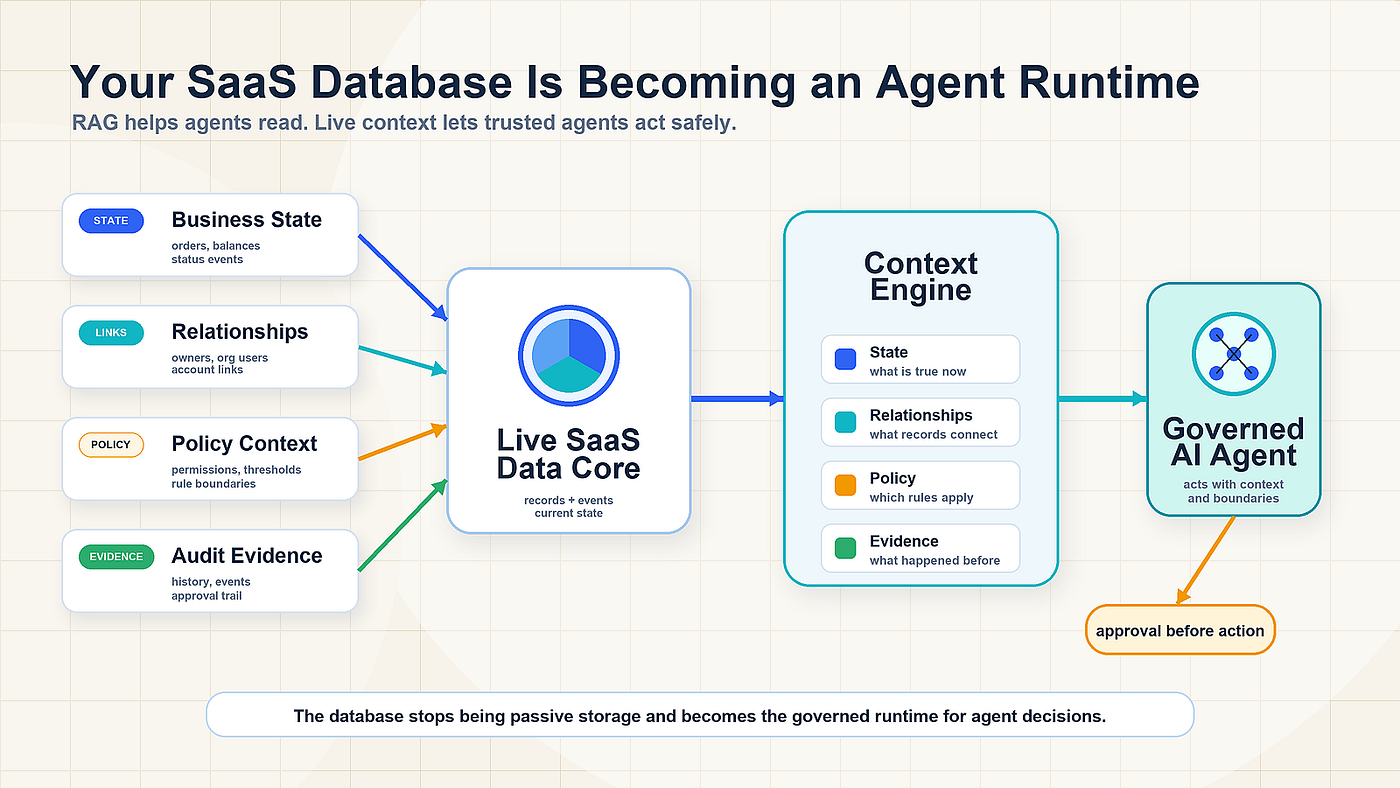
That shift creates a technical problem. If customer conversations become the starting point for SaaS workflows, the system behind the conversation needs more than a chat layer. It needs a controlled gateway that connects channels, identity, permissions, workflow state, backend actions, approvals, and audit logs.

Channel-Native Agents Are Not Just Better Chatbots
A chatbot can answer a question. A channel-native SaaS agent has to understand a request and connect it to an actual business process.
When a customer asks, “Can I reschedule my booking?” the useful part is not the response text. The useful part is everything that happens behind the response.
The system has to identify the customer, find the correct account, check calendar availability, understand booking rules, confirm whether the user is allowed to make the change, ask for confirmation, update the booking, notify the customer, and record the action.
That is not a simple conversation. It is a workflow.
The same applies to order tracking, subscription updates, support triage, invoice retrieval, refund requests, lead qualification, and onboarding guidance. The user may experience these as simple messages, but the SaaS product must treat them as governed workflow events.
Why the Agent Gateway Matters
A SaaS company can connect each channel directly to backend APIs, but that creates fragile automation.
WhatsApp may trigger one flow. Zendesk may trigger another. Instagram may use different logic. Email may depend on a separate automation. Over time, business rules become duplicated across channels, and the company loses control over how agentic actions are executed.
An agent gateway solves this by creating a shared control layer.
The gateway sits between customer channels and backend systems. It receives the message, resolves identity, parses intent, checks policy, routes the action, manages workflow state, handles approval, and records the trace.
The important point is that the gateway does not simply pass requests forward. It decides whether the request is valid, safe, complete, and allowed.

Identity Is the First Execution Boundary
A channel message is not a product identity.
A WhatsApp number, Instagram handle, email address, or support ticket requester may not be enough to authorize access to SaaS data. The agent must know which user record, customer account, tenant, workspace, and permission set should be used for the request.
This is especially important for B2B SaaS products where multiple users may belong to the same customer account but have different roles. A billing admin may access invoices. A support user may only access ticket history. A manager may approve changes. A customer contact may only view limited information.
If the agent cannot map channel identity to product identity, it should not execute sensitive actions.
This is where many SaaS agent projects become risky. Teams focus on the model’s ability to understand requests, but the safer question is whether the system can prove who is making the request and what they are allowed to do.
The Action Layer Should Be Explicit
A production SaaS agent should not treat every backend capability equally.
There is a meaningful difference between reading data, drafting a response, updating a record, triggering a payment action, canceling a service, or escalating a case. Each action has a different risk profile.
This is why actions should be defined as contracts, not loose tool calls.
An action contract should describe what the action does, what input is required, which user roles can use it, what state must exist before execution, what side effects it creates, what approval is needed, and how the result should be logged.
The model can interpret intent, but the gateway should enforce the contract.
This keeps the system from relying on prompt instructions as the only safety layer. Prompts are useful for behavior. They should not become the only source of execution control.
Workflow State Must Live Outside the Chat
Real customer conversations are messy.
Users reply late. They skip details. They change their mind. They ask multiple things in the same thread. They switch from one channel to another. They may start with a sales question and end with a support request.
If the workflow state only lives inside the chat transcript, the agent has to reconstruct the process from conversation text. That makes the system unreliable when tasks span time, systems, and people.
A better architecture stores workflow state separately from the conversation.
The chat remains the interface. The backend tracks the actual process state, the current step, the required input, the pending approval, the tool response, the human handoff status, and the next valid action.
This design allows the agent to continue work without guessing. It also gives human teams a clear view of where the workflow stands.

Handoff Is Not an Edge Case
Many teams think of human handoff as something to add after the agent fails. For SaaS workflows, handoff should be part of the initial design.
An agent should escalate when it cannot verify identity, when the requested action is outside scope, when the user appears frustrated, when required data is missing, when policy conflicts appear, or when the action risk is too high.
The handoff should not simply say, “A human will help you.” It should carry the useful context forward.
The human operator should see the original request, verified identity, relevant account information, tool results, action attempts, missing data, risk reason, and recommended next step. That turns handoff into continuity instead of restart.
A safe SaaS agent is not one that pretends to complete everything. It is one that knows its operating boundary.
Testing Needs to Match the Channel Reality
Agent evaluation should not happen only inside a clean developer console.
Customer-channel behavior is different. Users write incomplete messages. They use shorthand. They send screenshots. They ask for exceptions. They disappear and return later. They mix billing, support, product, and account questions in one thread.
A channel-native SaaS agent should be tested against these conditions.
The test suite should include delayed replies, identity ambiguity, unsupported requests, policy conflicts, tool failures, repeated questions, human handoff, partial data, and recovery after interruption.
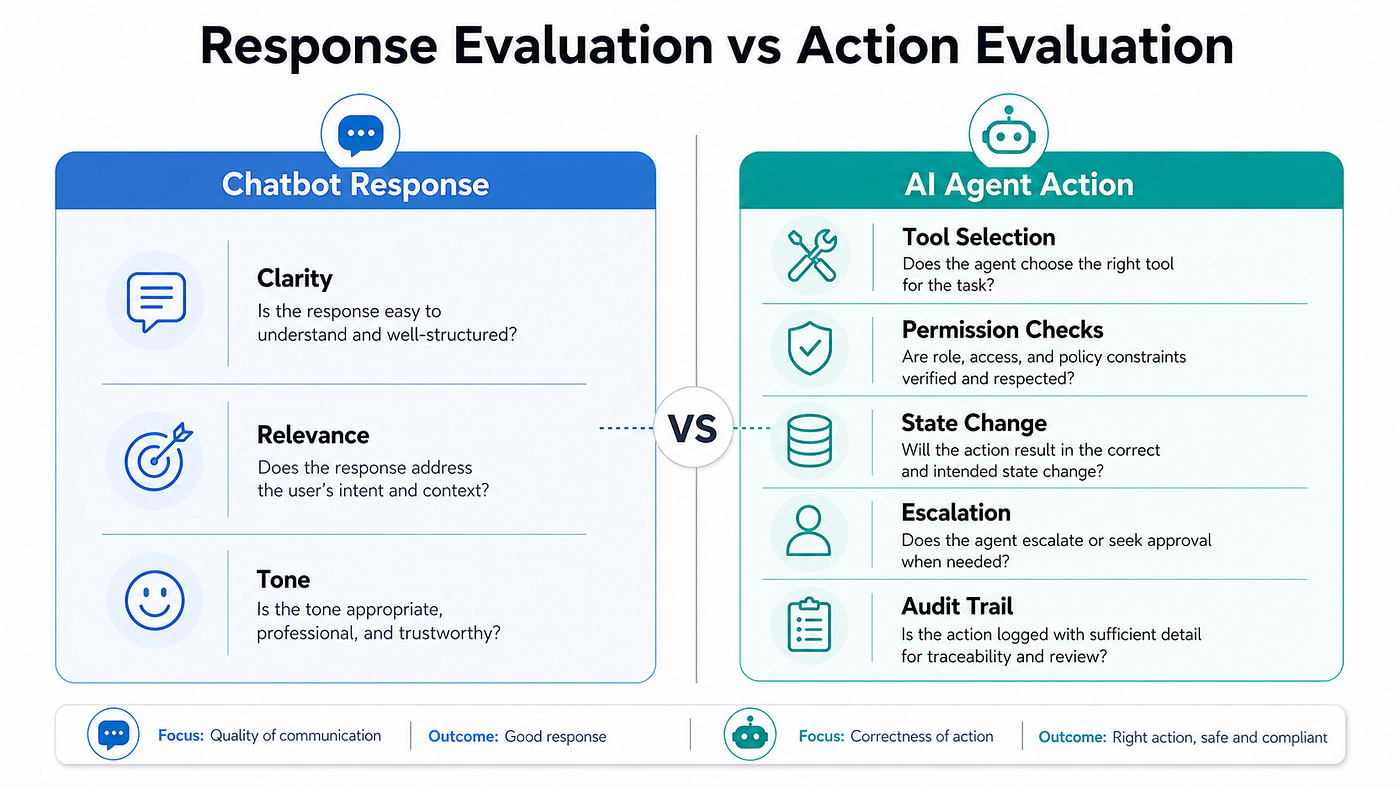
The goal is not only to check whether the agent gives a fluent answer. The real goal is to confirm whether it can act safely, stop correctly, escalate clearly, and leave behind a traceable workflow record.
A Practical Starting Point
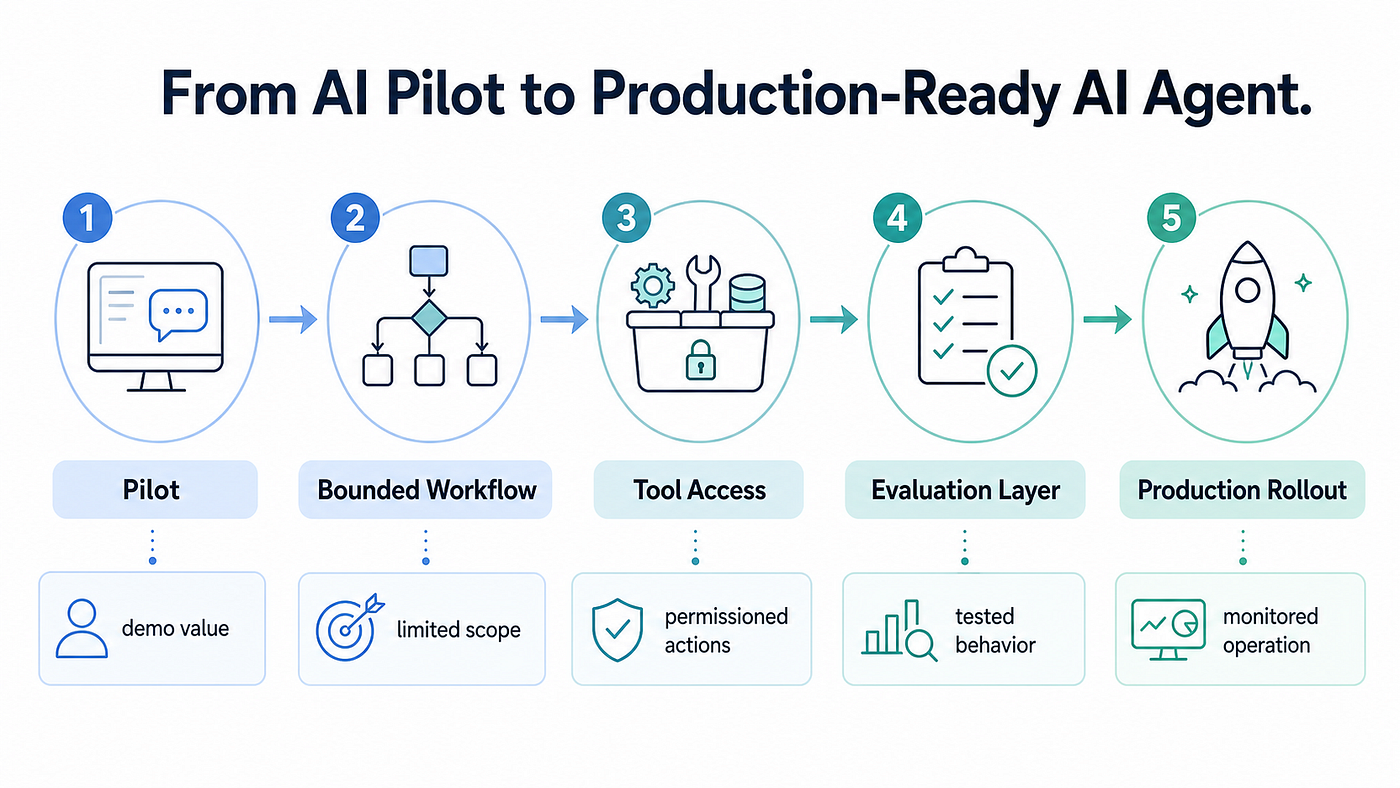
The best first workflow is narrow, valuable, and repeated.
A SaaS team should not begin by exposing the full product through an agent. It should choose one workflow where the value is clear and the risk is manageable.
Order status lookup is a good example. Appointment rescheduling can work if permissions and state are clear. Invoice retrieval can work when identity mapping is strong. Lead qualification can work when the output is routed into CRM with review. Support triage can work when escalation paths are defined.
The foundation should include channel adapters, identity mapping, action contracts, policy checks, workflow state, approval routing, audit logs, and handoff triggers.
Once this foundation works for one workflow, more channels and actions can be added with less risk.

The Shift From SaaS UI to SaaS Execution
Channel-native SaaS agents do not remove the need for product interfaces. Teams still need admin panels, configuration screens, analytics, review queues, and system-of-record views.
What changes is the starting point.
The user may begin the work in a message. The business still needs the same level of control behind that message. The agent must respect identity, permissions, workflow state, approvals, and traceability before it touches real systems.
This is why the agent gateway is becoming an important technical layer for SaaS companies. It allows the product to meet users inside customer channels without turning every channel into a separate, unmanaged automation path.
At SaaStoAgent, we pay close attention to shifts like this because channel-native execution is where SaaS agents move from conversational interfaces into real product operations. The challenge is no longer just whether an agent can understand a request or call a tool. The real test is whether it can identify the user, choose the right action path, respect permissions, preserve workflow state, request approval when needed, and leave behind a trace that product and operations teams can review.
메타데이터
- post_id
- 541a2d7ba2e1
- slug
- channel-native-saas-agents-the-technical-layer-between-customer-channels-and-saas-workflows-541a2d7ba2e1
- url
- https://medium.com/saastoagent/channel-native-saas-agents-the-technical-layer-between-customer-channels-and-saas-workflows-541a2d7ba2e1
- canonical_url
- https://medium.com/saastoagent/channel-native-saas-agents-the-technical-layer-between-customer-channels-and-saas-workflows-541a2d7ba2e1
- author_url
- https://medium.com/@shashanksaraswat_88982
- status
- ok
- fetched_at
- 2026-06-09 15:37:30