Ultimate Guide to Choosing Test and Measurement Equipment for Electronics Engineers
Choosing the right test and measurement equipment can mean the difference between seamless project execution and endless troubleshooting…
Ultimate Guide to Choosing Test and Measurement Equipment for Electronics Engineers
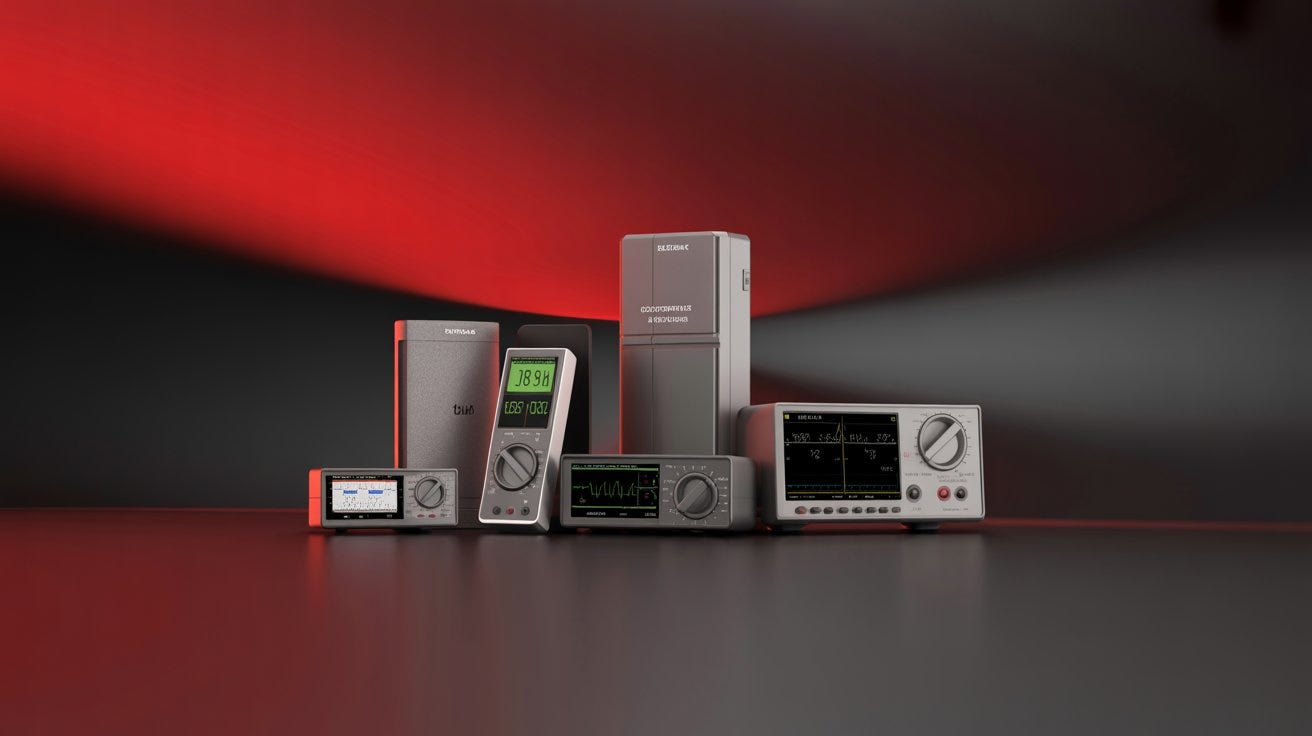
Choosing the right **test and measurement equipment** can mean the difference between seamless project execution and endless troubleshooting for an electronics engineer. The instruments that live on your bench are not just tools but extensions of your design intent, confidence, and ability to innovate. Whether you are just starting out in electronics, running a research lab, supporting product development, or maintaining industrial systems, understanding how to select, evaluate, and use test gear effectively is essential.
In this guide you will gain actionable insight into the categories of equipment available, what specifications matter, how to match instruments to your needs, and practical tips for building an efficient test environment. By the end of this article you will have a framework for intelligent purchasing, improved measurement accuracy, and reduced time to results.
Why Choosing the Right Test and Measurement Equipment Matters
The right test setup ensures that every signal you capture, every waveform you analyze, and every measurement you record is meaningful and reliable. Engineers often encounter situations where poor measurements led to misdiagnoses, design iterations, and schedule slips. Mismatches between instrument capability and project requirements can cost both time and money.
Reliable instruments help you make confident decisions, avoid design faults, optimize performance, and meet compliance or quality standards. Fundamental tools like an **oscilloscope**, multimeter, spectrum analyzer, and signal generator are not just accessories; they form the backbone of any serious electronics workflow. The choices you make here set the stage for every test and validation task that follows.
Core Categories of Test and Measurement Instruments
Oscilloscopes
An oscilloscope is arguably the most foundational piece of equipment an electronics engineer will own. It visualizes electrical signals in the time domain, allowing you to see how voltage changes with time. This makes oscilloscopes invaluable for diagnosing timing errors, observing waveform integrity, and validating complex mixed signals. Engineers rely on oscilloscopes to debug analog circuits, digital interfaces, power electronics, and more.
Oscilloscopes vary widely in performance. They differ in bandwidth, sample rate, memory depth, triggering features, and the number of channels. Bandwidth determines the highest frequency the instrument can accurately capture, and it should ideally exceed the highest signal frequency of interest. Oscilloscopes with deeper memory capture more data per trigger event, helping in detailed analysis. Mixed signal oscilloscopes (MSOs) combine digital logic analysis with analog waveform views for deep inspection of embedded systems where both logic states and analog behavior matter. Advanced oscilloscopes now offer integrated features like FFT analysis for frequency domain insights, built-in protocol decoding, and PC-based connectivity for automation and data logging.
Digital Multimeters
A multimeter is the most widely used handheld tool in electronics. It measures fundamental electrical parameters such as voltage, current, and resistance. Digital multimeters can also offer diode testing, continuity checks, frequency measurement, capacitance, and temperature readings. Their range of functions makes them indispensable for quick diagnostics, verifying supply voltages, checking component values, and confirming continuity in cables and connections.
When selecting a multimeter, consider its resolution and accuracy. Resolution refers to the number of digits the display can show and determines how finely the instrument can distinguish changes, while accuracy reflects how close a measurement is to the true value. Bench multimeters usually offer higher precision than handheld versions and often provide connectivity for logging and automation.
Signal Generators
Signal generators create defined electronic waveforms at specified frequencies and amplitudes. Engineers use them to stimulate circuits under test. These waveforms might be simple sine or square waves or complex arbitrarily shaped signals when advanced generators are involved. For frequency response testing, receiver alignment, or sensor excitation, a stable and configurable signal source is vital.
Function generators are ideal for general purpose waveform needs, while more advanced arbitrary waveform generators allow you to simulate real-world inputs or custom patterns your design must handle. In RF and communications work, signal generators provide modulated carriers, enabling deep tests of receivers or transceivers.
Spectrum Analyzers
When you need insight into a signal’s frequency content, a spectrum analyzer is the tool of choice. Unlike oscilloscopes that show voltage versus time, spectrum analyzers display amplitude versus frequency. This is particularly important in wireless communications, RF design, interference detection, and compliance testing.
Spectrum analyzers help identify noise, distortion, spurious signals, and frequency components that might not be obvious in time-domain views. There are different analyzer types, including swept and real-time spectrum analyzers, each suited for specific applications. Their frequency range, dynamic range, and resolution bandwidth are key specifications to evaluate based on your use case.
Logic Analyzers
In deeply digital systems, a logic analyzer captures and displays many digital signals simultaneously. It becomes indispensable when debugging parallel bus activity, serial protocols, or microcontroller interactions. Logic analyzers decode complex sequences of data, enabling engineers to validate timing relationships and protocol adherence.
Power Supplies and Loads
Programmable power supplies provide stable and configurable voltage and current sources for your circuits. They are fundamental for powering prototypes, driving test setups, and isolating supply-related issues. Electronic loads simulate real device conditions, allowing load testing and stress analysis of power systems.
Data Acquisition Systems
DAQ systems connect sensors and instruments to computers for logging and analyzing data over time. They excel in long-term tests, temperature profiling, or extended signal variability studies.
Key Specifications to Evaluate
When comparing equipment, deeper technical understanding of specifications allows you to match capabilities to your needs.
Bandwidth and Sample Rate
For oscilloscopes and signal sources, bandwidth and sample rate determine how faithfully an instrument captures or generates signals. Bandwidth should be several times higher than the highest frequency you expect to measure. Sample rate must be sufficient to capture waveform detail with precision. Higher sample rates reduce aliasing and capture transient events more accurately.
Accuracy and Resolution
Accuracy defines how close readings are to true values, while resolution represents the smallest change detectable by the instrument. Both are critical for precision measurement tasks. Bench multimeters and high-precision instruments often excel here and are preferred in lab environments.
Input and Output Features
Evaluate how your instruments connect to external systems. USB, Ethernet, or wireless connectivity enable remote control, data export, and integration with automated test environments. Instruments with APIs or scripting capabilities support advanced workflows and repeatable test sequences.
Software and Automation
Modern instruments integrate with software for deeper analysis and reporting. Some support MATLAB, Python APIs, or native analysis suites. Good software ecosystems significantly enhance productivity and offer visualization or scripting features beyond the hardware interface.
Build Quality and Support
Professional instruments from reputable manufacturers typically provide robust build quality, long-term reliability, and strong technical support. Calibration services and after-sales support maintain instrument accuracy and performance over time.
Matching Equipment to Usage Scenarios
Not all engineers have the same needs. Your environment and project type influence your ideal equipment mix.
Academic and Training Labs
For educational settings, cost-effective and user-friendly tools are essential. A basic digital oscilloscope, a reliable multimeter, and a function generator provide broad coverage for learning electronics fundamentals. These instruments support basic analog and digital lab exercises and help students understand waveform behavior and measurement principles.
Research and Development
In R&D, engineers tackle complex problems requiring high-end instruments. High-bandwidth oscilloscopes, mixed signal capability, sophisticated signal generators, and real-time spectrum analyzers support cutting-edge work. These tools help verify advanced designs, capture rare events, and validate system performance under diverse conditions.
Industrial and Production Environments
Industrially, emphasis is on reliability, repeatability, and throughput. Instruments that support automated testing, remote control, and repeatable workflows dominate here. Automated test systems, programmable power supplies, and networked instruments streamline large-scale test operations and improve quality assurance.
Cost Considerations and Budgeting
When planning your equipment purchases, balancing cost and capability is essential. Entry-level instruments satisfy basic needs affordably, while high-end devices offer advanced performance at a premium. It is often wise to prioritize core tools first before expanding your toolkit. A good strategy is to start with solid general-purpose instruments and upgrade based on real measurement challenges you encounter.
Calibration and Maintenance
Accurate measurements depend on properly calibrated instruments. Regular calibration according to manufacturer recommendations ensures your gear remains within specification. Poor calibration can introduce errors that mislead design decisions or cause compliance failures. Choosing instruments with easy calibration paths and strong manufacturer support saves time and reduces long-term costs.
Integrating Test Gear into Efficient Workflows
Measurement equipment should not operate in isolation. Integrating them into effective workflows enhances productivity. Instruments that share data seamlessly, support scripting, and connect to common analysis tools create environments where results are quickly visualized, reported, and compared systematically.
Future Proofing Your Lab
Technology evolves rapidly. When selecting test gear, consider instruments that offer upgrade paths or modular architectures. Mixed signal oscilloscopes that accept protocol decoding options, signal generators with firmware enhancements, or instruments with software-based analysis tools allow your lab to grow without repeating full purchases.
Common Mistakes to Avoid
Choosing test gear is not only about specs; it is about fitting the right tool to your tasks.
Overbuying Unneeded Features
Spending more on features you rarely use is a common mistake. Match the instrument’s capabilities to your actual work scope. Advanced performance makes sense only if you will use it regularly.
Ignoring Support and Warranty
Instruments with weak support or limited warranty can become liabilities if they fail or require calibration. Prioritize brands and vendors with strong reputations for service and durability.
Neglecting Workflow Compatibility
Your tools should work together. Instruments that integrate poorly create inefficiencies. Consider connectivity, software interoperability, and data exchange when building your test bench.
Conclusion
Choosing the right **test and measurement equipment for electronics engineering is a thoughtful process. It requires understanding your project requirements, evaluating instrument capabilities, planning for future needs, and optimizing cost and performance. From [oscilloscopes](https://revinetech.com/all-products/all-rigol-oscilloscopes) **to multimeters, spectrum analyzers, and signal generators, each piece serves a distinct role in enabling accurate measurements, insightful analysis, and confident design decisions. By applying the principles in this guide, you will build a test bench that supports your engineering goals, contributes to quality outcomes, and enhances your productivity.
메타데이터
- post_id
- 544d91cd1712
- slug
- ultimate-guide-to-choosing-test-and-measurement-equipment-for-electronics-engineers-544d91cd1712
- url
- https://medium.com/@revinetech/ultimate-guide-to-choosing-test-and-measurement-equipment-for-electronics-engineers-544d91cd1712
- canonical_url
- https://medium.com/@revinetech/ultimate-guide-to-choosing-test-and-measurement-equipment-for-electronics-engineers-544d91cd1712
- author_url
- https://medium.com/@revinetech
- status
- ok
- fetched_at
- 2026-07-10 14:51:46