The Question Beneath the Symptoms
by Noelle Potash DAc. LAc. MSMCT
The Question Beneath the Symptoms
by Noelle Potash DAc. LAc. MSMCT

“Whether the earth or the sun revolves around the other is a matter of profound indifference.To tell the truth, it is a futile question. On the other hand, I see many people die because they judge that life is not worth living. I see others paradoxically getting killed for the ideas or illusions that give them a reason for living (what is called a reason for living is also an excellent reason for dying). I therefore conclude that the meaning of life is the most urgent of questions.”-Camus, The Myth of Sisyphus (Flynn, 2026)
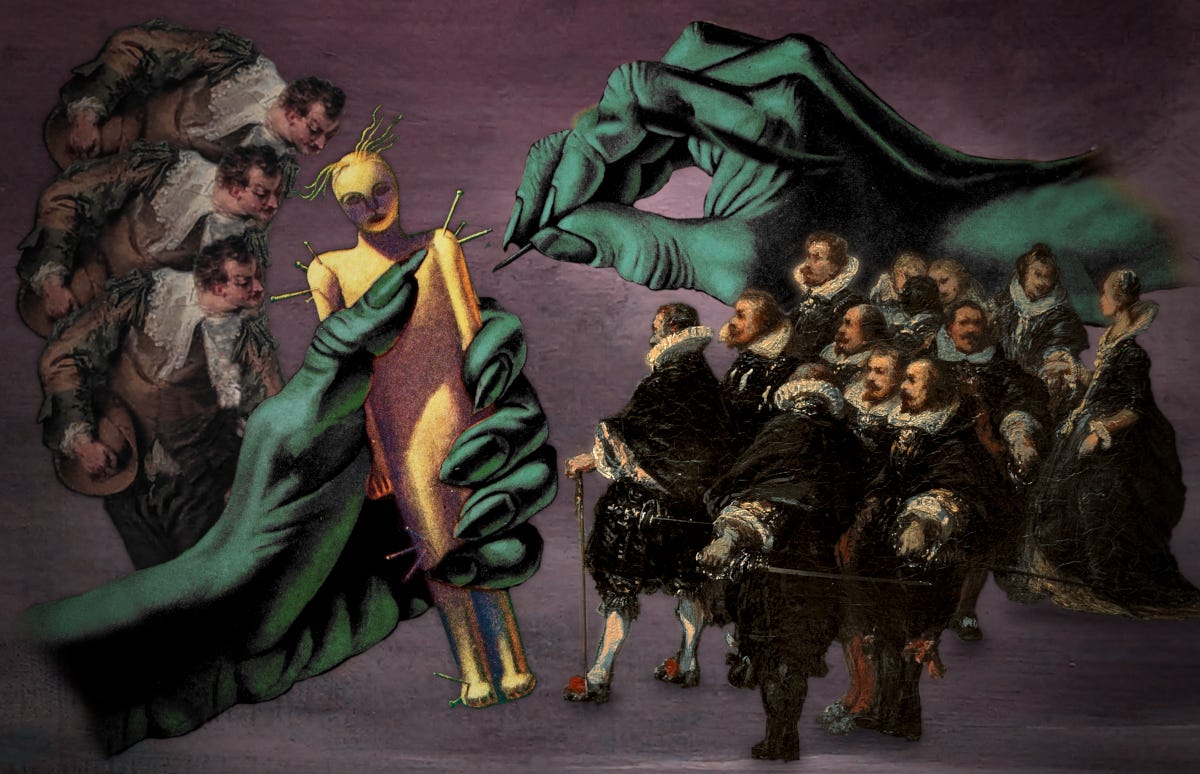
Modern life, modern self-care practices and modern medicine all have something in common. They reduce life to a series of tasks, symptoms or parts while neglecting the entirety of our human existence. Modern mindfulness practices have stripped away any buddhist ties, while modern medicine practices, treat the body as individual parts that need to be repaired with little regard for how those parts are affecting the whole being; mind and soul. And modern life has encouraged isolation and automation under the guise of convenience, deepening our disconnection from both nature and ourselves.. This growing disconnection from nature, community, and embodiment has coincided with increasing reports of mental health struggles and existential distress. Chinese medicine practitioners have known for thousands of years that when we don’t live in harmony with our own constitutional nature and the nature around us, the body becomes imbalanced and the spirit or shen becomes unsettled leading to mental agitation. It’s no wonder many people these days are mentally breaking. Our bodies are built on symbiotic relationships between microbes, fungi, virus, and thousands of cells in communication- we are walking ecosystems. If we can’t find connection within ourselves- imbalances will arise.
Camus argued that the fundamental philosophical question is whether life is worth continuing at all. In The Myth of Sisyphus, he writes: “the only question worth asking, is if we should commit suicide or not.” What he meant by that, is that we live in an absurd world, where many of us unconsciously live out our roles without any question of why we do it and if we want to continue. To question our mortality and choose to be here and continue, is to connect with our human-ness, our nature or the Tao.
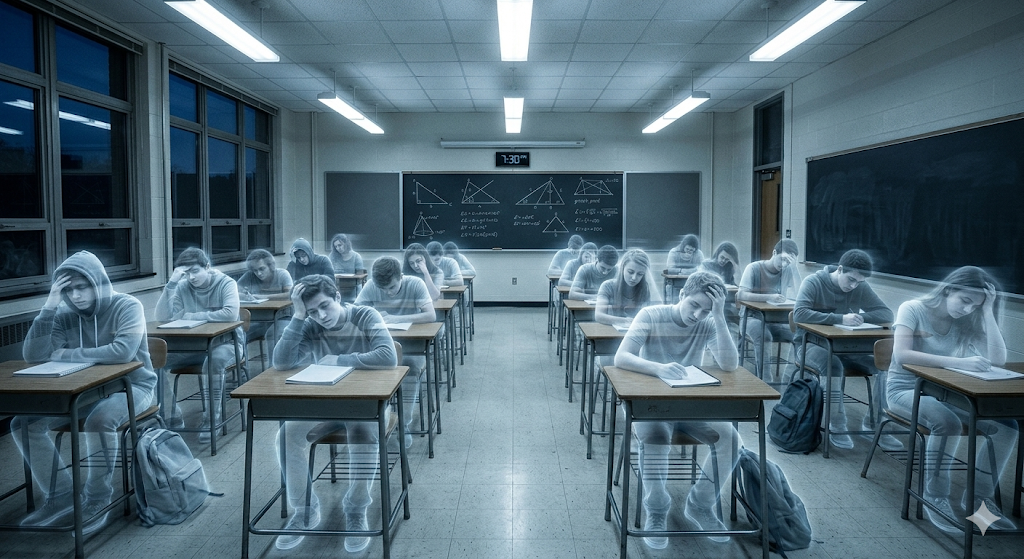
You and me are not different, we all get up everyday and fulfill our societal roles in our work, family, education, home making etc. and in our free time it is not uncommon to use methods of escapism to distract ourselves from the silence of our minds where these big questions arise. We’ve reached a point now though, where many of us are being forced to take a step back and ask ourselves if our lives have any purpose. Often times people get diagnosed with a difficult disease, they move through a traumatic event, lose a loved one, or sometimes they just wake up one day and a tiny interaction makes the illusion unravel. Their psyche shifts and the ease in which we once carried on with our everyday tasks suddenly becomes heavier and we wonder why do I continue to push this rock up hill?

A crisis of identity or mortality can occur at any age. Those who have gone through a so called dark night of the soul or a psychotic break will tell you that their ability to see the world is forever altered. In one qualitative study, 11 young adults between the ages of 17–31 who had their first psychotic episode were interviewed about existential themes surrounding freedom, identity, isolation, and death in order to understand how treat these patients better (Vries et al., 2025). In this study existentialism is seen as a integral part of treating a problem, it is a “thing” that needs to be understood and solved so that mental health patients can heal from and prevent future medical issues of psychosis. But we know that not all existential suffering is pathological, and not all psychological suffering is existential. This then leads to the question, what exactly constitutes a medical issue? I agree that this phenomena should be understood but should it be fixed or solved? Can we as medical professionals help patients solve this problem? Many of these patients within this study point out that they feel like they cannot control their minds or emotions, for example one patient said:
“Because in my eyes others always have a very normal life… and they can deal with things. And I just cannot do that.… I cannot deal with my emotions, nor with my thoughts, so then it is also very difficult to connect myself with other people.”
-Patient 2 (Vries et al., 2025)
In that example, we look at how severe mental health disease leads to these questions being asked and a psychologist is using that information to help people find purpose again and heal from the trauma of their events. However, it doesn’t have to be a huge mental health event that causes such a change to perception. It could be a torn rotator cuff that is painful and hard to heal which keeps a person from doing an activity that they identify with. It could also be the stress of dealing with hormonal changes, or burnout from chronic stress in a job or family life that triggers a diseased state. As medicine practitioners, whether East Asian medicine or allopathic, we can’t deny that in every disease pattern we see, that there is an underlying existential dilemma within our patients even if the question is simply why me? Why now?
Patients come to us because they want a clear understanding of what is happening, why it is happening and how do we fix it. Allopathic medicine does a great job of convincing people that the labels of their disease imbalance can be fixed by following x,y and z, and if you have problems from x, y, and z, just take a, b and c or go to see specialist f. I am not against allopathic medicine, in fact I think their diagnostic tools are incredible and I use them in my Chinese medicine practice all the time, but what I think is missing is the connection back to our human-ness. Why is it that there is so much variability in the efficacy of pharmaceuticals between patients? We can say metabolism, genetics, lifestyle, age, diet, or even taking other medications/supplements plays a part- or other words-the nature of a person has a huge effect on pharmacological efficacy. Our underlying nature or emotions drive our lifestyle habits and choices which can lead us into imbalance or health. The way in which we do the smallest things can have the biggest impacts down the road. If we address a person’s sense of purpose, identity, and relationship to living and dying alongside the physical disease pattern, we may improve treatment adherence, emotional resilience, and long-term healing outcomes.

Ancient systems such as Chinese medicine understood health not simply as the absence of symptoms, but as the ability to remain in harmony with both one’s inner nature and the external environment. Within both Chinese medicine and Buddhist philosophy, illness arises when a person loses the ability to respond to life with awareness and adaptability. Nature moves in cycles of change, stress, rest, growth, and decay, and human beings are not separate from those rhythms. When we lose awareness of our emotional and physical patterns, small imbalances can gradually develop into chronic illness. Modern society, however, rarely encourages this kind of self-observation. Productivity, distraction, and constant stimulation leave little space for reflection, making it difficult for people to recognize imbalance before it manifests more seriously in the body and mind. In 1974 Camus wrote:
“A convenient way of getting to know a town is to find out how people work there, how they love and how they die.[…]there is nothing more normal nowadays than to see people work from morning to evening, then choose to waste the time they have left for living at cards, in a café or in idle chatter.”-The Plague (Wicks, 2020)
What Camus alludes to is that without this time for introspection and self awareness it becomes hard to find our purpose and our reason for living. Helping patients make space in their lives for this type of introspection is woven into the foundations of Chinese medicine with its Taoist and Buddhist roots and I don’t think that it needs to remain removed from the allopathic office. Within the Chinese medicine system of medicine we can explore modern existentialist observations of the paradox of both existing in-itself (just like a tree or the clouds) and for-itself (with conscious awareness).

These existential questions are not new. Philosophers have long struggled with what it means to live meaningfully within systems that encourage conformity, distraction, and avoidance. Kierkegaard (the father of existentialism) believed that humans cannot truly understand themselves in isolation, but only through relationship to something beyond the self (Hannay & Marino, 2022). He argued that many people live within what he called the aesthetic sphere: chasing pleasure, distraction, stimulation, or comfort in an attempt to avoid despair. Others move into the ethical sphere, where identity becomes shaped by responsibility, social roles, and conformity to what society expects of them. Both modes of living can provide structure, but neither fully resolves the deeper question of meaning. For Kierkegaard, that movement only begins when a person enters what he called the religious sphere — not necessarily religion in the institutional sense, but a conscious relationship to something larger than the ego. A life shaped not only by productivity or pleasure, but by purpose, humility, love, and self-transcendence which influences how you express the deepest creative desires consciously in relation. When I look at modern medicine through this lens, I cannot help but notice how often both practitioners and patients become trapped within the aesthetic and ethical spheres. We seek immediate symptom relief, measurable outcomes, productivity, compliance, and protocols, but rarely leave space for the larger existential questions underneath suffering itself.
A good doctor is also a good teacher. We teach patients how to manage their symptoms, how to eat right, develop healthy habits, what medications/herbs to take but to be an exceptional doctor I believe we must ask questions that allow for the exploration of why a person does what he does. In a Chinese medicine practice, the physician is trained to ask open ended questions that require reflection on the part of the patient and we determine after asking these questions what the patients constitutional root is and how this compares to the branch or symptomatology of what brings them into the clinic. This allows the practitioner to not only make suggestions to fix the symptoms but to help balance their lives. Often times the questions asked in a treatment can make a patient reflect on why those symptoms are arising and this can change how a person chooses to live and move through their life. In the allopathic doctors office, unless you are in a psychiatry office, they ask closed questions; yes or no? There is not a lot of opportunity to learn about a persons nature from those types of interactions so I think this modern style of practice is practicing from the first 2 of Kierkegaard’s spheres: the aesthetic (looking for immediate relief) and ethics (following protocols). I propose that if all practitioners opened up their practices to make space for these types of interactions, the efficacy of whatever modality we choose to employ will increase.

Chinese medicine has been kept alive through so many centuries, both Taoism and Buddhism have shaped the foundation of how this medicine is practiced but it has also recently been shaped by political and allopathic medicine approaches. Even in the field of Chinese medicine, some practitioners are practicing reductionism in the same way as modern allopathic approaches. A famous existential psychiatrist Viktor Emil Frankl has said:
“Reductionism, is a “pseudoscientific approach” that mechanizes and reifies human beings, turning them into a “nothing more than the result of biological, psychological and sociological conditions, or the product of heredity and environment” (Souza and Scott, 2022)
It is the choice of the medical practitioner to choose a higher path for themselves and for their patients to self-shape and self-actualize into who they desire to be within the life they desire. Within the foundation of Chinese medicine lies a woven harmony of both buddhist and taoist philosophy that gives easy tools to the practitioner and patient for finding this balance within themselves when existential questions about living arise. The education system for health is woven into the 8 pillars of Chinese medicine and they are meditation, physical movement, nutrition, physical manipulation, astrology (cosmology), Feng shui, herbal medicine and acupuncture. The Eightfold Path within buddhism fits perfectly into the first pillar of Chinese medicine. It is designed to liberate one from suffering and achieve liberation through self-transcendence and has three integrated domains of wisdom (right view and right intention), ethics (right speech, action, and livelihood), and meditation (right mindfulness and concentration) (Souza and Scott, 2022).This path is the foundation for all the other pillars and when living life in this way naturally helps the practitioner and patient make choices based on love, connection and humility. What was recognized within this philosophy is that we have all the tools to be able to live harmoniously within this space between heaven and earth- the human realm and all we had to do was observe and match the energetics of the natural world around us to be in harmony. Recognizing out own nature and how that nature relates to the space around us and nature of other humans allows us to coarse correct when elements of ourself seem like they are going in a direction we don’t desire. It takes a great deal of time, of practice, and patience to witness this within ourselves and to teach our patients. Luckily, this education system has been moulded over so much time that it is alive and applicable for people in every societal change we’ve had as a human species. This system can hold the ideas of existentialism while allowing people to transcend themselves and still be a part of this natural world.
“Self-transcendence may also be understood as experiences in which a person transcends himself being pulled beyond the boundaries of one’s self, being captivated by something outside of myself, a relaxation of or liberation from one’s fixation on oneself” (Souza and Scott, 2022)

So should we continue living? What do you tell the painter who is going blind, or the diabetic who struggles with his appetite? Do you think the answer is simply to give a diagnosis, some pills and perhaps a suggestion to stop eating carbs and be done with them? Will that allow for long-lasting health and meaningful change? I think it’s worth asking ourselves as practitioners if we are cogs functioning in a meaningless existence that ceases to exist when we die or are we part of a larger connected cycle that we can’t possibly understand? Although the modern existentialist philosophers may disagree to some extent, the underlying theme that penetrates all these ideas is the question: what is the meaning of life for us as individuals and how does that relate to bigger meaning for all things? And I propose that by letting these big questions into the treatment room that we can help raise the efficacy of our practices by simply allowing space for the remembering of why we are here to live. There is no pill or herb or acupuncture point that will solve this existential dilemma. What we can do, however, is to help the body remember what feels like to be connected to nature, help the mind remember what it feels like to be connected to something larger than our egos, and use the tools we have such as acupuncture, herbs, and diet to facilitate that remembering. We must not forget that a doctor is a teacher and practicing what we teach helps us to be more effective in the transmission of this medicine. Asking big questions brings our human-ness out so that we don’t get caught up in identifying with a disease name.
Symptoms in modern medicine are simply signals of how our body has fallen out of balance with its nature. Some things are unavoidable, as sickness and death are also a part of nature and while everything has a potential to heal, not everything does. How we relate to the phenomena of nature within and around us can shape the prognosis and quality of life for patients and ourselves as practitioners. So how will you approach this in your own practice of living? The choice is up to you.
Works Cited
M. de Vries, P. Janse, C. Anbeek & A. Braam (2025). Existential concerns among young adults with psychotic vulnerability in mental health care: a qualitative study in the Netherlands. BMC Psychiatry, 25(1). https://link.springer.com/article/10.1186/s12888-025-06551-7
Renata Cueto de Souza, and Charles Scott (2022). From Mental Health Crisis to Existential Human Suffering: The Role of Self-Transcendence in Contemporary Mindfulness, 13(8), 681. https://www.mdpi.com/2077-1444/13/8/681
Flynn, T. (2026). Jean Paul Sartre: Existentialism. Internet Encyclopedia of Philosophy. https://iep.utm.edu/sartre-ex/
Crowell, S. (2017). Existentialism. In E. N. Zalta (Ed.), Stanford Encyclopedia of Philosophy (Spring 2017 ed.). Stanford University. https://plato.stanford.edu/archives/spr2017/entries/existentialism/
Wicks, R. (2020). Albert Camus. In E. N. Zalta (Ed.), Stanford Encyclopedia of Philosophy. Stanford University. https://plato.stanford.edu/entries/camus/#ParCamAbs
Hannay, A., & Marino, G. (2022). Søren Kierkegaard. In E. N. Zalta (Ed.), Stanford Encyclopedia of Philosophy. Stanford University. https://plato.stanford.edu/entries/kierkegaard/#KierAnalHumaExisDespSociCritAnxi
메타데이터
- post_id
- 545351139c0a
- slug
- the-question-beneath-the-symptoms-545351139c0a
- url
- https://medium.com/@potashn/the-question-beneath-the-symptoms-545351139c0a
- canonical_url
- https://medium.com/@potashn/the-question-beneath-the-symptoms-545351139c0a
- author_url
- https://medium.com/@potashn
- status
- ok
- fetched_at
- 2026-06-09 15:37:30