The Strap That Saved My Load on a Snowy Mountain Pass
Picture the grade climbing ahead of you at 6,000 feet, the wipers losing their fight with wet snow, and eighteen thousand pounds of freight…
The Strap That Saved My Load on a Snowy Mountain Pass

Picture the grade climbing ahead of you at 6,000 feet, the wipers losing their fight with wet snow, and eighteen thousand pounds of freight riding behind your cab. This is the moment that separates a securement system you trust from one you only hoped would hold. On a clean, dry interstate, almost any tie-down looks like enough. On a snowy mountain pass — with braking, downshifting, side wind, and the constant micro-shifts of a load settling into the cold — the only thing standing between cargo and catastrophe is the quality and rating of your cargo tie-down straps. Getting that system right before the weather turns is the difference between an uneventful descent and a story you never want to tell. The good news: securing a load for the worst conditions is a learnable discipline, not luck.
Hauling through a pass this week, and not sure your straps are rated for it? Don’t gamble on freight you can’t afford to lose. Browse working-load-limit-rated ratchet and winch straps built for real over-the-road conditions and get your rig ready before the next storm. → DC Cargo: https://dccargo.com/
Why a Snowy Pass Is the Ultimate Test of Your Tie-Downs
A mountain pass in winter stacks every force a securement system is designed to resist into one continuous event. Long downhill grades mean sustained braking, which throws cargo forward against your forward tie-downs. Switchbacks load the side restraints as the trailer leans through each curve. Cold steel contracts, banding, and dunnage compress, and a load that felt drum-tight at the truck stop can develop slack within an hour. Add a slick deck and reduced traction, and the margin for error collapses. This is exactly why federal cargo securement rules exist in the first place — they assume the road will try to take your freight, and they require enough aggregate restraint to stop it. Treating a snowy pass as the design baseline, rather than the exception, is the mindset that keeps loads on the trailer.
Ratchet Straps vs. Winch Straps: Knowing Which Job Calls for Which
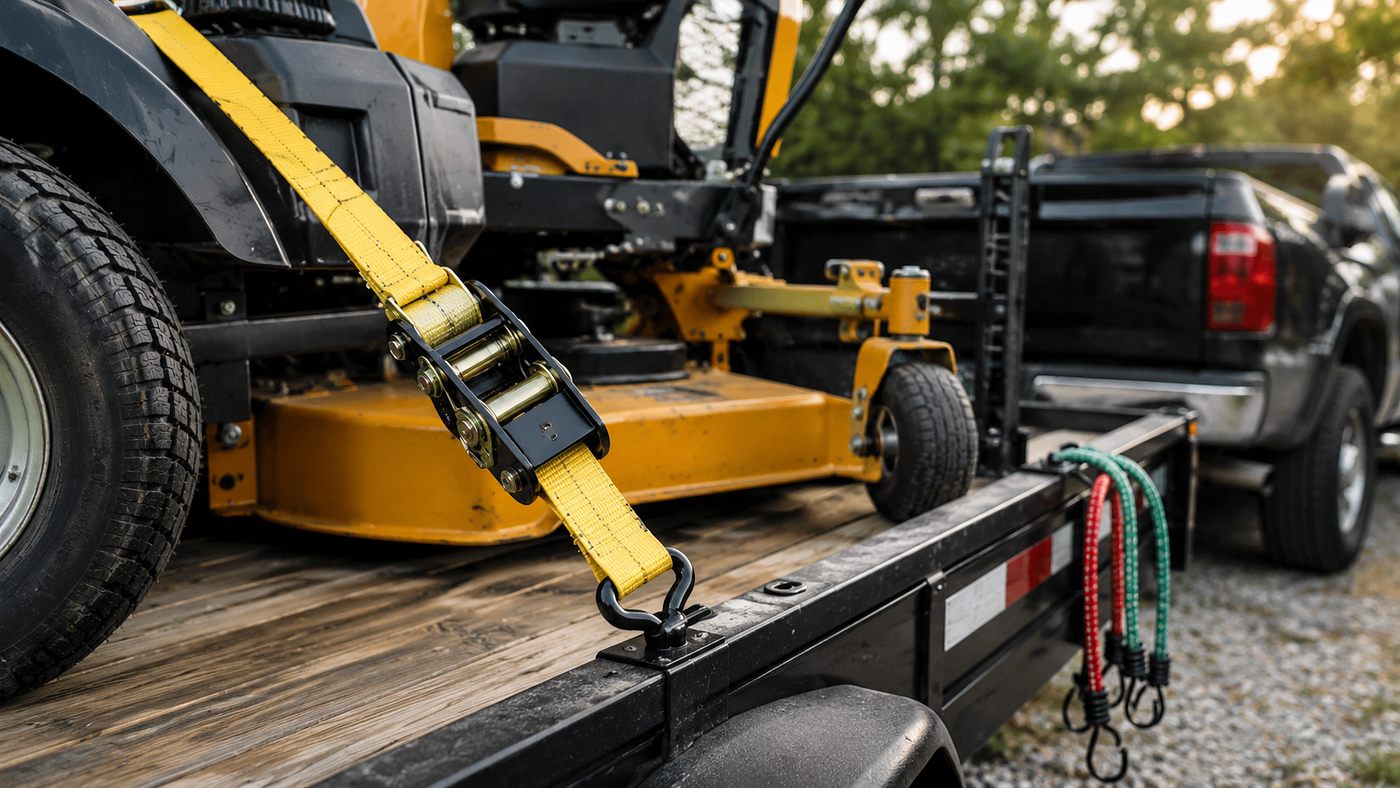
The most common securement mistake is reaching for whatever strap is closest instead of the one the job demands. Ratchet straps give you fine, incremental tension control, which makes them ideal for palletized freight, machinery, and any load where you want to dial in tightness without over-stressing the cargo. The ratchet mechanism also lets you re-tension quickly at a checkpoint — a feature that matters enormously when a load settles on a cold grade. A trusted supplier like DC Cargo carries assembly grades and end-fitting styles for nearly every trailer configuration, which means you can match the hardware to the anchor points you actually have. If your current kit is a mismatched pile of hardware-store straps, upgrading to properly rated ratchet straps is the single highest-leverage change you can make before winter hauling.
Working Load Limit Is the Number That Actually Saves Your Load
A strap’s breaking strength is marketing. Its working load limit, or WLL, is what keeps you legal and your freight on the deck. WLL is typically one-third of the strap’s rated breaking strength, and federal rules require that the aggregate working load limit of all your tie-downs equal at least half the weight of the cargo being secured. On a pass, that buffer is doing real work — absorbing dynamic forces that a static calculation never sees. The lesson is simple but easy to ignore under time pressure: count your tie-downs, add their WLLs, and confirm the total clears the legal floor before you roll, not after a DOT officer waves you onto the scale. A strap that “looks heavy duty” but carries an unknown or unrated WLL is exactly the kind of weak link that fails when the grade gets steep.
Not sure whether your current tie-downs clear the working-load-limit math for your heaviest loads? Get an expert look at rated, DOT-compliant securement gear before you load your next flatbed — it’s far cheaper than a spilled load or a failed inspection. → DC Cargo: https://dccargo.com/
Building a Flatbed Securement System That Holds in Any Weather
Open-deck freight is the hardest to secure because nothing contains it but your hardware and your discipline. A weatherproof flatbed system starts with the right tensioning tools for the deck you run. Flatbed winch straps thread through the winches mounted along your trailer rail and let you generate and hold serious tension across wide, heavy loads — lumber, steel, pipe, and equipment that ratchet straps alone weren’t designed to manage at scale. Pair those with edge protectors to keep sharp cargo from shearing your webbing, corner guards to spread tension, and chains and binders for anything with a low working load limit per attachment. The point is to think in terms of a complete kit rather than individual straps. Purpose-built flatbed tie-down solutions bundle the winches, straps, and protective hardware that turn a bare deck into a system rated for the conditions a winter pass throws at it.
Inspect, Re-Tension, Repeat: Habits That Prevent the Worst-Case Scenario
Even the best equipment fails when it’s checked once and forgotten. Federal rules require a securement inspection within the first 50 miles and at regular intervals after, and a snowy route is the worst possible place to skip that habit. Build a routine: walk the load at every fuel or rest stop, run a hand along each strap to feel for slack the cold introduced, and re-tension anything that gives. Look for cuts, abrasions, UV chalking, and frayed edges — webbing degrades faster than most drivers expect, and a strap that held last summer may be compromised now. Retire any strap with visible damage instead of trusting it one more trip; replacement webbing costs a fraction of a lost load. These habits cost minutes and prevent the exact failure that turns a routine descent into a roadside emergency.
Frequently Asked Questions
How many tie-down straps do I actually need for a heavy load?
Federal rules set a baseline of one tie-down for articles up to 5 feet long and under 1,100 pounds, two for items up to 10 feet, and additional straps for every 10 feet beyond that. Separately, the aggregate working load limit of all tie-downs must equal at least half the cargo weight. Always satisfy whichever rule demands more straps. On a winter pass, adding tie-downs beyond the legal minimum is a cheap insurance policy against dynamic forces a static count never captures.
Are ratchet straps or winch straps better for flatbed hauling?
They solve different problems. Ratchet straps give precise, incremental tension and are easy to re-tension at checkpoints, making them excellent for palletized and mid-weight freight. Winch straps anchor to the winches on a flatbed rail and generate the high, sustained tension needed for wide, heavy open-deck loads like lumber and steel. Most professional flatbed operators carry both and choose based on cargo weight, length, and the anchor points available on the trailer.
How often should I check my straps in winter conditions?
Inspect within the first 50 miles, as federal rules require, then at every fuel stop, rest break, and any time conditions change sharply. Cold contracts banding and webbing, so loads that were tight when you left can develop slack within an hour. A 60-second walk-around to feel each strap and re-tension as needed is the highest-value habit a winter driver can build.
When should I replace a tie-down strap instead of using it?
Retire any strap with cuts, holes, frayed or pulled edges, broken stitching, heat or chemical damage, or a hook that’s bent or cracked. UV exposure also weakens webbing over time, often without obvious signs, so consider age alongside appearance. If you’re questioning whether a strap is still safe, it isn’t — replacing webbing is far cheaper than the load, the fine, or the liability that follows a failure.
Conclusion
The strap that saves your load on a snowy pass isn’t a single hero piece of hardware — it’s a system you built and verified before the weather turned. It starts with choosing the right tool for the job, ratchet or winch, instead of grabbing whatever’s nearest. It depends on respecting working load limits and clearing the legal floor with a margin to spare. It’s reinforced by edge protection and the right hardware for open-deck freight, and it’s kept alive by the unglamorous discipline of inspecting and re-tensioning at every stop. None of these steps is complicated, and together they’re what stands between you and the worst phone call a carrier can get. Treat the hardest route you run as your standard, equip for it honestly, and the pass becomes just another descent.
Want to keep learning how to secure loads safely in any season? Explore guides, working-load-limit-rated straps, and complete flatbed kits trusted by drivers who haul through real weather. → DC Cargo: https://dccargo.com/
메타데이터
- post_id
- 5454036b8d1f
- slug
- the-strap-that-saved-my-load-on-a-snowy-mountain-pass-5454036b8d1f
- url
- https://medium.com/@ethanwalker0508/the-strap-that-saved-my-load-on-a-snowy-mountain-pass-5454036b8d1f
- canonical_url
- https://medium.com/@ethanwalker0508/the-strap-that-saved-my-load-on-a-snowy-mountain-pass-5454036b8d1f
- author_url
- https://medium.com/@ethanwalker0508
- status
- ok
- fetched_at
- 2026-07-22 06:57:32