7 Early Warning Signs of a Brain Tumor You Should Never Ignore
Recognizing unusual changes in the body can be important when neurological symptoms appear without a clear explanation. Early symptoms of a…
7 Early Warning Signs of a Brain Tumor You Should Never Ignore
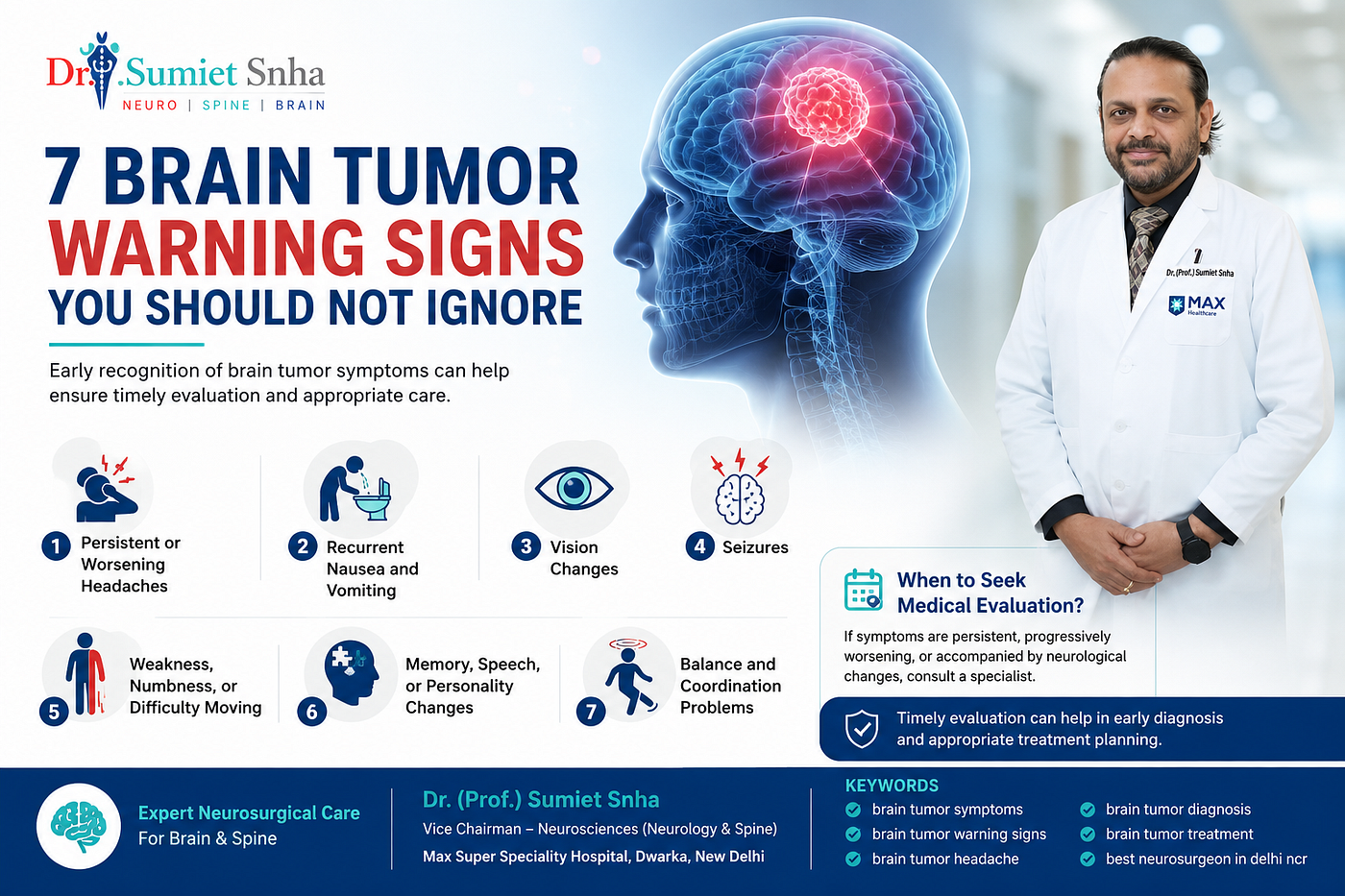
Recognizing unusual changes in the body can be important when neurological symptoms appear without a clear explanation. Early symptoms of a brain tumor can develop gradually and may initially resemble everyday problems such as headaches, nausea, tiredness, vision changes, or difficulty concentrating. The symptoms can differ from person to person depending on the tumor’s location, size, type, and growth pattern. Persistent headaches, seizures, weakness or numbness, balance problems, speech difficulties, or changes in memory and behavior may require further medical assessment. If symptoms are new, recurring, worsening, or affecting daily life, consulting the **Best Neurosurgeon in Dwarka** can help determine whether neurological evaluation or brain imaging is appropriate. It is important to remember that these warning signs do not automatically indicate a brain tumor, as several other conditions can cause similar symptoms.
What Are the Early Symptoms of a Brain Tumor?
Brain tumors can affect normal brain function when abnormal cells grow within or around the brain and put pressure on nearby tissues. In some cases, a tumor can also contribute to increased pressure inside the skull, which may lead to different neurological symptoms. The early symptoms of a brain tumor are not the same for everyone and largely depend on the tumor’s location, size, type, and growth pattern.
Common Early Symptoms
Some of the commonly reported brain tumor symptoms may include:
- Persistent or worsening headaches: Headaches that become more frequent, severe, or different from a person’s usual pattern may need medical evaluation.
- Nausea or vomiting: Recurrent nausea or vomiting, particularly when accompanied by other neurological symptoms, should not be ignored.
- Vision problems: Blurred or double vision or changes in the visual field can occur when certain areas of the brain or nearby structures are affected.
- Seizures: A new-onset seizure can sometimes be associated with a brain lesion and requires prompt medical assessment.
- Weakness or numbness: Unexplained weakness, tingling, or numbness, especially on one side of the body, can indicate neurological involvement.
- Balance and coordination problems: Difficulty walking, maintaining balance, or coordinating movements may develop.
- Memory, speech, or personality changes: Difficulty remembering information, finding words, concentrating, or noticeable changes in behavior can occur depending on the affected brain region.
- Drowsiness or confusion: Unusual sleepiness, confusion, or changes in alertness may also require evaluation.
These early signs of a brain tumor can also occur with many other medical conditions, so experiencing one symptom does not mean a brain tumor is present. Persistent, progressive, or multiple symptoms should be assessed by a qualified medical professional for appropriate brain tumor diagnosis.
7 Brain Tumor Warning Signs You Should Not Ignore
Recognizing potential brain tumor warning signs can help people seek medical evaluation when symptoms are unusual, persistent, or progressively worsening. However, these symptoms can also occur because of many other conditions, so they should not be used to diagnose a brain tumor on their own.
1. Persistent or Worsening Headaches
A persistent headache that gradually becomes more frequent, severe, or different from your usual pattern may require medical attention. A brain tumor headache can sometimes occur with other symptoms, such as nausea, vomiting, vision changes, or neurological difficulties. Morning headaches may occur in some people, but they are not specific to brain tumors.
2. Recurrent Nausea and Vomiting
Unexplained or recurrent nausea and vomiting, particularly when accompanied by persistent headaches or other neurological symptoms, should be evaluated by a healthcare professional. Vomiting alone does not indicate a brain tumor.
3. Vision Changes
Blurred or double vision, difficulty focusing, or loss of part of the visual field can sometimes occur when areas involved in vision are affected. These may be among the brain tumor symptoms in adults, although they have many other possible causes.
4. Seizures
A new-onset seizure in an adult requires prompt medical assessment. In some cases, seizures can be an early sign of a brain lesion.
5. Weakness or Numbness
Unexplained weakness or numbness, particularly affecting one side of the body, may indicate neurological involvement. Difficulty controlling an arm, leg, or facial movement should not be ignored.
6. Memory, Speech, or Personality Changes
Difficulty finding words, confusion, memory problems, unusual behavior, personality changes, or difficulty concentrating may develop when certain brain regions are affected.
7. Balance and Coordination Problems
Difficulty walking, frequent unexplained falls, poor coordination, dizziness, or unsteadiness can be important neurological symptoms and should be medically evaluated when persistent or worsening.
When Should Brain Tumor Symptoms Be Evaluated?
Not every headache, episode of dizziness, or neurological symptom indicates a brain tumor. Many of these symptoms can result from common conditions. However, medical evaluation becomes important when symptoms are persistent, progressively worsening, unusual, or occur together. Early assessment can help identify the underlying cause and determine whether further testing, such as a neurological examination or brain imaging, is appropriate.
When Medical Evaluation Is Important
Consider consulting a healthcare professional when:
- Symptoms continue for an extended period or gradually become worse.
- New neurological symptoms such as weakness, numbness, confusion, or coordination difficulties develop.
- A person experiences a first-time seizure.
- Significant or unexplained vision or speech changes occur.
- Weakness or numbness develops suddenly or progressively.
- Several symptoms, such as persistent headache, vomiting, and vision problems, occur together.
- Symptoms begin interfering with work, mobility, concentration, sleep, or everyday activities.
For people seeking specialized neurological assessment, consulting a qualified Best Neurosurgeon in Delhi NCR can help determine whether symptoms require further investigation and which diagnostic approach may be appropriate.
When Emergency Medical Attention Is Needed
Some neurological symptoms require immediate emergency medical attention rather than waiting for a routine specialist appointment. Sudden weakness or numbness, difficulty speaking, loss of consciousness, a seizure, or a sudden and extremely severe headache can indicate serious conditions, including stroke or other neurological emergencies.
It is important not to assume that such symptoms are caused by a brain tumor. Prompt medical assessment is essential because timely diagnosis and treatment can be critical in neurological emergencies.
How Are Brain Tumors Diagnosed?
Diagnosing a brain tumor involves more than identifying a single symptom. Doctors consider a person’s medical history, symptoms, neurological findings, and imaging results to determine whether further investigation is necessary. The diagnostic process is tailored to each patient because symptoms can vary depending on the tumor’s location, size, and characteristics.
Neurological Examination
A neurological examination helps assess how different parts of the nervous system are functioning. Depending on the symptoms, a doctor may evaluate:
- Reflexes to assess nerve and spinal pathways
- Muscle strength to identify weakness or changes in movement
- Coordination and balance to detect difficulties with controlled movements
- Vision to identify visual changes or field abnormalities
- Speech and language to assess communication and word-finding ability
- Memory and cognitive function to identify changes in concentration, thinking, or recall
These findings can help determine whether brain imaging or additional neurological evaluation is appropriate.
Brain Imaging
Imaging plays an important role in brain tumor diagnosis. An MRI brain scan is commonly used because it can provide detailed images of brain structures and help doctors identify the location, size, and characteristics of a suspected lesion.
A CT scan may also be used, particularly when rapid imaging is needed or when MRI is not suitable. In selected situations, contrast-enhanced imaging may provide additional information about a lesion and its relationship with surrounding brain tissue.
Additional Testing
If imaging identifies a suspicious abnormality, additional tests may be recommended depending on the suspected tumor type and individual circumstances. These may include blood tests, advanced imaging, or a biopsy.
A biopsy allows tissue to be examined through histopathological examination and, when appropriate, molecular testing. While imaging can identify and characterize a suspicious brain lesion, tissue examination may be necessary to determine the exact tumor type and its biological characteristics. This information can help specialists develop an appropriate brain tumor treatment plan.
What Causes Brain Tumor Symptoms?
The symptoms caused by a brain tumor can vary considerably from one person to another. This is because the brain controls many different functions, and the effects of a tumor depend largely on where it develops, how large it becomes, and how quickly it grows. Understanding these factors can help explain why some people experience headaches while others develop changes in movement, speech, vision, or behavior.
Key Factors Behind Brain Tumor Symptoms
- Tumor location: A tumor affecting the frontal lobe may contribute to changes in behavior, personality, judgment, or movement, while tumors involving areas responsible for speech may cause language difficulties.
- Tumor size: As a tumor grows, it may place pressure on nearby brain structures and potentially produce additional symptoms.
- Growth rate: Rapidly growing tumors may cause symptoms to develop or worsen over a shorter period, whereas slower-growing tumors may produce subtle changes.
- Type of tumor: Different tumor types can behave differently and affect surrounding tissues in different ways.
- Pressure on surrounding tissue: Local pressure can interfere with normal brain function and contribute to various neurological symptoms.
- Increased intracranial pressure: Pressure within the skull may contribute to symptoms such as headaches, nausea, vomiting, vision changes, or drowsiness.
Because these factors differ between patients, brain tumor symptoms and warning signs should always be interpreted in the context of a complete medical evaluation rather than through symptoms alone.
Brain Tumor Treatment Options
Brain tumor treatment is not the same for every patient. The recommended approach depends on several factors, including the tumor type, size, location, grade, growth pattern, symptoms, and the person’s overall health. Specialists may also consider whether the tumor can be safely accessed and how treatment could affect important brain functions. A personalized treatment plan may involve one approach or a combination of treatments.
Observation and Monitoring
Some slow-growing tumors that are small, stable, and causing few or no significant symptoms may be monitored rather than treated immediately. Regular clinical assessments and follow-up brain imaging can help specialists determine whether the tumor is changing and whether treatment may become necessary.
Brain Tumor Surgery
Brain tumor surgery may be considered when removing the tumor, or as much of it as can be safely removed, is appropriate. The surgical approach depends heavily on the tumor’s location and its relationship with important brain structures. In some cases, surgery may also provide tissue needed to establish an accurate diagnosis.
A neurosurgeon for brain tumor care evaluates these factors carefully before recommending surgery. The goal is to address the tumor while preserving important neurological functions whenever possible.
Radiation Therapy
Radiation therapy may be recommended for certain types of brain tumors. It can be used after surgery, instead of surgery in selected situations, or as part of treatment for tumors that cannot be completely removed. The type and timing of radiation depend on the individual diagnosis and treatment plan.
Chemotherapy and Other Medical Treatments
Some brain tumors may require chemotherapy or other medicines, including targeted or tumor-specific therapies. The choice depends on the tumor’s biological characteristics and test results.
Because every brain tumor is different, treatment decisions should be made after appropriate diagnosis and evaluation by a multidisciplinary medical team.
Choosing the Right Neurosurgical Specialist
When evaluating brain tumor symptoms, choosing an experienced neurosurgical specialist can help ensure appropriate assessment, diagnosis, and treatment planning. Dr. (Prof.) Sumiet Snha, Vice Chairman — Neurosciences (Neurology & Spine), provides specialized care for neurological and neurosurgical conditions. Patients searching for the **Best Neurosurgeon in Dwarka, Best Neurosurgeon in Gurgaon, or Best Neurosurgeon in Delhi NCR may consider factors such as clinical experience, diagnostic facilities, multidisciplinary support, and an individualized approach to treatment. Patients looking for the Best Neurosurgeon in Max Hospital Delhi** should also consider whether the specialist and hospital provide appropriate evaluation and treatment options for their specific condition.
About Dr. (Prof.) Sumiet Snha
**Dr. (Prof.) Sumiet Snha, Vice Chairman — Neurosciences (Neurology & Spine), is a neurosurgical specialist with 25+ years of experience in neurosurgery. He completed his neurosurgical training at All India Institute of Medical Sciences (AIIMS), New Delhi**, and has received additional training and professional exposure internationally. His clinical interests include brain and spine conditions, spinal injuries, peripheral nerve surgery, and minimally invasive spine surgery. Dr. (Prof.) Sumiet Snha has also been involved in teaching, research, and professional training activities, including AO Spine and ATLS-related education. His approach focuses on careful patient evaluation, accurate diagnosis, and individualized surgical or non-surgical treatment planning based on each patient’s condition and needs.
Frequently Asked Questions
1. What are the earliest symptoms of a brain tumor?
Early brain tumor symptoms can include persistent or changing headaches, nausea and vomiting, vision problems, seizures, weakness or numbness, balance difficulties, memory problems, speech changes, or personality changes. Symptoms vary according to the tumor’s location, size, type, and growth rate. Having one of these symptoms does not necessarily mean a brain tumor is present.
2. Can a persistent headache be a sign of a brain tumor?
A persistent headache can have many causes and is usually not related to a brain tumor. However, a headache that becomes progressively worse, changes from a person’s usual pattern, or occurs with neurological symptoms such as seizures, weakness, vision changes, or confusion should be medically evaluated.
3. What does a brain tumor headache feel like?
There is no single type of brain tumor headache. Some people may experience headaches that are persistent, progressively worsening, or accompanied by nausea, vomiting, or other neurological symptoms. The characteristics of a headache alone cannot confirm or rule out a brain tumor.
4. Can vision changes indicate a brain tumor?
Yes, certain brain tumors can affect areas involved in vision and may cause blurred vision, double vision, difficulty focusing, or loss of part of the visual field. However, vision changes have many possible causes. New or unexplained visual symptoms should be evaluated by an appropriate healthcare professional.
5. Can seizures be an early sign of a brain tumor?
A seizure can sometimes be an early sign of a brain lesion, including a brain tumor. A first-time seizure, particularly in an adult, requires prompt medical evaluation to determine its underlying cause.
6. Can brain tumors cause memory or personality changes?
Depending on their location, brain tumors can sometimes affect memory, concentration, speech, judgment, or behavior. A person may experience difficulty remembering information, finding words, concentrating, or noticeable changes in personality. These symptoms can also result from many other neurological or medical conditions.
7. How are brain tumors diagnosed?
Brain tumor diagnosis generally begins with a medical history and neurological examination. Depending on the findings, doctors may recommend imaging such as an MRI or CT scan. If a suspicious lesion is identified, a biopsy may sometimes be required to determine the exact tumor type and its biological characteristics.
8. Is an MRI necessary to detect a brain tumor?
An MRI brain scan is an important imaging method for evaluating suspected brain tumors because it provides detailed images of brain structures. However, whether an MRI is necessary depends on the patient’s symptoms, examination findings, medical history, and clinical circumstances. In some situations, a CT scan may also be appropriate.
9. Are all brain tumors cancerous?
No. Brain tumors can be benign or malignant. Some benign tumors grow slowly and may not spread to other parts of the body, although they can still cause significant problems if they press on important brain structures. Malignant tumors can behave more aggressively. The exact diagnosis requires appropriate medical evaluation and, when necessary, tissue examination.
10. When should I see a neurosurgeon for brain tumor symptoms?
Consider specialist evaluation when symptoms are persistent, progressively worsening, unusual, or associated with significant neurological changes. New seizures, persistent headaches accompanied by other neurological symptoms, unexplained weakness or numbness, speech difficulties, or significant vision changes may warrant further assessment.
11. Can brain tumors be treated without surgery?
In some cases, yes. Brain tumor treatment depends on the tumor’s type, size, location, grade, symptoms, and overall patient health. Selected tumors may be monitored through regular imaging, while others may require radiation therapy, medicines, or other treatments. Surgery may be recommended when removing or reducing the tumor is considered appropriate and sufficiently safe.
12. How do I choose a brain tumor specialist in Delhi NCR?
When choosing a specialist, consider relevant neurosurgical experience, diagnostic facilities, multidisciplinary support, available treatment options, and an individualized approach to care. Patients searching for the Best Neurosurgeon in Delhi NCR should focus on the specialist’s qualifications and experience relevant to their particular neurological condition rather than relying only on online rankings or claims.
Conclusion
The early symptoms of a brain tumor can include persistent or changing headaches, seizures, vision problems, nausea and vomiting, weakness or numbness, balance difficulties, and changes in memory, speech, or personality. However, these symptoms can also occur because of many other conditions and do not automatically indicate a brain tumor. Persistent, progressive, new, or unusual neurological symptoms should receive appropriate medical evaluation. Diagnosis may involve a neurological examination and brain imaging such as MRI or CT, with additional testing when necessary. If specialist evaluation is required, consulting a qualified Best Neurosurgeon in Dwarka can help guide appropriate diagnosis and treatment planning.
메타데이터
- post_id
- 547d0a6bbbac
- slug
- 7-early-warning-signs-of-a-brain-tumor-you-should-never-ignore-547d0a6bbbac
- url
- https://medium.com/@prakharthakur2810/7-early-warning-signs-of-a-brain-tumor-you-should-never-ignore-547d0a6bbbac
- canonical_url
- https://medium.com/@prakharthakur2810/7-early-warning-signs-of-a-brain-tumor-you-should-never-ignore-547d0a6bbbac
- author_url
- https://medium.com/@prakharthakur2810
- status
- ok
- fetched_at
- 2026-08-22 20:13:55