Killing al-Manuki: Is US cooperation changing Nigeria’s intelligence capacity?
BY LEKAN OLAYIWOLA The elimination of Abu-Bilal al-Manuki, a senior Islamic State figure described as ISWAP’s second-in-command globally…
Killing al-Manuki: Is US cooperation changing Nigeria’s intelligence capacity?
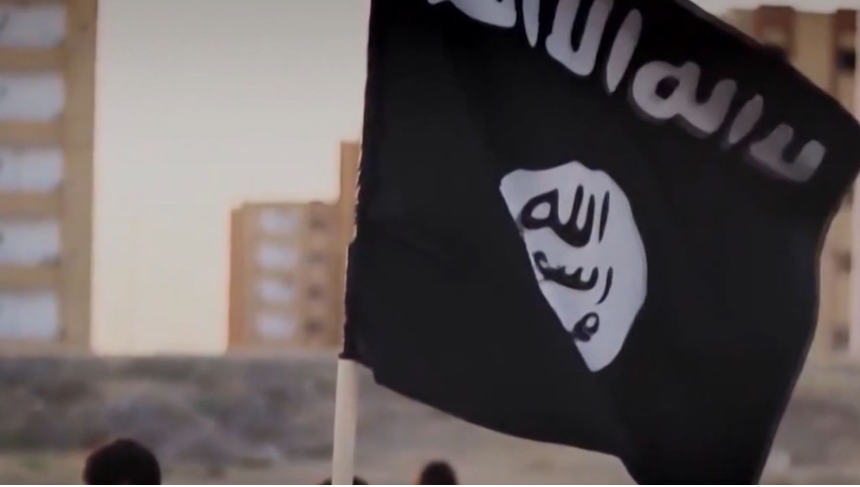
BY LEKAN OLAYIWOLA The elimination of Abu-Bilal al-Manuki, a senior Islamic State figure described as ISWAP’s second-in-command globally, delivers a significant symbolic victory. However, the deeper story lies in how this high-value target was located and eliminated deep inside one of Africa’s most difficult insurgent sanctuaries in the Lake Chad region.
Reported coordination between Nigerian and U.S. intelligence elevates the operation beyond a routine strike. It may signal a meaningful boost in Nigeria’s intelligence capabilities and a maturing phase in West Africa’s counterterrorism cooperation. While killing one commander rarely collapses an insurgency, sustained penetration of once-impenetrable networks can shift the balance. The al-Manuki operation raises a critical question: is Nigeria building the sophisticated intelligence apparatus needed to move from reactive defence to proactive disruption?
The Enduring Challenge of the Lake Chad Concealment Ecosystem
For over a decade, the Lake Chad Basin has functioned as more than a battlefield; it has been a near-perfect concealment ecosystem. Its vast marshlands, scattered islands, intricate waterways, difficult vegetation, and porous borders spanning Nigeria, Niger, Chad, and Cameroon have historically frustrated conventional military operations. Senior insurgent figures have thrived here not solely due to ideological commitment or combat effectiveness, but because the environment severely degrades state advantages in mobility, visibility, and logistics.
ISWAP, in particular, has demonstrated remarkable organisational resilience. Even after multiple leadership losses, aerial campaigns, and ground offensives, the group has adapted — improving its logistics networks, tactical mobility (including recent use of weaponised drones), communications discipline, and ability to exploit ungoverned spaces.
Recent years saw ISWAP launch ambitious campaigns, overrunning military bases and expanding influence. Against this backdrop, successfully targeting a figure of al-Manuki’s stature, a Borno native linked to high-profile operations like the 2018 Dapchi schoolgirls kidnapping, suggests evolving state capabilities.
Intelligence Fusion: From Concept to Operational Reality
Contemporary counterterrorism increasingly depends on multi-domain intelligence integration. This includes human intelligence (HUMINT — gathered from informants, defectors, and agents on the ground), signals intelligence (SIGINT — intercepting communications), geospatial intelligence (GEOINT — satellite and mapping data), persistent aerial surveillance, behavioural pattern analysis, financial tracking, and Intelligence, Surveillance, and Reconnaissance (ISR) systems that maintain continuous monitoring over wide areas. Victory emerges when these disparate streams converge into precise, timely action.
Nigeria-U.S. cooperation has evolved substantially in this direction, moving beyond earlier focus on counter-IED training to comprehensive intelligence-sharing, aviation support, joint training, and operational coordination. In February 2026, the United States deployed approximately 200 military advisers, intelligence analysts, and trainers to Nigeria. These personnel, operating from locations including Maiduguri, focus on enhancing intelligence fusion, ISR integration, target identification, and coordinated air-ground operations, all while respecting Nigerian operational command and avoiding direct combat roles.
This built on prior actions, such as the coordinated U.S.-supported strike on ISWAP targets in Sokoto State on December 25, 2025. Nigeria’s own operations have shown increasing reliance on surveillance-driven precision targeting rather than broad territorial sweeps. The Multinational Joint Task Force (MNJTF) has also strengthened cross-border information flow. These examples point to a gradual transition from attrition-based warfare toward intelligence-enabled disruption.
Measuring the Shift in Capability
Quantifying intelligence progress remains challenging due to classification, but observable patterns are instructive. Between 2013 and 2017, Nigerian counterinsurgency largely prioritised large-scale territorial recovery in Borno and adjacent states. Insurgents suffered losses, but high-value targeting of transnational figures embedded in Lake Chad sanctuaries was limited.
Since 2018, targeted operations against senior commanders have become more frequent. Nigerian air assets now more regularly operate on surveillance-led intelligence, while regional cooperation has improved. The al-Manuki strike, following months of intelligence gathering and reconnaissance, fits this emerging pattern of precision action enabled by fused intelligence.
No single dataset isolates the exact contribution of U.S. partnership from Nigerian adaptation and internal reforms. Nevertheless, the broader trajectory suggests movement away from purely reactive postures. Metrics appear to be shifting from how many fighters are killed in engagements to consistently locating, tracking, and disrupting concealed leadership networks before they execute attacks.
Cracks in the Armour: Why This Strike Matters
High-value targets like al-Manuki seldom become exposed accidentally. Successful operations typically result from layered vulnerabilities; successful infiltration, compromised communications, logistical trails, behavioural mistakes, or internal betrayal. The raid on Osama bin Laden relied on years of courier tracking and synthesis of multiple intelligence streams; the operation against Abu Bakr al-Baghdadi combined persistent surveillance with insider information.
If ISWAP’s Lake Chad sanctuaries can now be penetrated to this degree, the group’s assumptions about operational security, mobility, and internal trust are probably under pressure. Commanders may become more isolated, decision-making slower, suspicion higher, and coordination more difficult. These internal dynamics rarely cause immediate collapse but often mark the beginning of gradual degradation in insurgent effectiveness.
The Limits of Leadership Decapitation
However, global research on militant organisations shows mixed results from targeting leaders. Groups like Al-Qaeda, ISIS core, the Taliban, and Al-Shabaab have repeatedly demonstrated regenerative capacity, often promoting competent deputies or decentralising authority. ISWAP’s staying power derives not only from commanders but from structural enablers including weak governance in remote areas, economic marginalisation, mass displacement, porous borders, and limited state presence in vulnerable communities.
Intelligence gains, therefore, hold strategic value primarily when they reflect systemic improvement rather than decoupled successes. The real promise of the al-Manuki operation lies in what it may indicate about Nigeria’s evolving ability to contest the “ungoverned spaces” that sustain insurgency.
Wider Sahel and Geopolitical Context
Jihadist activity has intensified across the Sahel, with instability in Mali, Burkina Faso, and Niger creating fertile ground for transnational networks. The U.S. 2026 Counterterrorism Strategy explicitly identifies Nigeria and the Lake Chad Basin as priority fronts, highlighting the shift of ISIS remnants toward Africa following losses in the Middle East. It emphasises intelligence partnerships, partner capacity-building, and targeted support over large-scale U.S. troop deployments.
For Nigeria, this environment presents both opportunity and responsibility. Deeper cooperation can accelerate technical capabilities in ISR, data analysis, and precision operations. However, long-term success demands balancing these gains with sovereignty considerations and avoiding over-dependence. Nigeria must lead in shaping partnerships that serve national interests while addressing root causes.
The Road Ahead: Sustaining Momentum
The al-Manuki operation offers cautious grounds for optimism, but sustainability is the true test. Nigeria should prioritise institutionalising recent intelligence gains, strengthening domestic fusion centres, investing in local HUMINT networks, enhancing analyst training, and fully integrating ISR capabilities into routine operations.
Crucially, these kinetic and intelligence advances must be matched by robust non-kinetic efforts. Expanded governance reforms, reconstruction of destroyed communities, creation of economic opportunities for youth, deradicalisation programmes, and rebuilding public trust in affected areas are indispensable.
Intelligence-led precision operations can create the security space necessary for these investments to take root, but they cannot substitute for them. Without parallel progress on structural drivers like poverty, marginalisation, and weak institutions even impressive tactical victories risk proving temporary.
Lekan Olayiwola is a peace & conflict researcher/policy analyst. He can be reached at [email protected]
Views expressed by contributors are strictly personal and not of TheCable.
Originally published at https://www.thecable.ng on May 20, 2026.
메타데이터
- post_id
- 54c3faa932c2
- slug
- killing-al-manuki-is-us-cooperation-changing-nigerias-intelligence-capacity-54c3faa932c2
- url
- https://medium.com/@lekanolayiwola/killing-al-manuki-is-us-cooperation-changing-nigerias-intelligence-capacity-54c3faa932c2
- canonical_url
- https://medium.com/@lekanolayiwola/killing-al-manuki-is-us-cooperation-changing-nigerias-intelligence-capacity-54c3faa932c2
- author_url
- https://medium.com/@lekanolayiwola
- status
- ok
- fetched_at
- 2026-06-17 14:08:50