State Police and the Politics of Reform: Do Nigerians Really Want Change, or Just a Change of Faces?
The debate over state police in Nigeria has moved faster than most observers expected. As of July 2026, both chambers of the National…
State Police and the Politics of Reform: Do Nigerians Really Want Change, or Just a Change of Faces?
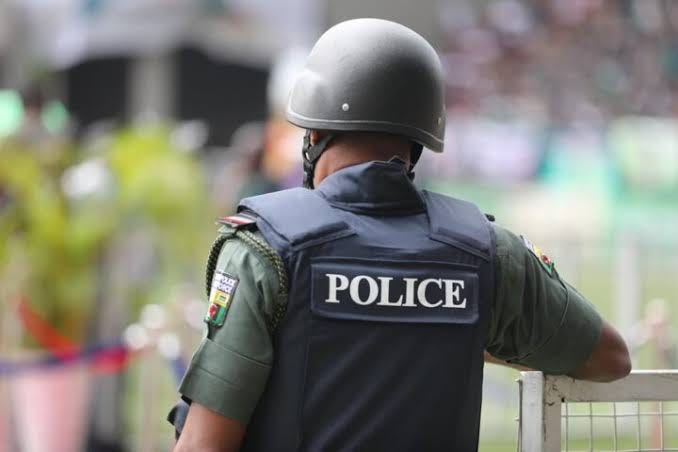
The debate over state police in Nigeria has moved faster than most observers expected. As of July 2026, both chambers of the National Assembly have passed the Constitution of the Federal Republic of Nigeria (Alteration) (State Police) Bill, 2026, the Senate voted 84 in favour out of 109, and the House of Representatives passed it 289 to 4. The bill now awaits ratification by two-thirds of Nigeria’s 36 state Houses of Assembly before it returns to President Bola Tinubu for assent. For the first time since the Local Authority Police was scrapped after the January 1966 coup, Nigeria stands genuinely close to a dual policing system: a Federal Police Service alongside 36 State Police Services.
That milestone has forced a question I have been turning over for months: What do Nigerians actually want. reform, or merely a change of faces?
Why this reform matters, and why it took so long
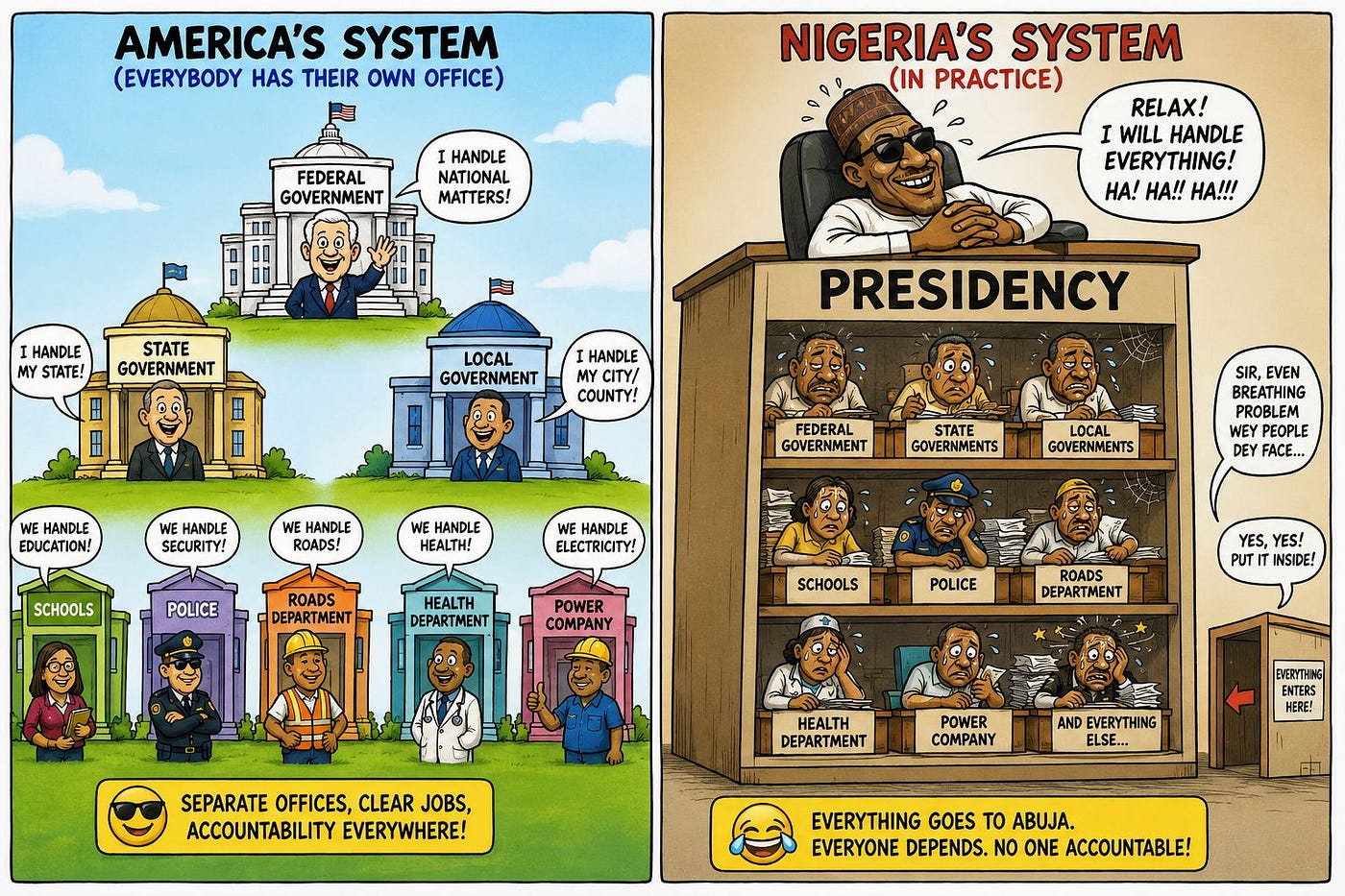
Nigeria as a federation of 36 states and a federal capital territory, home to over 200 million people and hundreds of ethnic and linguistic groups. Yet, uniquely among the roughly 25 federations in the world, Nigeria has operated a single, centrally controlled police force since independence. The United States, Germany, Australia, and virtually every other federal system distribute policing authority across national and sub-national tiers. Nigeria alone concentrated it entirely in Abuja, a legacy of the 1966 military takeover, when the old regional Local Authority Police forces were abolished precisely because they had been captured by regional politicians and turned into instruments of intimidation.
That history is not incidental. It is the root of the anxiety driving today’s opposition to state police.
The argument for decentralised policing has been made for decades by security experts, academics, traditional rulers, and civil society: security is local. The people who understand a community’s terrain, language, and specific threats, kidnapping, farmer-herder, cultism, and urban crime are best placed to police it. More than 400 kidnapping incidents were recorded in Nigeria this year so far, a scale that a stretched, centrally deployed federal force has struggled to contain.
From “how do we make it work” to “why it shouldn’t happen”
Even now that the bill is close to law, much of the public conversation is not about implementation, it is about whether the reform should exist at all. The dominant fear is that state governors will turn their police commissioners, who they appoint, into tools for intimidating opponents, silencing dissent, and rigging elections.
That fear is not irrational. Nigeria’s history of politically weaponised state institutions gives it real weight, and the 1966 precedent shows it has happened before.
But should a good reform be abandoned because it can be abused? By that logic, we would have to abolish the federal police over allegations of political interference at the national level, dissolve local governments because of documented corruption, and reject the judiciary over cases of judicial misconduct. No institution designed and run by human beings is abuse-proof. The answer has never been to reject institutions; it has been to build stronger checks around them.
To their credit, the drafters of the 2026 bill appear to have taken this seriously. The legislation alters Sections 214, 215, and 216 of the 1999 Constitution to create State Police Service Commissions with independent authority over recruitment, promotion, and discipline, insulated from direct gubernatorial control. It explicitly bars governors and politicians from directing police to target opponents, ethnic groups, or associations. State commissioners of police, though appointed by governors, require confirmation by state assemblies. And the federal government retains defined emergency-intervention powers, alongside a new concurrent legislative role in setting national policing standards and accountability systems.
Whether these safeguards hold in practice, a separate Police Act will need to spell out much of the operational detail, is the real test ahead. That is the debate worth having: independent oversight bodies, transparent recruitment, judicial review, legislative accountability, defined operational limits, and clear, enforceable consequences for abuse. That is how functioning federations govern difficult reforms. It is not how Nigeria’s national conversations have typically gone.
A familiar pattern
We have seen this script before. When fuel subsidy was removed in 2023, economists, multilateral institutions, and policy analysts had argued for years that the subsidy regime was fiscally unsustainable and riddled with corruption. Once it happened, public debate shifted almost overnight from whether the reform was necessary to who had implemented it. The same shift followed foreign exchange unification and electricity tariff reform. Each time, a policy that had broad technical consensus became politically contested the moment it was associated with a particular administration. The intensity with which Nigerian public debate collapses into “who benefits politically” rather than “does this work” is a distinct and corrosive pattern.
Instead of evaluating policies on their merits and long-term impact, the first question too often asked is: who is implementing it? If the answer aligns with a person’s political preference, the policy is defended. If it doesn’t, the same policy becomes unacceptable. That turns governance into a permanent political contest rather than a shared national project.
Consistency is the missing ingredient
No administration is beyond scrutiny, and no policy is beyond criticism. But criticism should be evidence-based and solution-oriented, not simply a function of political loyalty or opposition.
If we supported state police in principle, we should not oppose it now because of who is delivering it. If we spent years demanding structural reform, we should not reject every reform that arrives under a government we did not vote for.
Our loyalty should be to the country’s long-term development, not to parties or personalities.
The real question
As the state police bill moves toward the state assemblies, the question is no longer hypothetical. Almost any institution can be abused, the question is whether Nigeria is willing to build one strong enough to minimise that risk while capturing the real security benefits of local policing. That requires sustained attention to the Police Act, to funding structures (which the current bill leaves largely to individual states), and to independent oversight, not a one-time debate that fades once the amendment is signed.
History will not remember who scored the most political points in this debate. It will remember whether Nigeria built institutions strong enough to outlive the politicians who created them.
Perhaps it is time to ask ourselves one honest question: do we want reforms that move Nigeria forward, or do we only support reforms when they are championed by those we already agree with? The answer may explain why Nigerian politics remains so polarised, and why genuine national progress so often becomes a casualty of partisan interest, even when, as with state police in 2026, the reform itself has finally arrived.
메타데이터
- post_id
- 54c8676ea952
- slug
- state-police-and-the-politics-of-reform-do-nigerians-really-want-change-or-just-a-change-of-faces-54c8676ea952
- url
- https://medium.com/@IamJomarJ/state-police-and-the-politics-of-reform-do-nigerians-really-want-change-or-just-a-change-of-faces-54c8676ea952
- canonical_url
- https://medium.com/@IamJomarJ/state-police-and-the-politics-of-reform-do-nigerians-really-want-change-or-just-a-change-of-faces-54c8676ea952
- author_url
- https://medium.com/@IamJomarJ
- status
- ok
- fetched_at
- 2026-07-13 11:24:01