Linguistic Variables, Hedges, and Operations in Fuzzy Logic
Introduction
Linguistic Variables, Hedges, and Operations in Fuzzy Logic
Introduction
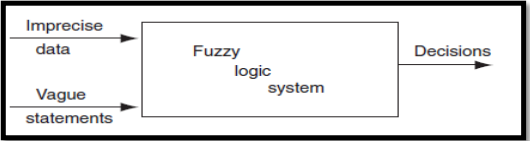
Classical logic ,formerly known as [‘Crisp Logic’] represents information using binary values: either true or false. However, real-world reasoning is rarely absolute. Human language often includes uncertainty and approximation through expressions such as:
- “The weather is hot”
- “The car is fast”
- “John is tall”
These descriptions cannot always be represented accurately using crisp numerical boundaries. To solve this limitation, Fuzzy Logic introduces the concept of partial truth, where values can belong to a set with different degrees of membership ranging from 0 to 1.
This article explains:
-
- Linguistic Variables
-
- Fuzzy Hedges
-
- Operations on Fuzzy Sets
-
- Properties of Fuzzy Set Operations
-
- Mathematical Examples
1. Linguistic Variables
A linguistic variable is a variable whose values are expressed using Human Language words or linguistic terms instead of precise numerical values.
Unlike classical variables, fuzzy variables describe qualitative concepts that humans naturally use in communication.
Definition
A linguistic variable consists of:
- A variable name
- Domain Discourse
- Linguistic values represented as fuzzy sets
Example
Consider the linguistic variable:
Speed
Its universe of discourse may range from:
0 km/h → 220 km/h
Possible linguistic values include for example :
- [‘Very Slow’
- ‘Slow’
- ‘Medium’
- ‘Fast’
- ‘Very Fast’]
Each linguistic value is represented by a fuzzy membership function.
Example of a Linguistic Variable
Statement:
“John is tall”
Here:
- “John” is the object
- “Tall” is the linguistic value
- “Tall” is represented by a fuzzy set
If:
μTall(John) = 0.86
then John belongs to the fuzzy set “Tall Men” with a membership degree of 0.86.

2. Fuzzy Hedges
Fuzzy hedges are linguistic modifiers that alter the meaning and shape of fuzzy sets.
Common Hedges
- Very
- Extremely
- Slightly
- More or Less
- Quite
- Indeed
These hedges are implemented mathematically as operations on membership functions.
3. Types of Fuzzy Hedges
3.1 Very — Concentration Operation
The hedge “Very” performs concentration, which reduces membership values and creates a narrower fuzzy set.
Example
If:
μTall(Alex) = 0.86
Then:
μVeryTall(Alex) = (0.86)^² = 0.7396
This means that the condition “very tall” is stricter than “tall”.
3.2 Extremely — Strong Concentration
The hedge “Extremely” applies a stronger concentration effect.
Example
(0.86)^³ = 0.6361
Thus, Alex belongs to the set “Extremely Tall Men” with degree 0.6361.
3.3 Very Very — Extended Concentration
Applying concentration repeatedly strengthens the restriction.
Mathematically:
\mu_{\text{very very }A}(x)=\mu_A(x)⁴
Example
(0.86)⁴ = 0.5470
3.4 More or Less — Dilation Operation
The hedge “More or Less” performs dilation, which broadens the fuzzy set and increases membership values.
Example
√0.86 = 0.9274
This operation makes the condition less strict.
3.5 Indeed — Intensification
The hedge “Indeed” intensifies certainty:
- Memberships greater than 0.5 increase
- Memberships less than 0.5 decrease
Examples
- 0.86 → 0.9608
- 0.24 → 0.1152
This operation emphasizes strong memberships and weakens uncertain ones.

4. Operations on Fuzzy Sets
Fuzzy set operations extend classical set theory by allowing partial membership.
The main operations are:
- Complement
- Containment
- Intersection
- Union
5. Complement of a Fuzzy Set
The complement represents the degree to which an element does not belong to a fuzzy set.
Mathematically:
\mu_{\bar{A}}(x)=1-\mu_A(x)
Example
Given the fuzzy set:
Tall Men = (0/180, 0.25/182.5, 0.5/185, 0.75/187.5, 1/190)
Then:
NOT Tall Men = (1/180, 0.75/182.5, 0.5/185, 0.25/187.5, 0/190)
6. Containment (Subset Relation)
A fuzzy set A is contained in fuzzy set B if every membership value in A is less than or equal to the corresponding membership value in B.
Mathematically:
A\subseteq B \Rightarrow \mu_A(x)\leq \mu_B(x)
Example
“Very Tall Men” is a subset of “Tall Men”.
7. Intersection of Fuzzy Sets
The intersection operation represents the degree to which an element belongs to both sets simultaneously.
Mathematically:
\mu_{A\cap B}(x)=\min[\mu_A(x),\mu_B(x)]
Example
If:
- μTall(x) = 0.5
- μAverage(x) = 0.25
Then:
μTall ∩ Average(x) = 0.25
8. Union of Fuzzy Sets
The union operation represents the degree to which an element belongs to either set.
Mathematically:
\mu_{A\cup B}(x)=\max[\mu_A(x),\mu_B(x)]
Example
If:
- μTall(x) = 0.5
- μAverage(x) = 0.25
Then:
μTall ∪ Average(x) = 0.5
9. Properties of Fuzzy Set Operations
Commutativity
A\cup B=B\cup A
A\cap B=B\cap A
Associativity
A\cup(B\cup C)=(A\cup B)\cup C
A\cap(B\cap C)=(A\cap B)\cap C
Idempotency
A\cup A=A
A\cap A=A
Conclusion
Linguistic variables and fuzzy hedges form the foundation of fuzzy logic systems. They allow machines to represent and process uncertain human language mathematically.
Through fuzzy set operations such as:
- Complement
- Intersection
- Union
- Containment
Its ability to handle uncertainty makes it one of the most practical mathematical tools in intelligent computing.
메타데이터
- post_id
- 54f89608e9e2
- slug
- linguistic-variables-hedges-and-operations-in-fuzzy-logic-54f89608e9e2
- url
- https://medium.com/@a.gedo03200/linguistic-variables-hedges-and-operations-in-fuzzy-logic-54f89608e9e2
- canonical_url
- https://medium.com/@a.gedo03200/linguistic-variables-hedges-and-operations-in-fuzzy-logic-54f89608e9e2
- author_url
- https://medium.com/@a.gedo03200
- status
- ok
- fetched_at
- 2026-06-09 15:37:30