Witnessing the Fade
I glanced at my watch. Twenty minutes early. Would they let me check in? I walked toward the registration desk anyway. The waiting room was…
Witnessing the Fade
I glanced at my watch. Twenty minutes early. Would they let me check in? I walked toward the registration desk anyway. The waiting room was noticeably emptier than usual, quiet enough that the sudden burst of a familiar language felt startlingly loud.
“Arey aap? Kya hua, yahaan kaise?”
My ears pricked up, like a guard dog sensing unexpected familiarity.
“Bas thoda cricket khelte hua, yaahan side mein dard mehsoos hua.”
I have a theory about this. All of us, at the end of the day, are just seeking familiarity in the unknown. We look for faces that recognize us, voices that stir us, language that grounds us. It’s the quintessential grain of salt, you only understand its absolute necessity once it’s absent. The last few years, living far from familial settings in India, have forced me to hold, measure, and care for each of these grains for what they are worth.
Ironically, the very familiarity I find such solace in is becoming increasingly difficult to store in the corners of my own brain.
The receptionist stopped typing, snapping me back to the clinical present. She handed me a form to fill out. I read it on autopilot, having done this exact exercise three times in the past year. No, I do not have metal in my bones. No, I do not wear a pacemaker. No. No. No. I flipped the clipboard, signed, and handed it back. Arriving early had worked; I was ready for my MRI.
It started just after COVID. Cloudy memory. Disjointed thoughts. Conversations that felt like trying to catch water with my bare hands. At first, I shoved the symptoms aside. It’s just COVID brain fog, I told myself. I’ll bounce back.
I didn’t. Instead, the symptoms worsened. Among the many unsaid things we take for granted, human hubris regarding good health is perhaps the most dangerous. We believe that mental and physical wellbeing is inevitable, and that the body possesses an infinite capacity to recover if you just apply “mind over matter.” I fell for that trap, and so did my neural health.
By the time I was at Harvard, the patterns were impossible to ignore. Pages of simple text took agonizingly long to comprehend. My thoughts for assignments arrived scrambled and refused to be organized. Office hours became an exercise in linguistic gymnastics just to hold a conversation. Multitasking was entirely off the table. Yet, I continued to ignore it.
The human brain has an admirable, terrifying ability to trick itself. It enters a quintessential state of denial, rationalizing away the warning lights. Maybe it’s the new country, my brain whispered to me. The academic rigor. Financial stress. Lack of community. You’ll be fine soon, trust me. And I blindly trusted it.
The real jolt, the moment the illusion became elusive, arrived during my last semester. It was midnight at one of the many farewell house parties. Laughter bounced off the walls, keeping the night young and sleep at bay. We were playing Mafia. Bored by the prospect of being a mundane villager, I volunteered to be the moderator. I chose to play God.
Perhaps it was the real God quietly slipping into my ear, using my fictional role to jerk me back to reality.
Within minutes of the game starting, I blanked. As God, you are tasked with assigning players their roles and navigating the logic of each round. Less than two minutes after handing out identities, I completely forgot who was who. When the verdict was announced after Round I, I confidently declared, “Mafia is dead,” entirely mixing up the players and the rules.
A confused silence swept the room, quickly followed by a bout of hysterical laughter. My mistake was funny because it made so little sense.
But beneath the cacophony of friendly jeers, a much louder, heavier question dawned on me. This doesn’t feel right. This doesn’t feel like me. What is happening?
“Ready for you. Pr-aaa-gone”
A man in his fifties called my name, cutting through the memory, and escorted me toward the scanning room. When I looked at his face, I couldn’t help but smile. He was the exact same technician who had guided me through my first MRI ten months prior. For someone diagnosed with a rare neural condition that actively degrades cognitive function — forgetfulness, short-term memory loss, slowed thinking — I was pleasantly surprised by how vividly I remembered him.
“I remember you from my first MRI last year,” I told him, practically beaming.
He smiled and shook my hand. “That is lovely. Well, since your memory is so good, you’ll remember all the safety protocols I told you back then.” He said it with a warm, teasing glint in his eye.
“Umm, actually, no. I suffer from hydro — ”
He laughed gently and cut me off. “I know. I’m just pulling your leg. Don’t worry, I got you.”
And we entered the room.
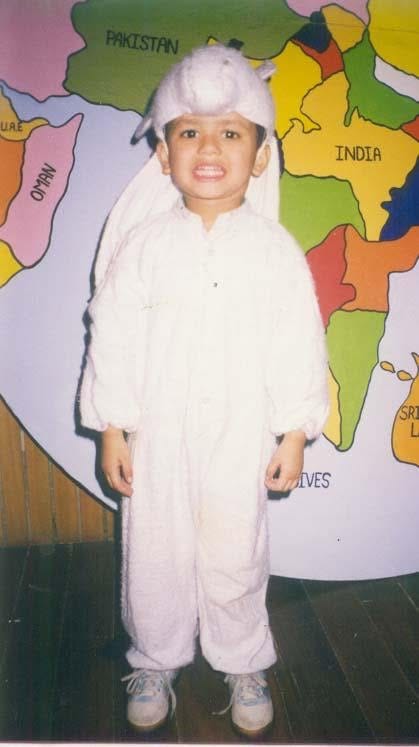
So much of life happens in the gap between what is planned and what is done. I always had big plans for myself. I am told that while still in nappies, I confidently claimed I would be a pilot. That fizzled out. Cricket was the next logical step, abandoned only when I realized I deeply disliked facing nasty fast bowlers. By fifth grade, I was aiming for the stars as an astronaut, until someone informed me that I needed to be brilliant at physics. I hated physics. Cross that one out, too. Then came the defense forces (my father didn’t buy it), followed by the familiar, respectable safety nets of Engineering and the Civil Services. I managed to disappoint everyone but myself on those fronts, too.
But what I never foresaw was that one day I’d be negotiating my professional aspirations not out of a lack of skill, interest, or discipline, but due to an inherent, biological inability to do certain things. A disability in its purest form.
In 2025, after numerous consultations, I was finally diagnosed with Normal Pressure Hydrocephalus (NPH) and multiple brain cysts. In a neurotypical brain, cerebrospinal fluid (CSF) flows and filters naturally. In mine, the flow is constrained, leading to an excessive buildup of fluid that slowly compresses the brain’s ventricles. The treatment is severely limited. It is a condition to be managed, not a puzzle to be solved.
The diagnosis brought a strange cocktail of relief and profound uncertainty. Relief, because it gave a name, an identity to the ghost haunting my mind. Uncertainty, because I am now constantly unlearning and relearning what it means to be me.
Forgetting names, places, and themes is embarrassing. Misplacing faces I have known is debilitating. Slowing down in my 30s feels entirely unfair.
The hardest part is that my awareness is fully intact. I am painfully conscious of my own slowing down. I can watch myself losing the thread of a conversation in real-time, blanking on words I have used all my life, staring at a known face while my brain returns a terrifying error code, missing steps for a recipe I have cooked umpteen times in the past. During all these times, I see myself, standing helplessly behind the glass as my own thoughts slip away.
And so, I am learning. To live with an unseen disability.
It is a brutal lesson in the fragility of wellbeing, but it has also forced my eyes open to the sheer volume of disabilities that surround us every day, some visible, most completely unseen.
Realigning my own expectations of what I can and cannot do and trying to make peace with the gap between the two has been an exhausting journey. For someone who has spent a lifetime being an “A” grader, being forced to reconcile with a “B” or even a “C” as a new ceiling of my capabilities is profoundly unsettling.
But maybe this forced surrender is how we finally stop tricking ourselves. Maybe this is how we learn to center health above hubris. Perhaps this is a lesson in humility I must embrace.
The other day, a friend, upon learning about my diagnosis, paused and asked me even as I licked my melting ice-cream off the side of my cone, “Do you feel well supported?”
It was such a simple question, yet I realized no one had actually asked me that since the diagnosis. Forget anyone else, I hadn’t even asked myself. The question physically moved me; I felt a heavy, sudden lump rising in my throat.
So, naturally, I laughed it off. My brain stepped in to trick me, to protect me, just one more time, exactly like it did when the fog first rolled in.
메타데이터
- post_id
- 54fbcc32b4ac
- slug
- witnessing-the-fade-54fbcc32b4ac
- url
- https://medium.com/@gunnama/witnessing-the-fade-54fbcc32b4ac
- canonical_url
- https://medium.com/@gunnama/witnessing-the-fade-54fbcc32b4ac
- author_url
- https://medium.com/@gunnama
- status
- ok
- fetched_at
- 2026-06-26 21:52:29