The City the Nawabs Built and the Gangsters Broke
Lucknow’s Seductive Dance with Power, Crime, and Modernity
The City the Nawabs Built and the Gangsters Broke
Lucknow’s Seductive Dance with Power, Crime, and Modernity
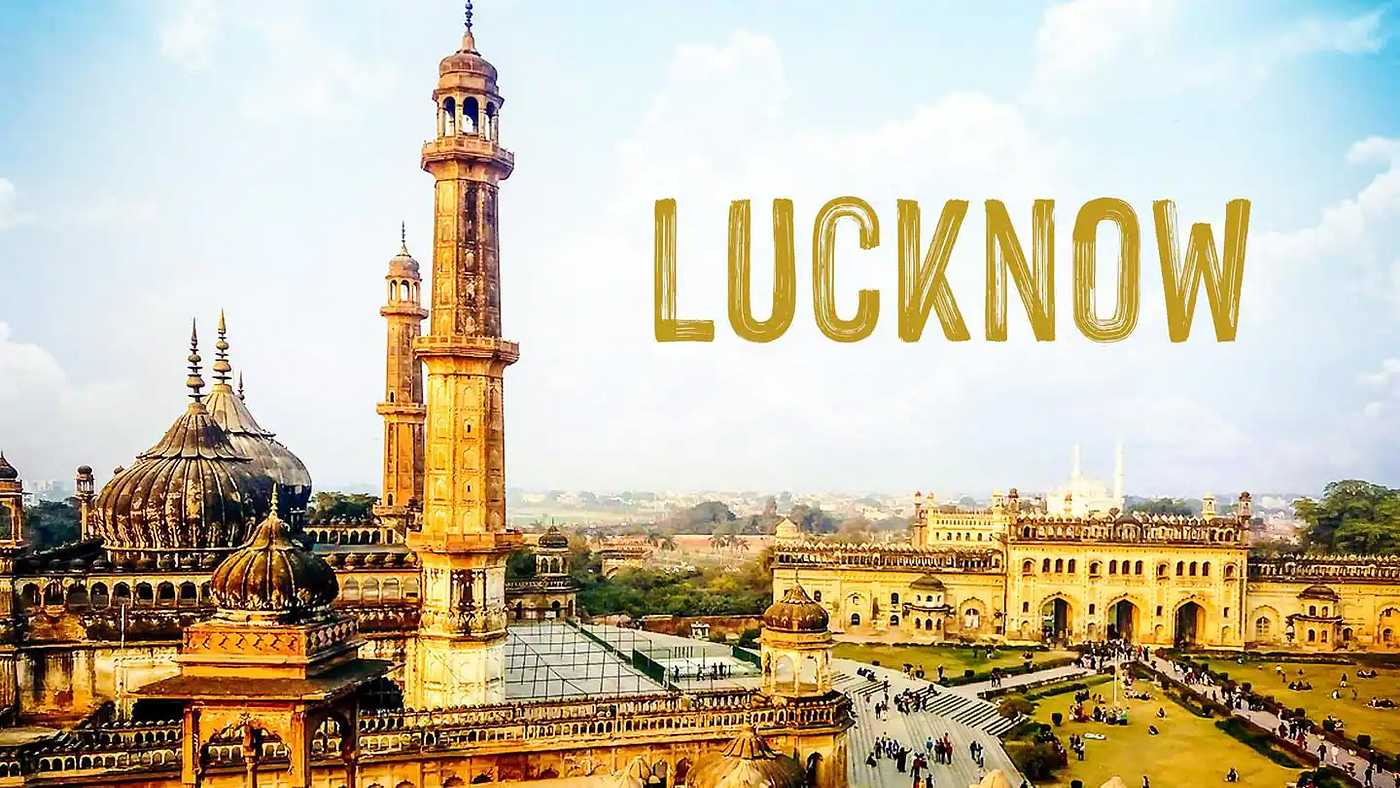
Lucknow, the capital of Uttar Pradesh (UP), offers one of the most instructive and layered case studies in the Indian subcontinent. Urban space is not neutral — it is controlled, contested, and reshaped by power. The central argument of this essay is that Lucknow’s urban identity has been perpetually in tension between its extraordinary heritage of cultural refinement and a succession of political forces — colonial, postcolonial, criminal, and developmental — that have affected and rehabilitated the city’s physical and social fabric.
This essay also talks about how various political leaders in recent times developed the city in a way which echoes with their ideologies and agendas. Far from being merely a passive recipient of these transformations, Lucknow’s streets, markets, and public spaces have functioned as the active terrain upon which questions of identity, safety, belonging, and modernity have been fought out. A 2005 film Sehar, directed by Kabeer Kaushik and starring Arshad Warsi, is a principal cultural text for understanding how the politician–mafia–police nexus of the 1990s transformed the lived urban experience of the city.
Muskuraiye, aap Lucknow mein hai
As of the 2011 Census, Lucknow has a population of 2.8 million, the second highest in UP after Kanpur. Along with Agra and Varanasi, it forms the backbone of the Uttar Pradesh Heritage Arc. Lucknow occupies an enviable position in several quality-of-life indicators. An IMRB International and LG Corporation survey ranked it India’s second happiest city, behind only Chandigarh, scoring well on food, transit, and overall citizen satisfaction. It is a UNESCO-designated City of Gastronomy, a recognition of its globally significant culinary heritage. According to a PropEquity and Magicbricks Q1 2025 report, Lucknow recorded a 48 per cent jump in real-estate sales value to ₹1,797 crore in the first quarter of 2025 — the highest growth among all tier-2 cities in India. The city is also one of 17 cities identified in a Colliers India report as an ‘emerging real estate hotspot,’ driven by IT sector growth, infrastructure investment, and a rapidly expanding professional class. Lucknow’s economy was formerly based on the tertiary sector and the majority of the workforce were employed as government servants. Today it is a centre for research and development as home to the R&D centres of the National Milk Grid of the National Dairy Development Board, the Central Institute of Medical and Aromatic Plants, the National Handloom Development Corporation and U.P. Export Corporation. Lucknow is ranked sixth in a list of the ten fastest growing job-creating cities in India according to a study conducted by Assocham Placement Pattern. The handicrafts sector accounts for 60 per cent of total exports from the state. Companies such as Hindustan Aeronautics Limited, KARAM, Berger Paints, Britannia Industries, Exide Industries, and Tata Motors have set up their plants in Lucknow. The Lucknow Modern Police Control Room (abbreviated as MCR) is India’s biggest ‘Dial 112’ service centre with 300 communication officers to receive distress calls from all over the state and 200 dispatch officers to rush for police help. It is billed as India’s most hi-tech police control room.
Persisting Socio-Economic Challenges
However, contrasting realities temper this optimism. Lucknow has historically lagged behind western UP cities such as Noida and Ghaziabad in per capita income, with the state’s highest earners concentrated in the National Capital Region (NCR) belt rather than in the state capital. Peri-urban areas of the city show notable socio-economic disparities, with most settlements falling within low-to-medium development categories. The city’s old quarters — Chowk, Aminabad, and the narrow galis around the Bara Imambara — have often been sidelined in development narratives that privilege the newer, wider precincts of Gomti Nagar and Hazratganj.
Urban Contradictions and Cinematic Representation
It is against these contradictions that Sehar (2005) becomes analytically indispensable: based on the real-life events surrounding gangster Shiv Prakash Shukla, IPS Ajay Raj Sharma, SSP Arun Kumar, and Chief Minister Kalyan Singh, the film is a forensic and gritty portrayal of how organised crime colonised Lucknow’s streets, contracts, and political corridors in the late 1990s.

Etymological Foundations and Layered Identity
The naming of the city reveals its constitutively layered identity. ‘Lucknow’ is an anglicisation of ‘Lakhnau,’ and three competing theories exist for its origin.
The most widely cited legend connects the city to Lakshmana, the younger brother of the Hindu god Ram in the Ramayana, who is said to have held an estate called Lakshmanapuri in the area; the settlement reportedly evolved through Lakhanpur, Lachhmanpur, and Lakhanavati before arriving at Lakhnau. A second theory links the name to the Hindu goddess of wealth, Lakshmi, the name mutating through Laksmanauti, Lakhsnaut, and Lakhsnau. A third, more architecturally grounded theory identifies the founder as Lakhna Ahir, an influential builder said to have constructed the fort of Qila Lakhna, giving the city its name.
The name of one of India’s most culturally baroque cities is itself uncertain and contested between mythology, architecture, and modernity. Thus, a place — especially in a culturally rich country like India — is always negotiating between multiple, simultaneous claims on its meaning and identity.
The Nawabi Era (1722–1856)
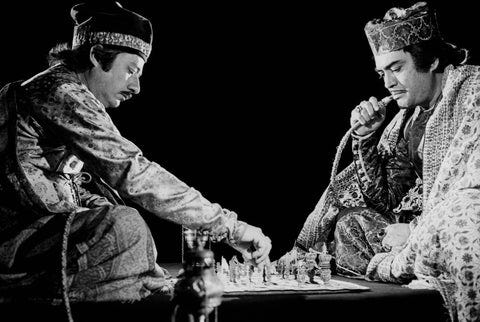
A still from Satyajit Ray’s Shatranj Ke Khiladi (1977), depicting the cultivated leisure of the Nawabi elite on the eve of British annexation of Awadh
Lucknow’s most celebrated urban epoch is the Nawabi period (roughly 1722–1856), when the Nawabs of Awadh transformed the city into one of South Asia’s most refined centres of art, architecture, music, and gastronomy. The royal patronage funded grand Indo-Persian-Mughal-European fusion architecture. The city was planned as a circular, gated, dense cluster with narrow streets for processions and defence. Gardens and riverfront ghats created leisure and public realms. The Nawabi built environment remains the most recognisable component of Lucknow’s skyline and its most powerful generator of touristic and civic identity. The Bara Imambara (1784), commissioned by Nawab Asaf-ud-Daula during a famine as an employment scheme, is an architectural marvel of vaulted halls engineered without any iron or steel. Its labyrinthine Bhulbhulaiya serves as both a practical test of spatial disorientation and a metaphor for the city’s own maze-like self-knowledge. The Rumi Darwaza (c.1784), a 60-foot gateway, continues to function as Lucknow’s most photographed symbol.
The cultural achievement of the Nawabi period was the elaboration of Ganga-Jamuni tehzeeb, a composite civilisation blending Hindu and Muslim artistic traditions, expressed in Urdu poetry, Hindustani classical music, Kathak dance, and the Chikankari embroidery still produced in the city’s old quarters. Satyajit Ray’s 1977 film Shatranj Ke Khiladi, set in Nawabi Lucknow on the eve of the annexation of Awadh by the British, captures this culture of cultivated leisure with precise sociological empathy, showing how the Nawabi elite’s absorption in chess and courtly refinement rendered them blind to the advancing colonial threat — a metaphor for the dangers of heritage as passivity. For the urban fabric, the legacy of this period is an extraordinarily rich heritage landscape whose preservation and adaptive reuse remain among the city’s most complex planning challenges.
The Colonial Period (1856–1947)

Ruins of the British Residency, Lucknow, photographed shortly after the Siege of 1857 — deliberately left unrepaired by the British as a memorial to imperial endurance.
Awadh was annexed by the East India Company in 1856, justified by allegations of maladministration (This is something the USA does even today, proving that colonialism hasn’t been eradicated, it has just worn the mask of liberal democracy). This was followed the very next year by the Indian Rebellion of 1857, also known as the First War of Independence, in which Lucknow was one of the principal theatres of conflict. The Siege and Relief of Lucknow, centred on the British Residency compound near the Gomti River, produced a distinctive colonial scar on the urban landscape. The ruined Residency was left deliberately unrepaired by the British as a memorial.
Colonial governance reorganised the city, introducing wide, grid-influenced road layouts in new administrative quarters, and centralising commerce in ways that served British merchant interests. Hazratganj became a commercial hub with colonial bungalows and markets. Its wide pavements, neoclassical-influenced shopfronts, and the ordered rhythm of its commercial establishments gave Lucknow its first genuinely planned modern retail and social street, a space quite distinct from the organic texture of the old Chowk bazaar.

La Martinière College, Lucknow — a Franco-Italian baroque building commissioned by Claude Martin in 1800, now a prestigious school and a symbol of colonial architectural syncretism in the city
This created a clear spatial divide — white colonial Lucknow (Hazratganj, cantonment) vs. old Nawabi core. Today, Hazratganj continues to carry that colonial-era character, its colonnaded buildings and broad footpaths making it one of the few Indian commercial streets that functions simultaneously as a heritage corridor and a contemporary retail destination, embodying the value and the tension of the colonial urban legacy.
The Independence Movement and Political Landmark

Delegates at the historic 1916 Indian National Congress session in Lucknow, where the Lucknow Pact was signed between the INC and the All India Muslim League
Lucknow’s contribution to Indian nationalism is both substantial and symbolically significant. The city hosted the historic Indian National Congress session of 1916, where the Lucknow Pact was signed — a landmark agreement between the Congress and the All India Muslim League that briefly united Hindu and Muslim political leadership under a common anti-colonial platform. The Congress President for that session, Ambica Charan Majumdar, in his address said that “If the Congress was buried at Surat, it is reborn in Lucknow in the garden of Wajid Ali Shah.” This was also the occasion of the first recorded meeting between Mahatma Gandhi, Jawaharlal Nehru, and Muhammad Ali Jinnah.
Lucknow’s public institutions — its parks, municipal buildings, and educational establishments — were sites of active political activities. The Kakori Conspiracy involving Ram Prasad Bismil, Ashfaq Ullah Khan, Rajendra Nath Lahiri, Roshan Singh, and others, followed by the Kakori Trial which captured the imagination of the country, also took place in Lucknow.
Post-Independence Development (1947–1991)

The old Gomti River bridge, reflecting the city’s pre-independence infrastructure
In the decades following independence, Congress governance in Uttar Pradesh shaped Lucknow’s urban development through a combination of centralised planning and institutional inertia. As the state capital, Lucknow received investment in government buildings, universities, and administrative infrastructure, yet this expansion was concentrated in a narrow civic corridor rather than distributed across the old city’s dense residential quarters.
The Lucknow Development Authority (LDA) was created and the construction of new residential colonies for government employees — Gomti Nagar, Vikas Nagar, Indira Nagar — slowly shifted the city’s centre of gravity eastward.
Growth was slower and less transformative than later regimes. This suburbanisation of public-sector housing created socially stratified zones: the walled, narrow mohallas of Aminabad and Chowk remained for the traders, artisans, and the urban poor, while state employees moved to planned layouts that offered wider roads, parks, and better sanitation. The Congress-era built environment was largely utilitarian, reflecting the Nehruvian preference for rational institution-building over aesthetic grandeur. This failure of ambition under Congress and its various chief ministers set the stage for the more dramatic, destabilising urban politics of the post-liberalisation era.

A planned residential road in Gomti Nagar, East Lucknow, developed by the Lucknow Development Authority from the 1970s onward
Post-Liberalisation and the Criminalisation of Urban Space
India’s economic liberalisation of 1991 inaugurated a new chapter in Lucknow’s urban economy, with consequences that were simultaneously creative and deeply disruptive. The removal of licensing regimes and the opening of real-estate markets generated a construction boom in the city’s expanding periphery, with residential colonies and commercial complexes multiplying along axes such as Gomti Nagar, Hazratganj, and the newly developing stretches of Ashok Marg and Faizabad Road. Land values rose sharply, making urban real estate a primary vehicle for capital accumulation. This, in turn, made the control of land-use permissions, construction contracts, and municipal approvals extraordinarily valuable, creating powerful financial incentives for the criminalisation of urban politics.
The liberalisation period thus produced a paradox familiar to students of urban political economy across the global South: the same market opening that enabled legitimate economic growth also turbocharged the politician–builder–mafia nexus. Railway contracts, public construction tenders, and the emerging mobile telecommunications sector all became arenas in which organised crime operated alongside and within legitimate business. The liberalisation-era city was, paradoxically, a city of both expanding opportunity and contracting public freedom.
By the mid-1990s, Uttar Pradesh had acquired a grim distinction as one of India’s most criminalised states (This was before the tenure of Lalu Prasad Yadav as the CM of Bihar which coincided with the Jungle Raj). Lucknow was not simply one of several urban nodes of criminal activity — it was the command and political centre of the entire nexus, because it housed the state’s legislature, its administrative machinery, and the networks of patronage through which criminal gangs secured protection and contracts.
Kabeer Kaushik’s Sehar (2005) provides the most sustained cinematic analysis of how this transformation affected Lucknow as a lived urban space. Based on the real-life story of gangster Shiv Prakash Shukla — fictionalised as Gajraj Singh (played by Sushant Singh) — and SSP Arun Kumar — fictionalised as Ajay Kumar (played by Arshad Warsi) — the film is, in the terminology of urban studies, a spatial biography of fear.
The film meticulously traces the architecture of the nexus: railway contracts controlled by criminal intermediaries; ISI involvement in fund flows; a politician–mafia–police–builder quadrilateral in which each component provides cover and benefit to the others; and the criminalisation of university students who serve as foot soldiers and electoral muscle for criminal–political bosses.
Governance Reform and the Special Task Force

Promotional poster of Sehar (2005), directed by Kabeer Kaushik — the film’s depiction of the UP Special Task Force and its confrontation with organised crime made it a seminal document of Lucknow’s goonda raj era
Shiv Prakash Shukla was one of the most dreaded gangsters and hitmen of his time. In March 1997, Shukla shot and killed Virendra Shahi, a prominent mafia don and former MLA regarded as one of the most powerful figures in Purvanchal’s crime–politics nexus at the time. The killing took place in Indira Nagar in a school function in front of 300 children and parents. Shukla used an AK-47 assault rifle, firing over 120 rounds at Shahi. This use of automatic military-grade weapons in gang rivalry was largely unheard of in UP, and much of India, at the time.
In 1998, Shukla was tasked with eliminating Brij Behari Prasad, a rival minister in Lalu Yadav’s government. Shukla admitted himself as a patient to Patna’s Indira Gandhi Institute of Medical Sciences, blending in with hospital staff and patients. On 10 July 1998, he murdered Prasad.
Multiple reports emerged that Shukla had signed a contract worth crores to kill the then Chief Minister of UP, Kalyan Singh. Soon after, ADG Ajay Raj Sharma was summoned by the CM. ADG Sharma handpicked the best officers, including CO Rajesh Pandey and SSP Arun Kumar, and tasked them with tracking and eliminating Shukla.
Thus, the Special Task Force (STF) was established on 4 May 1998 as a temporary elite unit, later made permanent. It differed fundamentally from the regular UP Police. While the state police operated under district-level command and handled routine law-and-order duties, the STF was a specialised, hand-picked force that reported directly to senior police headquarters and the Chief Minister’s office. It enjoyed greater operational autonomy, superior intelligence capabilities, and a mandate focused exclusively on organised crime and inter-district mafia networks rather than day-to-day policing. Its primary role was to dismantle the politician–criminal nexus that had turned Lucknow, the state capital, into the operational base of extortion rackets and eliminate the goonda raj.
Shukla was eventually encountered in 1998, outside an apartment complex in Ghaziabad.
The Mayawati Era: Redefining Public Space (2007–2012)

Mayawati with P. V. Narsimha Rao — Mayawati became India’s first female Dalit Chief Minister in 1995 and went on to serve four terms, fundamentally reshaping Lucknow’s monumental landscape
Millions of Dalits across India view Kumari Mayawati Das as their icon. She is a four-time Chief Minister of UP and the first female Dalit Chief Minister in India. Mayawati’s rise from humble beginnings to political power has been called a miracle of democracy by P. V. Narasimha Rao, former Prime Minister of India.
Mayawati’s fourth and most sustained term as Chief Minister (2007–2012) represented the most dramatic and contested transformation of Lucknow’s physical landscape in the post-independence period. The political stability after the turbulent years of goonda raj was itself a significant contribution to the city’s urban experience: with the STF now an established institution and a degree of administrative authority restored, Lucknow’s streets inthe late 2000s were demonstrably safer for ordinary residents than they had been in the late 1990s.
However, Mayawati’s most visible urban legacy was the construction of a series of monumental parks and memorials in Lucknow dedicated to Dalit icons and identity. On 14 April 2008, Mayawati inaugurated the Dr. Bhimrao Ambedkar Samajik Parivartan Sthal (commonly called Ambedkar Memorial Park) in Gomti Nagar — a 107-acre complex featuring a monumental stupa, statues of Ambedkar, Jyotirao Phule, Kanshi Ram, Birsa Munda, and herself along with other Dalit leaders. There is also an imposing array of 64 stone elephants (BSP’s election symbol is an elephant, which is also the symbol historically used by Dr. Ambedkar’s Scheduled Castes Federation).
The academic literature on this intervention is substantial and divided. As Amita Sinha and Kant (2015) have argued, these memorials functioned as landscapes of empowerment for a Dalit community historically excluded from India’s commemorative public spaces, providing tangible proof of achieved political power and psychological affirmation for a community whose symbols had been routinely vandalised.
Yet the urban costs of this strategy were equally clear. The Ambedkar Memorial Park at Gomti Nagar was estimated to have cost over ₹2,000 crore in public funds — a figure that attracted sustained legal challenge, culminating in a Supreme Court ruling in 2019 that expenditures on Mayawati’s own statues within the project constituted misuse of public money for self-glorification.
Critics pointed out that the park covered an enormous land area in a rapidly developing part of the city, consumed resources that could have addressed Lucknow’s chronic deficits in pedestrian infrastructure, traffic management, and old-city sanitation, and generated a heat-island effect due to insufficient tree cover.
The identity-politics-as-urban-planning experiment had stretched the city’s resources without resolving its everyday needs for connectivity, housing, and equitable services. Thus, BSP lost the 2012 state elections to the Samajwadi Party and UP saw its youngest Chief Minister to date.
The Akhilesh Yadav Era: Infrastructure and Modernity (2012–2017)

Akhilesh Yadav with his father and Samajwadi Party supremo Mulayam Singh Yadav at a press conference — Akhilesh became UP’s youngest ever Chief Minister at 38, and used Lucknow as the primary showcase for his developmental governance agenda
Akhilesh Yadav’s assumption of power in March 2012 at 38 years old, signalled a decisive pivot toward developmental governance, and Lucknow was its primary showcase. He is the son of the late Mulayam Singh Yadav, a well-known statesman and three-time Chief Minister of UP. Three flagship infrastructure projects defined the Yadav years in the city: the Lucknow Metro Rail, the IT City, and the Agra–Lucknow Expressway.
The Lucknow Metro stands as one of the most significant achievements in the city’s recent urban history. Cabinet clearance was given in June 2013, with the Lucknow Metro Rail Corporation incorporated in November 2013. Construction of Phase 1A’s 8.5-kilometre stretch from Transport Nagar to Charbagh began in September 2014, and the trial run was flagged off by Akhilesh Yadav in December 2016 — a completion in just 26 months, described by officials as a record for any metro rail project in India. Principal Metro Advisor E. Sreedharan described the Lucknow and Kochi metros as ‘amongst the fastest, both projected to be completed in three years’ and noted that the Lucknow project was also the most economical per kilometre, owing to lower land costs. The full Phase 1 Red Line, connecting Chaudhary Charan Singh Airport to Munshi Pulia, commenced operations in March 2019.
The IT City, developed through an HCL Technologies arm (Vamasundari Investments) on 100 acres along the Lucknow–Sultanpur Highway as part of the larger 846-acre CG City project, was conceived explicitly on the model of Hyderabad’s HITEC City and Bengaluru’s Electronic City. The intent was to attract companies such as TCS, Wipro, and Tech Mahindra, several of which have since established operations in the city. In 2025, Uttar Pradesh recorded a 22 per cent year-on-year growth in technology-based employment.
The Agra–Lucknow Expressway, inaugurated in 2016, was India’s most modern expressway at the time. It improved the city’s hinterland connectivity, opening Lucknow’s economy to industrial and logistics investment from the wider corridor.
Janeshwar Mishra Park in Gomti Nagar, inaugurated in 2014, is said to be Asia’s biggest urban park. The Green Corridor initiatives and the Gomti Riverfront project added aesthetic and ecological dimensions to the urban experience, creating cycling and walking paths along the river. The 100-kilometre cycle track network, inspired by Dutch cycling infrastructure, was inaugurated by Akhilesh Yadav (the election symbol of Samajwadi Party is a bicycle).
A research paper published in ResearchGate (2023) documented persistent challenges with safety, surface quality, and encroachment, noting that without corresponding shifts in road culture and pedestrian infrastructure, the tracks’ effectiveness remained limited.
Owing to family feuds and an impressive campaign by BJP, Akhilesh Yadav and Rahul Gandhi’s UP ke do ladke coalition failed and BJP won with an overwhelming majority. On 20 March 2017, in an unexpected move, BJP declared Ajay Mohan Singh Bisht as the Chief Minister.
The Yogi Adityanath Era: Accelerated Growth (2017–Present)

Amit Shah, Yogi Adityanath, and Prime Minister Narendra Modi at a BJP rally in Uttar Pradesh — the BJP’s 2017 landslide victory brought Yogi Adityanath to power, initiating the most aggressive law-enforcement and infrastructure drive in Lucknow’s post-independence history
Yogi Adityanath’s government, which assumed power in March 2017 and was re-elected in 2022, has pursued a model of urban transformation in Lucknow built on three pillars: aggressive law enforcement against organised crime and land mafias, large-scale infrastructure expansion, and a technology-led economic vision.
Under the Pradhan Mantri Awas Yojana (PMAY-Urban), approximately 2.135 million houses have been approved in Uttar Pradesh since 2014. On law and order, the Adityanath government’s revival and empowerment of the STF has materially reclaimed urban space from criminal networks. In a February 2026 address at the Uttar Pradesh Pharma Conclave, CM Adityanath stated that his government had freed nearly 65,000 acres of land from illegal occupation. Adityanath personally oversaw the distribution of 72 flats built on land formerly occupied by slain gangster Mukhtar Ansari in the Dalibagh area of Hazratganj — prime urban real estate reclaimed and repurposed for economically weaker sections (EWS) under the Sardar Vallabhbhai Patel Residential Scheme. These flats were priced at ₹10.70 lakh each, a fraction of the approximately ₹1 crore market rate for comparable Hazratganj properties. However, bulldozer actions against illegal constructions (often linked to land mafia reclamation) are criticised for affecting small vendors, street economies, and marginalised groups.
On infrastructure, the Adityanath years have continued and extended the expressway-led connectivity model. The Purvanchal Expressway (opened 2022) and the Bundelkhand Expressway (2022) position Lucknow at the hub of UP’s motorway network — a transformation in regional accessibility with significant implications for logistics, manufacturing, and tourism investment in the city. Metro expansion, with projects under way in six UP cities, continues to build on the Lucknow model.
However, critics argue that while Gomti Nagar, IT City (Chak Ganjaria), and peripheral corridors have seen heavy investment, the dense old-city core remains congested, with decaying heritage structures and inadequate basic services.
The government’s flagship technology initiative — the IndiaAI Mission’s plan to develop Lucknow as India’s first Artificial Intelligence city — involves an investment of approximately ₹1,500 crore in digital infrastructure, including data centres and a high-speed fibre-optic network.
Conclusion: Can Lucknow Become Something Bigger Than Itself Like Hyderabad or Bengaluru?

The question of whether Lucknow can transcend its historical identity and emerge as a metropolitan heavyweight on the scale of Hyderabad or Bengaluru is not merely about GDP rankings or skyline heights — it is fundamentally about whether the city can reconfigure its urban fabric, public spaces, and lived experience in ways that sustain both economic momentum and cultural continuity. Hyderabad’s rise was propelled by a clean-slate IT vision, neutral geography, and early global capital inflows into HITEC City. Bengaluru leveraged decades of public-sector research institutions, a temperate climate, and an established ecosystem of technical talent.
Lucknow, by contrast, begins its contemporary transformation from a far more contested terrain: a city whose streets and institutions were, only two decades ago, paralysed by the politician–mafia nexus. Sehar’s portrayal of extortion in markets, fear in universities, and compromised governance in the state capital remains a powerful reminder of how deeply criminal–political networks once reshaped everyday urbanity.
Yet the trajectory since 2007 reveals a remarkable, if uneven, process of reclamation. Mayawati’s monumental public spaces in Gomti Nagar symbolically wrested the city from the shadows of fear, Akhilesh’s metro and IT City initiatives injected new corridors of mobility and aspiration, and Yogi’s government has accelerated infrastructure at an unprecedented pace. These interventions have begun to heal the spatial fractures between the dense Nawabi old city and the expanding eastern periphery. The institutionalised use of the Special Task Force across multiple regimes has demonstrated that governance reform is not only possible but can create the basic security required for large-scale urban projects.
Nevertheless, the Gomti River remains visibly polluted, the Green Corridor has faced criticism for poor execution and new traffic bottlenecks, and rapid construction has intensified air-quality concerns. These issues highlight the classic urban-studies tension between speed of transformation and equity of outcomes: whether the benefits of reclaimed public space and improved connectivity are reaching all citizens equally or deepening the old-city/new-city divide. Lucknow’s future will not be decided by infrastructure alone, but by whether its governance can resist reproducing the very power structures it claims to have dismantled.
Ultimately, Lucknow is unlikely to replicate Hyderabad’s exact model of tech-driven megacity growth. Its strength lies elsewhere — in its layered Ganga-Jamuni tehzeeb, its ability to hold cultural memory even as concrete rises, and its proven capacity to reclaim urban spaces from criminal control. If the current momentum of infrastructure, safety, and economic diversification continues alongside genuine attention to environmental restoration, heritage-sensitive redevelopment, and inclusive planning, Lucknow has the potential to carve out a distinctive identity — not as a copy of southern tech hubs, but as a culturally rooted, administratively secure, and increasingly connected North Indian metropolis. The real test will not be whether Lucknow becomes the next Bengaluru, but whether it becomes a better, more livable version of itself.
As French President Emmanuel Macron said at the India-France Innovation Forum in Mumbai,
“The question is no longer whether India innovates. The question is who will innovate with India?”
Similarly, the question is no longer whether Lucknow will grow or not. The question is “Are the people of Lucknow, and Uttar Pradesh as a whole, ready to utilise the growth opportunity?”

Man cannot discover new oceans unless he has the courage to lose sight of the shore
메타데이터
- post_id
- 54ff73f1a5d8
- slug
- the-city-the-nawabs-built-and-the-gangsters-broke-54ff73f1a5d8
- url
- https://medium.com/@rks746/the-city-the-nawabs-built-and-the-gangsters-broke-54ff73f1a5d8
- canonical_url
- https://medium.com/@rks746/the-city-the-nawabs-built-and-the-gangsters-broke-54ff73f1a5d8
- author_url
- https://medium.com/@rks746
- status
- ok
- fetched_at
- 2026-06-15 20:49:13