American Colossus
ITT, the CIA, and Latin America
American Colossus
ITT, the CIA, and Latin America

Source: ITT, Inc., Public domain, via Wikimedia Commons
Origins
International Telephone and Telegraph was incorporated in 1920 as a New York holding company by a pair of brothers, Sosthenes and Hernan Behn. (Colonel) Sosthenes, the younger brother, had previously worked on Wall Street and served with distinction in the US Army during WW1. The brothers grew up in the Danish Virgin Islands — prior to their acquisition by the US in 1917- and were familiar with the Caribbean. Using family money, they had acquired telephone operations in Puerto Rico and Cuba in the wake of the 1898 Spanish American War. The brothers envisioned building a globally connected cable and telephone network, leveraging Sosthenes’ Wall Street connections for funding. The timing was excellent, coinciding with a drive by the State Department and Wall Street interests to replace British commercial interests, especially communications companies, in Latin America after WW1.
During the 19th century, Britain had gradually and strategically displaced Spain as the major commercial power in Latin American and had major investments across the region in export-related industries including mining, meat packing, petroleum and others, as well as in communications, utilities, and transportation. In fact, the British had amassed a vast world-wide commercial empire and their hegemony was near total. Removing British monopolistic control of the communications networks in South America was deemed a critical national security issue for the US —and an extension of the Monroe Doctrine. At the same time, Wall Street had money to invest and was looking for growth markets. Latin America was a prime opportunity.
![Western Union Undersea cables, 1900. Source: [1]](https://miro.medium.com/v2/resize:fit:798/1*07bAGBqnNuxb1t3steihRg.jpeg)
Western Union Undersea cables, 1900. Source: [1]
Growth
Using their Wall Street ties, friendly government relations, and debt, they soon added phone companies in Mexico, Uruguay, Brazil, Chile, Peru, and Argentina to their portfolio, and expanded into Europe starting with Spain in 1924. By 1929 two-thirds of the telephones and half of the cables in Latin America were operated by ITT. In addition to telephone lines, in 1925 ITT purchased AT&T’s foreign subsidiary, International Western Electric Co., which gave them a major telephone manufacturing presence in 11 countries. In the early 1930’s the company added German electronics companies SEG and Max & Genest, and factories across eastern Europe.
Sosthenes retained local managers across his portfolio, making each entity appear to effectively run independently or as a tightly integrated part of ITT as was best suited for the situation. These managers were his eyes and eyes around the world and combined with ITT’s wired network, made for a formidable information gathering capability. He followed up his regular calls with periodic visits to meet with senior government politicians and negotiate deals. A larger-than-life figure, he was energetic, charming and affable with guests, but also a master strategist, shrewd, and secretive. As events proceeded during the interwar period, he usually knew what was happening before the State Department did, and often had a hand in them.
At first Latin America saw opportunity in replacing British interests with US ones. It was a way to curry favor with Washington and attract investment. ITT was able to obtain favorable terms, expanding telecommunications holdings through the 1930s and 40s in Latin America, Europe, and Asia. During WW2, some countries began to be concerned with having control of their own phone systems but, aware of ITT’s close ties to Washington, did not want to rock the boat. They began to increase regulation and then to nationalize their phone networks. Spain and Argentina bought their networks back in the mid 1940s. Peru nationalized in 1959. Seeing the future, ITT responded by decreasing system investments which resulted in lowered service quality. This led to a lawsuit in the early 1950s against ITT in Cuba for failing to deliver adequate phone service. The young lawyer won the suit, only to see the Batista government overturn the verdict. The lawyer? Fidel Castro. After the Cuban revolution in 1959, the phone service was one of the first entities to be nationalized.
ITT grew steadily. From 1920 revenues of $3.9 million, by 1961 the company reached revenues and sales of $930 million. Diversification into non-communications industries such as insurance and hospitality started in 1963 led by new CEO Harold Geneen. Harold felt that Europe had become hostile to American business, that the Global network was becoming patchwork, and saw growth opportunity in other industries in the US. Between 1960 and 1977, ITT acquired 350 companies and become a major defense contractor. By 1971, revenues had reached $7 billion, and the only phone networks ITT owned were in Chile and Puerto Rico.
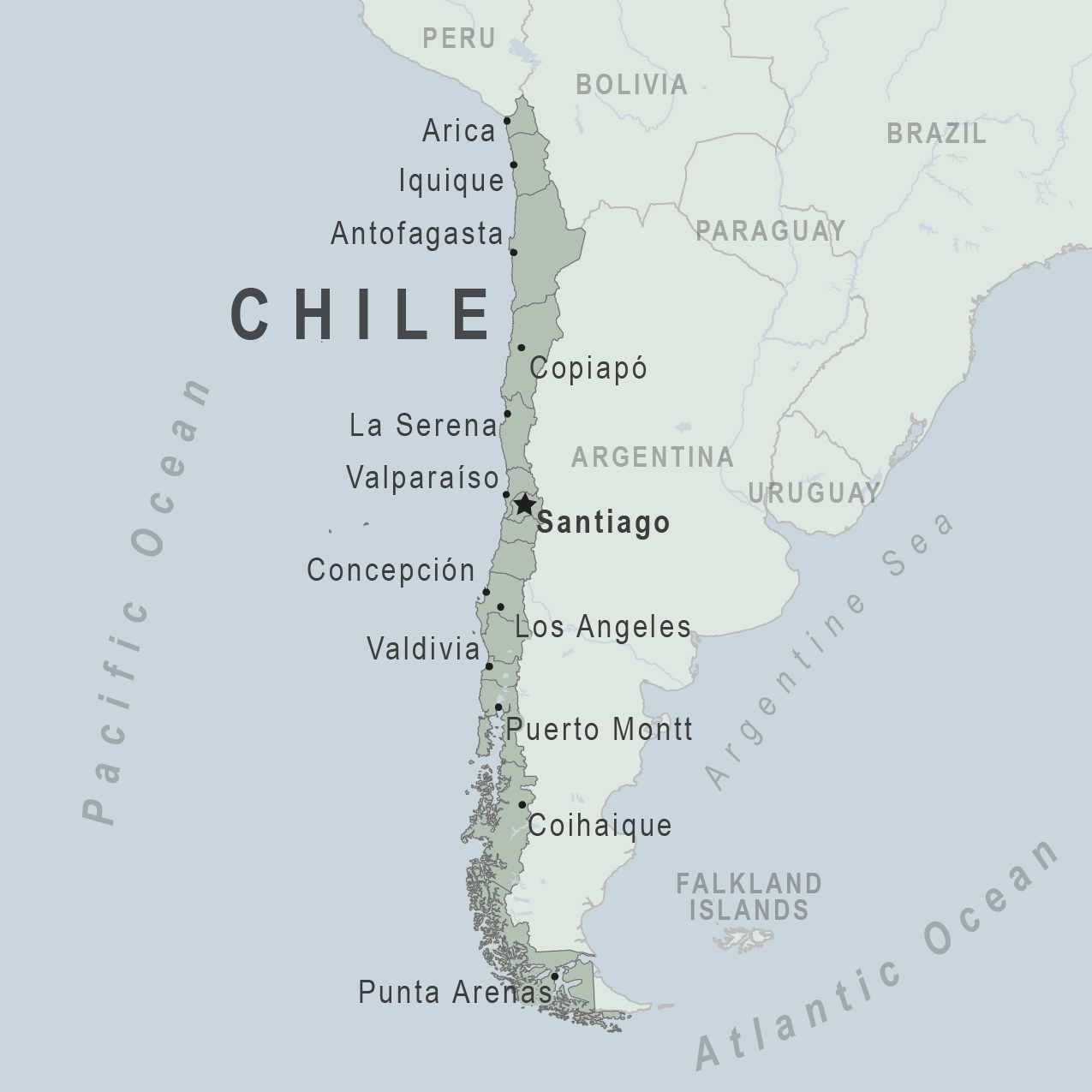
Chile. Source: US CDC.
Chile
While ITT had its share of controversy — German aircraft and electronics holdings in the 1930s and 40s and dealings with the Nazi’s that aided the German war effort, the anti-trust hearings in 1971/2, and a $400,000 bribe in 1971 to move the Republican convention to San Diego — it was in Chile that ITT got into real trouble.
Starting in the early 1960s, the US, interested in countering Castro’s brand of socialism and aware that improving living standards across Latin America would reduce fertile ground for the growth of communism, had developed a new policy toward Latin America termed “the Alliance for Progress”. The program used targeted aid and outreach to support development. They had made Chile the centerpiece of this program, providing over $1 billion in aid between 1962–1969. Chile was seen as a bastion of stability and democracy in the region, with high literacy and a relatively large middle class -some 30% of the population of 10 million people-though there was still poverty and the economy was extraction based.
ITT had purchased the national phone operator in Chile (Compania de Telefonos de Chile — CTC) in 1927. Due to Chile’s small, distributed population and difficult topography, the phone network was concentrated in a few urban centers with very limited interconnections. By 1960, it relied on a single long-distance cable, located offshore. That year Chile experienced the strongest earthquake ever recorded, known as the 1960 Valdiva earthquake or the Great Chilean earthquake. It created tsunami waves 84 feet high that devastated coastal communities. Towns in the south of Chili were cut off and unable to call for help. At the same time there was the potential for armed conflict with Argentina. Chileans realized that ownership and control of their phone network should be in Chile, and that a more robust long-distance network was needed.
In 1964 Chile founded a state-owned, long-distance communications company called Entel to improve interconnections, and Eduardo Frei, then president of Chile, planned to slowly buy out CTC (the ITT-owned local phone network). Entel began developing a robust long-distance network using a new technology suited to Chile’s rugged terrain and vast distances — microwave links. In 1967, Chile announced a new federal telecommunications policy and authorized the regulator to purchase up to 49% of CTC.
As ITT noted these trends and a declining relationship with the government, it began to reduce network investment. By 1970, CTC’s growth had fallen off and service quality was down. ITT still controlled 70% of CTC’s shares. In 1970 a new government was elected on a platform of nationalization. In 1971, the administration of Salvadore Allende announced a plan to nationalize CTC by buying out the rest of the shares. They offered $25 million for assets valued at over $120 million.
Salvador Allende
Dr. Salvadore Allende, a trained physician, began his political career in 1937 when he was elected to Congress as a moderate socialist. After Kristallnacht, he and 76 other Chilean Congressmen sent Hitler a telegram condemning the persecution of the Jews. In 1939 he was appointed Minister of Health in the Reformist Popular Front administration of Pedro Cerda. During his time as minister, Allende oversaw passage of a number of progressive social reforms, including worker safety laws, higher pensions for widows, maternity care, and school lunch programs.
As a Senator in the 1950s, he was responsible for legislation establishing the national health system — the first in the Western Hemisphere to guarantee universal health care. In 1964 he ran for president on a moderate socialist platform. He lost the election, and later declassified documents showed that from 1962–64 the CIA had contributed $2.6 million to finance the campaign of his opponent (Eduardo Frei) and spent another $3 million on anti-Allende propaganda. Frei won the election.
![Rally for Allende, 1964. Source: [2]](https://miro.medium.com/v2/resize:fit:1024/1*r4Wm_8YrxAQnIBjyNPr3Jg.jpeg)
Rally for Allende, 1964. Source: [2]
Chile’s 1970 Election
Allende ran for president in 1970 as leader of the Popular Unity coalition, which was primarily moderate socialists but also included support from the communist party. His socialist platform promised to improve the conditions of the working and middle classes by moving the country away from capitalism, viewed as exploitive, toward a socialist economy by expanding the polices of his predecessor — nationalizing industries, breaking up the old haciendas to redistribute land, and replacing the market economy with a more centralized planning system. In particular, he promised to nationalize ITT’s local phone network, put engineers in charge of important business decisions, and expand the telephone service to poor areas. He also planned to fully nationalize the largest industry in Chile at that time — mining. US corporations had investments in excess of $250 million in Chilean copper mines.
Alarm bells went off in the Nixon White House and at ITT. The Nixon administration was adamantly opposed to a second socialist administration in Latin America. At that time, US companies had some $1 Billion worth of investments in Chile. ITT was the largest single investor with total properties worth $200 million including 70% of CTC and a right-wing newspaper called El Mercurio. At the direction of the White House, the CIA began clandestinely supporting opposition interests and providing aid to military factions opposed to Allende to create opportunities for a coup.
It was a close three-way race between Allende, former president Jorge Alessandro, and Rando Mirac of the Christian Democratic party. ITT funneled $350,000 to Jorge’s campaign. Allende received the largest share of the popular vote at about 36.5%. As no candidate had received a simple majority, the final decision on the election was up to the Chilean Congress, which had always previously simply selected the winner of the popular vote. As Congress debated, ITT offered the CIA $1 million to defeat Allende, which they rejected.
Factions of the Chilean military did not approve of Allende, and in October they attempted to kidnap the Commander in Chief of the Army, General Rene Schneider. Gen. Schneider opposed a coup and therefore stood in their way. Popular outcry over his killing was so strong that the military had to temporarily drop their opposition to Allende and he was elected president by Congress.
![President Salvador Allende. Source: [3]](https://miro.medium.com/v2/resize:fit:1200/1*VtgJ-t7UmPRKNm9uI061iA.jpeg)
President Salvador Allende. Source: [3]
Allende’s Administration
When Allende won, he quickly began implementing his policy called: “the Chilean way to Socialism”. With initial popular support from Congress, he instituted a number of reforms in 1971 which reduced inflation, grew the economy, and improved the standard of living. He raised wages and increased pensions, cut taxes, distributed free milk to children, broke up the old haciendas, and began to rapidly nationalize industries.
By 1972 the last two polices, while supported by many, began to meet resistance from the middle class, the upper class, the Church and some foreign leaders. His implementation was rapid and dictatorial. An example was the nationalization of the copper mines. When it came to compensation, Allende’s administration used dubious assertions to rationalize offering the mine owners only pennies on the dollar. For CTC, he offered ITT $25 million for assets valued at $150 million. By 1973, Allende had taken state control of over 500 companies, purchasing 204 of them. All large haciendas had been seized and redistributed in plots smaller than 200 acres.
Chile has restored trade with Cuba under Frei in 1969. Allende recognized Cuba formally and cultivated a relationship with Fidel Castro, defying the OAS and further alarming Washington. He also cultivated relations with the USSR, expecting that they would provide aid and support for his socialist experiment, which was incurring massive outlays that exceeded the ability of the economy to support them. The USSR provided some aid but far less than what Allende expected and needed.
In 1972 and 1973 as outlays expanded, government receipts declined, and the cost of goods increased. Inflation began to grow rapidly, real wages declined, and agricultural output dipped. He lost his coalition in Congress. The CIA continued to clandestinely fund opposition parties and activities in Chile with the clear goal of removing Allende, spending some $8 million from 1970–1973.
![Real Wages in Chile. Orange bars denote Allende’s presidency. Source: [4]](https://miro.medium.com/v2/resize:fit:400/1*wyumQsAU3p8daKru8DEqLQ.png)
Real Wages in Chile. Orange bars denote Allende’s presidency. Source: [4]
Some economic factors were out of Allende’s control, including a major decline in the cost of copper, Chile’s primary export, and the occurrence of a natural disaster in 1971 (the Aconcagua Earthquake) that left 40,000 people homeless and caused widespread destruction. Chile had also amassed a large foreign debt under the previous (Frei) administration. However, Allende continued massive spending; hiring large numbers of people to centrally manage the economy, implementing large wage increases and social programs, and developing a large computing center to manage agricultural productivity.
Allende sought to normalize relations with the US, but state aid to Chile had been cut off after Chile nationalized the copper industry. US corporations were involved in nearly every segment of the economy, and Chile depended heavily on them for spare parts and technical assistance. The CIA asked ITT (and others) to implement economic sabotage in Chile by restricting credit and reducing technical support. ITT declined, but other companies did restrict credit, reducing total credit available tenfold by 1972. At this point the lack of spare parts had immobilized a large percentage of Chile’s transport systems; public bus fleets, taxis, private trucks, and powered equipment at the copper mines.
ITT and Allende’s administration had been negotiating compensation terms for CTC, but in 1972 news of ITT’s dealings with the CIA and interference in Chile were published in the US by columnist Jack Anderson. Upon learning of them, Allende cut off negotiations, arrested company managers and seized the phone company.
A series of strikes and shortages began to paralyze Chile as inflation exceeded 400% and public debt exceed 25% of GDP. A major trucking strike in late 1972, partially funded by $2 million from the CIA, brought the country to a standstill. By 1973, Allende moderated some of his policies, but it was too little, too late. The country began to free-fall.
The military, though historically non-political, was insular, separate from main society and woefully underpaid. Elements had participated in an insurrection in 1969 widely considered a protest against underfunding, and they had witnessed military takeovers in neighboring countries which raised living standards for military personnel. Many officers were also influenced by anti-communist ideology learned in US Army training schools. A military coup was attempted against Allende in June but failed due to lack of support. Allende rightly feared assassination or another coup, and at Castro’s advice, began to train local militias that would provide a check on the military.
The Coup
On September 11, 1973, General Pinochet, current Commander in Chief, used a recently passed congressional resolution which accused President Allende of violating the constitution as justification to carry out a coup. He was supported by most of the military. He quickly asserted control of the country, shutting down all news sources. Allende refused to relinquish power or leave the country. Supported by a few loyal forces he moved to the presidential palace. The palace was attacked using missiles provided by the U.S. and then assaulted by ground forces. Allende gave one last broadcast, refused to resign, and then was either shot or killed himself.
![The attack on Presidential palace, 11 September 1973. Source: [5]](https://miro.medium.com/v2/resize:fit:1024/1*JI19tMjIaPF6gbB4av5tDg.jpeg)
The attack on Presidential palace, 11 September 1973. Source: [5]
World Response
Reaction to the coup and Allende’s death was rapid. ITT offices around the world were bombed by activists; Zurich (16 Sep. 1973), New York (28 Sep.), Rome (28 Sep.), West Berlin (17 Nov.), Nuremberg (18 Nov.) and many more over the succeeding 12 months. The company was a major defense contractor by this point, and effectively had its own foreign service and lobbying teams staffed with ex-CIA directors, World Bank Presidents and Wall Street insiders. Accurate or not, it was viewed as complicit in, or even responsible for events in Chile and far too powerful.
In 1974, Puerto Rico purchased their phone company on generous terms, divesting ITT from the business entirely.
Aftermath
General Pinochet initially ruled via military junta; dissolving Congress, suspending all political activity and violently suppressing left wing groups. Tens of thousands were arrested, and thousands were tortured, executed, and exiled. The Nixon administration recognized the junta and supported its efforts to consolidate power. Pinochet was declared president in 1974 and ruled through a military dictatorship for the next 17 years, moving the country to the right and continuing to suppress opposition. He normalized relations with the Western world and slowly restored some capitalism, though his polices generally benefitted a wealthy few. Economic recovery took decades with as much as 50% of the population still in poverty in 1990. He nationalized the remaining 70% of CTC, paying ITT compensation of $125 million. Retransition to democracy began in 1989. Pinochet was indicted in the 2000s in England and Chile for crimes ranging from kidnapping and murder to genocide but was able to avoid conviction on medical grounds. He died in 2006 while being prosecuted for tax evasion and fraud after a network of foreign bank accounts tied to his family was found during US financial investigations subsequent to 9/11.
In 1975, the Church Committee under Senator Frank Church (D-ID) investigated US intelligence community activities over previous decades, publishing some of these, and ultimately reinstituting an active and permanent Senate oversight committee on intelligence as well as forcing a Presidential intelligence community directive making assassination of foreign leaders illegal.
ITT was not prosecuted for its role in Chile, although CEO Harold Geneen did testify before Congress. The company received extensive bad press but defended its actions at the 1973 shareholder meeting and continued to diversify and grow as a corporation.
Sources
[1] US Library of Congress http://hdl.loc.gov/loc.gmd/g9101p.ct003867
[2] US Library of Congress. http://hdl.loc.gov/loc.pnp/cph.3c34154 Public domain file donated by US News and World Report. Photographer: James N. Wallace.
[3] Bernard Gotfryd, Public domain, via Wikimedia Commons
[4] Rudiger Dornbusch, Sebastian Edwards. Public domain, via Wikimedia Commons
[5] Biblioteca del Congreso Nacional, CC BY 3.0 CL <https://creativecommons.org/licenses/by/3.0/cl/deed.en>, via Wikimedia Commons
Bibliography
Eugeney Morozov, ITT’s Spectacular Rise and Fall, Le Monde Diplomatique, August 2023.
Anthony Sampson, The Sovereign State: The Secret History of ITT, Hodder and Stoughton, London, 1973
Walter Mondano, The Forces of Privatization: The Privatization of Chili’s telephone Industry, Law and Business Review of The Americas, Volume 4, Number 2, 1998.
Robert A Naylor, British-Latin American Relations, Encyclopedia.com, Viewed 21 May 2024.
Staff, The Growth of a Giant: A brief history of ITT, nacla.org, 25 September 2007. Viewed 21 May 2024.
Various. *T*he Largest Earthquake in the World-Articles.** U.S. Geological Survey. Archived from the original on 7 January 2007.
Staff, Covert action in Chile 1963–1973, The United States Senate Select Committee to Study Governmental Operations with respect to Intelligence Activities. US Government Printing office, 1975.
“Chile in 1964: CIA Covert Support in Frei Election Detailed”. The National Security Archive. Archived from the original on 26 June 2015.
The New York Times 1973 editions.
메타데이터
- post_id
- 54ffc8a8d8ab
- slug
- american-colossus-54ffc8a8d8ab
- url
- https://medium.com/@bgcress/american-colossus-54ffc8a8d8ab
- canonical_url
- https://medium.com/@bgcress/american-colossus-54ffc8a8d8ab
- author_url
- https://medium.com/@bgcress
- status
- ok
- fetched_at
- 2026-07-23 19:04:23