Finding Your True Poetic Voice
A simple shortcut to developing your authentic voice
Finding Your True Poetic Voice
A simple shortcut to developing your authentic voice

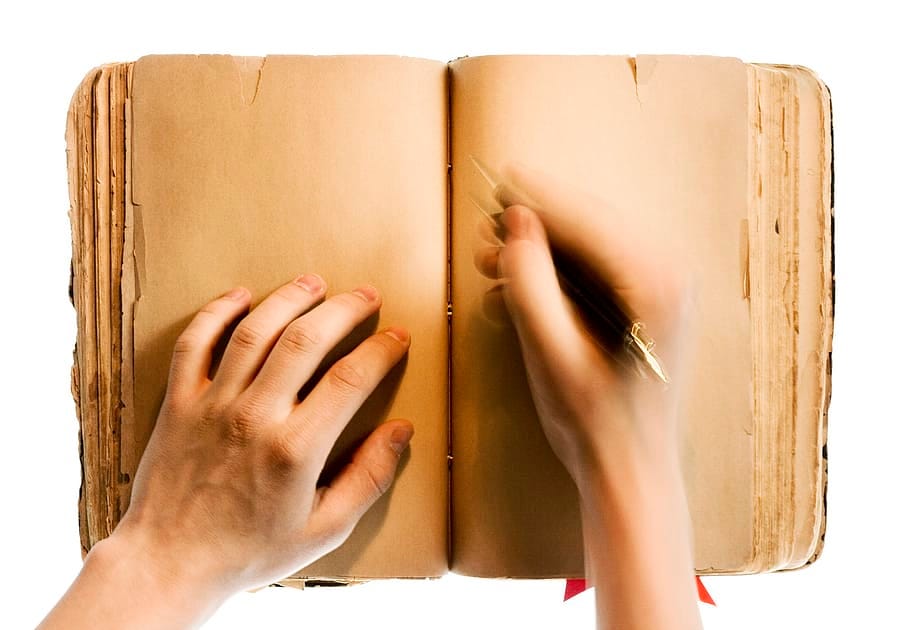
By Simeon VD on iStock (image licensed by author)
New poets often quit before ever finding their authentic voice.
You read a few poems, which inspire your soul, drawing out the words within you that must be shared, then you write your first poems, but these poems seldom represent your poetic voice. Many new poets, because they never read enough different poets, or never explore the tools of the writer, end up emulating a single poetic hero rather than finding their unique voice and expression.
Poetry is more than you sitting early in the morning, cup of tea, hiding from the spouse and kids, and letting your deepest thoughts spill across a blank paper or pulsating screen. Much of what a new poet wants to say is lost because he or she never takes the time to understand the “how” and the “why” of writing, instead just focusing on the thoughts and feelings you believe, once shared, represent a poem.
If you want to be heard, and read, you must take the time to learn how great poets express themselves, and also spend enough hours to let your authentic voice develop. And the only way to do this is to read daily.
I do read, you mumble, I do read every day. But my question is, what do you read, and how much time do you spend asking yourself how the writers you admire create their magic, meaning why do they do what they do and how do they create work we all want to read?
No time you say, I have so little time to write, let alone read, and yes, the goal of reading enough to find your own voice seems daunting. Billy Collins, master writer and former poet laureate of the U.S., chats about a poet needing 10,000 hours of reading before you can ever discover your own style, a number that shuts down even the most dedicated of fresh poets who want nothing more than to write as a form of personal expression, with the secret hope maybe the rest of us will want to read your work too.
There is a shortcut to beginning your needed learning
There is a compromise, a way to get started mastering a deeper understanding of poetry without the terror of having to read for hours a day for the rest of your life just to catch up.
I teach a method called the 30/30, a tool I devised to keep me focused on my busiest days, and one I also use to trigger new works when my poetic muse seems to be happily singing on someone else’s shoulder.
It’s simple really, I get up, sit at my desk, then read for thirty minutes, followed by a thirty-minute writing session. If I have time, I go beyond, but I do the minimum 30/30, six days a week, and it has changed much about how I think about and write poetry these days.
The rules of the thirty-minute reading segment
-I select three books of poetry, or perhaps books on how to write poetry, the day prior. This takes me maybe five minutes. I rotate between the poets I admire and new poets I need to read to help my poetic education continue.
-I keep an old school pen and notebook handy because as I read I write ideas, key phrases, perhaps a sentence I want to use as part of a poem or as a theme for a new work. Do not use a computer, since once a message or any alert pops up your mind has to go there, and you lose the rhythm. Also, recent research states there are at least three hundred additional stimulation points in a person’s brain when they write by hand compared to using a computer. In other words, you are forced to think when writing by hand instead of just typing.
-I purchased a kitchen timer, set it to thirty minutes, and push it when I start and I don’t stop until it beeps. Write continuously for the full cycle to get the most out of the process.
-I keep the mind set of how and why; how does the writer do it, what is the theme, how did they break the lines, word choice, punctuation, their creation of images and style. I read for enjoyment, but most importantly, I read to learn and that is the primary function.
-I know it may not be in everyone’s budget, but I buy real books instead of reading on the computer or pad. I have several hundred poetry books on my shelf, which I return to on a rainy afternoon or late night reading session when the family is in bed.
The computer is a wonderful tool, and I was an early adapter, owning a first generation Apple and never looking back, but I also know the computer, while the perfect tool for final version writing, isn’t the best when it comes to first generation works. Too many distractions and too much reliance on AI to clean up your mess. AI generated poetry, or any other writing, might be okay to fill a mediocre website needing content, but it is not writing and can never capture your true voice, your images and your feelings.
The rules of the thirty-minute writing section
-I write, letting it flow, with no editing. The goal is to let my mind respond to one of the notes from the reading session. I sometimes end up with a few lines, a complete poem, or bits and pieces I like that might trigger other thoughts tomorrow, but always something. I do transfer the orphaned gems I can’t part with into a file where I can come back for future inspiration.
-I again use the timer, set to thirty minutes, and I go until it beeps, but I do admit I sometimes go for another hour afterwards because I usually end up with pages of notes after the reading and once I am into a good writing session I hesitate to stop.
Other thoughts that might help
The Poetry Foundation, online of course, is a great, and free, resource to find new writers. Simply put in a name, read a little about who the writer is, then read a number of their poems included along on their page. I often do this before buying a book of their work.
I would also recommend you start with the best of last century. Young writers tend to be drawn to the pop writers of the week, which is also a good read, but then they never discover the masters who can teach you so much.
Here are a few books on my shelf, the ones I keep because I learn so much from their voice, themes, imagery and style. Imagery is especially important for new writers who rely on cliches instead of learning to describe what they see and feel in their own words. Ask yourself what these writers make you see and feel using their own words and saying it in a fresh way?
Again, these are just a few of many, and I offer them as a starting point for the new poet. The women on the list were in many ways pioneers in poetry, breaking the rules and style by offering a unique voice:
Jane Kenyon, Raymond Carver (his poetry not short stories), Denise Levertov, Mary Oliver, early Charles Bukowski, Elizabeth Bishop, Sylvia Plath, Joe Moran (First You Write A Sentence/powerful book on writing), William Carlos Williams, Diane di Prima, Dorianne Laux, Donald Hall and Frank Bidart.
Remember you are reading these writers to learn, and even if they are not your style they are all successful poets who survived as writers longer than most of you have been alive.
Final thought
New poets are driven by the need to express themselves, but often are never heard because they haven’t yet learned the tools of the poet. Even something as simple as when to cut a line or the perfect choice of a word is magic when done by someone experienced. If you want to write, why not try and learn from the best of the poetry world by simply reading their work and seeking to understand how they solved the problems of writing we all encounter.
Be patient, but move forward every day. I read poetry, and books on how to do it better, at least thirty minutes a day, 5–6 days per week. I am not at the 10,000-hour goal, and probably never will be, but at least today I am thirty minutes further along than I was yesterday.
메타데이터
- post_id
- 54fff83d867e
- slug
- finding-your-true-poetic-voice-54fff83d867e
- url
- https://medium.com/blueinsight/finding-your-true-poetic-voice-54fff83d867e
- canonical_url
- https://medium.com/blueinsight/finding-your-true-poetic-voice-54fff83d867e
- author_url
- https://medium.com/@thomasplummer
- status
- ok
- fetched_at
- 2026-07-09 01:16:53