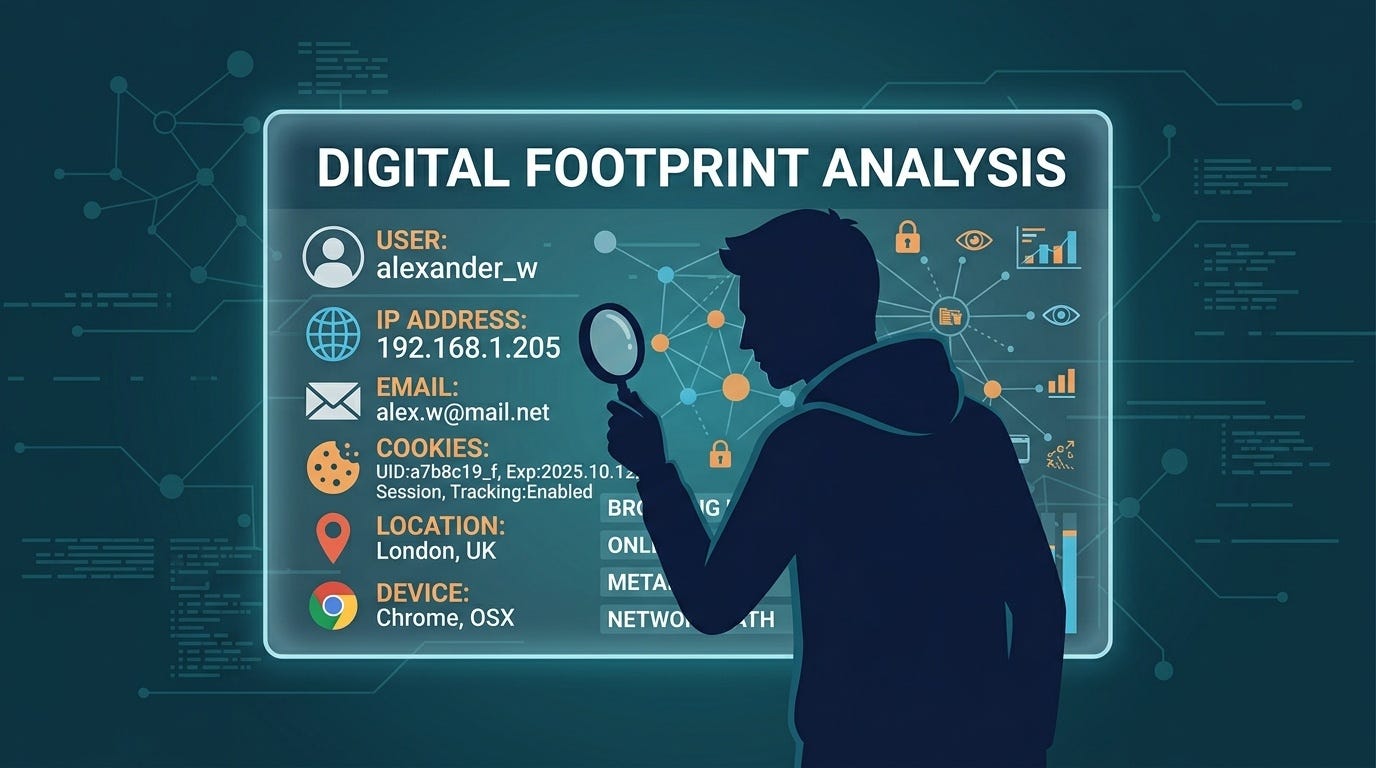
Data Brokers Are Selling Your Inbox: A 3-Second Hack to Protect Your Digital Identity
You didn’t sign up for most of the emails in your inbox. Someone sold you.
Data Brokers Are Selling Your Inbox: A 3-Second Hack to Protect Your Digital Identity
You didn’t sign up for most of the emails in your inbox. Someone sold you.
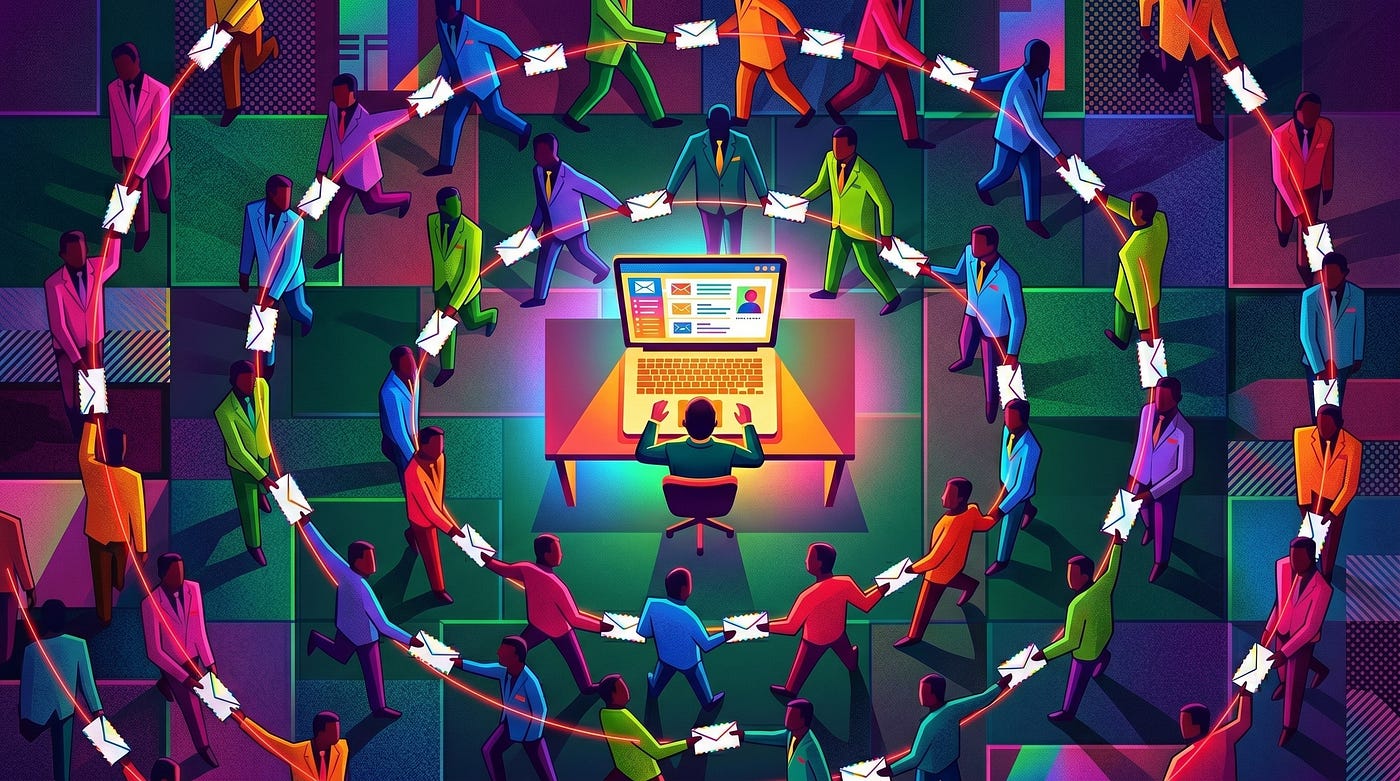
A colleague of mine — a sharp, privacy-aware software developer — got an email last year from a debt consolidation service he’d never interacted with in his life.
Odd, but he ignored it. Then came one from a supplement brand. Then a car insurance comparison site. Then a payday loan company.
He’d never signed up for any of them. He’d never even heard of most of them.
He spent an afternoon trying to trace it back. Eventually, he found it: a recipe website he’d used two years earlier to save a pasta recipe. He’d made an account to bookmark it. The site had since been acquired, the email list packaged up and sold to a data broker, and his address had spent two years quietly circulating through the grey market of email databases.
A pasta recipe. That’s what it cost him.
This is the data broker economy in action. It’s not dramatic. It’s not the stuff of heist movies. It’s quiet, mundane, and happening to your inbox right now.
The good news: there’s a fix, and it takes about three seconds to use.
Who Are Data Brokers, and Why Do They Have Your Email?
Data brokers are companies that exist specifically to collect, package, and sell personal information. Not your credit card numbers or passwords — that’s a different kind of criminal. Data brokers operate in a legal grey area, trading in things like your name, age, location, browsing habits, purchase history, and most valuably for marketers: your email address.
Where do they get it? Everywhere.
• Websites and apps that sell user data as part of their revenue model, often buried in a terms of service nobody reads
• Companies that get acquired, whose user databases become assets transferred to the new owner — and then monetised
• Public records and social platforms that are systematically scraped by automated tools
• Free services where the product is, as the saying goes, you
• Data breach dumps that circulate on the dark web and eventually get cleaned up and resold as “marketing lists”
The scale of this industry is difficult to overstate. The data broker market is worth tens of billions of dollars annually. Companies like Acxiom, Epsilon, and hundreds of smaller operators have files on virtually every adult with an internet connection.
And the product they’re selling, in many cases, is a route directly into your inbox.
What Happens After Your Email Gets Sold
Most people think of spam as an annoyance. Junk to delete. A minor tax on using the internet.
That’s a dangerous underestimate.

The Phishing Problem
When your email address is on enough lists, it starts attracting a different category of sender: phishers.
Modern phishing attacks are sophisticated. They don’t always arrive as obvious Nigerian prince emails anymore. They arrive as fake package delivery notifications, fake invoice alerts, fake security warnings from services you actually use. And they work best when the attacker already knows which services you’ve signed up for — because a data broker sold them a list that told them exactly that.
The Credential Stuffing Risk
Every time your email address surfaces in a data breach — and if it’s been around for a few years, it almost certainly has — it gets added to credential dump files. These files pair your email with old passwords, and automated tools run them against hundreds of services simultaneously.
If you’ve ever reused a password, this is the mechanism that bites you.
The Attention Drain
Even setting aside the security risks, there’s a simpler cost: your attention.
Every unsolicited email you open, scan, and delete takes something from you. It’s a tiny amount per email. Across fifty unsolicited emails a day, it’s a meaningful drain on focus that compounds over weeks and months into a background hum of digital exhaustion.
“Spam isn’t just noise. It’s a daily tax on your attention, paid to strangers who bought access to your inbox without asking you.”
The 3-Second Hack: Disposable Email Addresses
Here’s the thing about most of the spam in your inbox.
It got there because of a sign-up you made somewhere. A form you filled in. A gate you passed through to access something you wanted. Your real email was the price of entry.
The solution isn’t to stop signing up for things. The solution is to stop using your real email address when you do.
A disposable email address is a fully functional inbox that you generate on the spot, use once, and then leave behind. It receives real emails — verification links, confirmation codes, download files, all of it. It just has zero connection to your real identity. When it’s inevitably sold to a data broker three months later, the broker has a useless address that leads nowhere.
The entire workflow takes about three seconds:
• Second 1: Open a temp mail service in a new tab
• Second 2: Copy the auto-generated address — it’s already there, waiting
• Second 3: Paste it into whatever sign-up form you’re filling in
Receive the email you needed. Close the tab. Walk away.
Your real address never touched the form. Your real inbox never enters the data broker pipeline. The recipe website, the SaaS trial, the discount code pop-up — they get an address that will never bounce back to anyone real.
The Tool: Why I Use TM-Mail for This
There are a handful of temporary email services out there. I’ve used several. The one I keep recommending — because it’s the one I actually keep using myself — is TM-Mail.
The reason is friction. Or rather, the complete absence of it.
Most privacy tools ask something of you. A VPN needs installing and configuring. A password manager needs setting up. A privacy-focused browser needs switching to. All worth doing, but all with a learning curve.
TM-Mail asks nothing. You open the page and a working temporary email address is already generated and ready to copy. No account creation. No password. No extension to install. The inbox loads in real time. Emails arrive within seconds. When you’re done, you close the tab and that’s the end of it.
A few things that matter when you’re actually using a disposable email address service regularly:
• Speed — verification emails need to arrive fast, before session timeouts kick in. TM-Mail’s inbox is fast
• Reliability — nothing worse than a temp inbox that misses emails. In testing it consistently catches everything
• No data collection — there’s no account tied to you, which means there’s nothing to breach or sell
• Free — completely and permanently free, with no upsell pressure
Works everywhere — it’s a website, so it runs on every device and browser without setup

It’s become a reflex. Any form I’m not fully committed to: TM-Mail, copy, paste, done. The real inbox stays clean. The data brokers get nothing useful.
When to Use a Temporary Email (And When Not To)
This habit works best when you’re deliberate about it. Here’s the mental model I use:
Always use a temp mail address for:
• Free trials of software or SaaS products you’re evaluating
• Downloading ebooks, templates, guides, or any “lead magnet” content
• Retail loyalty schemes and “get 10% off” coupon sign-ups
• Wi-Fi login portals at hotels, airports, cafes, conferences
• Any website you’re visiting once and don’t intend to return to
• Creating test or throwaway accounts for app development or research
Stick with your real email for:
• Services you genuinely use and need ongoing access to
• Financial and banking accounts where identity verification matters
• Work tools tied to your professional identity
• Purchases where you need receipts, warranties, or order tracking
The test is simple: if losing access to that inbox tomorrow would cause you zero inconvenience, use a temporary email. If it would cause problems, use your real address.
The Bigger Picture: Stop Being the Product
The data broker economy runs on a simple assumption: that people don’t know their data is being sold, or that they know and feel helpless to stop it.
Both of those assumptions are worth challenging.
You don’t have to opt out of the modern internet to protect your inbox. You don’t need to become a privacy extremist, use Tor for everything, or delete your accounts. You just need one small, repeatable habit: stop giving your real email address to things that haven’t earned it.
“Data brokers profit from your carelessness. The counter-move isn’t paranoia — it’s a three-second habit and a tab you open before filling in a form.”
Your email address is the front door to your digital identity. It unlocks your accounts, resets your passwords, and connects your online life across every platform. Handing it to strangers every time you want a coupon or a free PDF is leaving that door propped open.
Close it. Use TM-Mail for everything that doesn’t need your real address. Keep your primary inbox for the things that genuinely matter.
Three seconds of friction now. A significantly cleaner, safer digital life indefinitely.
The data brokers will find someone else’s inbox to sell.

Found this useful? Hit clap, share it with someone whose inbox needs rescuing.
메타데이터
- post_id
- 55804fa55ed1
- slug
- data-brokers-are-selling-your-inbox-a-3-second-hack-to-protect-your-digital-identity-55804fa55ed1
- url
- https://medium.com/@tmmail/data-brokers-are-selling-your-inbox-a-3-second-hack-to-protect-your-digital-identity-55804fa55ed1
- canonical_url
- https://medium.com/@tmmail/data-brokers-are-selling-your-inbox-a-3-second-hack-to-protect-your-digital-identity-55804fa55ed1
- author_url
- https://medium.com/@tmmail
- status
- ok
- fetched_at
- 2026-06-21 15:33:18