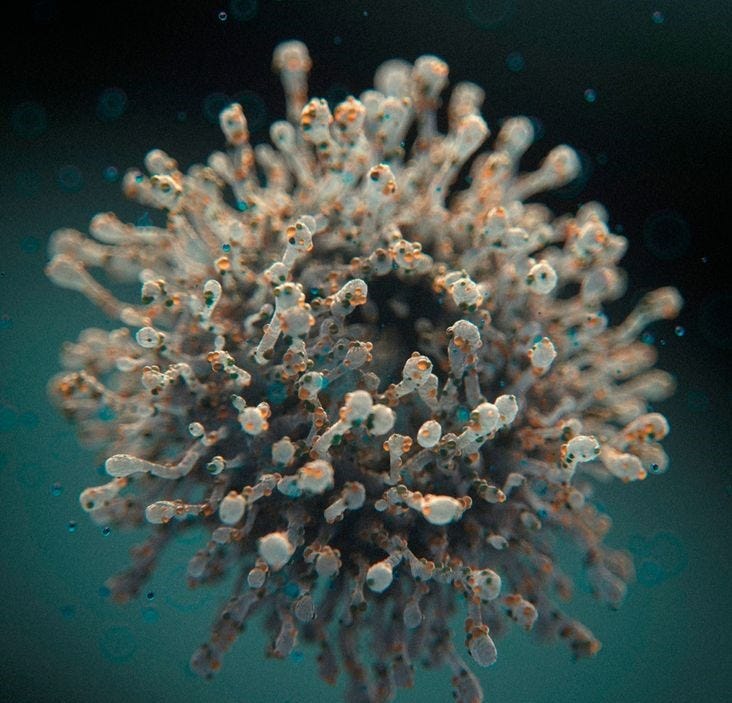
Measles in 2026: Why This "Eliminated" Disease Still Walks Into Indian Emergency Rooms
Measles in 2026: Why This "Eliminated" Disease Still Walks Into Indian Emergency Rooms
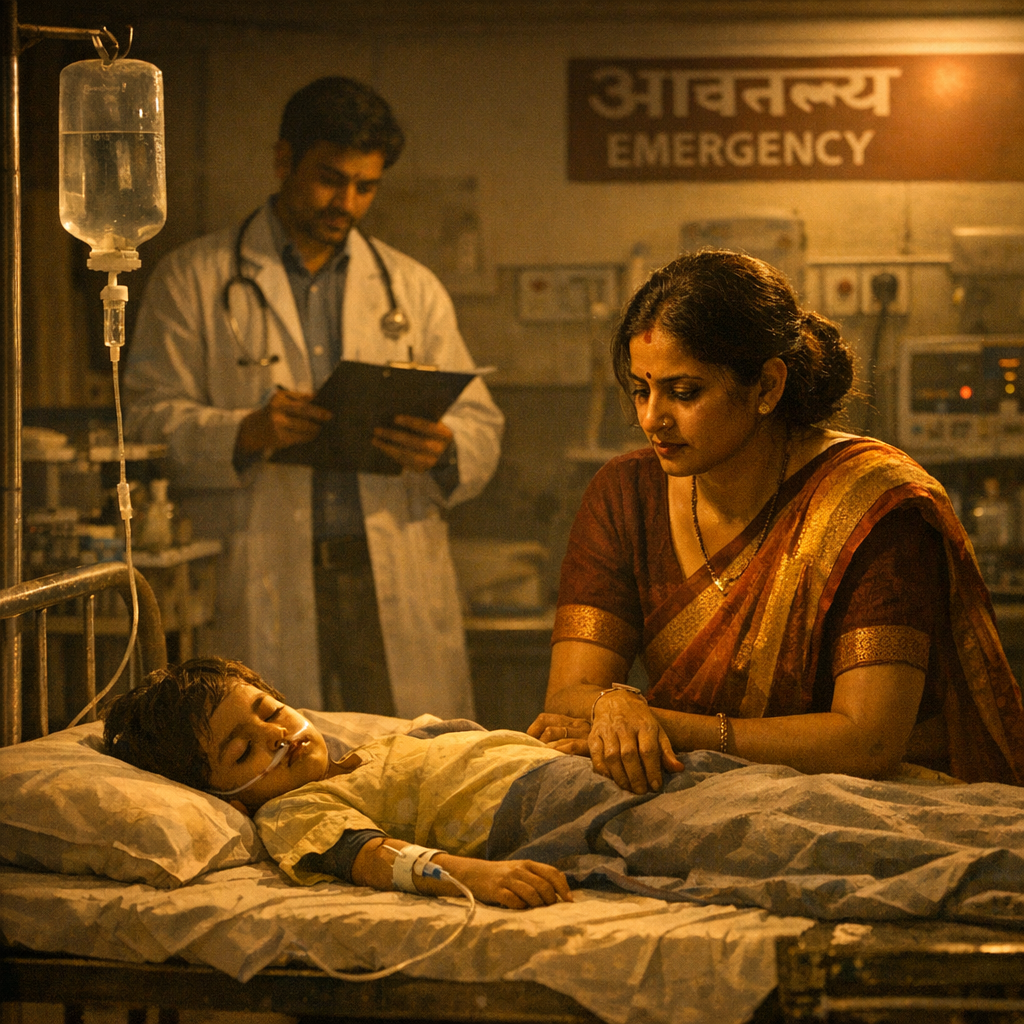
I have been working in emergency medicine for 4 years. I have seen malaria, dengue, typhoid — the diseases we in India grow up hearing about, the ones we almost expect to walk through the door. Measles was never supposed to be one of them anymore. Then one evening, a mother walked in carrying a four-year-old. The child was burning — 104 degrees of fever. Eyes swollen shut, unable to bear the tube light above the bed. A rattling cough that filled the entire bay. And then, two days later, that rash. Starting at the hairline. Spreading downward like a tide with no intention of stopping. I had to stop for a moment. This was not a disease I expected to treat in 2026. But here we are.
This Is Not a Story From the Past
Many Indian parents today think of measles the way they think of smallpox — something their grandparents talked about. Something we fixed. India has made remarkable public health gains against measles over the past decade. But despite colossal mass immunization efforts, India has repeatedly missed the required 95% two-dose vaccination coverage threshold needed to achieve elimination. A critical and troubling pattern has developed: while overall case counts decreased, the case fatality rate among reported cases increased — especially following the COVID-19 pandemic, when routine immunization services markedly collapsed, generating a large cohort of susceptible children that led to massive outbreaks in 2022. The virus did not disappear. It was simply waiting.
It Is Just a Rash." — The Most Dangerous Four Words in Indian Homes
The disease is characterized by fever, cough, and runny nose, followed by a typical rash. While a large proportion of cases are self-limiting, multiple deaths have been reported because of disease-associated complications. By the time that rash appears on your child’s face, the virus has already been silently attacking the body for days. The fever starts first — brutal, unrelenting. Then the eyes go red. Children become completely photosensitive, flinching from the light in a regular room. They cannot eat. They cannot sleep. The rash is not the beginning. It is the middle of the storm. And for some children, the storm gets much worse. Measles can lead to ear infections, severe diarrhea, pneumonia, and in the worst cases, encephalitis — inflammation of the brain — that can leave a child with permanent neurological damage or take their life entirely. Measles elimination is challenging in India because of its high infectivity — each infected child can infect an additional 4 to 26 other children in South-East Asia. Let that number sink in. One sick child in a classroom. Up to 26 others at risk.

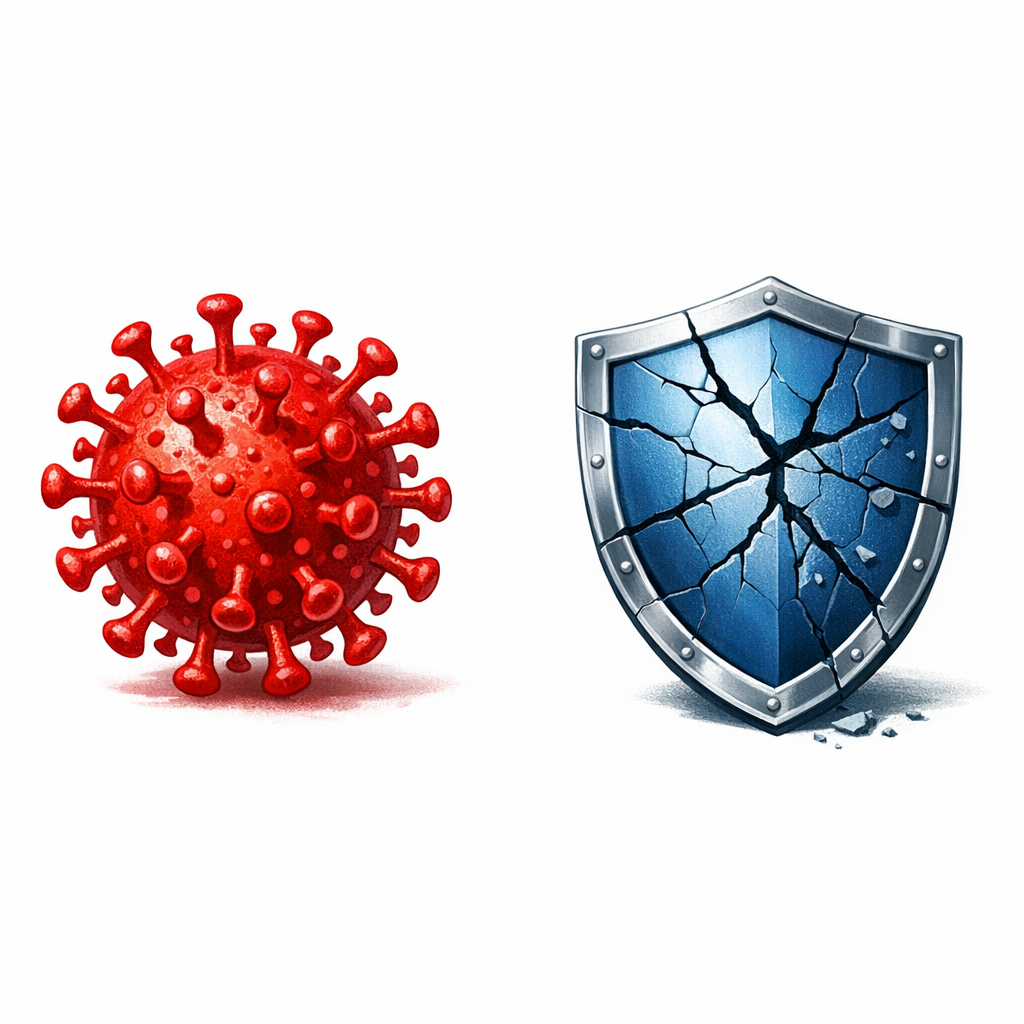
The MR Vaccine: India’s Shield — And Why It Is Weakening
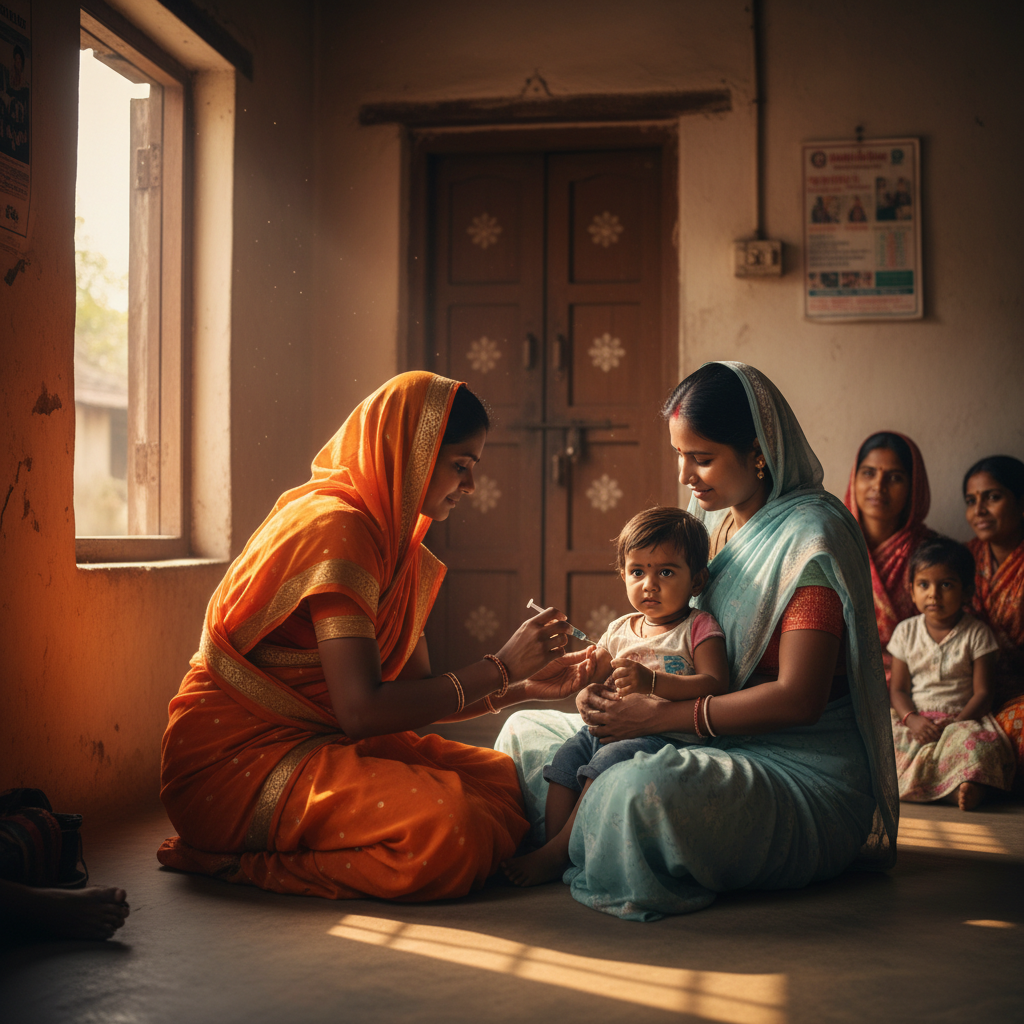
In India, we do not use the MMR vaccine (Measles-Mumps-Rubella) universally through the government program. India leverages the Universal Immunization Programme (UIP), which provides two free doses of the MR — Measles-Rubella — vaccine to eligible children, at 9-12 months and again at 16-24 months of age. This is a powerful, proven vaccine. The MR vaccine is safe and has been in use for over 40 years, and the vaccine used in India’s campaign is produced domestically and is WHO prequalified. The seroprotection rate against measles reaches 88.7% after the first dose and 100% after the second dose. That second dose is not optional. It is what completes the protection. And yet — that second dose is exactly where India is struggling. As per NFHS-5 data, 87.9% of children aged 12 to 23 months received the first dose of the measles-containing vaccine, whereas only 31.9% of children aged 24 to 35 months received the second dose. Think about what that means. Millions of Indian children are walking around with only half the protection they need. In Mumbai alone during a recent outbreak, the overall vaccination coverage for the two doses of the Measles-Rubella vaccine dropped from 82% to 41% compared to the previous year. When the shield drops, the most vulnerable fall first.
Where Is the Virus Hitting Hardest?
Within Maharashtra, Mumbai emerged as the epicenter of a recent epidemic, with 601 confirmed cases and 18 deaths linked to measles identified within a single outbreak. Suspected cases were identified through door-to-door surveys, with multiple clusters found particularly in slum areas of the city. This is the painful truth about measles in India. It does not strike randomly. Susceptibility to measles in India is not accidental — it is systemically structured along socio-demographic lines. It hits the children in dense urban slums where families live packed together. It hits children in remote villages where the ASHA worker could not reach. It hits children whose parents were told by someone — a neighbor, a WhatsApp message, a distant relative — that the vaccine was unnecessary, or dangerous, or "just a government thing." The measles outbreaks in India mainly involve children aged 9 months to 15 years, with the maximum cases occurring in the 1 to 4 year age group. These are toddlers. Children who have not yet started school. Whose entire future depends on whether their parents brought them to the nearest PHC on time.
The Good News: India Is Fighting Back — Seriously
Here is what gives me hope when I walk out of that emergency bay. India launched the National Zero Measles-Rubella Elimination Campaign 2025-26, marking a significant step towards the goal of eliminating Measles and Rubella by 2026. In 2024 alone, India recorded a remarkable decline of 73% in measles cases and a 17% reduction in rubella cases in comparison with 2023. 332 districts have already reported zero measles cases and 487 districts have reported zero rubella cases between January and March 2025. India's efforts have even received global recognition, with the prestigious Measles and Rubella Champion Award from the Measles and Rubella Partnership in 2024. We are not losing this fight. But we are not winning it yet either. And in medicine, "almost eliminated" still means children are dying.
What Every Indian Parent Needs to Do Right Now?
This is not about blame. Every parent loves their child. This is simply about what the data says, and what you can do today.
- Check your child’s immunization card right now. Look for the MR vaccine entries. Two doses of the MR vaccine are given under the UIP — one at 9 to 12 months and another at 16 to 24 months of age. Both doses must be given. One is not enough.
- It is free. Use it. Under the Universal Immunisation Programme, two doses of the measles-rubella (MR) vaccine are provided free of cost to all eligible children. There is no reason to skip it.
- Even if your child was vaccinated privately with MMR, the MR dose in the government campaign still counts. All children in the age group of 9 months to 15 years are included in India’s elimination drive, even if they have already received Measles/MR/MMR vaccine under routine immunization at a government health facility or a private clinic.
- If your child develops high fever, red eyes, a deep cough, and then a rash — go to the hospital. Call ahead. Measles spreads through the air. Do not sit in a crowded waiting room without telling the staff first.
- Do not believe WhatsApp forwards about the vaccine. The MR vaccine is completely safe. Like any injectable vaccine, there may be mild pain, redness, low-grade fever, or a rash, all of which subside on their own. That is it. The alternative — an unvaccinated child in an outbreak zone — is not a safe choice.

A Final Word From the Emergency Room
The child I described at the beginning — the one with the fever, the red eyes, the rash spreading down her small body — she recovered. Ten days. Her mother barely slept. When the fever finally broke and the little girl asked for water, the mother looked at me and said, "Doctor, I did not know it could be this serious." That is the only reason I wrote this. India has set a goal to eliminate measles by 2026. That goal belongs to all of us — not just to the government, not just to doctors, not just to ASHA workers walking dusty roads to reach the last child in the last village. It belongs to every parent who picks up that immunization card and shows up. The vaccine is free. The clinic is there. The ASHA worker will come to your door if you ask. Please. Do not wait for your child to end up in my ER to know that this disease is real.
Disclaimer: Statistics sourced from the Ministry of Health and Family Welfare (MOHFW), NFHS-5 data, WHO India, and peer-reviewed public health research as of 2025-2026. Compiled with Claude Sonnet 4.5 for paraphrasing. Images are for representative purposes only.
메타데이터
- post_id
- 55897d8dad69
- slug
- measles-in-2026-why-this-eliminated-disease-still-walks-into-indian-emergency-rooms-55897d8dad69
- url
- https://medium.com/@mathewsdisney/measles-in-2026-why-this-eliminated-disease-still-walks-into-indian-emergency-rooms-55897d8dad69
- canonical_url
- https://medium.com/@mathewsdisney/measles-in-2026-why-this-eliminated-disease-still-walks-into-indian-emergency-rooms-55897d8dad69
- author_url
- https://medium.com/@mathewsdisney
- status
- ok
- fetched_at
- 2026-07-27 09:50:22