Iran’s Diplomatic Triumph: US-Israel Rift and the Fracturing of Traditional Alliances in 2026
As the US-Iran MoU reshapes power dynamics, Netanyahu faces isolation while Trump prioritises de-escalation, exposing deep fissures
Iran’s Diplomatic Triumph: US-Israel Rift and the Fracturing of Traditional Alliances in 2026
As the US-Iran MoU reshapes power dynamics, Netanyahu faces isolation while Trump prioritises de-escalation, exposing deep fissures
In the aftermath of intense Middle East conflicts, Iran has secured notable diplomatic advantages through the US-Iran memorandum of understanding, which could reshape regional power balances and influence future stability, while the United States and Israel publicly diverge. This analysis explores the shifting geopolitical landscape, the widening rift between President Trump and Prime Minister Netanyahu, enduring historical tensions, debates over influence and accountability, and the implications for regional stability. As rhetoric around regime change and responsibility surfaces, longstanding alliances face unprecedented tests in a rapidly evolving world order.
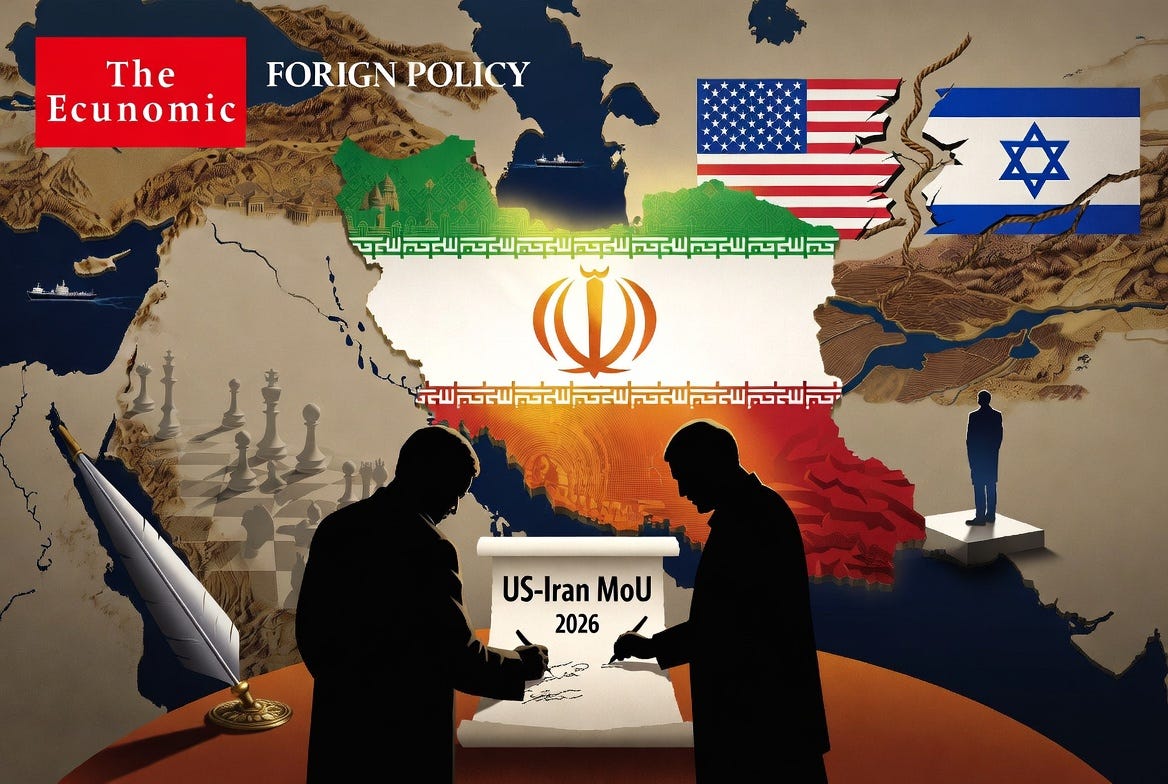
AI-generated image. Shifting power dynamics in the Middle East — Iran’s strategic gains through the US-Iran MoU contrast with growing public strains in the traditional US-Israel partnership
The Road to the MoU: Conflict, Ceasefire, and Compromise
The 2026 Middle East confrontations began with escalations involving Iran, its proxies, Israel, and direct US involvement. Initial pretexts centred on curbing Iran’s nuclear ambitions and regional influence, with some framing it as a path toward internal change in Tehran. What followed was a grinding war of attrition across multiple fronts, including strikes on Iranian territory, responses targeting Israel, and intense fighting with Hezbollah in Lebanon.
By mid-June 2026, a memorandum of understanding between the United States and Iran had established an immediate halt to hostilities and a 60-day window for negotiations on a comprehensive framework. This included sanctions relief elements, the reopening of shipping lanes through the Strait of Hormuz, and commitments to further talks on nuclear issues. Oil flows quickly rebounded toward pre-conflict levels, signalling de-escalation.
As detailed in my earlier analysis “Unconquerable Iran and America’s Retreat: A War That Redefined Power in the Gulf and Beyond,” these developments underscored Iran’s capacity to withstand pressure and extract concessions through persistence and strategic patience. The MoU did not represent an outright victory for either side but marked a clear diplomatic pivot away from prolonged kinetic conflict.
Iran’s Power and the US Position After the Deal
Iran emerged from the period with enhanced leverage. The agreement provided pathways for economic relief and normalised certain maritime activities, bolstering Tehran’s regional standing. Critics of the previous approach argued that military pressure had limits against a determined actor with asymmetric capabilities and alliances.
The United States, while achieving a pause in fighting, faced questions about the long-term costs of engagement. Defence expenditures, domestic political divisions, and the challenge of balancing multiple alliances tested Washington’s bandwidth. Some observers described the outcome as a relative setback for maximalist goals, with Iran retaining core capabilities and gaining breathing room.
Building on themes from “Empire in Freefall: Iran’s Laughter and the Global South’s Crescendo Against U.S.-Israel Fragility,” the episode highlighted how sustained resistance can shift narratives from dominance to negotiation. Iran’s ability to weather the storm and participate in high-level talks in Switzerland demonstrated resilience that surprised many initial forecasts.
The Fissure Between Trump and Netanyahu
Public and private tensions between the Trump administration and the Netanyahu government have become increasingly visible. Reports of sharp exchanges during meetings, including moments where past support was referenced pointedly, illustrate the strain. One notable comment attributed to Trump referenced shielding Netanyahu from earlier legal challenges, underscoring how personal and political histories intersect with current policy disagreements.
The MoU process exposed differences in priorities. While the US sought broader regional stabilisation and progress on multiple tracks, Israeli leadership expressed strong reservations about aspects that could constrain future freedom of action against Iran or its allies. Netanyahu’s government has resisted full withdrawal from certain southern Lebanese positions, viewing them as essential security buffers. US officials have pushed for phased arrangements involving Lebanese forces, creating friction. These differing assessments reflect underlying strategic concerns about regional security and influence, which are crucial to understanding the evolving landscape of the Middle East.
This divide goes beyond personalities. It reflects differing assessments of threats, timelines, and acceptable risks. Trump’s administration has emphasised deal-making and economic incentives, while Netanyahu’s coalition prioritises security maximalism. The result is an unusual public airing of differences between two historically close partners.
Historical Shadows: USS Liberty and Enduring Distrust
Any discussion of US-Israel relations inevitably encounters historical episodes that fuel scepticism in certain American circles. The 1967 USS Liberty incident, in which Israeli forces attacked a US Navy intelligence ship, resulting in dozens of American deaths and injuries, remains a point of contention. Official investigations concluded it was a case of mistaken identity during wartime, yet alternative interpretations persist, arguing for deliberate action or inadequate accountability.
These events, alongside documented cases of espionage such as the Jonathan Pollard affair, have contributed to narratives in some quarters that question the depth of alliance reciprocity. Claims of intelligence-sharing imbalances, influence operations, and instances in which US interests appeared secondary have circulated for decades. While mainstream policy has treated Israel as a key strategic partner, these episodes provide ammunition for critics who argue the relationship involves significant one-way elements.
References to nuclear-related concerns, including historical debates over proliferation and intelligence activities, further complicate the picture. Detractors have interpreted the absence of strong US responses in certain past incidents as evidence of political constraints or fear of escalation.
Influence, Lobbying, and Calls for Accountability
The role of pro-Israel lobbying groups, particularly AIPAC, has long been debated in US politics. Supporters view it as legitimate advocacy for a democratic ally; detractors argue its influence distorts foreign policy priorities and shields Israel from scrutiny. Proposals to reform or limit such lobbying power occasionally surface, though outright abolition remains fringe.
In the current climate, some voices — both domestically and internationally — have called for greater accountability regarding actions in Gaza and the West Bank. Accusations of war crimes and genocide have been levelled by various actors and international bodies, though these remain highly contested legally and politically. South Africa’s case at the ICJ and related proceedings continue without final determinations of genocide as of mid-2026.
Observers noting alignment between certain US statements and Iranian positions on accountability suggest a pragmatic convergence: prioritising de-escalation and long-term stability over unconditional support for any single actor’s maximal objectives. Whether this constitutes coordinated “regime change” pressure on Israel is a matter of interpretation; what is clear is that Netanyahu’s domestic standing has weakened, with polls and political dynamics indicating limited prospects for an easy reelection, even before the MoU’s full implications are known.
Israel’s Isolation and the New Regional Reality
The combination of the MoU, ongoing Lebanon negotiations, and visible US-Israel disagreements has left Israel in a more isolated diplomatic posture than in previous decades. Traditional European and some Arab partners have pursued independent tracks. Global South voices, as explored in prior reflections on attrition and congressional reckonings, have amplified critiques of Western policy consistency.
Netanyahu’s government faces simultaneous pressures: military commitments in the north, domestic political challenges, and external diplomatic headwinds. The MoU’s framework, by design or consequence, has complicated efforts to maintain previous levels of alignment with Washington on Iran policy.
Trump’s approach — willing to apply pressure even on close partners when pursuing larger deals — has been described by supporters as pragmatic deal-making and by critics as transactional. The phrase sometimes attributed to observers, “Trump is effective because he can implement regime change to allies as well,” captures this perception of flexibility. However, actual policy remains focused on negotiated outcomes rather than internal overhauls.
Broader Implications and Power Shifts
The current moment reveals a Middle East where kinetic dominance has limits and diplomatic endurance carries weight. Iran’s position has improved relative to pre-conflict expectations. The United States has secured breathing space, but at the cost of questions about alliance cohesion. Israel confronts a more constrained environment for unilateral action.
Economic resilience in Israel persists despite strains, with tech and defence sectors adapting. Daily life in cities like Tel Aviv continues with characteristic energy, even as security awareness remains elevated. In contrast, regions directly affected by prior fighting face reconstruction challenges.
As explored in analyses of attrition at home and abroad, these conflicts have domestic repercussions everywhere they are involved — budgetary pressures, political polarisation, and societal fatigue.
Thoughtful Remark
Geopolitics rarely delivers clean victories or permanent defeats. The 2026 developments illustrate how even powerful actors must adapt when reality imposes costs that pure force cannot erase. Iran’s gains stem as much from survival and negotiation as from battlefield results. The US-Israel relationship, tested by policy divergence and historical undercurrents, reveals that alliances are living arrangements requiring constant recalibration rather than eternal certainties. Whether this moment marks a lasting realignment or a temporary adjustment will depend on the outcomes of the remaining 60-day talks and domestic political evolutions in all capitals.
Closing Note
What does it mean when a US administration publicly pressures a longstanding ally on core security policies while pursuing parallel engagement with a former adversary? How will Netanyahu navigate domestic politics if the MoU framework advances without full Israeli buy-in? Can historical grievances, such as the USS Liberty incident or espionage cases, be addressed transparently without poisoning current cooperation? And in a multipolar world, will transactional deal-making by figures like Trump ultimately strengthen or erode traditional alliances?
These questions will shape the coming months. The answers will influence not only the Middle East but global perceptions of power, credibility, and the durability of partnerships.
I invite you to share your perspectives in the comments. What aspects of this evolving situation concern you most, or offer hope?
For deeper dives into related themes, explore my previous pieces linked below, and stay tuned for ongoing analysis as events unfold. The conversation continues — your voice matters in understanding these complex shifts.
Further Reading from Past Analyses:
메타데이터
- post_id
- 5591b3db34e9
- slug
- irans-diplomatic-triumph-us-israel-rift-and-the-fracturing-of-traditional-alliances-in-2026-5591b3db34e9
- url
- https://medium.com/the-gravity/irans-diplomatic-triumph-us-israel-rift-and-the-fracturing-of-traditional-alliances-in-2026-5591b3db34e9
- canonical_url
- https://medium.com/the-gravity/irans-diplomatic-triumph-us-israel-rift-and-the-fracturing-of-traditional-alliances-in-2026-5591b3db34e9
- author_url
- https://medium.com/@airwaysnc
- status
- ok
- fetched_at
- 2026-06-26 12:24:55